We Remember the Underside of Gratiot County, The Ku Klux Klan Part IV. “Klan Conclusions: 1926-1931”

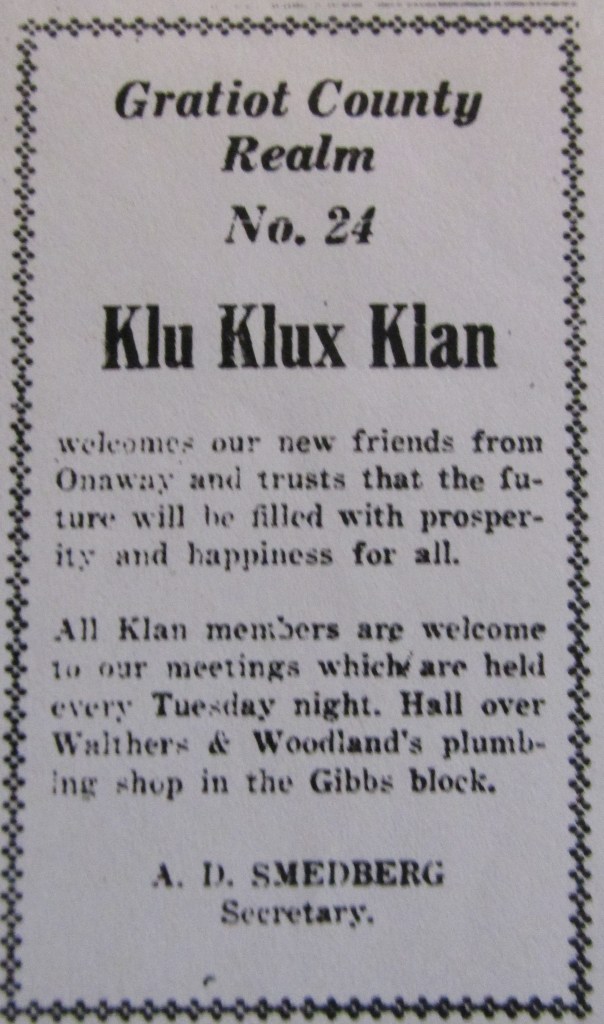
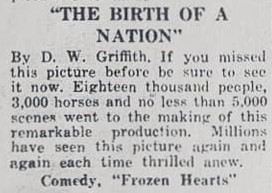
From top to bottom: Realm No. 24 welcomes Lobdells to Alma – and identifies a Klan member; more than one county theatre, like Ithaca’s Ideal Theatre, sought to cash in on Klan activity during the mid-1920s by re-showing “The Birth of a Nation” – which glorified the Klan; “The Sower” links American patriotism of the 1920s and the Ku Klux Klan, dated July 15, 1924; Ku Klux Klan items from the 1920s on display in the Henry Ford Museum in Dearborn, Michigan as they appeared in 2009.

The following is another in a series of articles on the Gratiot County Ku Klux Klan, which was very active in the county during the 1920s.

  Following the aftermath of the King-Garner Trial of 1926 in Ithaca, the decade gradually saw the decline of Gratiot County Realm No. 24. The attention that the trial brought to Gratiot County, along with a national decline of the  Ku Klux Klan following a sex and political scandal in Indiana, led to the erosion of its popularity.

  However, the Klan still had its supporters and followers. Names like Otto Hawley and Herbert A. Becker of Alma, Margaret Smith and R.A. Anderson of St. Louis, G.W. Anderson, James and Margaret Esenlord, and M. Alspaugh of Arcada Township all posted bail for Lewis King and the Garners during their trials in Gratiot County. One of the supporters admitted in newspapers that he even invited King to Gratiot County to hold his religious meetings.

  Out in Arcada Township, the Ku Klux Klan campground attempted to make a go of it – and did for at least two years. At one point, it advertised itself as a haven for Klansmen, Tri-K Girls, American Krusaders, and Junior Klansmen. The campground eventually closed, probably due to lack of financial support, or the owners possibly decided to end the farm’s designation as a Klan gathering spot.

  An exciting event occurred in the Alma Record in 1926 when the newspaper welcomed  Lobdell Emery from Onaway, Michigan, to Alma. Among those groups buying ads welcoming this new company to Alma was Gratiot County Ku Klux Klan No. 24. The advertisement stated that it “Welcomes our new friends from Onaway…All Klan members are welcome to our meetings, which are held every Tuesday night.” Beneath the ad, Klan secretary A.D. Smedberg of Alma signed his name. Smedberg attended the University of Michigan and Ferris Institute and later was the purchasing agent for New Moon Homes in Alma. Smedberg also ran for Mayor of Alma.

  Another name from the Gratiot Klan slowly surfaced. At Alma College, one member of the Board of Trustees was  Klansman Stephen S. Nisbett, active in the  Newaygo County KKK and President of Gerber Baby Foods. He eventually served on the board for 22 years.

  The historical record is scant regarding those who took a public stand against the Klan. One of these, Reverend R.A. Gelston of the Alma First Presbyterian Church, went to the pulpit one Sunday to declare that the Klan had no place in Alma and that people should be aware of its divisiveness and damage to the community. During the peak of Klan activity in Alma, one could also read statements in church notices during its height. One could attend an evening service about “The Fiery Cross ” at one end of town.” Up the street, another church countered with “The Cross on which Christ Died.”

  In Alma, the Klavern operated its headquarters at 110 ½ East Superior Street until at least 1931. Before its demise, a popular activity of the Gratiot Klan was holding picnics at places like Crystal Lake in Montcalm County, complete with a good, old-fashioned sermon. During one Christmas at the start of the Depression, the Klan announced that it would distribute Christmas baskets to needy families in the Alma area. Realm No. 24 also periodically trumpeted the importance of its meetings – such as when the Grand Dragon of the state Ku Klux Klan, George W. Carr of Owosso, appeared in Alma.

  For some in Gratiot County, Klan enthusiasm was slow to pass. While the Great Depression took place, it was common for families to hold weekly house parties for entertainment. One group from Arcada Township did so at the former location of the Klan campground. What was the group’s name for its monthly parties? The Klitter Klatter Klub.

Next time: Part V. “Klan Confusion – What Should Gratiot County Learn from the History of the KKK?”

Copyright 2023 James M Goodspeed

We Remember the Underside of Gratiot County, The Ku Klux Klan Part III. “County Conundrums: Trouble with the Klan, 1925-1926”

Gratiot County Klan news from the mid-1920s: The top of the front page of the Gratiot County Knighthawk, the Klan newspaper published in the county in August 1928; the Gratiot Klan was very active in participating in state KKK affairs as this notice from 1926 indicates; three Klan preachers entered Gratiot County in the summer of 1925, led meetings which lead to a riot and then faced charges which ultimately went to the State Supreme Court; even small communities like Sumner members participated in Klan meetings such as the one in New Haven in the late summer of 1924.

This is part three in a four part series on the Gratiot County Ku Klux Klan and it activity in Gratiot County during the 1920s.

Alma had a problem with the Klan in the summer of 1925 when three out-of-state itinerant “preachers” held religious meetings in Wright Park. Before their initial one-week engagement ended, Alma Mayor Creaser attempted to find the trio and inform them that their permit would not be renewed because of the controversy of these meetings.

              Lewis J. King, George Garner, and R. C. Garner were well-known in the Midwest in pro-Klan circles. At one time, they claimed to be Protestant Christians who converted from Catholicism; King himself professed to be an ex-priest and sold books about his conversion and anti-Catholic teachings at his meetings.

              Coinciding with King’s meetings was the spreading of a scurrilous rumor by the Ku Klux Klan that Catholics at St. Mary’s Church were secretly stockpiling a horde of guns and ammunition in the basement of the church.

              When King appeared at Wright Park the evening after being told that his meetings were over, he and a large group of supporters approached the main gate, where they encountered Alma Mayor Creaser and several police officers. At that point, “The Riot in the Park” began.

              King argued that he had a right to hold a public meeting and that the large crowd behind him did, too. Resisting the officers, they stormed the gate, yelled for the crowd to follow, and barged into the park, running over Creaser and the police officers while knocking over fences in their way. One of the Garners, draped in an American flag, was seen out front leading the crowd. As a result, Lewis J. King continued his inflammatory preaching in Wright Park for yet another night in Alma.

              The next day, the Alma City Commission fielded numerous complaints from the public and had the three offenders arrested. After making bail, King defied the Commission by conducting a meeting at the Alma Christian Church. Meanwhile, over ninety people signed a petition concerning the arrests, demanding Mayor Creaser’s resignation. Bolstered by this support, King again tried to hold meetings in the park but then agreed to move them onto a private lot in northwest Alma.

              On August 2, weeks after the incident in the park, the police arrested the preachers for defying a city order, resisting officers, and inciting the public. However, the men made bail again and continued holding revival meetings and pubic baptisms on the Pine River. During one of these King-Garner meetings in Alma, a crowd of 300-500 Klansmen dressed in full Klan attire showed up in support.

              In November, the King-Garner trial, which took place in Ithaca, gained statewide attention. Gratiot County Prosecutor Romaine Clark and the state Assistant Attorney General led the prosecution. According to the Alma Record, “a large crowd that jammed the courtroom and overflowed into the corridors” listened intently to the proceedings during the trial. Clark moved quickly, forcing King to admit he had never been a Catholic priest, that he never became a citizen of the United States despite living here for over fifteen years, and that he had been involved in dozens of conflicts and fights across the United States – all involving his religious meetings.

              After 4 ½ hours of deliberations, the jury found King and the Garners guilty of resisting a police officer. However, the defense requested a thirty-day appeal, and each man was released on $3,000 bail (provided by several Gratiot County residents). Meanwhile, the case worked its way up to the State Supreme Court.

              One year later, the men lost their appeal; King received one to two years in Jackson State Prison, while the Garners were sentenced to eighteen months in Ionia. However, in the end, none of the men served more than four months for their crime.

  Copyright 2023 James M. Goodspeed

We Remember the Underside of Gratiot County: The Ku Klux Klan Part II. “Crowds and Capers: Klan Fever Hits Gratiot, 1924-1925”

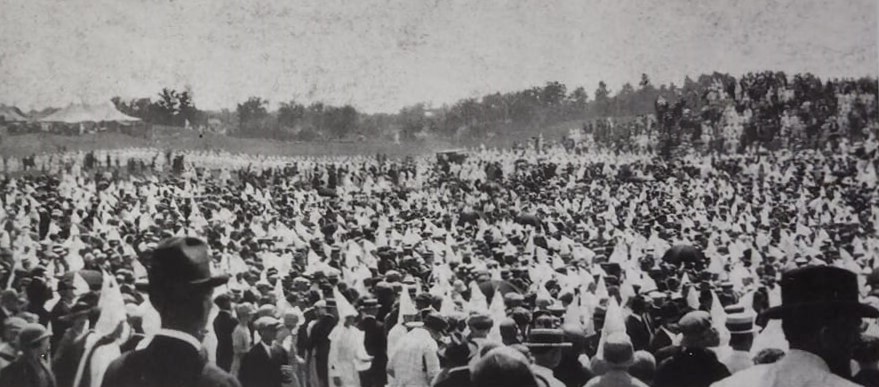
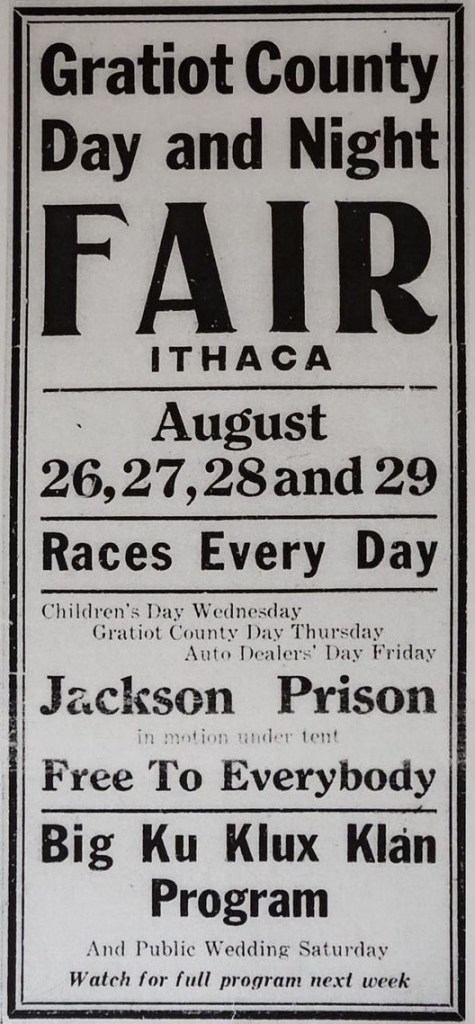
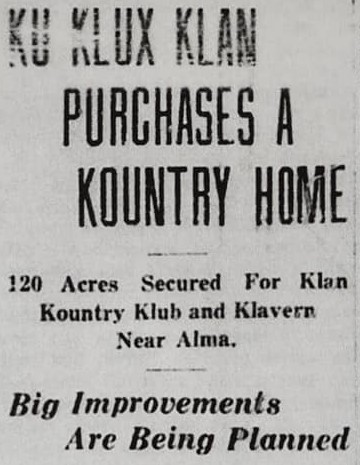
From the top, the Ku Klux Klan in Gratiot County: A Ku Klux Klan meeting takes place somewhere in the mid-Michigan area in the mid-1920s; The Gratiot County Fair held “Klan Day” and an official KKK wedding; Lewis J. King was one of a trio of so-called evangelists who came to Gratiot County under the auspices of the Klan. The three men would cause an uproar in the county before they left; A notice about the new Klan Kampground in Arcada Township.

The following is part two of a four part story concerning the Ku Klux Klan in Gratiot County during the 1920s – and a forgotten part of this county’s history which appeared one hundred years ago.

They called themselves the Invisible Empire of the Ku Klux Klan, Realm Number 24. If there was anything that many Gratiot County residents found out in the 1920s about the Ku Klux Klan, it was not invisible, and many people in the county were curious about it. This public interest was the case from 1924 to 1925 when the Klan peaked in popularity and attention within Gratiot County.

Starting in 1924, the KKK went on the offensive in southeast Gratiot by holding meetings at the packed Ashley Christian Church and a hall in Bannister, where hundreds also came. In this area of the county, the Klan attempted to intimidate and harass Catholics who were of Slovak, Czech, and Polish descent. The Klan then went and burned crosses on the property of both Father Nimrichter and the Slovacek family. The Slovaceks faced Klan members who came onto their property and threatened them to leave the community. In response, some Slovacek men used pitchforks to drive off these masked intruders.

The late summer and fall of 1924 witnessed more efforts by the Klan to try and convince people that it was growing in membership and as a movement. In August, “Klan Day” took place at the Ithaca Fair; anyone attending events at the fairgrounds could have their cars parked by Klan members. The Gratiot County Herald reported that earlier that day, over 12,000 people came into Ithaca to observe  200 Klansmen, many of whom were on horseback, lead a float with an Ithaca High School student on it dressed as Cupid. It was the largest number of people to assemble for a gathering in Ithaca until that time in history.

  The parade encouraged people to come to the grandstand that night to witness mid-Michigan’s first official “Klan wedding.”  At the beginning of the week, an article in the Gratiot County Herald informed anyone who wanted to buy the bride a gift about how they could do so. Reverend Leon May of the Forest Hill Church of Christ, a Klan member and Grand Kludd (state chaplain) of the Michigan KKK, performed the wedding. And yes, the couple purchased a valid marriage license.

The KKK soon received state and local attention when it announced the purchase of a 120-acre farm in Arcada Township to make it the first Ku Klux Klan Kountry Klub Klavern in Michigan. The klavern operated at that location for at least two years. One meeting in October 1925 attracted over 300 Klansmen, Klanswomen, Juniors, Tri-K girls, and American Krusaders. This entourage participated in picnics, golf,  tennis, and baseball games between Klan teams as far away as Lansing and Saginaw.

In July 1925, the ugliest incident in Gratiot County’s chapter of the KKK took place in Alma’s Wright Park. Three self-professed evangelists came to Alma from Indiana to conduct so-called religious revival meetings.   Afterward, Lewis J. King, George Garner, and R.C. Garner eventually left Alma in such turmoil that the after-effects of these “meetings” dragged on in Gratiot County for another sixteen months.

Most did not know that King and the Garners had been invited here by some county residents and that the trio had a long list of arrests across the Midwest for disorderly conduct, disturbing the peace, and being general nuisances. All happened wherever they went  for what they advertised in the name of “White, Anglo-Saxon, Protestant Christianity and One Hundred Percent Americanism.” The Gratiot County Ku Klux Klan showed its support for the three men by regularly attending their meetings in Alma in large numbers while in complete Klan dress. However, in Alma, it seemed that issues with the Klan were like a powder keg that was about to explode.

Copyright 2023 James M Goodspeed