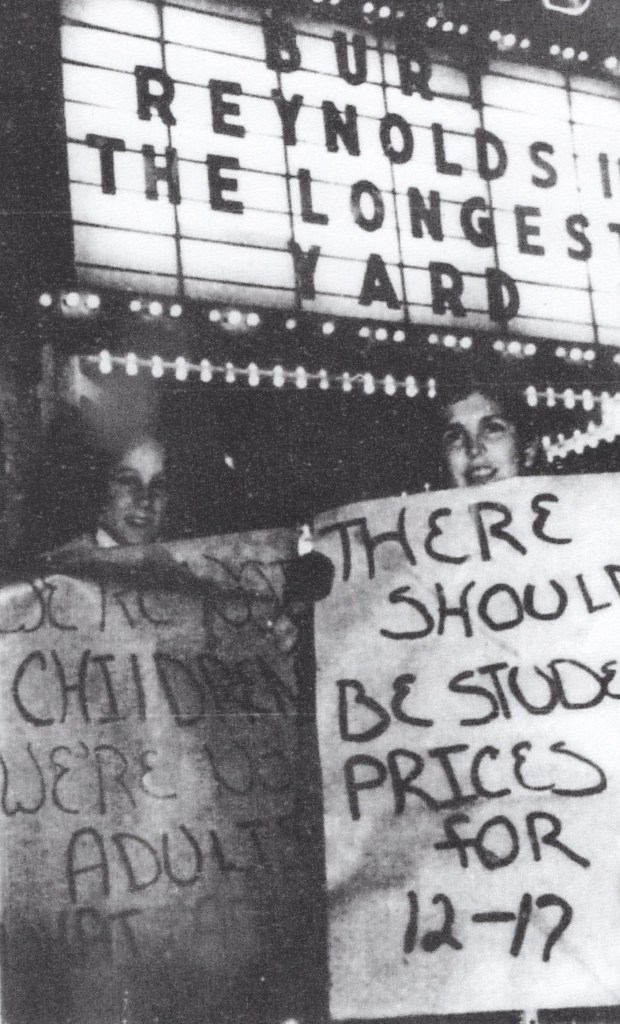
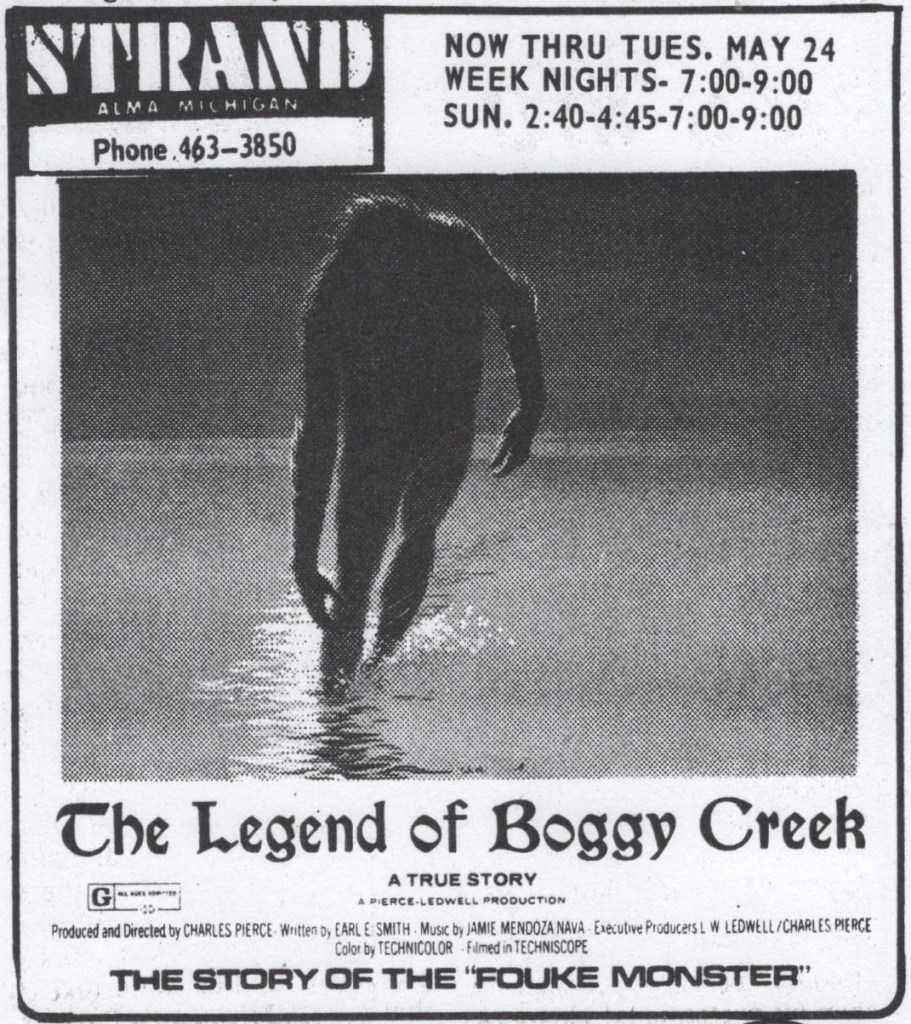

Alma’s Strand Theatre in the 1970s: in response to a belief that ticket prices should be adjusted for teens, Chris Tobin (left) and Barb Hunter, Alma Middle School students, led a picket. A total of fifty young people picketed the Strand on a Friday night in January 1975; movies like “The Legend of Boggy Creek” were among the first in a series of films and documentaries dealing with Big Foot in the 1970s; the coming of cable television to Gratiot County became one of the challenges to movie-going during the decade. “Jaws,” the first of the Hollywood summer blockbusters in 1975, debuted on cable in late July 1979.
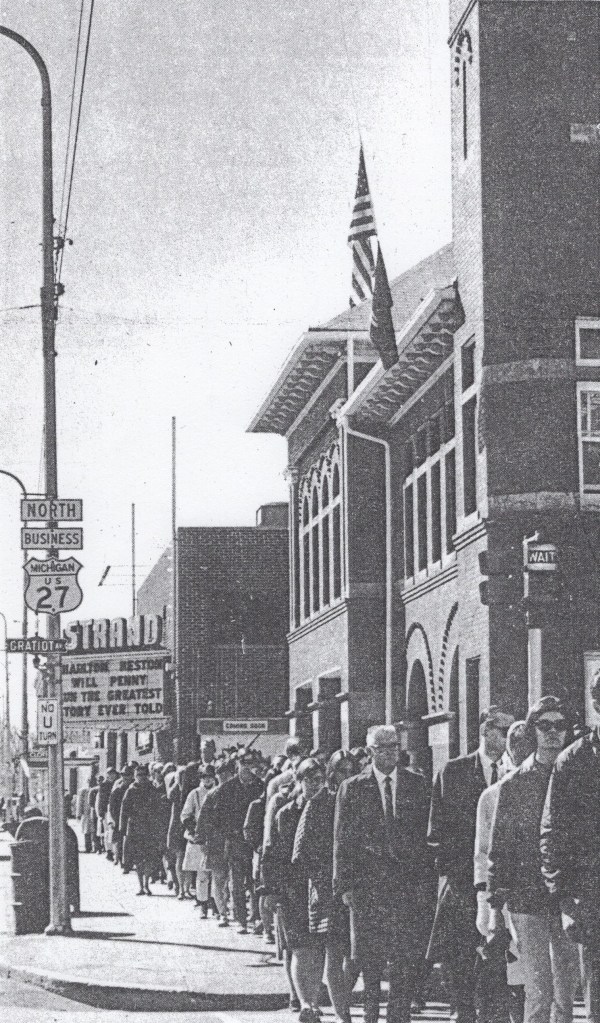
In 1970, one often saw long lines of Strand Theatre patrons that extended down the sidewalk on East Superior Street. Many nights, people waited to buy tickets for the next show or to be first in line after missing out on a previously sold-out movie. Despite the crowds, the Stand faced challenges that decade, like the emergence of the nationwide rating system and the playing of adult movies. Across the country, adult-rated movies drew large numbers of moviegoers and produced handsome profits for theatre owners. Many parents wanted a rating system and opposed showing adult movies in Gratiot County. The Strand Theatre also faced competition from places like the newly built Campus Twin Indoor Theatre in Mt. Pleasant and the nearly Skytop Drive-In west of St. Louis. New releases came faster to Mt. Pleasant, where people watched movies in the convenience of a modern theatre. In response to sparse attendance, owners of the Skytop started showing adult movies, and the number of cars skyrocketed. To keep up business, the Strand was tempted to show similar movies.
One event at the Strand in the 1970s centered around young viewers. In January 1975, two Alma Middle School students, Chris Tobin and Barb Hunter, led a group of fifty youngsters who protested the prices charged for 12-17-year-olds (the cost was $2.00 a ticket). The two girls and their group presented a petition to manager Harvey Freeman demanding that the Strand lower the price of tickets for these young people to a more median level. The group then went and picketed outside the Strand during “The Longest Yard,” which starred Burt Reynolds. The next day, newspapers reported that in response to the student’s demands, Freeman tore the petition up and then bluntly stated that there would be no price changes in tickets.
While many big movies of this decade came to Alma, most of the time, they appeared many months after their initial release. For example, “Jaws” (1976) did not arrive until six months after it debuted. In this case, a movie that created the “American Summer Blockbuster” took until December to be shown in Alma. An exception to this was “Star Wars,” which arrived only two months late in July 1917 and played for three weeks (the same movie played for thirteen weeks in a row in Mt. Pleasant). Between the 1970s blockbusters, there were often reissues of older films, such as three showings of “Gone with the Wind,” which appeared between 1970 and 1974. Movies that featured Bigfoot documentaries also became a fad.
As the 1970s ended, community outcry arose over X-rated movies at the Sky-Top west of St. Louis, leading to petition drives and further opposition. Cable television competition became another problem for theatres and arrived in Alma in the summer of 1979. Another of the factors that marked the decline of the Strand was its scant movie advertising throughout the 1970s. After the attention-grabbing promotions of Keith Musser in the 1960s, if one wanted to see a movie at the Strand, now a person needed to call the theatre about show times. Different owners and managers also appeared to follow Musser after he sold the Strand. In a twist, the last movie shown in late December 1979 was entitled “Starting Over.” This Burt Reynolds movie foreshadowed what the Strand must do to stay in business. This final chapter of the theatre’s history, marked by more struggles, lasted throughout its final twelve years.
Copyright 2024 James M. Goodspeed


 Goodspeed's Gratiot County Historical Blog