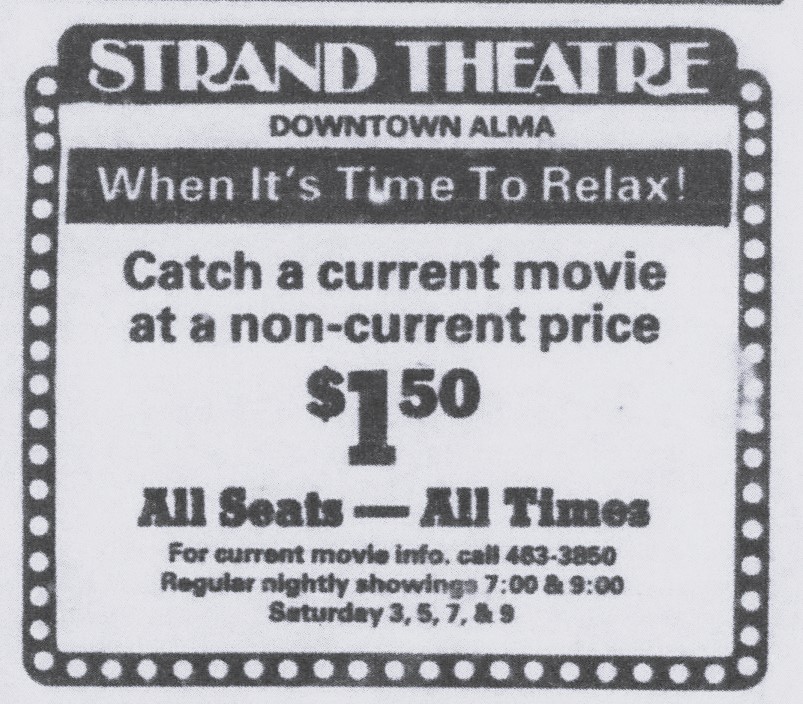
Above: Advertising on the Strand’s marquee told the story—decades of movie-going at the Strand Theatre ended in 1992; familiar Strand advertising from the 1980s until its closing.
It had been a long run, but in the early 1990s, over 75 years of movie-going ended in downtown Alma. At the start of the 1980s, the Strand Theatre faced severe challenges. First-run movies came late – if they played in Alma at all. In August 1981, Harrison Ford’s “Raiders of the Lost Ark” finally appeared nine weeks after being released in Mt. Pleasant. During Christmas 1981, the Strand closed for an entire month, although adults paid $3 and kids paid $1.25 to watch a movie. A year later, in 1982, the Strand started its policy of “All Seats All Shows for Only $1.50.” Even though these were generous ticket reductions, the VHS rental craze started, and soon, in the 1980s, one debated renting and watching a movie at home.
Determining who owned and managed the Strand during its last twenty years is a mystery, especially after owner Keith Musser died in the 1970s. Linda Apple became the Strand’s manager from 1981 to 1986; the theater had nine employees. By then, Apple reported that she only had five days’ notice to get a movie and could only plan showings two weeks in advance. Second runs were a norm then, except for an occasional big release like “Star Trek IV: The Voyage Home,” which debuted in December 1986 and had a large turnout. People knew that although ticket prices were low, prices remained high as concessionaires controlled the cost of candy, pop, and popcorn.
The end of the Strand appeared on the horizon by late March 1989. Steve A. Smith from S&R Investments announced that Alma would have a new $750,000 cinema complex in the Pine River Plaza, next to 300 Bowl. The idea of a new cinema corresponded to changes on Wright Avenue as it grew in the 1990s. A new Fisher Big Wheel store, restaurants like Taco Bell, and a new Wal-Mart came along. The new Alma Cinemas featured four screens, had a sign visible from US-27, and opened on September 15, 1989. The first movie shown at the Cinemas was “The Adventures of Milo and Otis.”
On February 16, 1992, a Sunday, the Strand closed its doors for good. For some time after this, a passerby wondered what would become of the old movie theatre with the marquee displaying a message that read “Closed.” However, another group had a dream for the Strand, and that came through the vision of the Gratiot County Players. They wanted the Strand but needed $80,000 from the owners, Craig and Kristin Naffziger. The Players pulled the deal together and showed old movies on weekends to help raise money to pay off their purchase. They eventually succeeded and held performances at the Strand several times each year.
A final goodbye to the movie days at the Strand took place on August 13, 2004. On that day, “Grand Slam at the Strand” was held as former workers and those associated with the Strand from the Depression through the 1950s showed up for a red carpet reunion. Interviews recalled the old days; visitors could leave handprints on the sidewalks. The grand old movie place, a fixture since its start in 1920, had this one last hurrah in Alma and Gratiot County. Looking back, it all began with the first movie at the Opera House. Alma’s movie history then played out with the Liberty, Idlehour, and Alma Theaters, in addition to two different Strand Theaters.
Copyright 2024 James M. Goodspeed
Did you know the Strand’s owners or managers from the 1970s to 1992? If so, please send me a note.
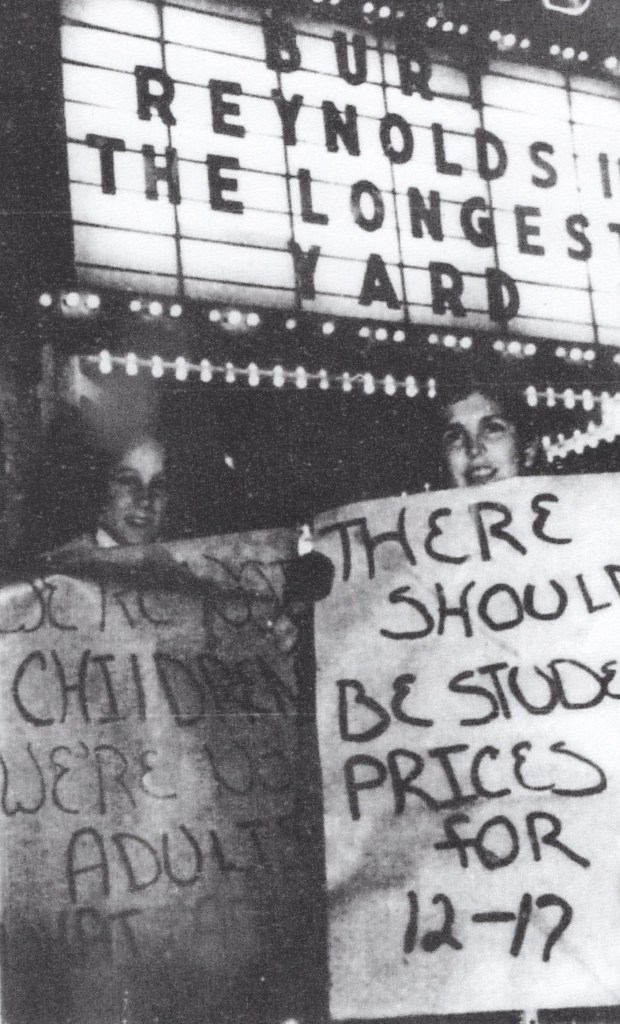
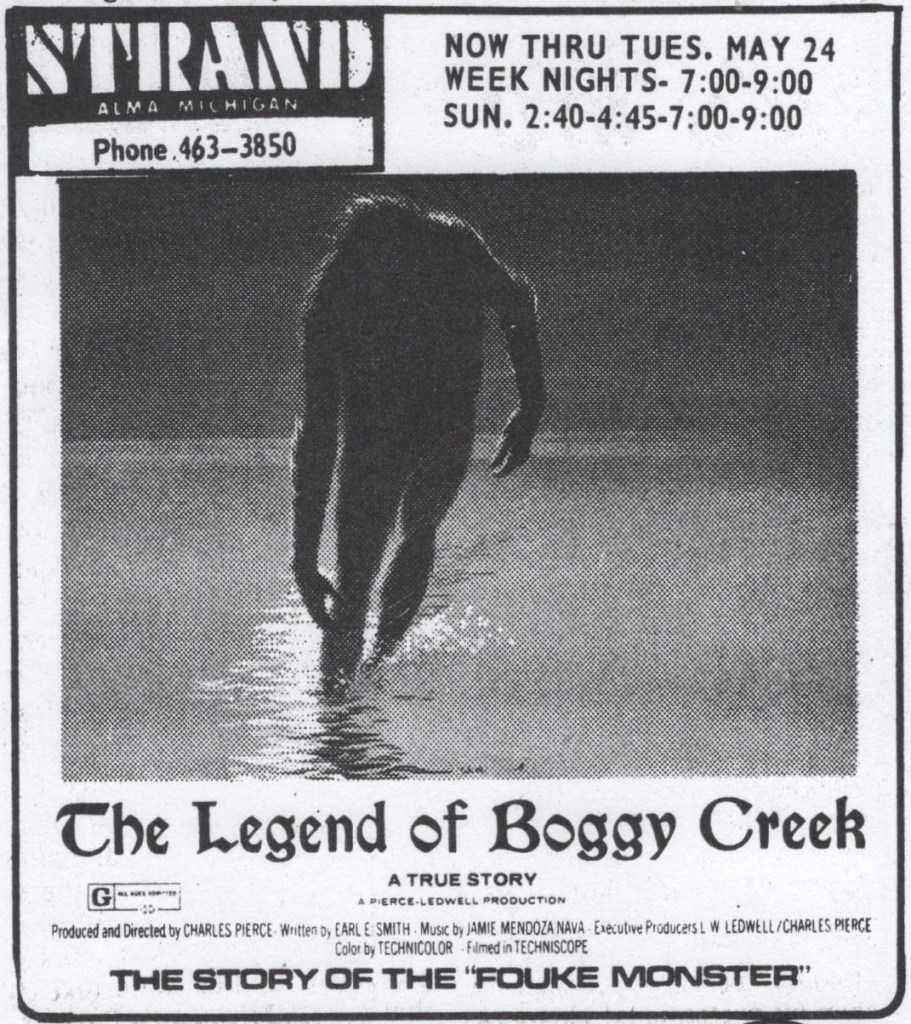
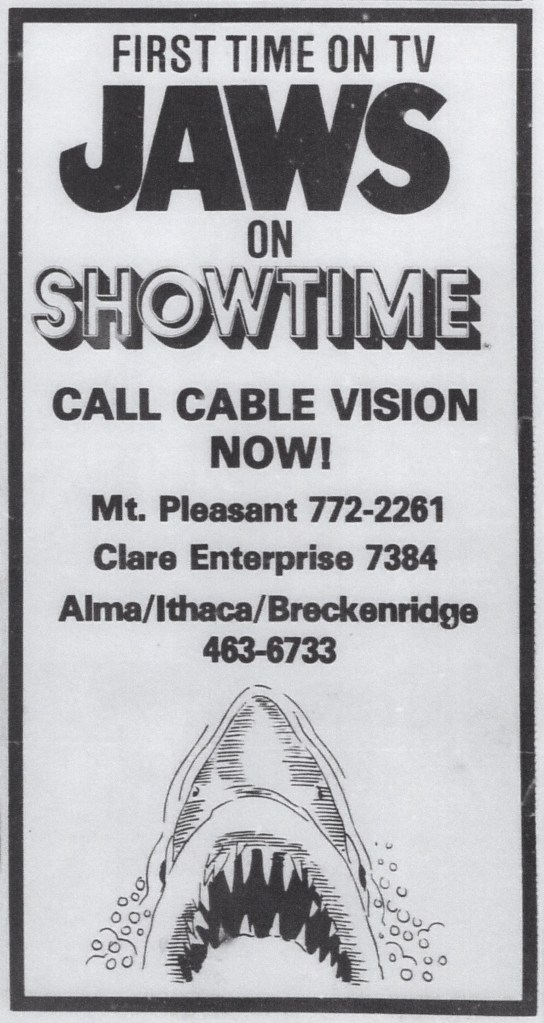
Alma’s Strand Theatre in the 1970s: in response to a belief that ticket prices should be adjusted for teens, Chris Tobin (left) and Barb Hunter, Alma Middle School students, led a picket. A total of fifty young people picketed the Strand on a Friday night in January 1975; movies like “The Legend of Boggy Creek” were among the first in a series of films and documentaries dealing with Big Foot in the 1970s; the coming of cable television to Gratiot County became one of the challenges to movie-going during the decade. “Jaws,” the first of the Hollywood summer blockbusters in 1975, debuted on cable in late July 1979.
In 1970, one often saw long lines of Strand Theatre patrons that extended down the sidewalk on East Superior Street. Many nights, people waited to buy tickets for the next show or to be first in line after missing out on a previously sold-out movie. Despite the crowds, the Stand faced challenges that decade, like the emergence of the nationwide rating system and the playing of adult movies. Across the country, adult-rated movies drew large numbers of moviegoers and produced handsome profits for theatre owners. Many parents wanted a rating system and opposed showing adult movies in Gratiot County. The Strand Theatre also faced competition from places like the newly built Campus Twin Indoor Theatre in Mt. Pleasant and the nearly Skytop Drive-In west of St. Louis. New releases came faster to Mt. Pleasant, where people watched movies in the convenience of a modern theatre. In response to sparse attendance, owners of the Skytop started showing adult movies, and the number of cars skyrocketed. To keep up business, the Strand was tempted to show similar movies.
One event at the Strand in the 1970s centered around young viewers. In January 1975, two Alma Middle School students, Chris Tobin and Barb Hunter, led a group of fifty youngsters who protested the prices charged for 12-17-year-olds (the cost was $2.00 a ticket). The two girls and their group presented a petition to manager Harvey Freeman demanding that the Strand lower the price of tickets for these young people to a more median level. The group then went and picketed outside the Strand during “The Longest Yard,” which starred Burt Reynolds. The next day, newspapers reported that in response to the student’s demands, Freeman tore the petition up and then bluntly stated that there would be no price changes in tickets.
While many big movies of this decade came to Alma, most of the time, they appeared many months after their initial release. For example, “Jaws” (1976) did not arrive until six months after it debuted. In this case, a movie that created the “American Summer Blockbuster” took until December to be shown in Alma. An exception to this was “Star Wars,” which arrived only two months late in July 1917 and played for three weeks (the same movie played for thirteen weeks in a row in Mt. Pleasant). Between the 1970s blockbusters, there were often reissues of older films, such as three showings of “Gone with the Wind,” which appeared between 1970 and 1974. Movies that featured Bigfoot documentaries also became a fad.
As the 1970s ended, community outcry arose over X-rated movies at the Sky-Top west of St. Louis, leading to petition drives and further opposition. Cable television competition became another problem for theatres and arrived in Alma in the summer of 1979. Another of the factors that marked the decline of the Strand was its scant movie advertising throughout the 1970s. After the attention-grabbing promotions of Keith Musser in the 1960s, if one wanted to see a movie at the Strand, now a person needed to call the theatre about show times. Different owners and managers also appeared to follow Musser after he sold the Strand. In a twist, the last movie shown in late December 1979 was entitled “Starting Over.” This Burt Reynolds movie foreshadowed what the Strand must do to stay in business. This final chapter of the theatre’s history, marked by more struggles, lasted throughout its final twelve years.
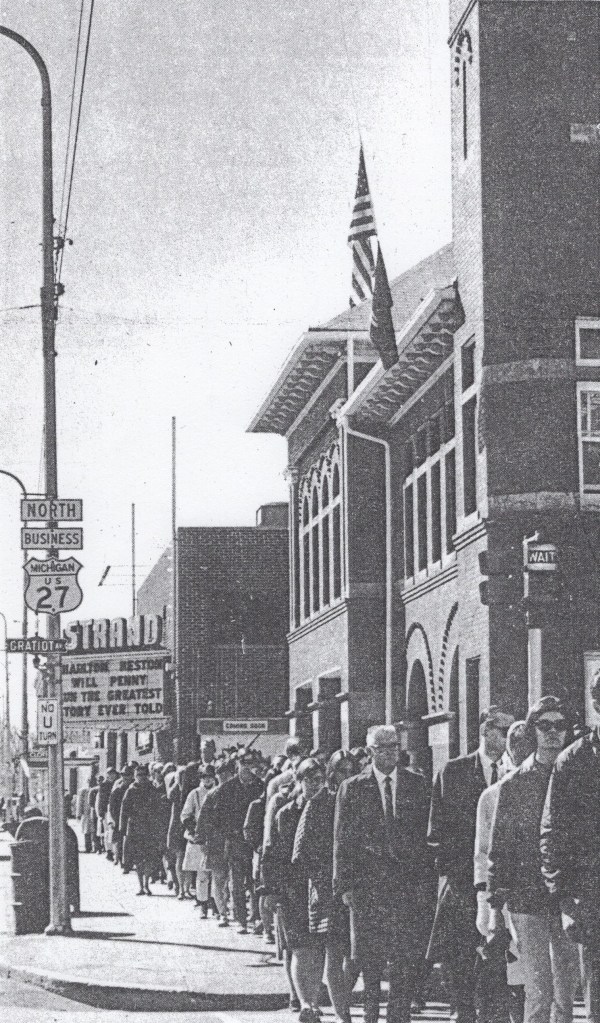
The Strand Theatre in the 1960s from the top: Keith Musser became the owner of the new Strand Theatre in 1962. One of the improvements in the new Strand was his installation of two 800,000-candle power projectors; Musser’s gift at movie promotions worked in Alma. Here, a group engages in a “Twist contest” in front of the Strand in late April 1962; “HELP!” was the call that drew many teens to see the Beatles’ first movie in late October 1965; the changing times and conflicts of the 1960s can be seen in this memorial service walk conducted by over 200 Alma College students and faculty members in front of the Strand and City Hall. All silently recognized the tragic assassination of Reverend Dr. Martin Luther King, Jr. in early April 1968. The walk stopped the traffic in downtown Alma for a few minutes without incident.
After opening in the late winter of 1962, owner Keith Musser sought ways to draw people to Alma’s new Strand Theatre. Musser’s efforts as a promoter and showing of memorable movies continued throughout the changing times of the 1960s.
In many ways, the Strand Theatre during this decade could be called “The Era of Keith Musser.” In one of his first promotions after purchasing the Strand, Musser started a “Twist Contest” in May 1962, where female contestants stepped onto a large platform in front of city hall. The first round of the “Twist-off Contest” coincided with the debut of the movie “Twist All Night.” WFYC radio broadcasted the contest finals, and winners received $25 in cash prizes. The next night, Greening’s Chevrolet Buick gave away a “beautiful jalopy” for anyone who could guess the nearest mileage on the old car. A year later, Musser hired magician Dennis Loomis to escape from a straitjacket while hanging upside down in front of the Strand.
In April 1965, Musser hyped the debut of a new James Bond movie by having a yellow convertible on loan from Mike Pung with the movie title “GOLDFINGER” hanging on the sides. The car also had four lovely girls inside, and the vehicle paraded around Alma. For Christmas 1965, Musser again displayed the Ruskovic Mastodon bones, found in Emerson Township in the 1950s, to the public. Two years later, Musser held a contest where only “red-blooded” teenage boys could win a date with “a real live girl bomb.” He then added that the Strand was “not responsible for explosions.” There were also children’s draws on Saturdays, like when Channel 6 sent His Honor the Mayor and Al E. Khatt to perform live on stage. All of these promotions appeared in local newspapers and sought to draw people to the Strand.
During this decade, the Strand made many improvements inside, such as investing in an 800,000-candle power projector to show Cinemascope and widescreen movies. Musser also installed new drapes in the theatre and purchased a new popcorn popper. He then gave away free popcorn to those passing by the theatre. Free movie passes appeared for contests and giveaways through local newspapers. Twice, on opening night, the Strand invited the public to meet actors who starred in films that were showing, like “Hawaii” and “The Green Berets.”
To those who saw them, movies at the Strand during the 1960s regularly depicted America’s ongoing social changes. In late October 1965, the Beatles starred in “Help!” Musser wanted adults to attend and sarcastically guaranteed that teenagers would not scream during the movie. “My Fair Lady” (1966) was a successful musical comedy movie with solid appeal. So was “The Sound of Music,” which ran for three weeks straight in 1967 and was one of the longest runs at the Strand during the decade. A year later, a movie addressed America’s racial issues in “Guess Who’s Coming to Dinner?” It played one month before the assassination of the Rev. Dr. Martin Luther King, Jr.
Sometimes, trying to show different kinds of movies brought about conflicts in Alma. In October 1968, the Strand started showing adult movies, and when “Ulysses” appeared, the movie was met with public opposition. That night, many Alma College students got up and walked out due to the movie’s excessive use of profanity. In response to the walkouts, Musser immediately canceled the show and replaced it with a rerelease of “The Sound of Music.” A year later, the Strand showed its first “X” rated movie, “Midnight Cowboy.” Letters supporting and demanding the use of the nation’s first movie rating system soon poured into the newspapers. All of these letters opposed the showing of adult movies in Alma. While some writers strongly urged parents to screen films before allowing their children and young people to see them, many Gratiot County residents wanted the X-rated movies banned entirely.
Yet, as the decade of the 1960s closed, the Strand Theatre had seen its best days regarding movie attendance. As the 1970s approached, a slow decline began, from which the Strand, like other movie theatres in America, ultimately would not recover.
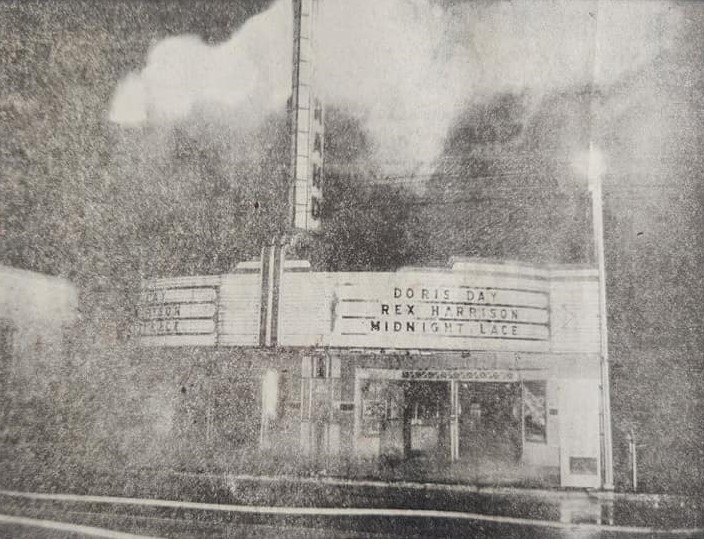
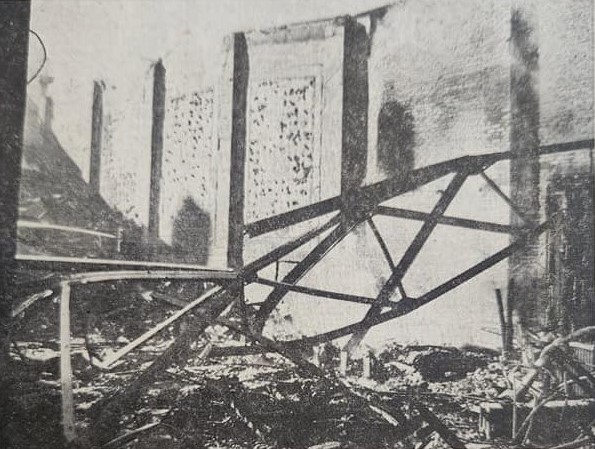
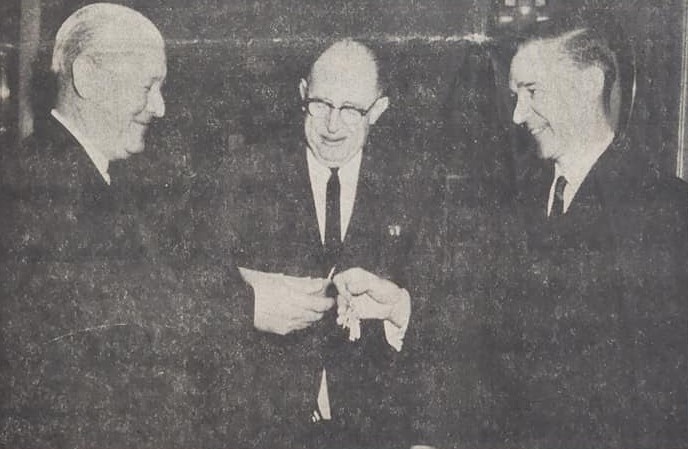
Above from top: Fire consumes the Strand Theatre on the early morning of November 7, 1960. Even though fire as soon detected, the theatre went up in smoke and could not be saved. Forty years of movie going at this location appeared to have ended on that date; the wreckage and rubble of the Strand would rest on the site for more than a year, creating a public eyesore in Alma; a photo of the new Strand Theatre as it approached its opening in mid-January 1962; new theatre oner Keith Musser (left) had been manager of the Strand for six years in the 1950s. A forty year veteran as a theatre operator, Musser was the man to help put the Strand back on Alma’s map – and got people to come to the movies. Musser accepts the keys from builder A. Carl Schmidt of Hillsdale. In the center is J. Donald Sullivan who was the building inspector in Alma.
Alma lost a well-known place the day before one of the closest Presidential elections in American history.
It was 4:23 a.m. on Monday, November 7, 1960, when John Zigray, a newspaper boy, saw flames and smoke shooting from the rear of Alma’s Strand Theatre. Zigray ran around the corner to the Alma police station to report the fire, and the alarm rang five minutes later. However, in only a short time, the flames shot up 25 to 30 feet above the roof when the first fire truck arrived. By 7:00 a.m., the fire was nearly out, but the interior of the Strand was gone, resulting in over $100,000 in damages. In addition, fireman James Peck fell from a ladder and was treated for chest injuries while putting out the flames.
Although the fire started in the rear of the building, the Strand’s walls failed to collapse. Many who saw the theatre the next day marveled that the marquee remained, hanging dangerously over the sidewalk. The following afternoon, a crane came with a wrecking ball to take down the marquee for fear of it being a public hazard. Alma City Hall remained undamaged, probably due to the double brick walls adjoining the Strand. However, as the Strand’s remains slowly cooled, a pile of debris formed that sat on the premises for months to come.
Before the fire, the Strand Theatre showed movies in Alma for forty years; now, more was needed to build a new theatre in 1960. In response to not having a theatre in Alma, the city quickly supported showing Saturday movies at the Alma Community Center. In April 1961, owner Dolores Cassady offered the city thirty days to purchase the Strand’s 53-foot lot for $25,000. City commissioners quickly replied that the price was too high and gave Cassady thirty days to clean up the remaining debris.
In late June 1961, Carl Schmidt, a Hillsdale contractor and former theatre manager, bought the property to rebuild the Strand. He quickly proposed an “escrow plan” to see how badly Alma movie patrons wanted a new theatre. For $25, anyone could buy advance tickets for 52 future movies. If sales were poor, Schmidt proposed turning the property into a retail store. Fortunately for Alma moviegoers, Schmidt went ahead with his plans to rebuild the theatre. Although the opening date for the new Strand was moved back several times, on Thursday, February 1, 1962, almost fifteen months after the fire, a new Strand Theatre debuted in Alma.
Carl Schmidt surprised many in Alma when he announced that he sold the new building just one month later to Keith Musser, a former manager with ties to the old Strand. Musser was experienced with movie theatres and had many ideas about getting people to the movies. Given the city’s desire for a new theatre, Musser appeared to be the right man at the right time.
This time, the new Strand had only 600 seats and no longer had a balcony. It did have a cry room, party room, wider seats, new projectors, and a screen measuring 36 feet. After Alma Mayor Robert Anthony cut the ribbon on opening night, viewers watched a drama, “Madison Avenue,” and “Swinging Along,” a musical comedy. The first big blockbuster to appear at the Strand took place a month later, on March 8, 1962, with the premiere of “Spartacus,” starring Kirk Douglas. The Strand Theatre was back in business and showed movies in downtown Alma again for the next thirty years.
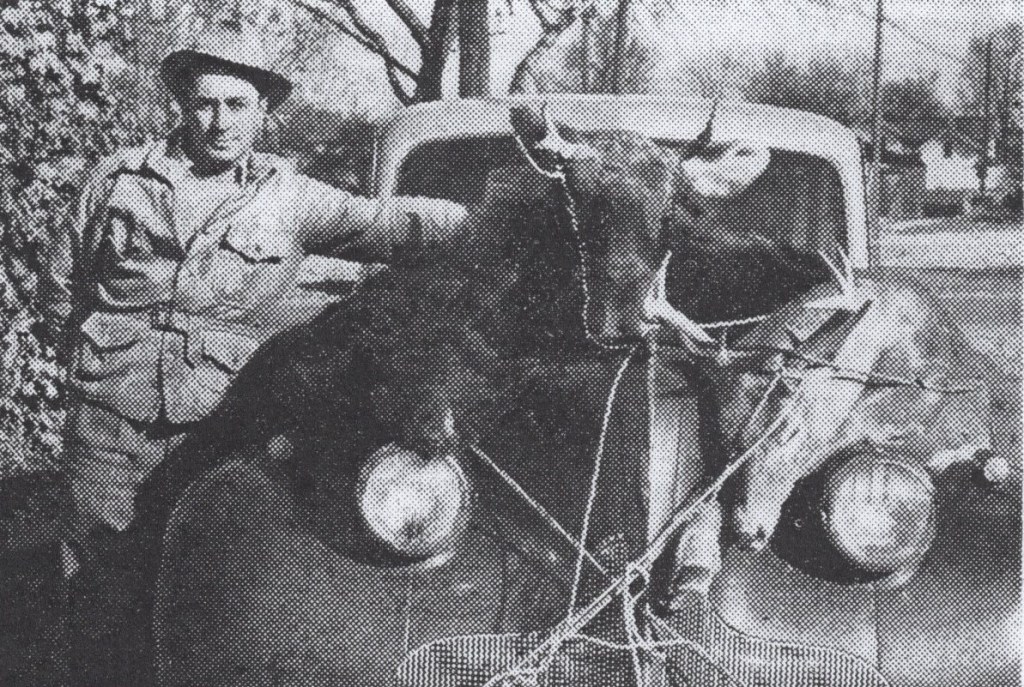
People and events from November 1939 from the top: Arthur Williams of Ithaca brought home the really big game from hunting season. His moose, bear and deer were all shot while hunting in Canada; the death of Perrinton Civil War veteran John Beckwith now meant that according to the news, only one Civil War veteran remained in the county; Thanksgiving approached and anyone not eating dinner at home could find a dinner at the State Sweet Shop in Alma – for only 45 cents; Hitler and Stalin claim do they do want war with each other – history will prove otherwise.
The harvest season was over, the holidays were approaching, and life continued in Gratiot County. Most of the news centered on how people lived in the county. The Depression went on – a second world war was going on in Europe.
It was November 1939 in Gratiot County.
The DepressionMoves Along
Dr. Francis Townsend, the father of the Townsend Movement, planned to speak in Saginaw, and many Gratiot residents went to hear him. Townsend advocated the idea of an old-age pension, so Townsend Clubs sprang up across the nation. Gratiot County Townsend Club members who sought to hear “the apostle of the old-age pension plan” were urged to attend this meeting – and many did.
Members of the Gratiot County Social Welfare Commission waited for the results of an audit to know how much money existed in the state books of the Emergency Relief Administration. On December 1, the commission took over the responsibility of ERA, and the county audit had to be approved by the Gratiot Board of Supervisors to know the status of funds. This commission consisted of C.J. Chambers, Dan McCuaig, and Earl Davis, and the three men had been overseeing the costs of the county’s poor farm since November 1. Now, they were responsible for all emergency relief cases and hospitalization of indigents. As a result, the state and federal law changes all meant more responsibility on the county level concerning welfare.
By the end of November, 46 young people in Gratiot County had employment with Michigan National Youth Administration work projects. Statewide, a total of 10,917 youth were involved. These youth, between the ages of 18 and 24, had part-time jobs such as working on road and street improvements, in educational buildings, on and around public grounds, working on recreational buildings, sewing, resident projects, nursery schools, and homemaking, to name only a few. Gratiot boys aged 17 to 23 could also apply at the Gratiot County Welfare Office at 614 East Superior in Alma for enrollment in the Civilian Conservation camps. Interested boys needed to apply by early December.
War News
As the war continued in Europe, Captain Charles E. Hixon of the Military Department, Field Artillery, Michigan State College, came to Ithaca to discuss defense preparation. Hixon wanted to address how the ROTC planned to play a part in national defense. His talk took place at the Ithaca Mason Temple.
A recruiting party from Fort Wayne visited Gratiot County November 8-10 at the Ithaca Armory. The War Department, with the support of President Roosevelt, now wanted hundreds of young men to be enlisted. One local volunteer, Harold L. Overmier of Ithaca, joined the Navy. The War Department’s goal was to raise army strength to 227,000 nationwide.
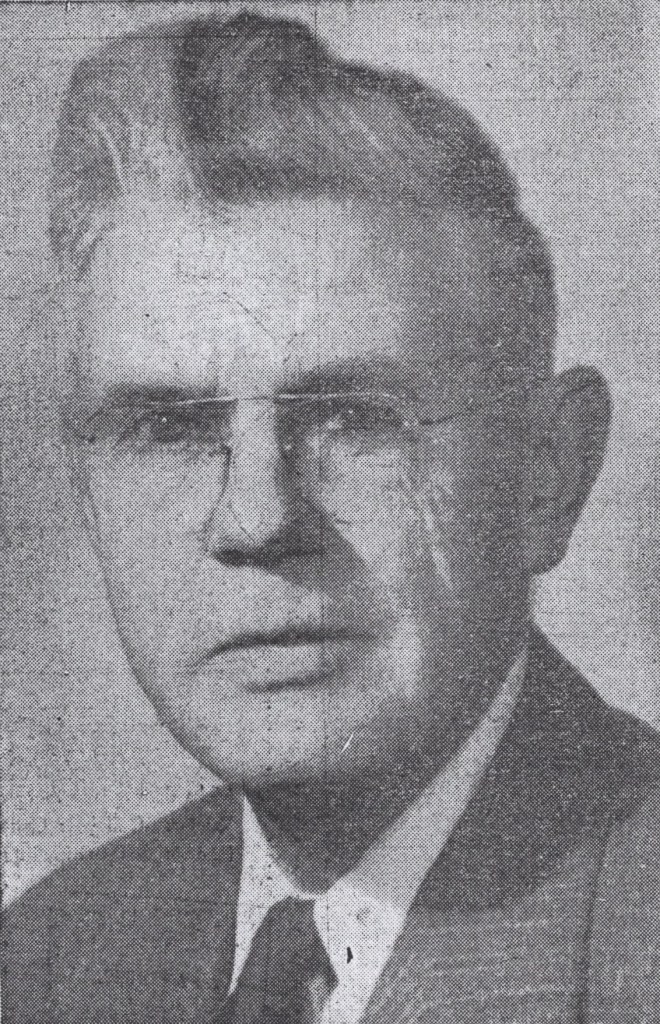
Gratiot County lost its next to the last Civil War veteran when John Beckwith of Perrinton passed at 88. Beckwith, then from Muir, joined the Grand Army of the Republic at 13 and joined Company E (re-organized), Third Infantry, on September 15, 1864. Although Muir did not see the most challenging part of the war, he served in Tennessee, Alabama, and Texas – where he mustered out on May 25, 1866. Beckwith had been a resident of Perrinton for 52 years. This death left only Jasper Norton, age 94, of Elm Hall as the county’s last tie to the Civil War.
Holiday Seasons Arrive
The holidays were in the news in November 1939, even though it rained and snowed on Halloween in Gratiot County. However, in Alma, a Halloween celebration occurred at the Alma Fire Department as youths downed 1,800 doughnuts and drank 100 gallons of cider that Tuesday night. Initially set for Tourist Park, city leaders moved the fire to the fire department, and it went off without a problem. At the fire station, a long line of youngsters came in one door and exited another, and they could eat and drink all they wished. Over in St. Louis, the city still held a costume parade led by the high school band. The St. Louis City Council provided refreshments. In Ithaca, another Halloween parade occurred, and afterward, youths met at the high school auditorium to listen to the high school music department provide music while they received their treats. Station PHEW broadcaster Duane Mellinger oversaw the ceremonies for several hundred boys and girls who came. Halloween parties also took place in other places. The Gratiot County Junior Farm Bureau held its party at the Beebe Hall. At the same time, the Northside Jolly Neighbors in St. Louis met at the M.J. Ingold home on North Seaman Street. A total of 25 attended the party. Mrs. Hugh McLaren won first prize for best costume.
As Thanksgiving neared, the state turkey tour visited ten turkey farms in Gratiot and Clinton counties. A highlight was a stop at the Clark Howland farm in Newark Township, which featured a short talk and dinner. The 75 turkey growers on the tour saw 12,500 turkeys.
By the end of November, places like Alma and Ithaca prepared for Christmas. Santa arrived in Alma on Friday, November 24. Crowds of children lined up in front of the Strand Theatre an hour before Santa appeared. Soon, St. Nick appeared in a sleigh mounted on a red truck, and a police escort had to get him through the crowds and inside. Every seat in the theatre was occupied, with children even sitting on the steps in the aisles. Santa happily gave out free “noise makers” to each in attendance. Then, the audience watched a series of free cartoons courtesy of Strand Theatre manager Victor A. Jaeckel. Starting soon after Thanksgiving, Salvation Army kettles appeared on Superior Street on Saturdays. The city also prepared to help needy families at Christmas as organizations and people gave for Yule Benevolences. Mid-West Refineries gave $50 for Christmas baskets and asked for the names of twenty families to provide gifts for Christmas. Others, like the Alma Teachers’ Club, gave $25, while the Alma Red Cross gave $50 to buy 20 pairs of new shoes for those needy children.
Ithaca began the Christmas season by planning for its Home Lighting and Decorating contest. Roland Crawford headed a committee establishing rules for participants in the 1939 Christmas season. All residents participated in decorating their homes with pleasing displays. The Ithaca Chamber of Commerce planned to decorate the downtown area with individual Christmas trees, each having strings of 24 lights. A large lighted “Merry Christmas” sign greeted visitors on East Center and North Pine streets. The annual Window Night program occurred on Friday, December 1, and a fire whistle blew at 7 o’clock to signal everyone downtown to turn on their Christmas lights. A program took place that night at the bandstand, located east of city hall. Here, Santa arrived, led by the Ithaca High School band. Following a Community Sing, those in attendance were eligible for up to 50 prizes given away by area merchants. Also, at that time, the Ithaca Santa Claus Club prepared to help those who might not have a Christmas. The club asked for new and discarded toys and clothing donations, which could be left at Ginther’s Garage.
The Long Arm of the Law
In November 1939, Gratiot County heard about criminal behavior, from more minor crimes to those that shocked the community. One only needed to read the county newspapers to find out what crimes occurred.
L.E. Grice and his wife were arrested for violating the Horton Trespass Law. Grice cut across the corner of the Nathaniel Thibaudeau farm in North Star while looking for bittersweet. The two were reported and cited for trespassing. L.E. Grice paid $10 and costs. Game violators faced different charges that fall. A group of ten officers from the state conservation department put up a blockade on US-27, two miles north of Ithaca. It resulted in finding two men from Tecumseh who had dressed venison, a result of shooting deer out of season near Beaverton. They paid fines and costs of $58.85 to avoid jail time. A River Rouge man was found with dressed hen pheasants. He paid $16.85 in penalties and fees.
Then, there were other types of arrests. Cornelius W. Eichorn of Beebe had his driver’s license revoked for six months after hitting a tree between Alma and Ithaca. Due to insufficient funds, Beatrice Piggott of St. Louis was arrested for passing a bad check to Alfred Wolansky of North Star for $14.20. She was scheduled for trial on December 2. George Dickerson of Sumner Township refused to buy a license tag for his dog for $1. When told that he had to pay $2 for being late, Dickerson went to Isabella County to buy a license for a lesser fee. Gratiot officials refused to honor the Isabella license, arrested Dickerson, and he had to pay $10.15 for fines, penalties, and a new license. Failure to do so meant Dickerson faced ten days in jail. Dickerson paid the fine.
A family of four in Washington Township made the news because of charges of concealing stolen property. Jesse and Retha Goins and their two sons were arrested for concealing stolen property from the Beck Farm in Clinton Township. Gaylord Beck discovered that the Goins family had 16 crates inside their kitchen with his name on them. When police investigated, they found 71 crates in a shed, with another 200 empty crates packed overhead. The stories about the existence of the apples told by each family member varied, and the sheriff arrested Jesse Goins and his oldest son. The bond was set at $200.
Thievery was always a problem for the law, and safe robbery, which was common in Gratiot County gas stations, continued. Two filling stations, one each in St. Louis and Breckenridge, were hit nearly simultaneously, and $285 was missing. At Bottum Brothers in St. Louis, the safe, which weighed 700 pounds, was hauled to a doorway and then abandoned. The thieves then sought to chisel off the door and saw off the hinges. At Breckenridge’s Hi-Speed Station, thieves got in through a ventilator next to the lady’s room, tore away a York safe, and pulled it off the wall. The criminals then rolled the safe to an alley, where the thieves loaded it. The safe was located two miles north of St. Louis a day later. Justice was delivered in another case where detectives in St. Louis and Mt. Pleasant arrested two Gratiot robbers. Gerald Brown and Archie Clawson robbed a gas station in late 1938 and made off with $54. The station owner, who tried to stop the robbery, was slugged from behind. After being apprehended, the pair awaited trial in Clare County Circuit Court. Two boys, one from Seville Township and another who lived near the Gratiot County line, were arrested and given a week in jail for breaking into the toolbox on a tractor that belonged to the Gratiot County Road Commission. James Cobb and William Pratt made off with $40 worth of tools. The court ordered the two to make restitution, and probation was deemed conditional until the boys paid for six sheep they stole from the William Moody farm near Forest Hill in August.
Crimes of a sexual nature also appeared in the news. A new Michigan law dealing with criminal sexual psychopathic cases meant that Judge Kelly Searl ordered two men to the Michigan State Hospital Commission. The two men, one from Vestaburg, arrested for criminal sexual assault, and the other from Wheeler, charged with indecent exposure, came before Judge Searl. Under the new law, both men were sentenced for no specific period or institution. The two remained in the Gratiot County jail until called by the commission. An Elm Hall man was also charged with committing a crime against nature, and his bond was set at $300. He remained in the county jail. A Mexican worker from Beebe received one year’s probation for a charge of rape. He petitioned Judge Searl to return to Texas and was granted leave.
Harvest, End of Season, Hunting, and Gratiot County
Although harvest season ended in the county, farm-related activities continued. Charles Krepps of Wheeler hosted an organizational meeting at his home to form a Farm Bureau Chapter. After a mixer, some talks, and a fine potluck meal, the new South Wheeler Community Farm Bureau pledged to meet regularly on the fourth Wednesday of each month. The group elected Krepps as its president.
Several Gratiot County Agricultural Conservation farm reporters spread across the county to determine how much wheat acreage would be planned for 1940. The survey also helped the county to determine how many farmers would be eligible for 1940 wheat parity payments.
The sixth annual meeting of the Production Credit Association took place on October 27 at the Strand Theatre in Alma. Three hundred sixty-one people elected three directors and listened to talks by PCA special representative from Minnesota and C.P. Milham, Gratiot County’s agricultural agent. Leon Tolversen, the special representative, held a surprise quiz program for ten selected farmers from across the county. The farmers formed five teams, and the one who answered the correct questions about PCA’s operation received a prize of five dollars.
The Alma Chamber of Commerce offered its annual Alma Farmers Institute program at the Strand on December 7. Mayor Earl Walker and Chamber Vice President Rex Babcock planned to speak to an estimated 600-800 people, followed by talks by C. P. Milham, county extension agent. The Ford German Band, provided by Ford Motor Company, provided entertaining music, and attendees watched a recent Michigan-Michigan State football game film. Each person who attended the institute received a ticket for a free dinner provided by one of several Alma restaurants.
In other farm-related news, Gratiot County 4-H members raised or processed over $12,000 in products from summer clubs with a net profit of nearly $4,000. Harry Johnson of Ithaca moved Johnson’s Power Farm Equipment Store from the Nelson Produce Building one half mile east to a new location. The new store sat on 160 acres of land purchased from George O. Davis, also called the old Long Farm. This new building measured 40 feet by 88 feet and consisted of double tile. Harry Johnson’s three sons, Woodrow, Lyle, and Randall, all who worked with him in the business. Balmoral Patricia, an Ayrshire owned by James S. Davidson of Balmoral Farms, Ithaca, came home safely from the New York World’s Fair. Balmoral Patricia was one of the performers in Borden Company’s World of Tomorrow.
A pair of barn fires took place in the county that November. Donald Oakes lost his large barn in Lafayette Township and its contents for a total loss of $3500. He had insurance to cover $2600. Fortunately, the Breckenridge Fire Department saved the house and other buildings. The fire was deemed to be of undetermined origin. Harold Sandel of Elwell lost his two-story frame house in a fire from a defective chimney. The ten-room house quickly rose in flames, but neighbors helped Sandel retrieve most of his household items.
On a lighter note, it was hunting season, and many Gratiot residents went after wild game.T. Jefferson Hoxie and George Hart enjoyed a pheasant dinner at the Fuller home west of Alma. Bigger game meant that most Gratiot hunters went north to get their big buck. James McWilliams of Ithaca, Morris Eastment of Alma, and Rollie Teachworth of Emerson got deer on opening morning in Roscommon and Midland County. Arthur Williams of Ithaca came home with the real big game – a moose, deer, and a bear – all shot while hunting for five days in Canada. Williams showed off his collection to the Gratiot County Herald office. Two pheasant hunters brought in the first reported red fox of the season. Cyril Tugan shot one on the old Cutter Farm southeast of Ithaca, while Paul Beck got one south of North Star on the Mike Reeb farm. One of the animals possibly escaped its enclosure on Bob Budge’s farm a week earlier. Orrin Moon of Pompeii shot a third one south of Pompeii on a Sunday. A resolution was made by the Gratiot County Council of Churches and Sunday Schools to end Sunday hunting and headed to the Gratiot County Board of Supervisors. Unfortunately, the only way that this ban could occur would be if the Board took up an enabling act after a referendum vote and approval by the state legislature. Gratiot County hoped more local hunting would happen as the state planned to set up a wildlife restoration area in eastern Gratiot and western Saginaw counties. A public hunting area of 19,000 acres would be mainly acquired from tax-delinquent properties.
And So We Do Not Forget…
The Ithaca High School Senior Class performed “Wings of the Morning” on December 6 in the gymnasium. Admission was 25 cents…2,100 Alma School children enjoyed Thanksgiving Break from Wednesday afternoon through Thanksgiving weekend. Many teachers were expected to leave Alma to return to their families for Thanksgiving…Alma Postmaster Joseph L. Winslow urged the Alma public on November 23 to mail Christmas tokens early for those who lived out of town…the Middleton Ladies Aid Society planned their annual December fair. Mrs. Orville Miller led a group in creating ready-to-wear aprons…Pastor Albert J. Anthony of First Presbyterian Church in Alma spoke about his military service during the World War at the Alma Rotary Club…A Riverdale family experienced thirteen cases of smallpox. Dr. William Guinard, village health officer, believed that the outbreak was under control and milk delivery to Riverdale continued. Guinard urged anyone who did not have the smallpox vaccine to visit their physician and obtain a precautionary treatment…Rathbone pioneer E.M. Becker died at the age of 88. Becker lived in Lafayette Township for 74 years, held nearly every township office during his lifetime, as well as postmaster. He also helped to build the first church and school in Rathbone…the Alma city commission agreed to remove the Pere Marquette railroad bridge over the old mill race at State and Woodworth Streets. A sidetrack to Home Lumber and Fuel Company would remain intact…Alma High School students listened to an Armistice speech by Dr. W.E. Kaufmann from Alma College.
The Alma Chamber of Commerce adopted a resolution urging the creation of a community center. Reid Brazell, Paul R. Cash, and Rex A. Babcock led the discussion and resolution…a large Red Cross appeared on the Alma clock tower inset with brilliant red bulbs. The emblem was to be displayed at night until the Red Cross roll call campaign concluded on November 30….the J.J. Newberry store closed for one hour on Friday, November 10, in respect for the passing of Charles T. Newberry, the brother of the founder of the company. The funeral occurred in Tarrytown, New York…extensive remodeling of the former Delavan house on State Street in Alma continued. Jennie Miner, the new owner, ordered a new stone foundation porch in front, a new two-car garage, and a new steam heating system. Extensive remodeling continued inside. The house had ten rooms…No state interference was present concerning Alma’s continued use of angle parking downtown.
A Middleton home was placed in quarantine when a case of infantile paralysis occurred in early November. Colleen Glazier, age 11, was the daughter of Leal Glazier, the owner of a general store in Middleton. Citizens noted that Gratiot County had no effective organization to deal with an outbreak of the disease…the North Star Cemetery Association elected three officers for the following year. E.S. Riest (president), Vern Parling (clerk), and Abbie Mellinger (secretary) planned to serve in 1940…a two-hour movie, “The King of Kings,” was played nightly for one week at the Alma First Methodist Church. No admission was charged for the movie sponsored by the Alma Council of Churches…Morris Johnson, formerly from Pittsburg, Pennsylvania, was hired as the new night clerk at the Wright Hotel…the Strand Theater attempted to offer a local news service two nights a week. Bob (Scoop) Jones was out taking pictures of people and events that took place. Manager Victor (Doc) Jaeckel said he shot events on 16 mm film.
The St. Louis Football team scored four touchdowns and defeated Chesaning by 33-0. Elbridge Wolfgang, a senior tailback, scored all four touchdowns…in Republic Truck history, on October 1, LaFrance-Republic “Sales” Corporation became known as “LaFrance-Republic Division, Sterling Motors Corporation.” The company moved to Milwaukee, Wisconsin, in 1932. However, the service organization was still in Alma…the State Street Sweet Shop received new steps leading to its cellar, and the kitchen was getting new flooring. More remodeling was planned…E. D. Russell of Alma operated an auto repair shop on Woodworth Avenue. In late November, he received a booklet from the Philippines sent for the inauguration of Bienvenido M. Gonzalez, who was to become the new President of the University of the Philippines at Manilla. Russell met Gonzalez in Baltimore, Maryland, in the early 1920s when both families lived in the same apartment complex. Russell worked as service manager of the Baltimore branch of Republic Trucks. Gonzalez did research work at Johns Hopkins University. The booklet was published in October for the inauguration of Gonzalez as President…Keith DeMott, age 21, of Washington Township, married Naomi F. Smaltz, age 25, of Fulton Township…Mildred Packer, age 10, of St. Louis, would probably lose sight in her left eye due to a BB gun accident. Another student was shooting at a tree, and Packer was on the other side. Packer went to St. Marys for treatment…St. Louis High School and businessmen from the city held their annual community fair starting on November 30, sponsored by the FFA, Home Economics, and Manual Arts departments. The program is from Thursday night through Friday morning… Jake Sattler purchased D. K. McDonald’s implement dealership in Middleton.
All teachers in Gratiot County were reminded again to take their oath of allegiance as part of Act 54 of the Public Acts of 1939 of the Michigan Legislature. The oath could be administered by a justice of the peace, notary public, circuit court commissioner, judge, or any court of record…Perrinton High School held Alumni Day on Saturday, October 28. Alumni classes of 1934-1936 played against the Classes of 1937-1938. The latter won, and 73 people attended the banquet in a church basement. Over at Middleton, 75 guests participated in a dance there on October 28…a notice appeared that Arthur Fowler of Sumner passed away. Fowler was noted for his role in buying the grist mill and property from Henry Hyde. Fowler improved the mill, which was said to be unlike any other in the state and an essential industry in Sumner… Mrs. Francis Clifford of Perrrinton was shocked while visiting the Fredricksburg and Spotsylvania National Military Park museum. While looking at old Signal Corps photographs, she noticed the image of her brother, Josiah P. Hackett. The photo was taken after the second Battle of Fredericksburg; her brother was from Maine. Officials at the museum announced that this was the first time a visitor identified someone in their old photographs…the Thompson Home Library was open two hours each evening during National Book Week. A display of Cizek Children’s colored paperwork done in Vienna was on display. A list of new books was also available to visitors…Ashley High School seniors planned to put on an amateur show. A cash prize of $3 would be awarded to the first-place winner. George “Elmer” Schleder served as announcer.
And that was November 1939 for Gratiot County During Depression and War
The 1950 movie scene in Alma from the top: “The Long, Long Trailer” has its movie debut in Alma in February 1954; Davy Crockett and milk bottle caps, September 8, 1955; movie wizard Keith Musser was one of Alma’s greatest movie promoters at the Strand in the 1950s and 1960s; an Alma icon closed in July 1951 when the Alma Theatre closed after over thirty years of showing movies.
With the arrival of the 1950s, Gratiot County moviegoers moved away from life during wartime and went to the movies. To go with changes in society, in October 1951, the owner, W. A. Cassidy Theaters, invested $6000 in improvements by installing a new automatic switch-over projector, a new sound system, and a new screen. These changes allowed film reels to switch over more smoothly and stopped sound jumping.
The Strand Theatre also made a significant move by hiring Keith Musser as a manager in October 1951. With experience in other theaters, Musser had what the Alma Record described as “the tradition of the old-time theatrical showman.” In other words, he knew how to get people into the Strand Theatre to watch a movie. Musser oversaw both of Alma’s theatres and was Cassidy’s operations supervisor. Over time, Musser played a vital role in the growth and success of the business, and he became well-known in Alma.
Not long after Musser’s hiring, the Cassidy Theatres decided to close the Alma Theatre, which went back to World War I when it was known as the Idlehour. In the early 1940s, the Alma Theatre started offering cheaper tickets, allowing many young people in Gratiot County to afford to see their first movies. Western serials were especially popular. Unfortunately, by the late 1940s, showings only took place a few days a week, and business dwindled. As a result, in early March 1952, one of Gratiot County’s oldest theatres closed for good. Today, the original white facing of the old Idlehour still appears at the top and sides of the building, which many in Alma later knew as the location of Bob Moore Flowers.
There was now only one movie theater in Alma, and the Strand developed new strategies to draw viewers. In August 1951, Doctor Silkini’s Asylum of Horrors featured an onstage show involving a live Frankenstein monster, a wild man, and a gorilla that escaped its cage. Silkini reappeared in 1956, although this time, he brought King Kong. On September 20, 1952, the Strand advertised an onstage wedding of Betty Brecht and George Wonsey that took place before the feature movie. After a farmer discovered prehistoric remains in Emerson Township, Keith Musser arranged to display these mastodon bones in the Strand’s lobby in 1954. At that time, the Ruskovic mastodon discovery in Emerson Township was big news and captivated the public. The Strand also joined the Alma Record with a “Mystery Farms” contest in Gratiot County. The first people to correctly identify the photograph of a featured Gratiot County farm received two free movie tickets. The biggest contest of the decade occurred in 1957 when the Strand gave away a brand-new Isetta automobile.
The most attention that the Strand Theatre received in the 1950s involved a trailer and two famous television personalities at the time: Lucille Ball and Desi Arnaz. The two stars appeared in the comedy film “The Long, Long Trailer,” and the featured trailer in the movie came from Alma’s Redman Trailer Company. In early May 1953, MGM Studios purchased the forty-foot New Moon mobile home after looking at over 200 trailers nationwide. In February 1954, the Strand and the city of Alma held the movie’s debut. Actresses who appeared in the film, Perry Sheehan and Kathryn Reed, came to Alma for a parade and received keys to the city. Even Governor Soapy Williams was on hand in Alma for the ceremonies. Following the parade, the girls visited the Masonic Home and had tea at Rademacher Sales. The movie premiered on Friday, February 26, 1954, although Redman Trailer employees and their families saw a sneak preview. At that time, anyone entering the Strand ticket office found it modeled into a miniature trailer front, with lobby furnishings similar to those used in the actual trailer. Blair Trailer Sales in St. Louis also advertised that it had a replica of the trailer for anyone who wanted to view it.
However, big movies starting with “High Noon” and ending with “The Ten Commandments” would mark the 1950s at the Strand. In between, science fiction films, like “The Beast from 20,000 Fathoms,” debuted as a part of the “sci-fi” craze at the movies. The Davy Crockett craze hit Gratiot County in September 1955, and any child with an Alma Dairy milk bottle cap got a free ticket to watch Walt Disney’s “Davy Crockett.” At about the same time, the Strand installed Cinemascope. Movies had a more extensive picture covering the entire screen using this widescreen lens. As the decade closed, no one could foresee how the oncoming social changes of the 1960s would affect the Strand Theatre and movies – and people turned out to see movies.
The late 1940s in Alma from the top: Laurence Olivier starred in “Hamlet” in May 1949. A extremely popular show, it could only be seen by reserved seat; the death of Strand Theatre owner William A. Cassidy brought an end to Alma theatre ownership that stretched back to early in the Depression; Alma Production Credit Association held its fifteenth anniversary at the Strand Theatre. PCA had a long history in Alma which enabled farm loans.
With the end of World War II, Gratiot County soon faced new problems like the continuation of rationing and increased inflation. Forms of rationing, which started after Pearl Harbor, continued into late 1946, and many things that people wanted to buy now cost more. During the late 1940s, Gratiot men who died during the war began coming home from overseas cemeteries. A postwar draft began, and those previously too young to serve in World War II now entered military service.
From late 1945 until early 1947, the only news about Alma’s theatres concerned the weekly showings of movies in local newspapers. There appeared to be no fancy advertisements or significant events during those years while moviegoers in Gratiot County adjusted to postwar life. Things started to change in August 1947 when a familiar face appeared at the Strand in the form of Kirma the Great, who had previously appeared on stage during the Depression. He claimed to be able to solve problems of love, courtship, marriage, and health with his scientific knowledge and psychic powers. Kirma displayed his talents at the Strand Theatre for an entire week as owners hoped to draw people to the Strand.
Soon, prices at the Alma theatres jumped to thirty-five cents for “outstanding pictures” shown from Sunday through Wednesday, such as Bob Hope and Dorothy Lamour in “My Favorite Brunette.” Regular shows on other days remained twenty-five cents. In the fall of 1947, the Strand started showing Children’s Matinees on Saturday mornings with the debut of “The Enchanted Forest” from the Children’s Film Library. Another favorite draw in the late 1940s included Abbott and Costello, who appeared in a run of comedic romps at the Strand in movies such as “The Wistful Widow of Wagon Gap.”
In early July 1948, the Strand Theatre again featured boxing events and showed the official pictures from Joe Louis’ last fight. Louis fought Jersey Joe Wolcott in this match and then retired from boxing. One of the biggest shows to appear at the Strand was “Hamlet,” which starred Laurence Oliver. It was billed as the Strand’s most significant show since Pearl Harbor and only appeared for two days in April 1949. The best seat cost a whopping $2.40 per ticket, and viewers who wanted a ticket were encouraged to order it by mail.
As the 1940s came to an end, the Strand continued to advertise itself as being “comfortably air-conditioned” during hot weather each summer. Another well-attended movie at the end of the decade involved “The Lawton Story,” which depicted religious and family themes and made its Michigan premiere at the Strand for one week in April 1949. Some movie repeats continued to draw people. In November 1949, the Strand featured the third appearance of “The Wizard of Oz.” To feature new types of entertainment, the Strand also briefly returned to live performances with “Spotlight on Youth,” which featured fifteen young people performing singing, dancing, and musical acts. Cold War-themed movies started appearing with “The Red Menace,” a film “so shocking it was filmed behind sealed studio doors.” It warned about the threat of communism in the United States and was shown down the street at the Alma Theatre.
The biggest news in June 1949 dealt with the death of W.A. Cassidy, who owned both the Strand Theatre and the Alma Theatre. Cassidy, a prominent Midland businessman, also owned two theatres in Midland and was interested in owning another one in Saginaw. Cassidy had been in the movie business since July 1916, leased the Alma Theatre in 1930, and bought the Strand Theatre in September 1932. After his death, his estate was valued at $450,000 (nearly $6,000,000 today). Cassidy’s passing, new ownership, and the re-emergence of Hollywood blockbuster movies all led to the 1950s, which drew more people to Alma’s theatres.
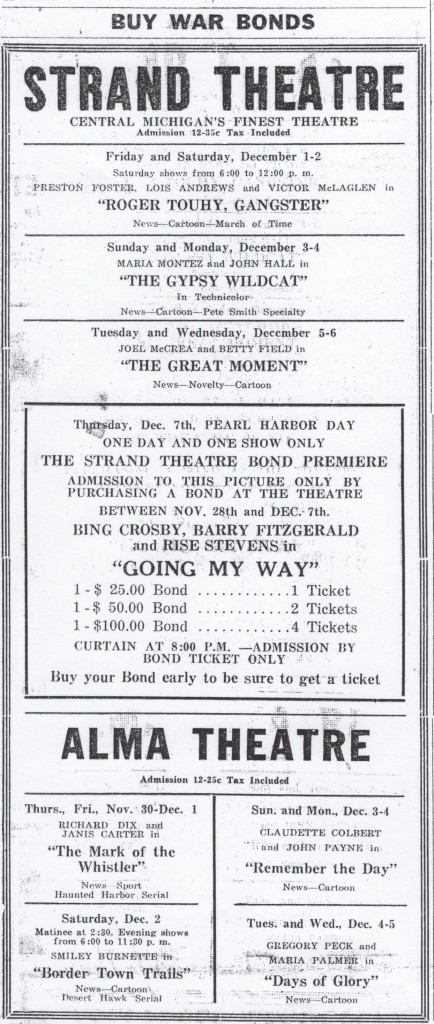
Above: War Bond drives were held at Alma’s Strand Theatre during World War II. “Going My Way,” featuring Bing Crosby, was held in early December 1944; bonds could be obtained at the Strand Theatre in November 1944; one of the last war bond shows took place in early June 1945. Viewers who purchased E Bonds received free tickets.
Another world war knocked on Gratiot County’s door before the 1940s began. During these events, going to the movies offered escape and entertainment as the country slowly drifted toward direct involvement in World War II.
As 1940 began, the Strand Theatre started a local run of movies called “Alma’s Local News Reel.” Billy Farrell played on the new Hammond Organ some of these nights at the Strand. Farrell played the organ thirty minutes before every show, and customers regularly asked him to play their favorite music. The Alma Lions Club sponsored a talking picture, “We’re in the Movies,” which became a two-hour feature involving local community members. The John B. Rodgers Producing Company of Fostoria, Ohio, came to town and directed and filmed the movie. This color movie, shot over five days in Alma, involved local people and businesses that depicted everyday life in the city. To get people to see the film, the Lions Club promoted the project with a “Movie Queen” contest to select an Alma “Glamour Girl.” Lois Brainard, one of the thirty-seven contestants, won with 4,770 votes. Brainard and the other contestants then attended the premiere. “We’re in the Movies” had six showings in Alma and raised enough money for several Alma Lions Club service projects.
However, the biggest news in March 1940 was the premiere of “Gone with the Wind,” which had a limited one-week engagement at the Strand. Tickets cost $1.10 for reserved seats and could only be purchased ahead of time through mail orders. The movie debuted on Easter Sunday and had been highly anticipated in Alma, and it would not appear again until 1941. The epic Civil War movie, shot in color, lasted four hours. Over time, “Gone with the Wind” would hold the most viewings in the Strand’s history, appearing each decade until the theatre’s closing in the 1990s. Also, “Gone with the Wind” marked the debut of more color movies in Gratiot County movie theaters.
In late 1941, ticket prices at the Strand jumped to eleven cents for children and twenty-five cents for adults. Down the street, the Alma Theater completed a new remodeling project. Owners changed the seating arrangement to include only one center aisle and raised the seating capacity to 324 people. As a result, the Alma Theater raised prices to eleven cents and twenty cents for movies.
After Pearl Harbor, viewers caught up on the war and world news through the “March of Time” newsreel, which appeared before each main feature. To commemorate Pearl Harbor Day in 1944, the Strand supported the Sixth War Loan Drive by showing Bing Crosby in “Going My Way” for one night only on December 7. However, a viewer had up to a week ahead of time to buy a bond to see the movie. Every purchase of a $25 bond gave the buyer a ticket to the show. Ultimately, the drive was successful and raised $30,000 in bond sales! Another bond show occurred at the Strand in 1945 with Spencer Tracy and Katherine Hepburn in “Without Love.”
Earlier in the war, in response to orders from the War Production Board, Alma participated in a “brownout” to conserve energy, which affected the lighting of the marquee. People walking up and down Superior Street could no longer read the movie titles from a distance. However, on the night of Tuesday, May 8, 1945, the Strand Theatre turned on its marquee again in response to the news of Germany’s surrender. That night, the Strand lit up and joined many businesses in celebrating the war’s end in Europe by turning on their lights up and down Superior Street. After a long period of darkness, someone in Alma commented, “Superior Street is again as brilliant at night as of yore.” In a short time, the movie lights in Alma appeared every night in 1945 with the end of World War II.
From above: The Strand Theatre in 1942; amateur night at the Strand, August 6, 1936; the problem of smuggling illegal Chinese emigrants appeared on July 9, 1936 at the Alma Theatre.
Although the Great Depression was in full swing in Gratiot County in the late 1930s, it did not stop people from going to the movies. The Strand Theatre and the Alma Theatre continued to draw people in and managed to stay in business. For many in Gratiot County, going to the movies offered an escape from the economic and social challenges of the times.
In Alma, theatre owners continued to use gimmicks to attract people to see a movie. In early January 1935, “The Great Kirma,” a mystic from India, arrived for one week at the Strand. He started his appearance by driving his 1935 Model Terraplane Six Sedan through the streets of Alma while completely blindfolded. Afterward, in front of onlookers, he hypnotized a young lady in Walker’s Electric Shop show window. During his shows each night, Kirma further mesmerized people by answering any question the audience asked him.
In July of that year, the Strand installed a new device billed as air conditioning. By removing dirt and pollen from the air, hay fever and pollen sufferers found relief while enjoying a show at “The Coolest Spot in Town.” Strand ownership advertised cooler temperatures and help from hay fever. For hay fever sufferers, going to the movies in Alma for relief continued to be advertised for several decades to come. During the winter, these fans also supplied each person with twenty feet of warm air.
Throughout the late 1930s, the Strand held various community benefits, often at Christmas. Those who attended a show received a free ticket for a movie if they brought in food for Smith Memorial Hospital or for holiday baskets to help people in need. On a more serious note, Alma ministers stated in 1935 that they favored movie censorship and wholly disapproved of movies being shown on Sundays. They also discouraged churches from publishing advertisements about shows.
Amateur entertainment remained a Strand staple. In August 1936, amateur acts auditioned to win appearances every Saturday night in “Four Acts of Vodvil.” One year later, Major Bowes’ Amateur Revue and Jamboree appeared. These shows featured some of the top amateurs in the country. It turned out that Bowes’ program was the forerunner of the 1950s television show Ted Mack’s Original Amateur Hour.
Also in early 1936, W.A. Cassidy and his wife from Midland purchased the Alma Theatre, known to many in Alma as the old Idlehour. They improved it and continued showing movies from Thursdays through Mondays. Sometimes, controversial movies appeared in Alma. In May 1938, the Strand featured “Assassin of Youth – Marihuana! Fruit from the Devil’s Garden.” It was followed two months later by “Damaged Goods: The Picture that Dares Tell the Truth.” Restricted audiences got to view movies about drug abuse and the dangers of syphilis.
In late 1938, the Strand underwent significant renovations. A new marquee rose, double its former size, with a larger canopy. This new canopy curved in a semi-circle for 53 feet, then extended for 12 feet over the sidewalk. It held 340 lamps, each giving off 40 watts of light. With this new addition, the new marquee could be easily visible from distances up and down the business district at night. Those walking down the street each week could see interchangeable letters that spelled out the titles of the latest movies. Four double doors went from the foyer to the lobby as one entered the Strand. A new box office now allowed people to purchase tickets from the sidewalk. More remodeling took place inside as 500 new seats replaced the old ones. By the end of the decade, ticket prices, which had been ten and fifteen cents per ticket in 1935, rose to twenty cents by the end of 1939.
As the 1930s ended, another world war appeared on the horizon, and a new era of movie blockbusters was about to start in Alma.
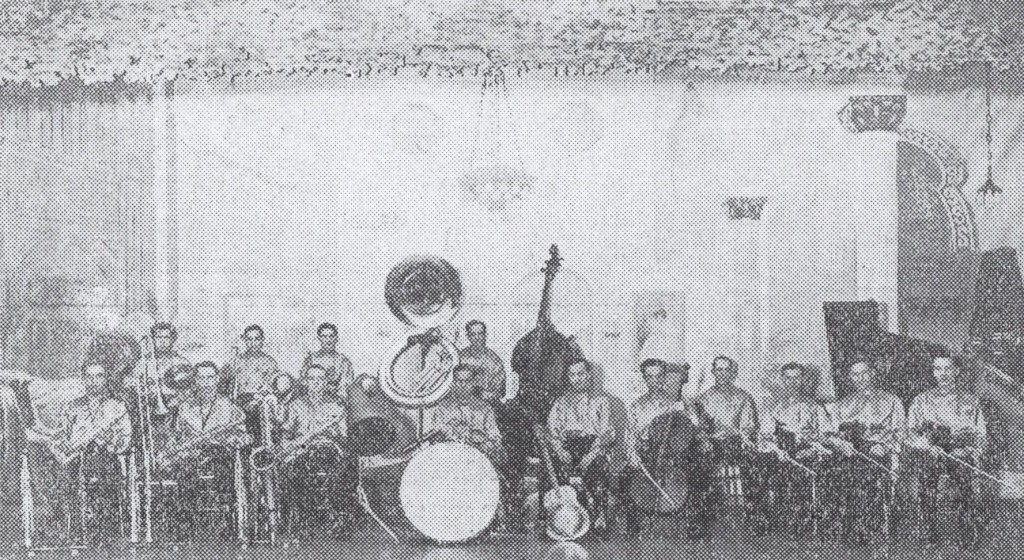
Above from the top: A Depression special – movies reduced at the Strand; in late February 1931 the Ionia State Reformatory Orchestra appeared at the Strand as one of ten big vaudeville acts starting in March 1933; “Tarzan and His Mate” appeared at the Strand, as did co-star “Mary” for one hour on July 14, 1924.
“Boom and bust.” “ An economic collapse unlike anything seen before.” Both phrases describe the economic crisis that hit Gratiot County starting in the late fall of 1929 and what many called the Great Depression.
Strangely, the movie that played at Alma’s Strand Theatre five days before the economic crash was “The Gamblers.” It dealt with a father and son engaged in Wall Street corruption. Little did most Gratiot citizens know that what happened in New York City that October would seriously affect their lives.
As movie theaters struggled to draw people early in the Depression, they offered prizes and reduced prices to keep people coming to the movies. The Strand gave away a $225 Amrad Radio in late December 1929. It went so far as to offer $500 as a first prize during “Greater Movie Season” almost one year later. A more practical prize gift in October 1931 was to give a two-pound package of Rowena Pancake Flour for the first 200 paid admissions. The cost of seeing a movie dipped to 25 cents a show in early 1931 and then reached 15 cents a show by February 1933.
Other movie draws in Alma starting in 1930 included airing “Amos and Andy” every night at 7 o’clock (except on Sundays). The Strand Sweet Shop, which first opened next door before the start of the Depression, became a place to stop for sandwiches, malts, and sweets. In 1931, “Freckles” Spear, an eight-year-old “Our Gang” movie star, came to Alma. Later that year, Prince Shah Babar, a famous Hindu mystic and mind reader, drove a car blindfolded through Alma. He also buried alive a member of his company in front of the Strand Theatre, then put a person to sleep in the store window of W.D. Baltz. In August 1933, the MGM Studio sent a traveling studio into the country to show people how it made movies. Mary the Rhinoceros quickly visited in July 1934 before a “Tarzan and his Mate” movie. Mary starred alongside the first Tarzan, Johnny Weissmuller.
The Depression also changed Alma with the passing of the Idlehour Theatre. In the spring of 1931, Dick Rockwell sold out to W.A. Cassidy of Midland and Mr. Gordon from Mt. Pleasant. With the sale came a new name: The Alma Theater, which would operate for over twenty years in Alma. Cassidy would also succeed in purchasing the Strand a year later. As a result, Cassidy installed new screens and sound systems to bring in more moviegoers. Some very famous movies also made their way to Gratiot County early in the Depression, such as “Dracula,” “King Kong,” and young movie stars like John Wayne (“The Big Trail”).
There were other issues involving movies in the 1930s. Groups like the Disciples of Christ in 1934 worked to clean up dirty films. They were the only group that believed that the movie industry needed censorship and reform, and they encouraged boycotts of offensive shows.
The Depression was on, but so was movie attendance in Alma.










 Goodspeed's Gratiot County Historical Blog