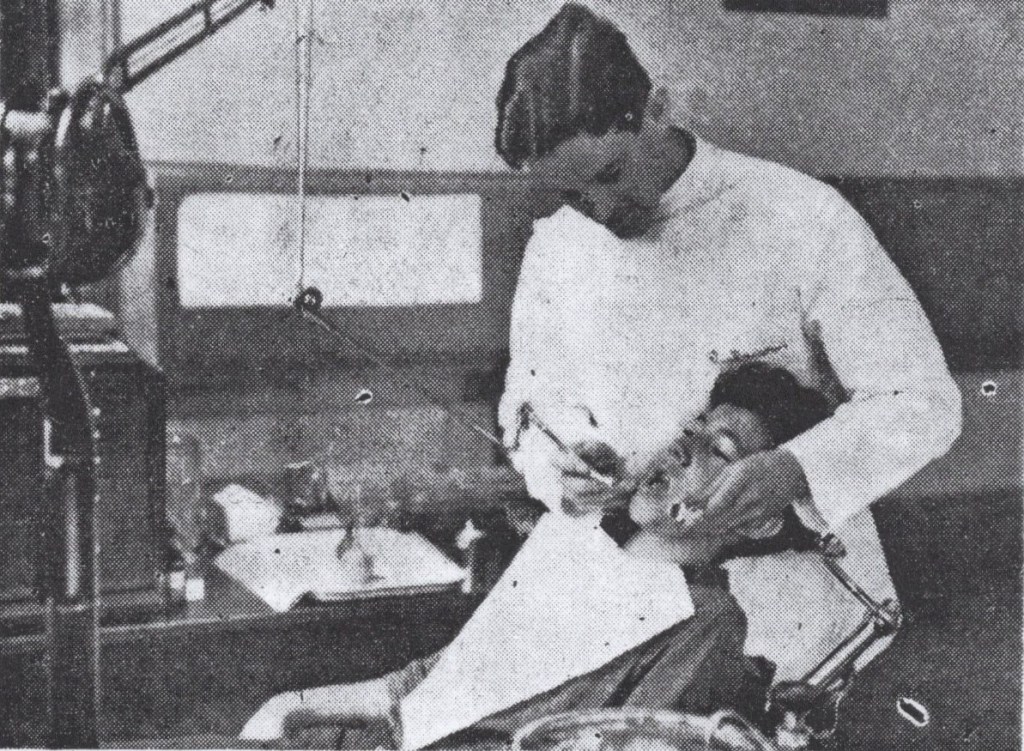
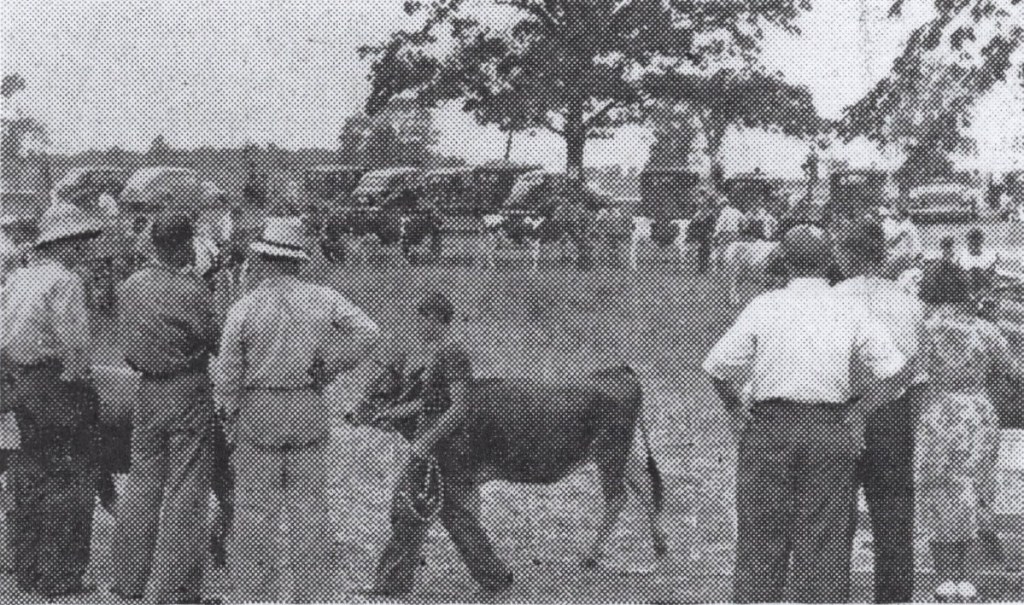
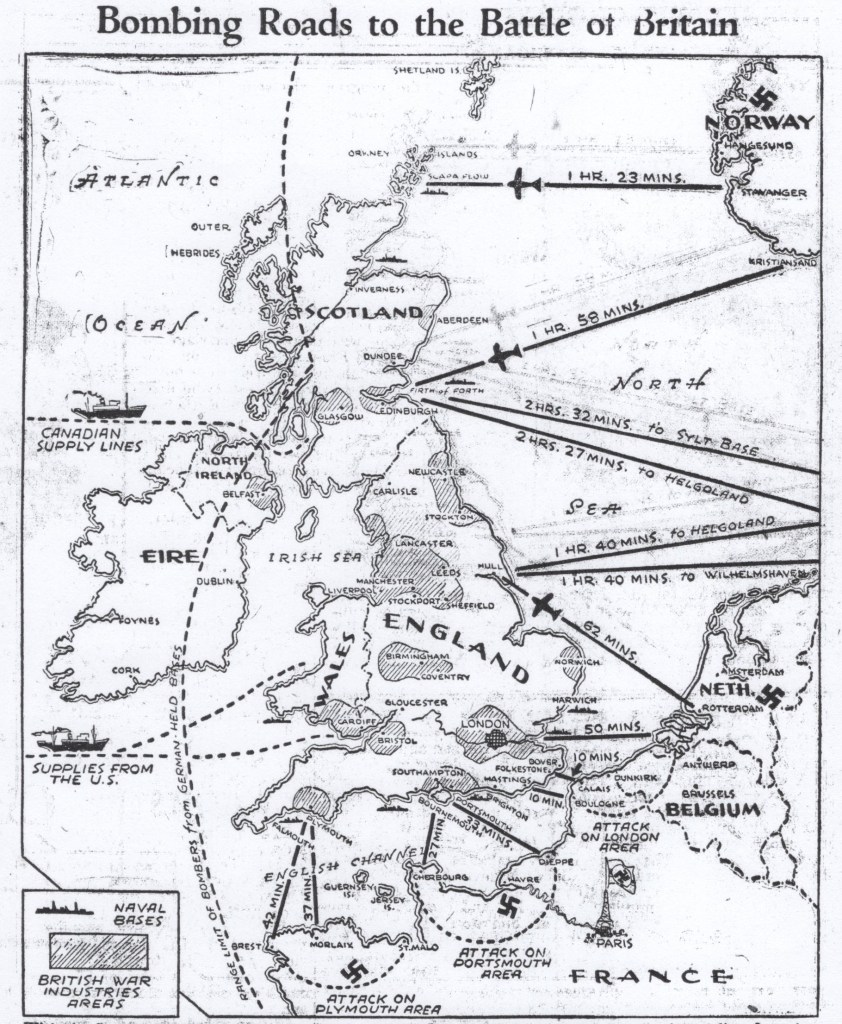

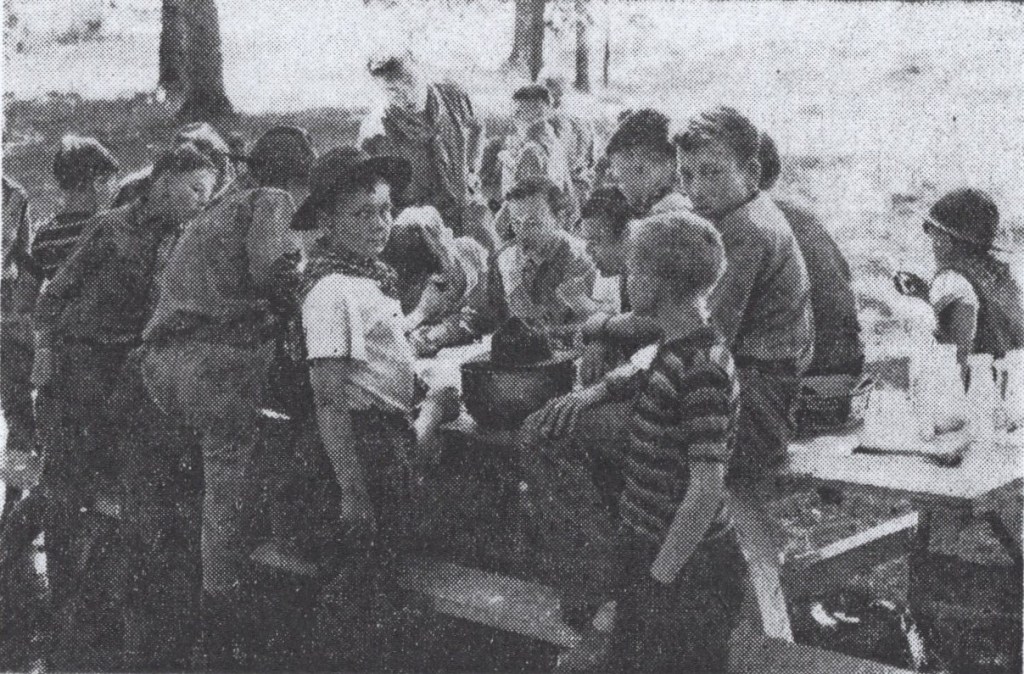
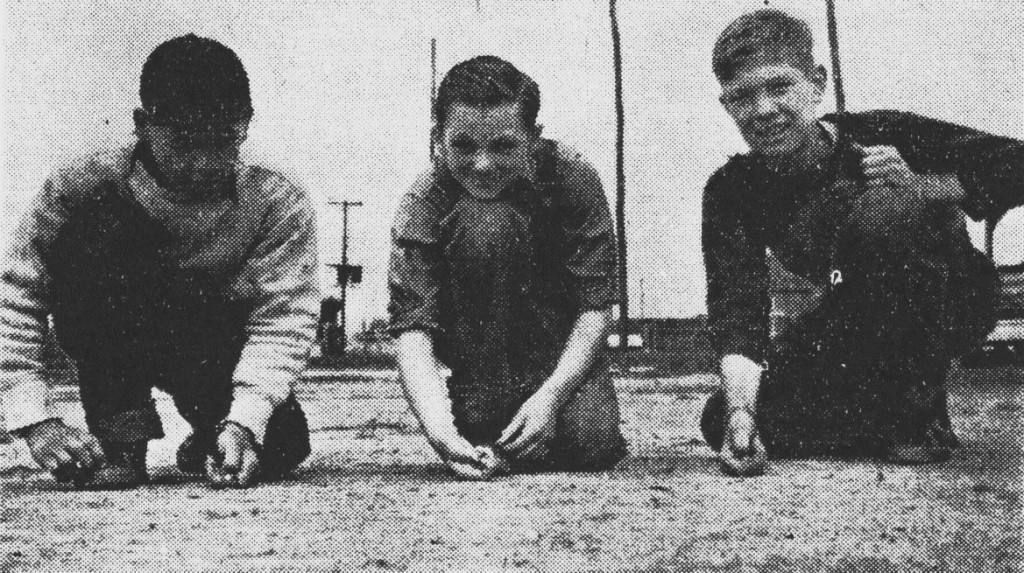
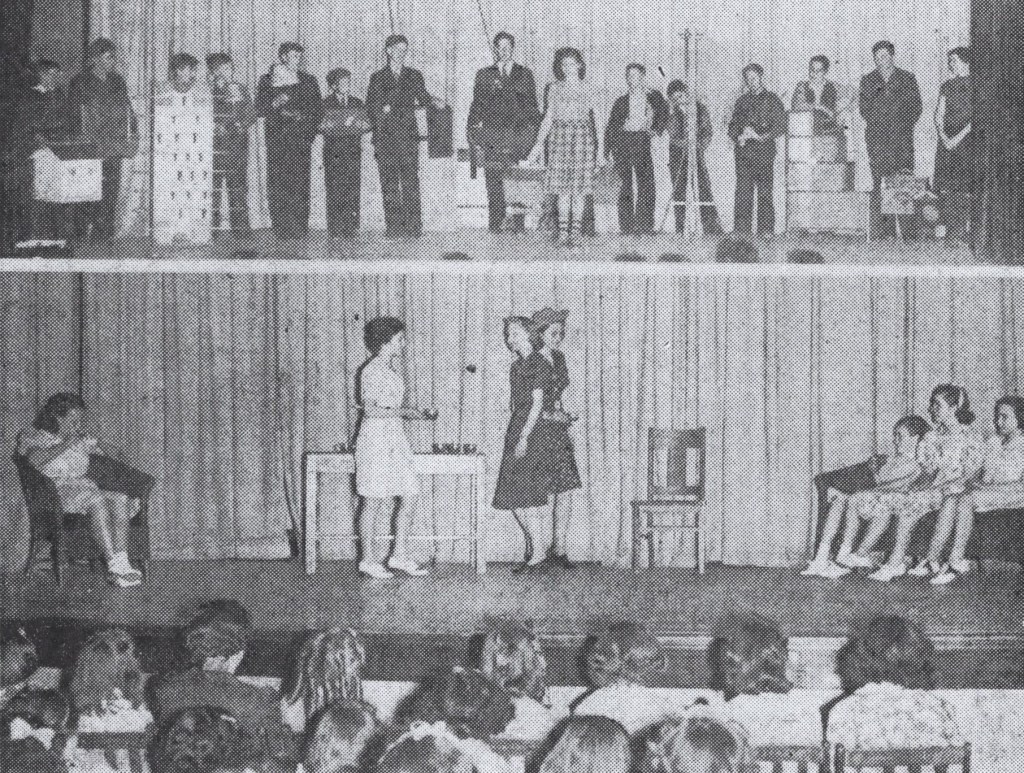
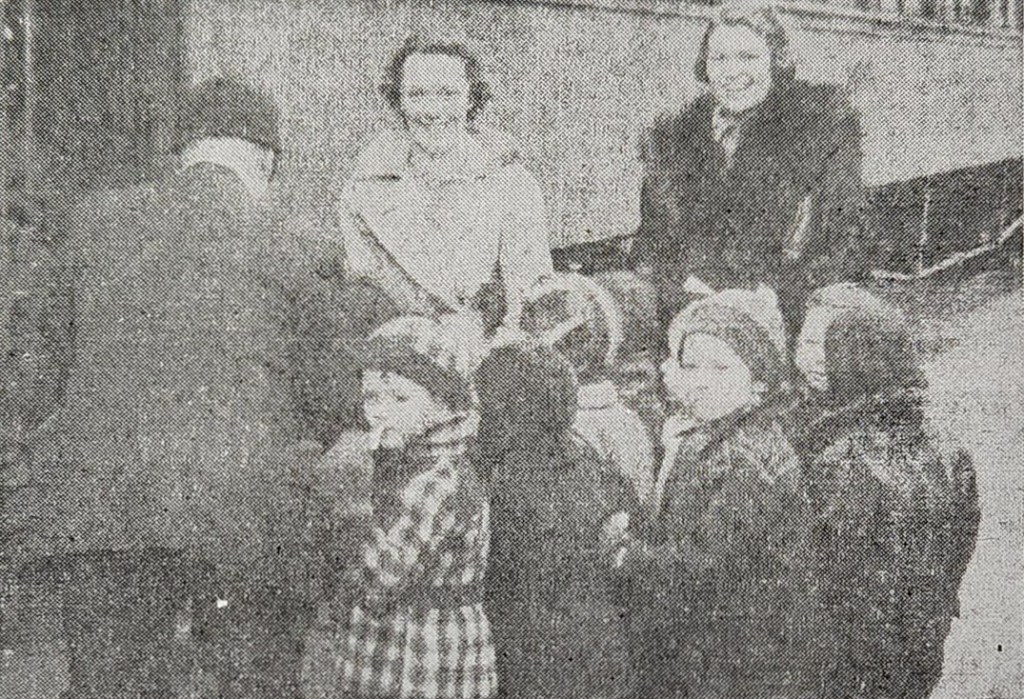
From top to bottom: Doctor G.V. Barrow of Ann Arbor works on one of his patients during the Gratiot County free dental clinic in Ithaca. Barrow treated eighteen cases each day for several weeks. The clinic then moved to Alma and concluded in St. Louis; this FFA showmanship event at the Gratiot County Fair featured stock raised by young future farmers from Gratiot; meanwhile, the Battle of Britain was in full swing in Europe. Could England survive Hitler’s bombings?; would President Franklin D. Roosevelt be nominated for a third term as President? The Democratic Convention in Chicago soon revealed that the President would indeed accept a run again for a third term.
The late spring and summer of 1940 proved to be cooler and wetter than many residents in Gratiot County wished. Newspapers warned readers that the war in Europe could soon escalate into a global conflict. Across Gratiot County, Depression-era programs continued to operate, providing respite, entertainment, and activities for both children and adults.
People could enjoy the isolation of quiet country towns, villages, and hamlets.
It was July 1940 in Gratiot County.
The World at War
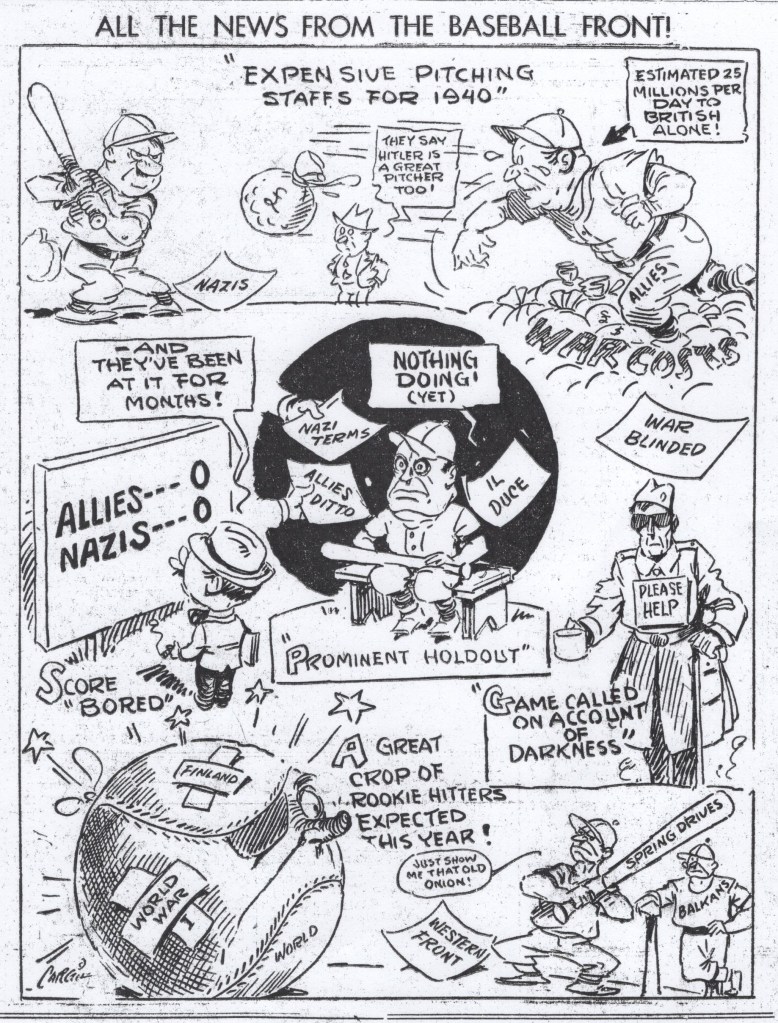
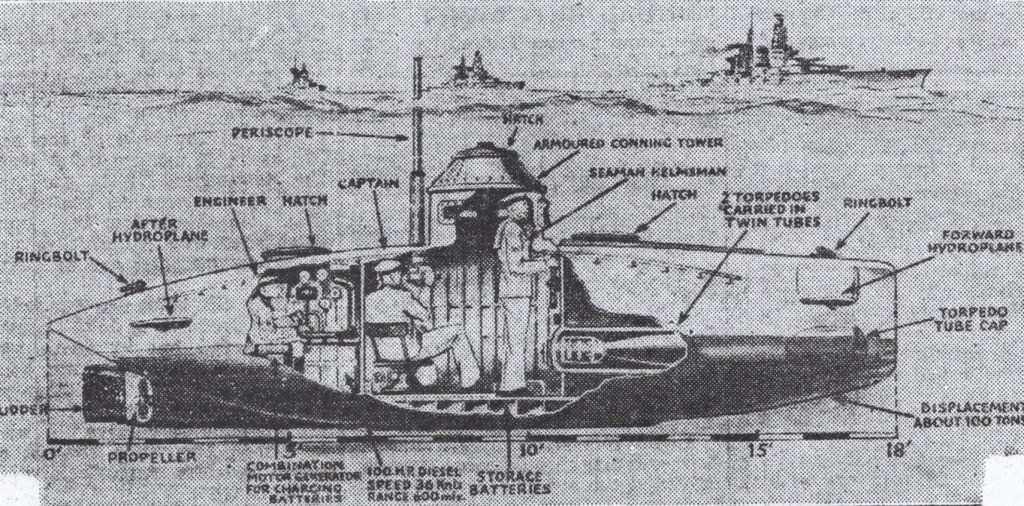
Gratiot residents began reading about a potentially growing global conflict. A group of 30,000 United States troops was now placed on high alert in the Panama Canal Zone. Bombing raids by Hitler’s Luftwaffe upon Britain became known as “The Blitz.” Maps illustrated the time and distance it took to fly German bombers from their bases to targets in England. Then, there were maps illustrating how Americans, Soviets, and the Japanese all had potential areas of conflict in the Pacific. Would there soon be a “Pacific War” involving the United States? In all of this, most Americans seemed to forget that the Japanese Empire had been at war in places like China since 1937.
Here in Gratiot County, the Red Cross said that it needed only $400 to reach its goal for the War Relief Fund. They hoped to raise the balance to $1,920 by July 10. Twenty-two Michigan communities in southern Michigan agreed that military education for high and junior high school students was beneficial and necessary. The government hoped that between 10,000 and 15,000 defense workers would receive training in this way. The only question was what kind of training to provide and how far it should extend. Some, like Professor Howard McLusky from Michigan, argued that a long ideological fight involving dictatorships and democracies would soon start, and courses in high schools should prepare students for it. State Superintendent Dr. Eugene B. Elliott argued that Michigan schools had to prepare students with both strong minds and strong bodies; however, he failed to mention that he believed the United States would be directly involved in a war.
The issue of a third term in the White House arose in newspapers regarding President Franklin D. Roosevelt’s status at the Democratic Convention in Chicago. Keynote speaker Senator Alben Barkley spoke on behalf of Roosevelt and stated that the President had declared all delegates free to vote for the Democratic candidate of their choice. Still, the President did not say he would refuse a renomination. As a result, newspapers ran the headline “Way to Third Term Cleared by Roosevelt.” Within a week, FDR accepted the renomination and left the issue of a third term up to the voters.
Over at Ithaca, a hefty call for copies of birth certificates nearly swamped the county clerk’s office. Why? Numerous Gratiot residents needed them to demonstrate their citizenship status to work in plants supplying materials to Britain, as well as for anticipated home defense needs. Requests for birth certificates were received in Ithaca by phone, in person, registered mail, and air mail. Birth certificates were also necessary for those traveling to Canada for vacation or fishing. These certificates cost fifty cents each.
Depression Life, July 1940
The Gratiot County supervisors okayed the move of the county welfare office from Alma to the basement of the courthouse in Ithaca. Part of the reason for the move was a cost-saving measure that eliminated the need to rent space. The final move was contingent upon state approval.
The terms “recreation” and “recreation programs” gained a lot of attention in Alma for Turck’s Beach, and places across town where miniature golf, tennis, playgrounds, wading pools, as well as boys’ and girls’ softball and baseball all took place. There were also activities such as handicrafts, dancing, and an interest in archery. These activities took place across Alma in various locations, including Wright Park, Alma High School, some elementary schools, and the basement of the Salvation Army. The month of July, usually hot and steamy in Gratiot County, soon turned unseasonably cold and wet, thus dampening some of the swimming at Turck’s Beach. Despite the cooler weather, a large crowd gathered at the beach to enjoy a swimming show and water carnival, as well as demonstrations on how to operate a canoe and perform a rescue from drowning. Bill Moody, the head lifeguard, conducted some of the performances. At the same time, Dr. W.E. MacInnes gave a brief talk about Red Cross safety. A second water carnival was planned for early August at Turck’s Beach. Many of those who worked at these places that offered recreation had NYA workers or were tied to NYA projects.
Are you older and concerned about your finances in old age? Attend a Townsend Club meeting in the county. Townsend Club Number 2 held meetings every Monday at the Ithaca village hall. Doctor Townsend himself appeared on the front pages of local newspapers under “Doctor Townsend Says…”. Townsend billed his old age pension plan as “a movement to unite the peoples of the earth in one great brotherhood” – and ensure that every older American received an old age pension.
WPA work continued on the 1939 paving project, even though it was the summer of 1940. A crew of 65 men built new curves and gutters on streets where they paved last year. The project poured a slab on three blocks of River Avenue, then planned to move on to shorter works on Walnut, Euclid, Allen, and Orchard streets. Work was progressing more slowly in July, according to City Manager W.E. Reynolds, because in 1939, he had between 90 and 130 men working on projects. Now, regulations lowered the number to only 50 workers. Alma petitioned for an additional fifteen blocks for paving. Still, the city had not yet received approval from the federal government.
Migrant Workers, Weather, Fair in July
A reasonably large turnout was observed at Alma’s Washington School for the county’s migrant school open house held at the end of June. Almost one hundred visitors came to the open house on a Thursday night. Following this program, another 126 Mexican workers and their children attended the program’s first Family Night. Migrant center workers from Mt. Pleasant and Kenton, Ohio, joined with the Alma staff to discuss work in their respective centers. The Alma school officially enrolled up to 100 children in woodcraft, English, citizenship, table manners, and singing. This group also included sixteen toddlers and babies. By the end of July, the numbers dropped to 55 children as migrant families moved on to other work in the state. Gertrud Herman, Merle Farnie, and Grace Rowell lead the programs at the center. Rowell, accompanied by Reverends Drake and Moreno, took a group of the older migrant children to the Gratiot County Fair to see the rodeo. A field day was also held for the older children from Alma and the Mt. Pleasant centers before the centers’ closing. The center held its final Family Night on July 25, marking the end of the program. By the time the Alma Center closed, over 400 visitors from across the state of Michigan came to Alma to see how the Washington School’s migrant center worked with children, and many migrant mothers hoped that Alma would open another program like this in 1941. This migrant center was the first such project supported by the Gratiot County Council of Churches and the Council of Women for Home Missions.
Gratiot County’s weather continued to challenge area farmers that summer. A cold and wet late spring had crops lagging during planting season, while hay, oats, wheat, and barley were unusually heavy due to the rains. A warmer July was allowing crops to start catching up, but many appeared to be below average and needed a warm late summer and an extended growing season. More Gratiot farmers planted soybeans, but the increase was not as significant as in other parts of the state. And then came a classic Gratiot cloudburst on July 8, which flooded a large section of Emerson Township. The storm affected an area in Emerson Township that measured 2 ½ miles north and south and 5 miles east and west, and it was hit with heavy winds. The Riley Aldrich farm was completely submerged in water, as were the farms of other farmers in the area. Aldrich’s grandson appeared in a Gratiot County Herald photograph with water standing halfway up his boots.
Many farm families not affected by the storm later requested help from the Gratiot Road Commission to spread spot oil in front of their homes and down their roads to deal with the dust. Farmers paid one cent per square yard, and the final cost depended upon how many times the road was oiled.
Visiting the 75th annual Graiot County Fair in Ithaca was a highlight of summer and took place from July 23 to 27. Before opening the fair, officials installed a new automatic starting system for horse racing, which would take place over four days of the fair. The fair featured the most extensive 4-H exhibits, the C.R. Ranch rodeo, Roman chariot races, horse pulling, and a large midway. Children’s Day on July 23 offered free admission to children under the age of twelve, and rides cost only a nickel.
In other news, the Farm Security Administration announced the expansion of the Farm Tenant program in Gratiot County. This program allowed former farm tenants to buy their farms under government long-term contracts. Tenant farmers were encouraged to apply to the program. Need to dip sheep? A sheep dipping demonstration took place on the Paul Burnham farm in Bethany Township and Max Church’s farm in Arcada. County Agent C.P. Milham asked Gratiot farmers to declare war on sow thistles, urging them to seek out and destroy the plants. Sow thistles grew to three feet in height, and had yellow blossoms like dandelions, which could smother a crop due to their dense mat of leaves.
The Long Arm of the Law in July 1940
The Fourth of July weekend in the county was rough on several drivers. Overall, a total of six traffic accidents injured seven people and claimed one life. Franklin Kunkel, age 22, of Riverdale, was killed in an accident when his Ford roadster crashed into another car near the Honeyoye Bridge, miles west of Alma. Kunkel tried to pass another vehicle before entering the bridge, then went off the road after striking another car. Instances of drunkenness made their way to court as a group of people from Owosso were arrested east of Alma for drunk driving. A familiar sight in Alma, Frank (Frenchy) LaBart returned to Alma after eight years. LaBart managed to bang up several cars in front of the Kroger Store while trying to park his vehicle. He was charged with drunk driving and served 45 days in jail rather than pay $56 in fines. Lillian Berted, age 29 of Alma, was arrested in Breckenridge for public drunkenness. Although initially pleading not guilty, she later changed her plea and paid a fine of $13. R.L. Lalonde of Ithaca received a fine and costs of $28.85 for driving wildly past a WPA flagman and road workers south of Alma. Lalonde was cited for reckless driving.
Leo Gusman, a Mexican from Eaton Rapids, was arrested for driving without a license. Gusman’s penalty was paying $12.30, and he still had to spend five days in jail. Howard Sparks from Clinton County was arrested for illegally selling fireworks. He paid $16.45 rather than go to jail. Jenasio Mejia, “an Alma Mexican,” was arrested near the Michigan Sugar Company factory for carrying a concealed weapon. He was held in the county jail for having a loaded revolver and six extra shells. Someone, an itinerant peddler in Alma, was passing forged checks in Alma on behalf of Parke, Davis, and Company of Detroit. The forger had already passed one in Clare for $15.00. Be on the lookout for the crook. Two beet workers, Steve Grusky and Stanley Druska, got into a heated battle just south of Bannister. Both were arrested and hauled off to jail. In late July, Otto Morro, St. Louis street commissioner, announced that the first crop of wild marihuana in town had been located in an alley between North and Center streets. A citizen identified the plants and reported them to the authorities.
In some other instances that involved calling for the police, an 18-year-old girl in Alma jumped off the Superior Street Bridge just after midnight on July 17. Thankfully, the water was only four feet deep, but the fifteen-foot drop did more damage. She later admitted that she wanted to take her own life after parting with her male escort. Still, a sister arrived at the police station and escorted the jumper home the next day. In another tragedy, the first drowning of the summer took place at the Washington Township gravel pit, just east of the B-Z-B gas station. Herman Wallen of Perrinton, age 22, was probably killed after diving into the bottom, as a cut on the head suggested he had hit bottom; possibly he also suffered an epileptic seizure. Wallen was considered an excellent swimmer.
Another story in the Dewey Glinkie case appeared in local newspapers. Ginkie, who had stolen over $3,000 in county funds several months earlier, was in the news as Sheriff William Nestle traced a lead to Canandaigua, New York, where someone found Ginkie’s Social Security card and notebook in a mailbox. The card had been issued in Ohio, and the notebook contained Glinkie’s handwriting. Yet, the collection of notes failed to specifically tell who was helping Glinkie or who knew of his whereabouts. Before this, Glinkie had connections to Port Huron and Detroit. So, the hunt for Dewey Glinkie continued.
The county got excited when former county prosecutor Ora L. Smith announced that he was running for the Michigan Republican gubernatorial nomination for the 1940 election. Smith formally announced his candidacy on the radio station WJR in Ithaca. Several parades took place in the county to honor and support Smith. In other court news, Kelly S. Searl, a circuit court judge, began his 26th year as a judge in Ithaca. The Alma City Commission denied the use of its tourist park for house trailers. The city only charged $1.50 per week for short stays or 25 cents per day. The commission was concerned that long-term occupancy by house trailers would run up the cost of electricity and turn the area into a “trailer park.” Currently, there are 75 to 100 families or groups in Alma living in trailers.
Gratiot County Health Matters
A pair of Gratiot County residents, Vere Allen (Arcada Township) and Ruth Johnson (St. Louis), each suffered bites from their dogs. Both animals were euthanized, and their heads were sent to Lansing for rabies testing. Thirteen-year-old Anna Macey of Alma was also bitten on her thigh while riding her bike near the Wright Hotel. Police impounded the dog for observation for ten days due to concerns of rabies. The county sheriff was increasingly concerned that residents were becoming more careless about letting their animals roam rather than being quarantined. In St. Louis, many residents complained about the number of running dogs in town. Doctor D.K. Barstow warned residents that the only way to be safe from rabies was to get their dog(s) vaccinated. For those who resorted to only leashing or penning their dogs, Barstow reminded them that a leash could not keep another rabid animal from biting the family pet. Rabies vaccinations were good for a year. A statewide quarantine had been in place for 47 counties since April. During the first three months of the quarantine, County Dog Warden Howard Evitts of Pompeii announced that 160 dogs had been euthanized in Gratiot County so far.
Better health news came from the news of lower TB death rates in Gratiot County. A report showed that eight people died of TB in 1938 and seven in 1939. Vera Karajoff of Alma had to be admitted to Smith Memorial Hospital for a serious injury to her ankle. Initially, a fracture was a concern; however, Karajoff only had a severe sprain. How she did it was not reported. Charles Federspiel was released from Smith after an X-ray check-up on his fractured left arm. Federspiel broke his arm in a jumping incident. In sad news, in Ashley, grocery store owner Clarence Duprey, age 46, took his own life. He left a wife and three daughters. Newspapers listed no cause for the death.
The Gratiot County free dental clinic entered its third week in July. Dr. G. V. Barrow of Ann Arbor saw an average of eighteen cases each day in Ithaca. The clinic soon planned to move on to Alma and then to St. Louis. Approximately 400 young people received dental care in Ithaca alone from the clinic.
And So We Do Not Forget
The new C.S.A. Hall in St. Louis planned a two-day celebration for its dedication with a grand opening. A Grand March from the Park Hotel to the hall on Michigan Avenue kicked off the activities on Saturday, July 6…Notices for the upcoming performances on the Chesaning Showboat appeared in local newspapers. A cast of 125 performers, along with Jimmy Raschel’s Band, planned two-hour shows from July 11 to July 14 in Chesaning…Jean Arthur and Fred Mac Murray appeared in “Too Many Husbands” at the Ideal Theatre in Ithaca on July 4 for a one-night show. Roy Rogers appeared July 5-6 in “The Days of Jesse James.” Tickets were ten cents for matinees…The Saginaw Black Socks edged the Ithaca Independents by the score of 2-0 in a special Sunday game in Ithaca. North Star defeated the Balmoral Indians by a 7-0 score…Cupid’s victims included Marvin Neal, age 22, of Alma, and Narlene Tracy, age 19, also of Alma. Good luck to the newlywed.
Mrs. Clifford Brewer of St. Louis became the new Central Michigan women’s golf champion at Clare. Brewer defeated two previous champions on her way to the title…Vera Patterson of Ithaca set a new ladies’ golf record at the Gratiot Country Club by turning in a 37 on nine holes. Muriel Pettit held the previous record with a 39…A Reverend F.R. Davidson petitioned the Alma City Commission to set up a portable tabernacle of Masonite pressed wood for religious services in Alma. Davidson represented the General Council of the Assembly of God…The Gratiot County Board of Supervisors adopted a resolution allowing the closing of county offices and the driver’s license examination bureau in the courthouse on Saturdays. While some offices in the courthouse had previously been closed during a slow summer season, the supervisors stated that some offices could remain open on Saturdays as needed in the future…George Stewart, J.C. Penney’s manager, took a two-week vacation to spend time with family on Crystal Lake…More new paint jobs in Alma included work on Wilkins’ Economy Market, Reed’s Popular Priced store, and Gay’s 5 & 10c store.
Sidney Toler and Marjorie Weaver starred in “Charlie Chan’s Murder Cruise” on July 7-8 at the Alma Theatre. Tickets were ten and fifteen cents…The Alma Chamber of Commerce announced an outline for the program and activities for the 1940 Harvest Jubilee in late August…Former employees of the Alma Republic Truck Company planned to hold a reunion on July 27-28 in Conservation Park in Alma. A total of 1,313 letters were sent to former employees in 23 different states, inviting them to the reunion. This reunion would be the third such one held in Alma…Buy a new single-wall washing machine at Walker’s Electric Shop for only $39.50. A double-wall machine only costs ten dollars more.
Finally, over at St. Louis, a balloon ascension and jumper captivated the city on a Saturday night. The St. Louis Trade Association sponsored the event on July 6. Large crowds turned out to watch the balloon, put together by the Winkler Brothers of Lansing, fill with hot air next to the newly erected bandstand. After it filled with enough air to allow it to tower above all the buildings in St. Louis, it began to rise skyward and headed northeast. Many feared the jumper would end up in the Pine River. However, after reaching its maximum height, the jumper bailed out. It deployed two parachutes, the second of which was decorated in red and blue. How did it end? The jumper found himself in a cornfield just north of the city. The balloon ascension was just one of a series of regular Saturday night programs created by the St. Louis Trade Association that summer.
And that was Depression and War in Gratiot County in July 1940.
Copyright 2025 James M Goodspeed














 Goodspeed's Gratiot County Historical Blog