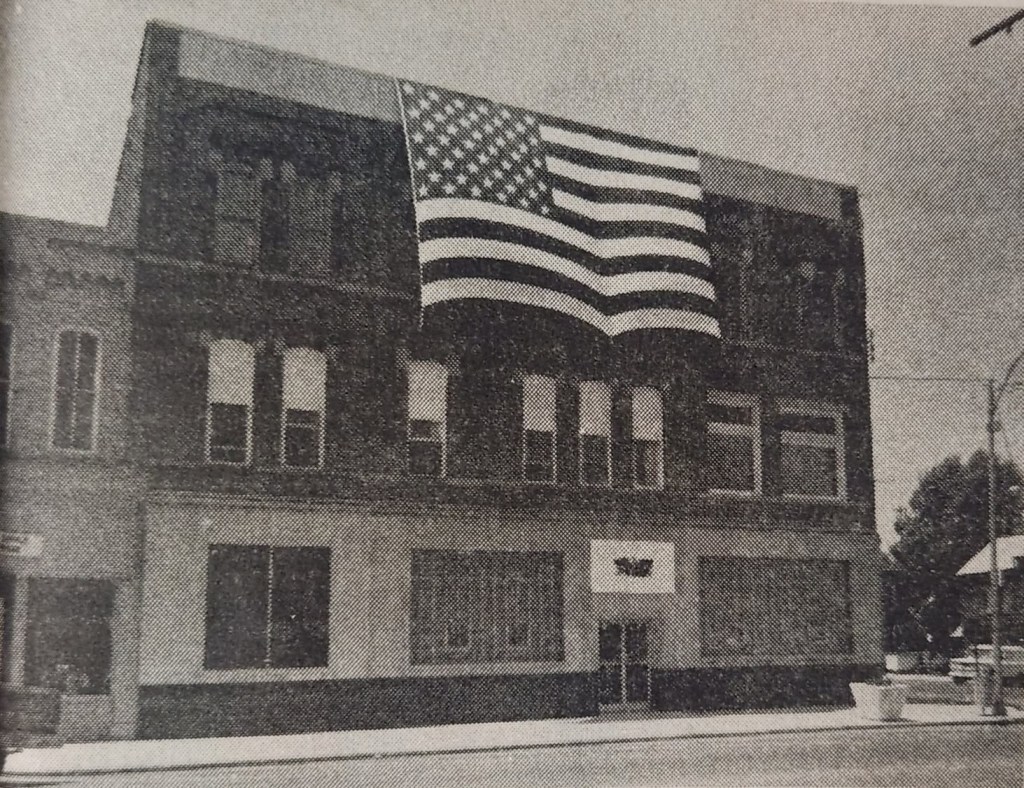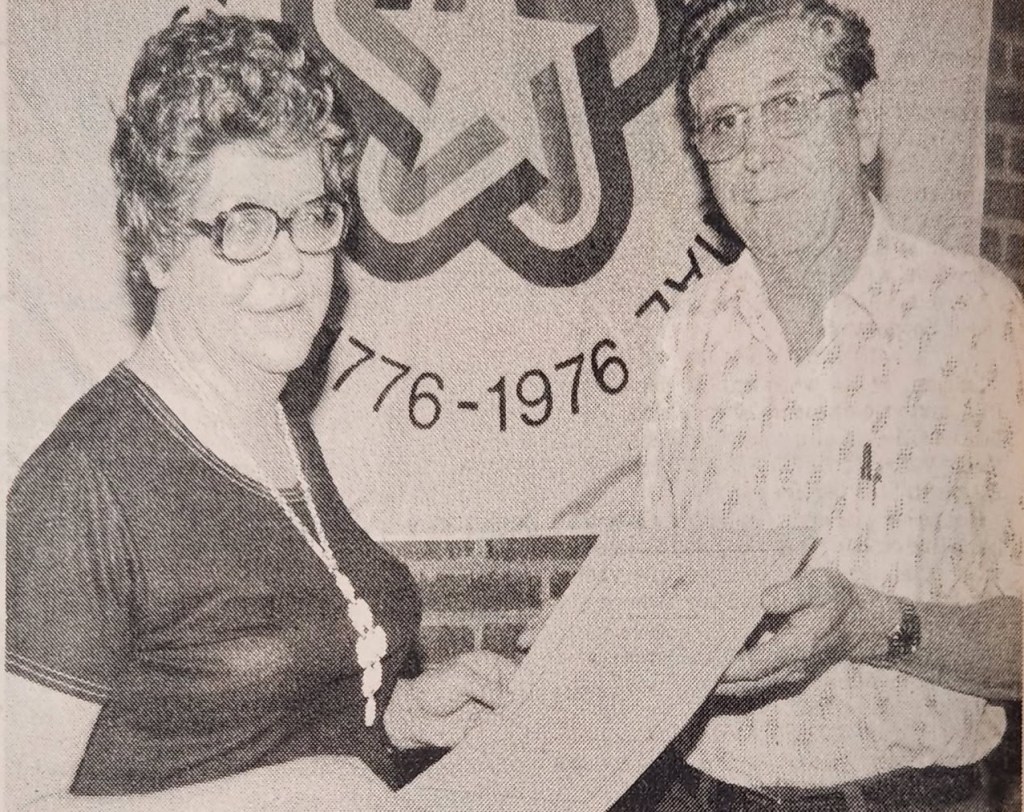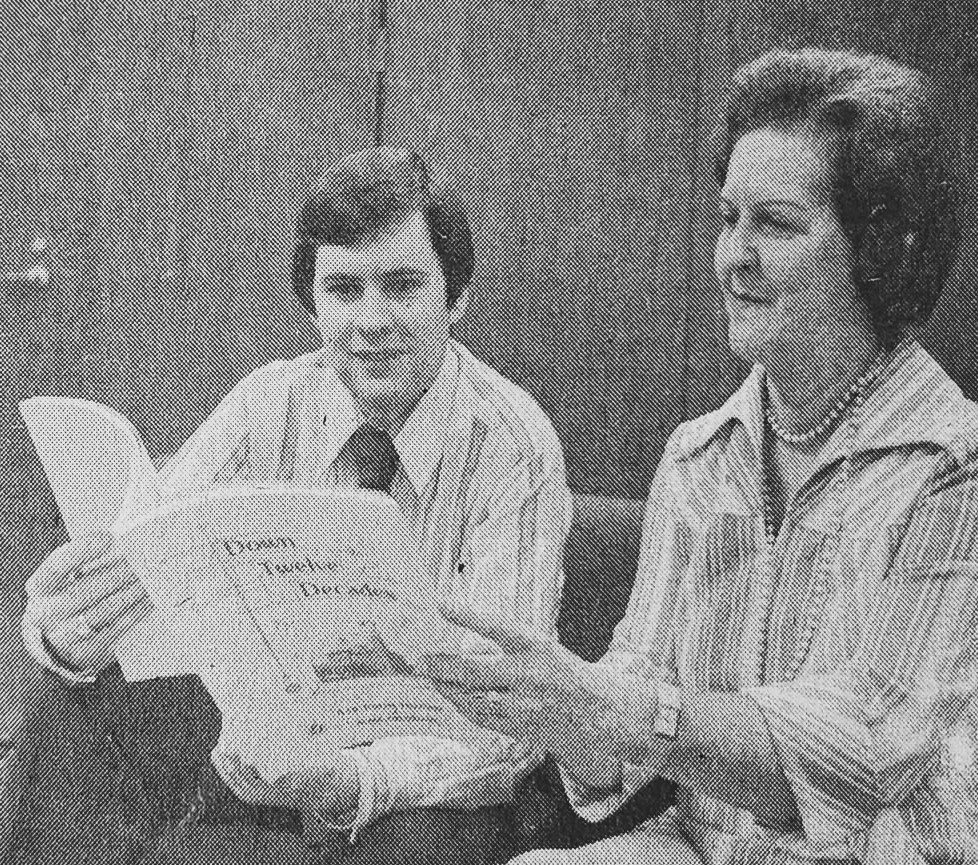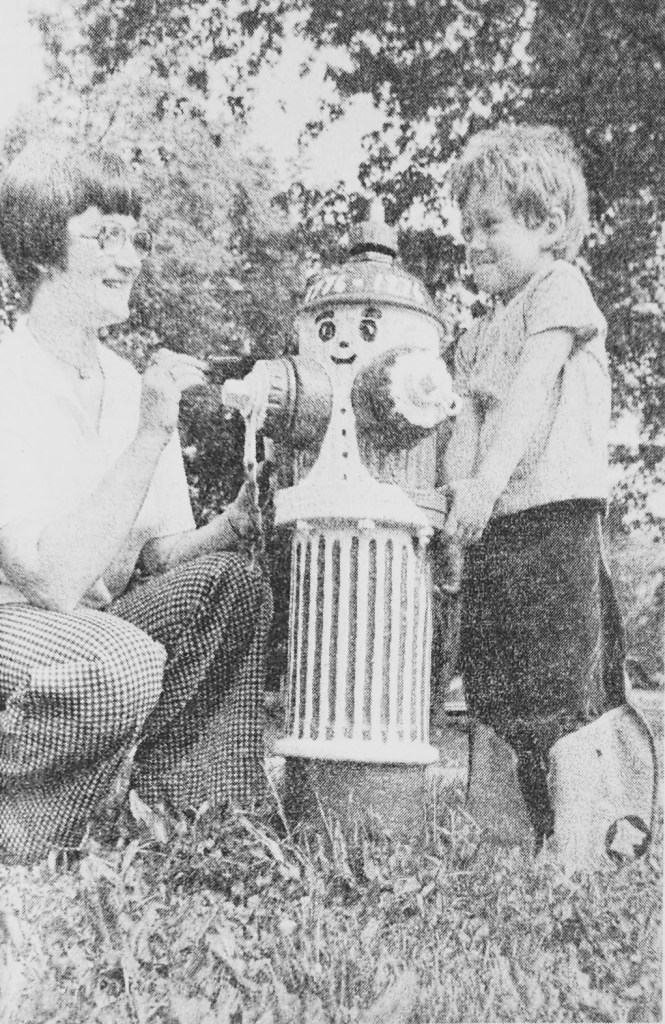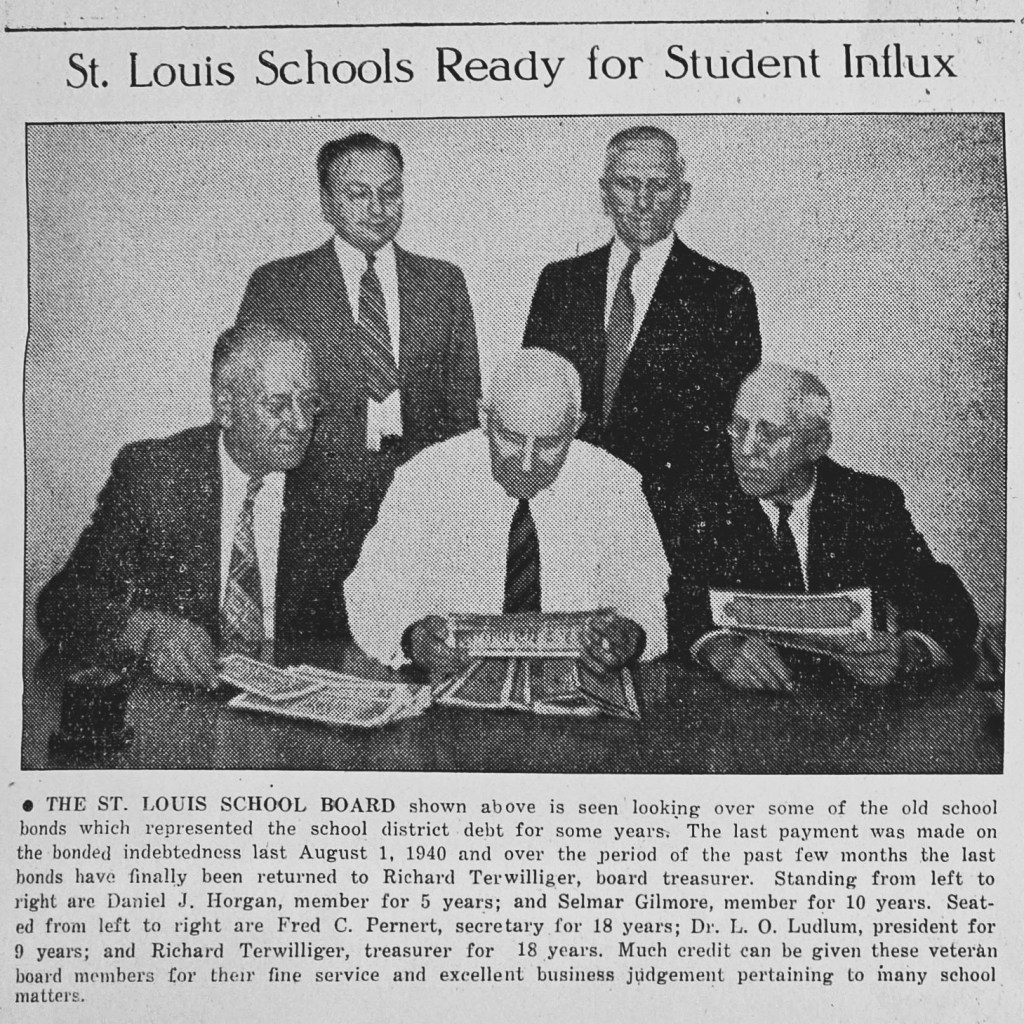
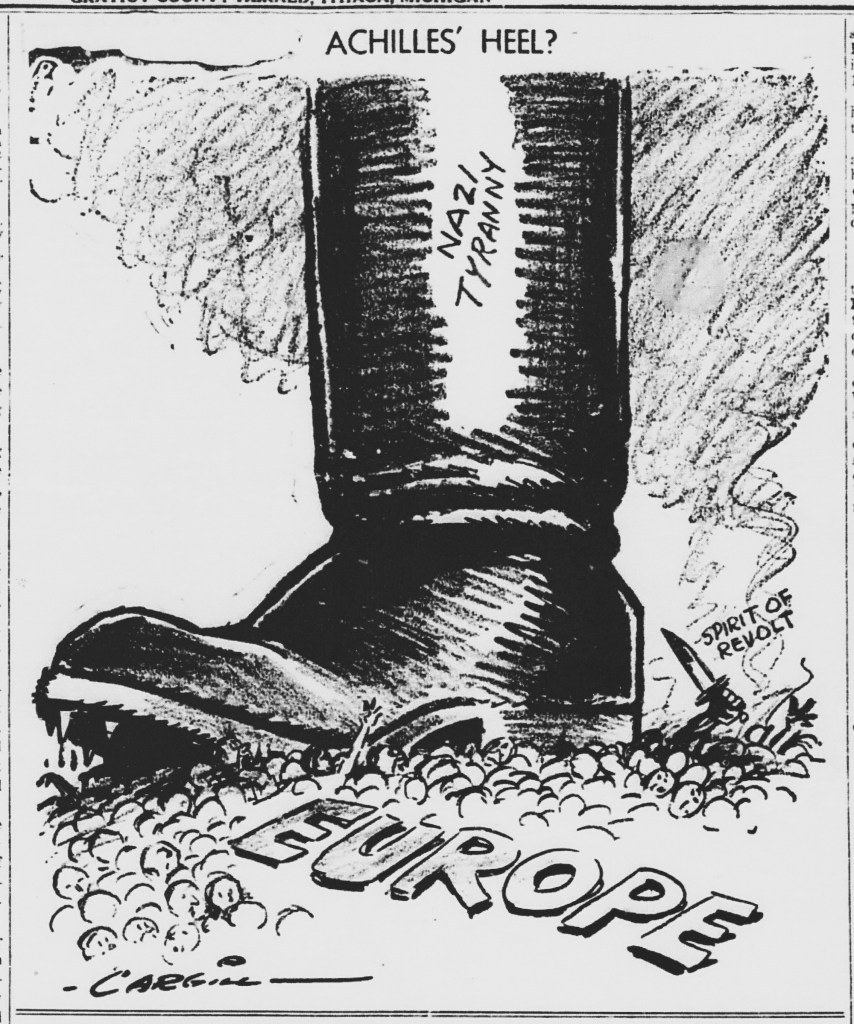
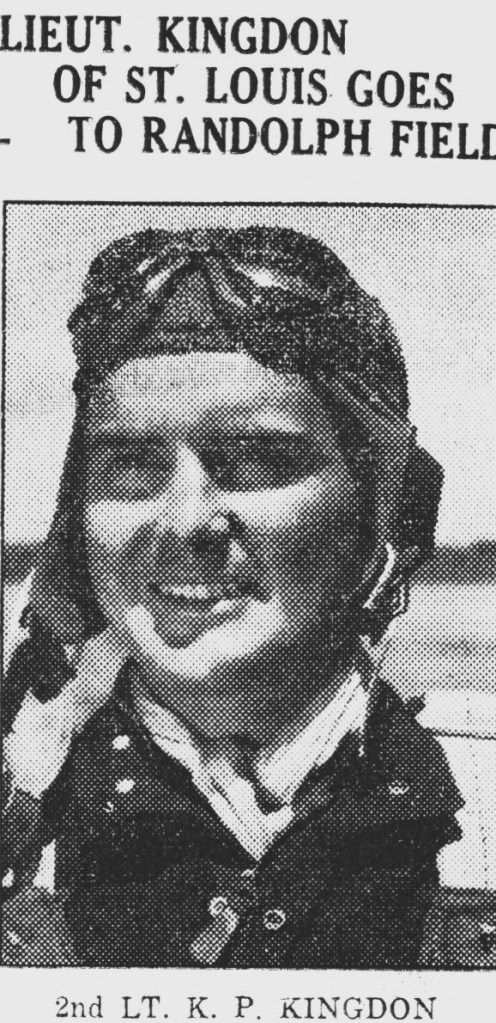
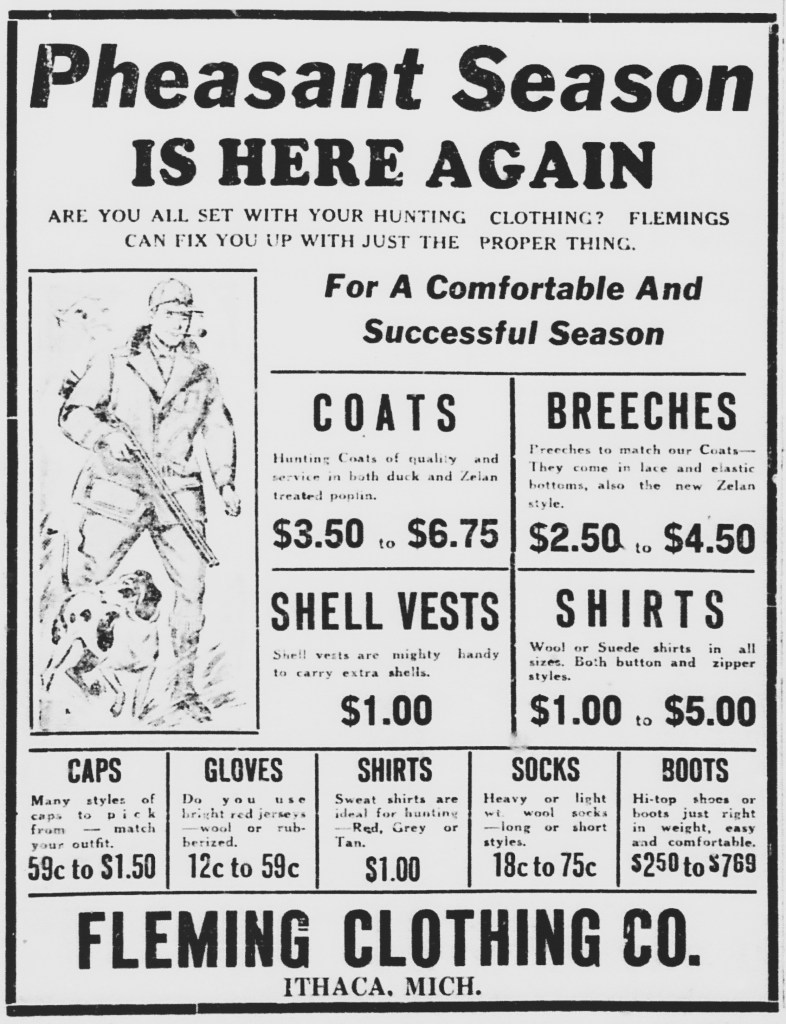
October 1941, from the top: Newly commissioned officers of Company 407 of Alma. The “Home Guards” were back; Over two years of Nazi tyranny in Europe made people hope for uprisings and revolts; Navy Day debuted in Gratiot County on October 27, 1941; Lieutenant Kenneth P. Kingdon of St. Louis graduated from Kelly Field and was assigned to be a flight instructor at Randolph Field, Texas. Kingdon’s story was just one of several that appeared in October newspapers. The names and numbers of men coming and going from Gratiot County increased as 1941 entered its last quarter; pheasant season descended upon Gratiot County, drawing hordes of hunters from outside the country to hunt the Ring-neck pheasant.
President Roosevelt’s speeches and radio addresses to the nation sounded as if United States involvement in the war was drawing closer.
Some of Gratiot County’s young men briefly came home from recently entering Selective Service. A short visit home could be worth the long trip from Louisiana, the Carolinas, or even Texas.
The county’s earliest calls for aluminum and waste paper collection drives were only a foretaste of what would happen the next year. But no one knew this.
Out in the Gratiot County countryside, pheasant and rabbit season was about to open. Farmers prepared for the arrival of many out-of-county hunters – and they worried about how their crops, animals, and farmland would be treated.
The last peacetime holiday season was fast approaching. But again, no one realized just how quiet life really was.
It was October 1941 in Gratiot County.
War Talk and War Preparation Movement in October 1941
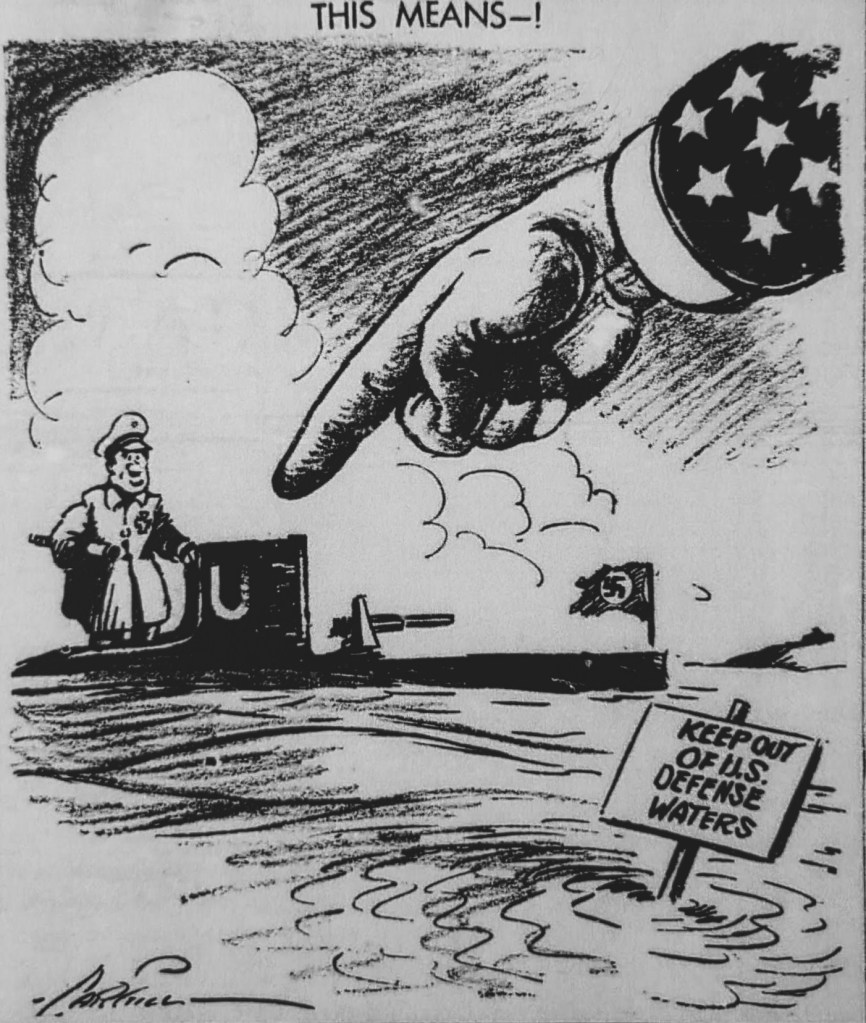
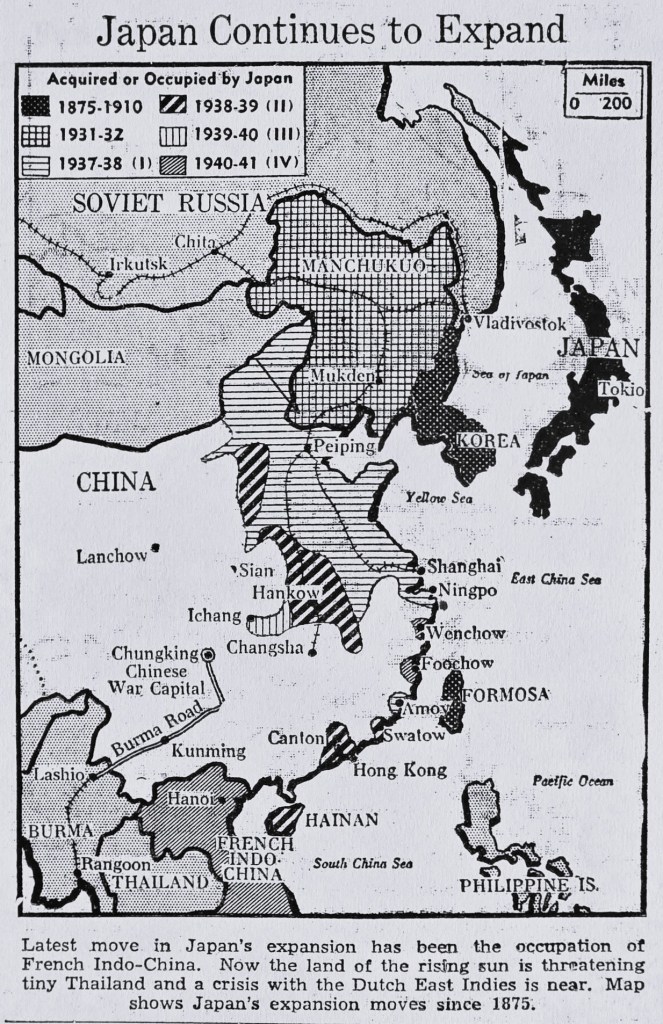
“The shooting has started,” President Franklin D. Roosevelt said in an address to the nation in late October. War seemed imminent for the United States, but how and where would it begin? Nazi U-boat attacks upon shipping in the Atlantic caused Roosevelt to warn the world that “We Americans have cleared our decks and taken our battle stations. The forward march of Hitlerism can be stopped – and it will be stopped.”
Throughout October, many news items strengthened feelings that war with Germany was just around the corner. Early in October, the Gratiot County draft board announced that fourteen men had to appear at the county draft board offices on November 3 to report to Detroit for their final examinations. This came after the county did not have to provide men for selective service in October or November because it had filled all previous quotas on schedule. The Greyhound bus carrying the group was scheduled to leave Alma at 6:00 pm (following a dinner at the American Legion Hall), and they would stay at the Fort Shelby Hotel. After their examinations, the men would return home and have ten days to take care of all personal matters before entering the service.
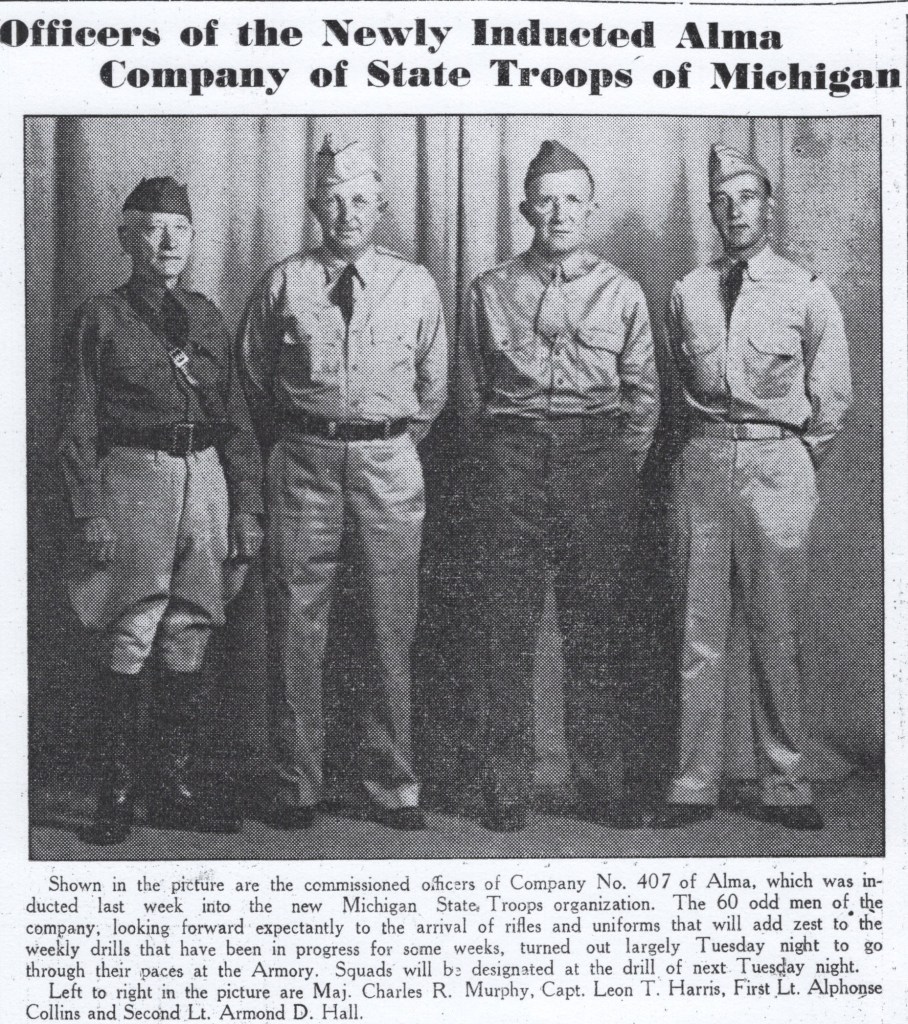
While it had been nearly six months since the Alma anti-tank battery left the county for federal service, the 407th Company of Michigan State Troops was organized and was activated. Captain Leon Thomas Harris commanded the unit and had 57 officers and men. A formal induction service was held at the Alma Masonic Temple after the men marched down there from the armory. The group awaited a shipment of rifles, and 44 of the men received measurements for new uniforms. While more men entered the service, 33 others became eligible for early release because they were 28 years of age or older. The first three offered discharge started with Private Albert Tussell of Wheeler. Upon discharge, Russell immediately joined the enlisted corps and was one of four Russell brothers serving from Gratiot County. Ward Young of Ithaca and Harold Cook of Riverdale were the other men to receive early discharge.
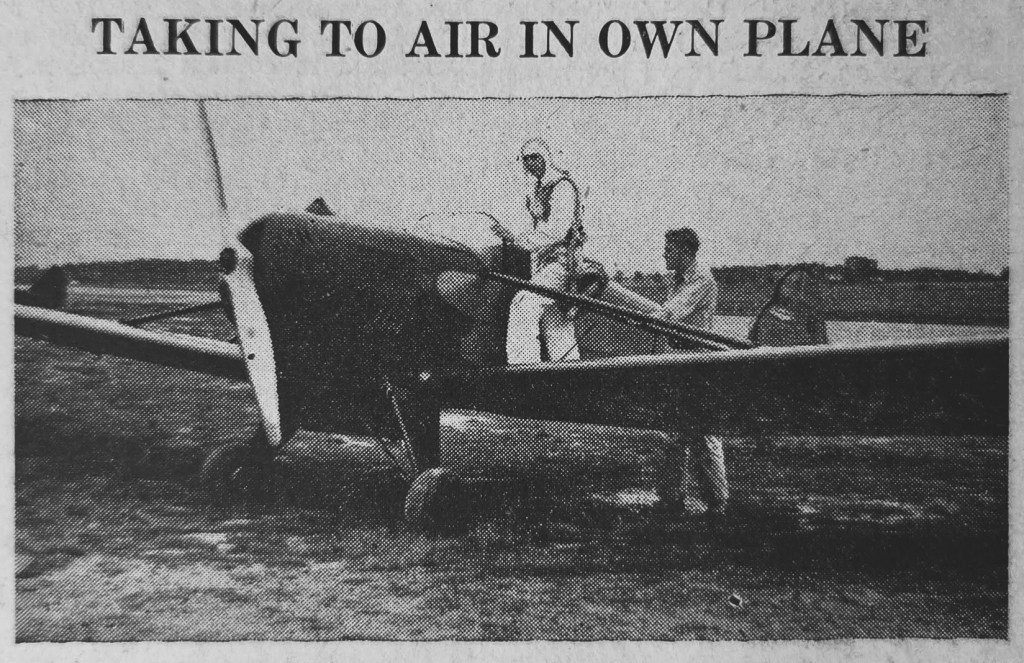
Other men also came home in October, but only on furlough. A group of 42 men from Louisiana and the Carolinas returned for a 12-day leave. About 30 of them belonged to the anti-tank battery, which left the county earlier in 1941. Several stated that they liked the idea of being home for the start of pheasant season in Gratiot County. As these men returned home, readers learned where they had been. Private Willard Haag and Private Allen Fairbanks came home to a chicken dinner in their honor. Haag had been at Fort Custer; Fairbanks at Fort Clairbourne, Louisiana. Private Harry Oberlin was invited to a party in his honor at the Ray Peck home. Cider and doughnuts welcomed Oberlin and sixteen friends. Private Duane Gamble of Newark came home to Perrinton to visit for a few days after becoming a licensed radio operator at Scott Field, Illinois. Private Franklin Klein came home from Fort Sheridan, Illinois, after spending eight weeks training in automotive mechanics. He was one of 41 graduates in his group, and he expected to be sent back to Fort Custer with the 56th Quartermaster Regiment. Private Gerald Gilbert of Alma headed the other way as others came home. Gilbert was one of 113 selectees from Fort Custer to be sent to Camp Wallace, Texas, to prepare at the Coast Artillery Replacement Training Center. News arrived that Lieutenant Kenneth Kingdon of St. Louis was assigned to Randolph Field, Texas, as a flight instructor. Kingdon had just graduated from Kelly Field as one of 31 officers who completed basic training at the “West Point of the Air” that summer. When Kingdon got home to St. Louis, he stayed with his parents for five days.
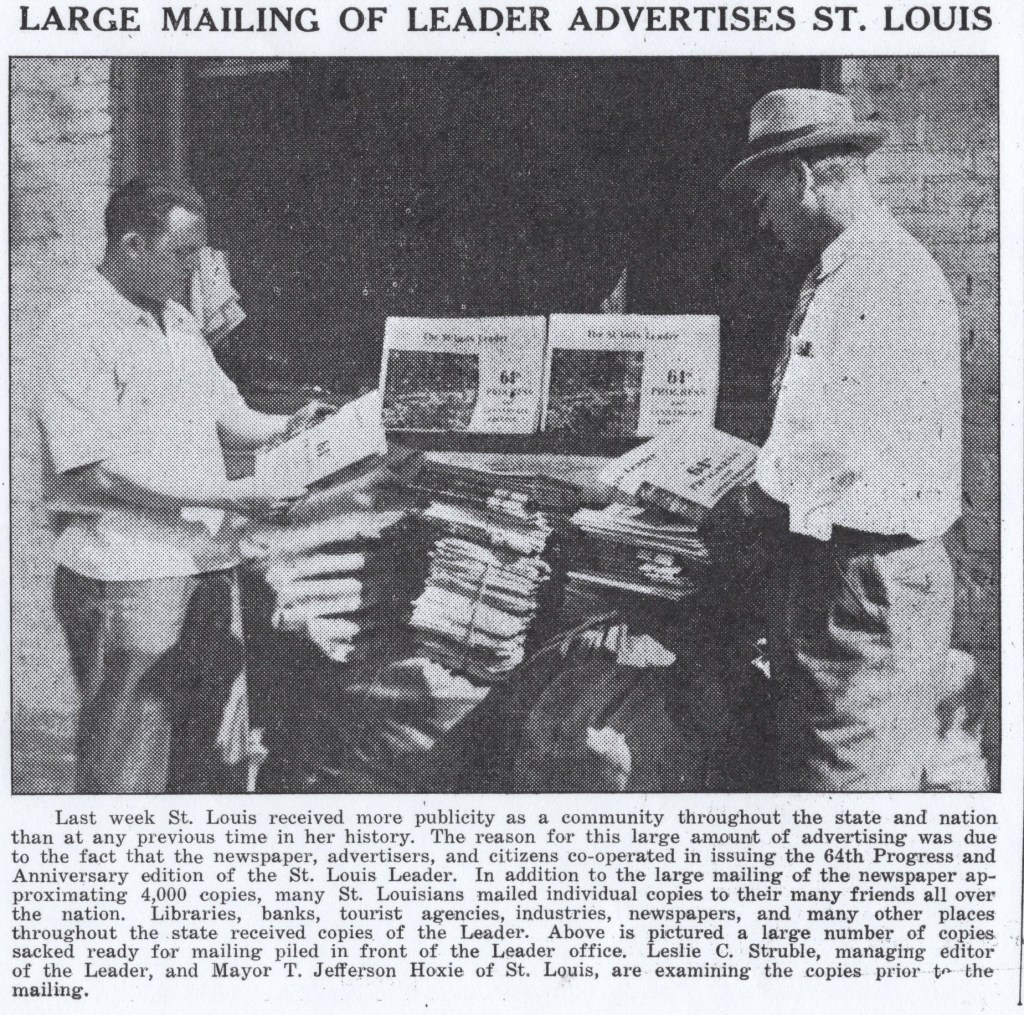
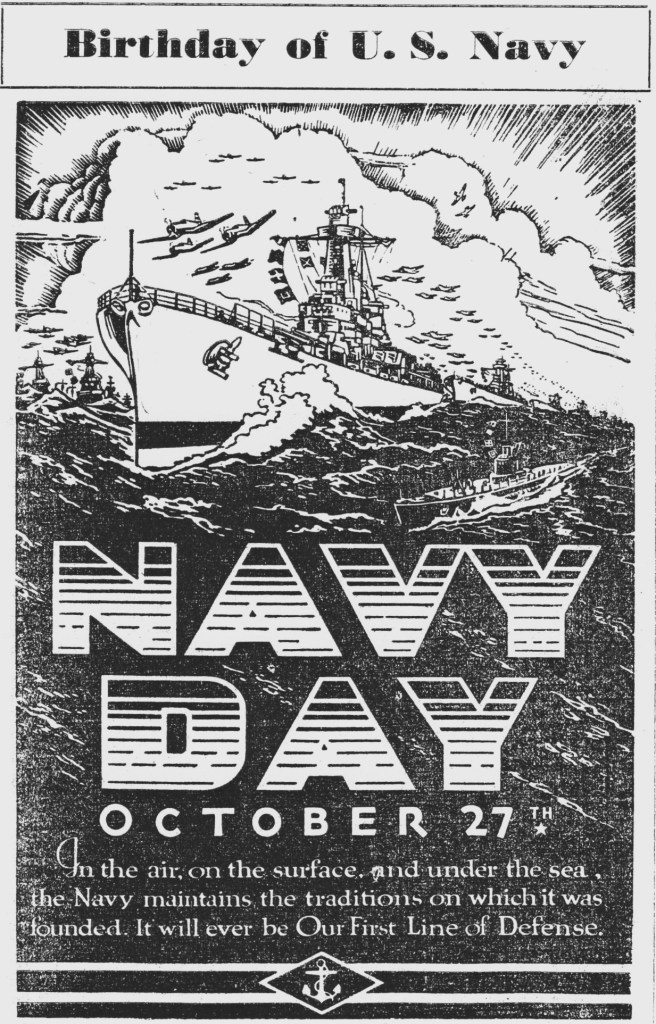
In October 1941, one branch of the military openly recruited more Gratiot men for service. Alma Record editor R.A. Babcock and Leslie C. Struble of St. Louis became official “Navy editors” who helped with a Navy campaign to get Gratiot young men to join the new “Two-Ocean” Navy. To carry out the recruitment drive, the Navy opened a recruiting station in St. Louis. Those young men who wanted more information could get it at the Alma Record office or the St. Louis Leader office. At the end of the month, Gratiot County officially joined and promoted Navy Day on October 27, hoping to draw more men to the service. One St. Louis youth, Reinhold Faust, decided to join the Marine Corps and was headed to Parris Island for his first assignment.
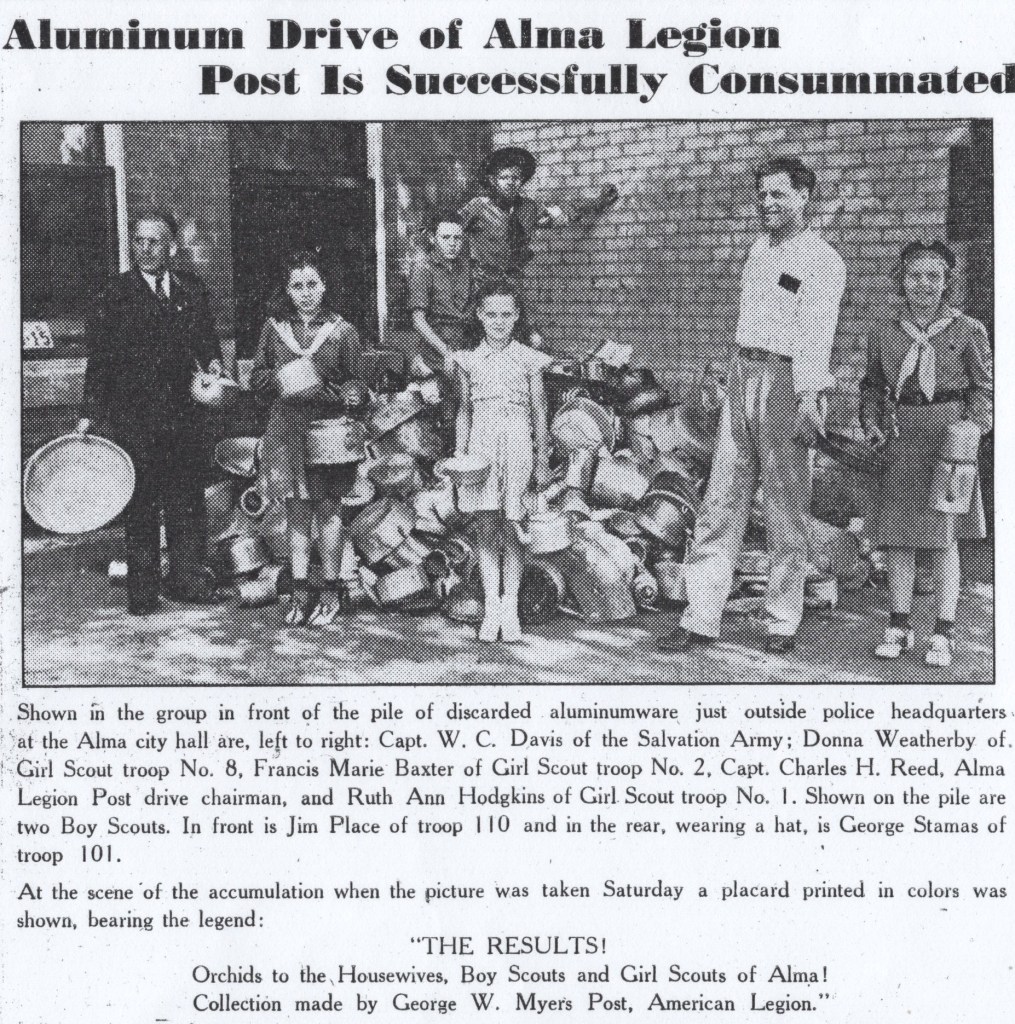
Civilians exhibited their patriotic spirit and supported those in the military.. The Gratiot Red Cross prepared for its annual roll call drive to raise $ 3,450, double what it raised a year ago. A group of twelve Gratiot County men completed a ten-hour ARC course in advanced first aid and lined up to receive the Red Cross First Aid pin. Breckenridge participants included Thomas J. Roth, Dr. D.J. Shepard, Louis Federspiel, and Richard Paulus. The Jean Torrence Chapter of the Daughters of the American Revolution donated 55 cans of jellies and jam, along with a large collection of current magazines, for men at Fort Custer. Gratiot County Boy Scouts organized a countywide waste paper salvage drive. This came in response to a call from Washington for a nationwide paper-collection effort. A greater nationwide effort was needed to collect aluminum pots and pans, which had been donated earlier in the summer but had not been picked up and shipped for melting. Soon, Gratiot County would get involved in other forms of metal drives. The Gratiot County Defense Council formed in Ithaca to address the county’s defense needs and goals; in this case, the main focus was firefighting. Alma Postmaster J. L. Winslow reported that more people bought national defense bonds and stamps during September. These sales included bonds amounting to $3,356.
Some glad and sad news rounded out the month. The Alma Elks and the four-county American Legion Posts planned a large Armistice Day parade in Alma, with over 20 floats from industrial and business firms and seven bands. Red flares and aerial bombs went off during the parade to honor Gratiot County’s World War I veterans. In sad news, Claud Jessup, originally from North Star Township, died while stationed at Guantanamo Naval Base, where he served for most of the previous fifteen years. Mrs. Emma Jessup of Ithaca, Claud’s mother, after much deliberation about long-distance travel and concern because of advancing age, decided to travel to Cuba to visit her son. After she left Ithaca on October 14, her son suffered a cerebral hemorrhage the next day and passed at Guantanamo Bay. Emma Jessup had no way of knowing what happened and could not be reached until she reached Cuba. Mother and son were reunited, but in an unexpected tragedy.
New Deal Programs at Work in Fall 1941; Depression Needs
WPA (Works Progress Administration) workers received good news that the WPA planned to increase pay. Howard O. Hunter, WPA commissioner, said he believed pay increases would average about ten percent. Gratiot County workers earned $44.40 a month at the time. Only one person over the age of eighteen from a single family could work in the program, and the WPA workforce averaged 234 people during 1941. By September, a total of 157 WPA workers existed in the entire county. For some of their jobs, Alma WPA workers prepared to finish pouring concrete slabs on three blocks of River Street. St. Louis also hoped that WPA workers over there would complete a major sewer project. WPA workers completed about fifty blocks of street improvements over the past three years. Places like State, Iowa, and Superior streets were all WPA projects.
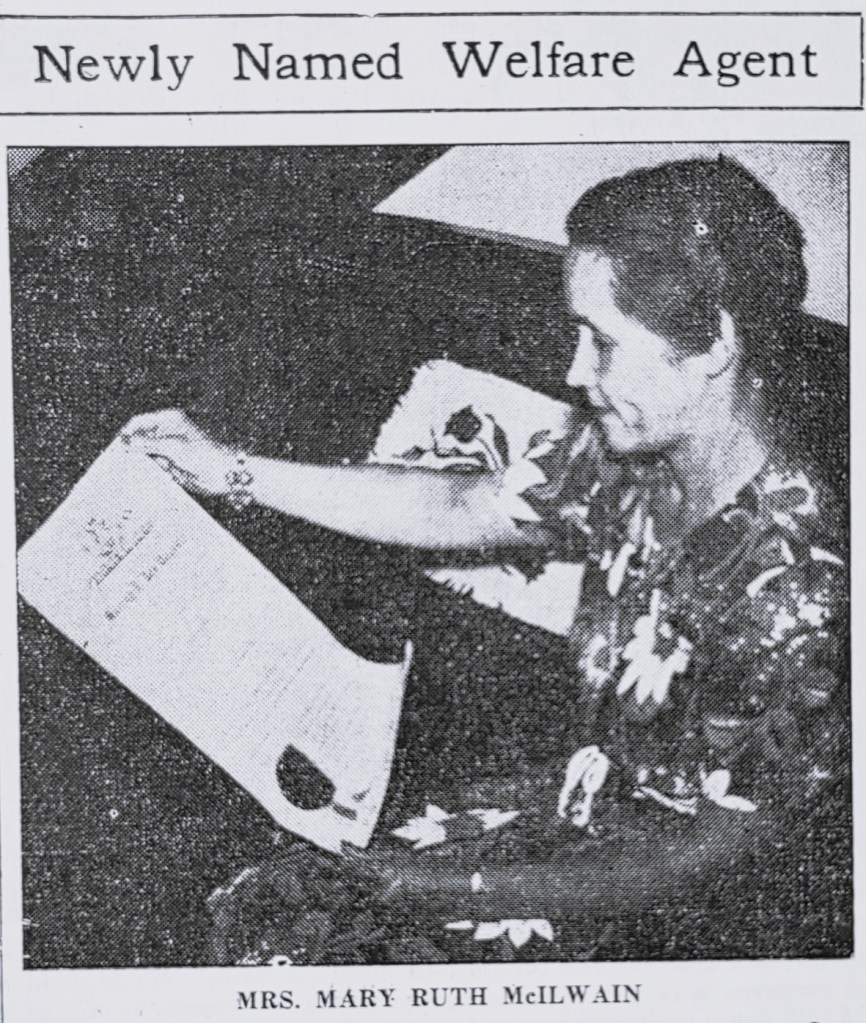
On Depression-related issues, the county still debated the status of a new welfare agent. The board of supervisors agreed to defer action on accepting the new agent who was appointed by the state of Michigan. Mrs. Mary McIlwain of St. Louis would be paid $5 per day or $2.50 per half day for each day she worked, plus another four cents per mile until the matter reached a resolution. Meanwhile, the issue continued until next month. The Gratiot County welfare association agreed to adopt the federal food stamp system. Each set of stamps had different colors and was supplied by mail-order service from state headquarters in Lansing. One of the biggest issues county commissioners faced was the cost of hospitalization, medical care, the infirmary, and the county poor farm. The previous year’s costs reached $84,959.86, and the commissioners aimed to reduce costs by deciding where to treat patients. The County Road Commission worked with the Department of Social Welfare to employ the unemployed by cutting brush along the county’s highways during the winter months. Most of the workers gladly received groceries and coal in exchange for their work.
Health Matters in Gratiot County
Newspapers reported on health issues, including the ongoing war against tuberculosis. Approximately 15,000 people in Michigan received “Health” magazine, which featured the success of over 3,700 rural Michigan schools that sold Christmas seals. During the previous year, 101 rural Gratiot schools sold Christmas seals to raise money to fight tuberculosis. The Yound School in Newark Township, taught by teacher Martha Wangerin, led the sales, received mention, and was followed by teacher Miss Nellie Peck’s Frost School in Wheeler. The issue featured letters written by many Michigan students. Newspapers also reminded readers that sixty-six people died from tuberculosis, a rate of 22 per 10,000 people in the county.
To combat disease in Gratiot County, places like Alma Public Schools held a diphtheria immunization clinic, led by Dr. Charles Dubois, city health officer and physician. Immunization cost twenty-five cents; however, any payment was welcome. Parents of children in kindergarten through second grade who could not afford the shots received them for free. The county board of supervisors reported that a free summer dental clinic took place in Ithaca, Alma, and St. Louis for underprivileged children. A total of 869 children and young people received free care courtesy of the Children’s Fund of Michigan.
Individual accounts of those who had health needs dotted the October 1941 news. Mrs. Lydia Gulick of Ithaca was hit by an automobile while walking near her home in Ithaca and was taken to Smith Memorial Hospital. Eight-year-old Mary Jo Young of Elwell suffered a slight head injury when she was hit by a car in downtown Elwell. One tragic story of the month centered around the fate of fifteen-year-old Betty Steggal of Middleton when a car she was in crashed and hit a telephone pole in Owosso early one Sunday morning. Steggal was killed instantly, but the driver suffered only cuts and bruises. In still another tragic accident in the county, Robert L. Hulwick, 19, of St. Louis, was killed in a traffic accident when he tried to pull out around a truck on Michigan Avenue and struck Carleton Van Horn, 20, a private in the U.S. Coastal Artillery. Hulwick tried to avoid the car and truck but struck an elm tree.
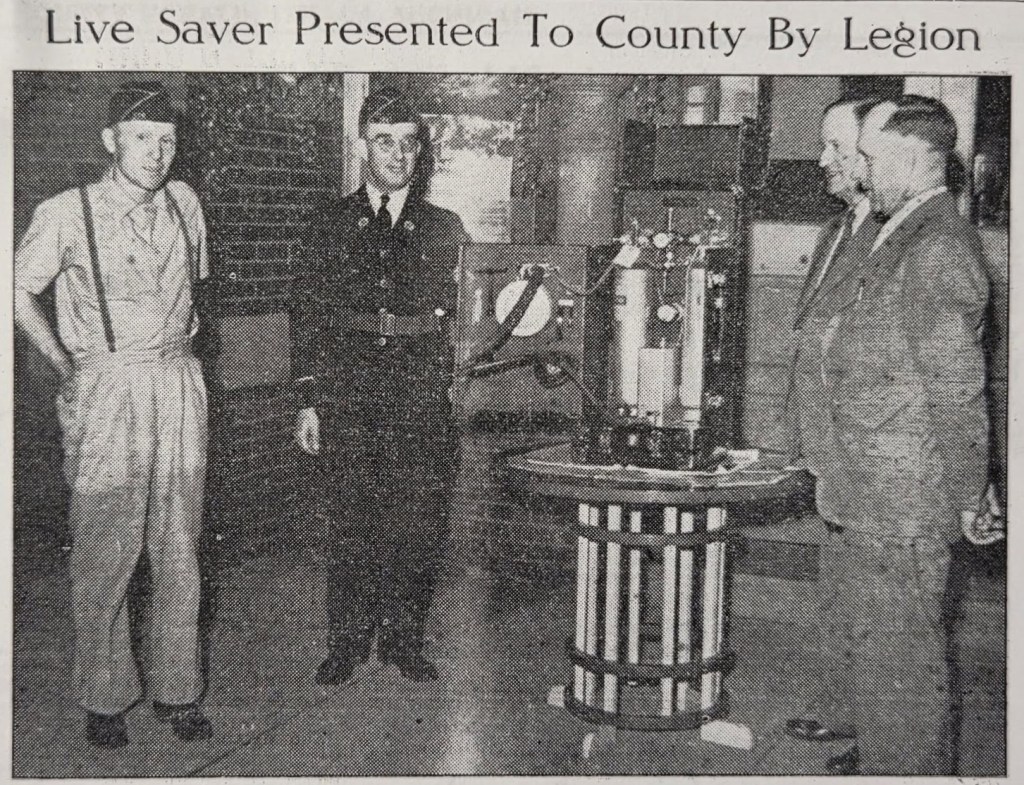
Ansel Jones of St. Louis headed to Smith Hospital with a smashed index finger he received at work. Mrs. Florence Aldrich, wife of an Ithaca doctor, was admitted at Smith due to first- and second-degree burns on her face and hands received when hot paraffin exploded while in their home. The Baby Dattos girl was placed in an incubator at Smith Memorial in order to help her with concerns about her health. Arland Carter of Elwell injured a finger on his left hand while he was cleaning a gun during hunting on his father’s farm. In another hunting accident, Bert Dicken of Arcada Township had to be taken to Smith Memorial after Dicken’s relative accidentally shot him. In this case, the other hunter stubbed his toe, fell, and discharged the shotgun about 120 feet away from Dicken, who received shots in his shoulder, neck, and both legs. Only one pellet was removed from Dicken’s body, and he was told to return for observation. Lavern Mitchell of St. Louis went to Smith Memorial after falling from a pear tree at his home. He dislocated a shoulder and fractured his left heel bone.
The Long Arm of the Gratiot County Law
In September, the county made 86 arrests. Offenders paid $424.35 in fines; costs reached $573.09. Some of those who appeared in court were charged with crimes like cohabitation (lewd and lascivious conduct), habitual drunkenness, disorderly conduct, indecency and obscene conduct in the presence of minor girls, indecent language, and several related to hunting violations.
While in court, Norman Prange of St. Louis received an injunction to stop orders and taking goods in Ithaca on behalf of the Cook Coffee Company of Bay City. The injunction told the city of Ithaca that it could not restrain coffee sales, as they were legally protected from interference with interstate commercial business. Frank and Emma Burch appeared in court because they were illegally married, as Frank Burch had not received a legal separation and divorce from his first wife. He thought a legal paper served on him by his first wife was a prelude to his divorce when the first wife showed up after this second marriage. Burch agreed to child support and immediately filed for divorce. The court deemed the situation an innocent mistake by Mr. Burch. A hearing was held for Roy Lewis, formerly of Alma, who asked for his release from Southern Michigan Prison in Jackson. Lewis was committed there as a criminal sexual psychopath and claimed he was cured. Judge Kelly Searl continued the Lewis case for another six months.
Other cases that month involved embezzlement charges against a truck driver who failed to turn over money for transporting lime for Lake Shore Sugar Company in St. Louis. Two St. Louis boys also stole an automobile in Mt. Pleasant and ended up in the state vocational school for boys in Lansing. Another Alma man sold a chattel-mortgaged radio and got a fine of $35.85 or he had to spend 60 days in jail. A rash of hunting violations occurred when hunters shot hen pheasants, had too many birds in possession, and started hunting too early on opening day – as well as transporting loaded firearms. Carl Lumbert of Midland County heard a “not guilty” verdict in a case involving entering a slaughterhouse near Perrinton. Then Lumbert was immediately arrested for breaking and entering in Montcalm County. Louis Hernandez, a Mexican beet-field worker who lived near the Gratiot-Isabella county line, was arrested for driving under the influence. Friends of Hernandez paid a $54.85 fine to avoid jail time and to get Hernandez back to work in the beet fields.
In other news, Alma Chief of Police Earl Willert attended a defense training meeting at the Fort Shelby Hotel in Detroit. The meeting attracted law enforcement officers from across the state to discuss home defense issues. Finally, about 250 Gratiot descriptions of property went up for sale in Ithaca at the courthouse, drawing 74 bids and $1,377.50 in sales. Most of the properties consisted of vacant lots in Alma and St. Louis. Although more than one hundred people turned up for the sale, competitive bidding remained slow.
Farmers, Farming, and Hunting
A downpour hit the county in one week in early October, bringing almost five inches of rain. These heavy rains then slowed sugar beet and bean harvest and worried bean farmers, who had experienced harsh midsummer heat followed by an abnormally dry summer. As a result, loads of sugar beets arriving at county stations remained slow.
If it is October, then the deluge of hunters upon Gratiot County was about to begin. Pheasant and rabbit hunters from around the state were about to descend upon the county, making Gratiot farmers nervous. Many farmers hoped for a “peaceful invasion” through the Horton Trespass Law, which required hunters to have written permission to hunt on private property. County farmers frequently complained about open gates, cutting or crushing wire fences, shooting at stock, or letting stock out of their enclosures. Many in the farm community saw hunters as either “good” or “bad.” State reports of the current pheasant population suggested that this season could produce a bumper crop of pheasants. Still, fewer hunting area clubs said they would be open so that hunters could turn to the 5,000 to 6,000 acres open to hunters in southeast Gratiot and western Saginaw counties.
This October hunting season saw some unusual pheasant stories. Alma students Jack Detloff and Duane Morton were at the Alma Newsstand when a pheasant flew into the large window of the Compton Shop and broke its neck. Unsure of what to do, the two boys took the pheasant to the police station, where they were told that they could keep the bird. In another case, farmer Paul Raycraft of Arcada Township shot not one, but two albino pheasants. It was the first recorded instance of killing two albinos in one day in Gratiot County (and in the state of Michigan). Raycraft told the Gratiot County Herald that he had seen the birds with albinism in the summer and fall, but was surprised to bag two in one day. At the end of the month, the Michigan Chemical Corporation held a stag pheasant banquet for employees at the St.Louis Park Hotel. Employees who took opening day off worked together to gather enough pheasants for the dinner.
Regarding other farm news in October, thirty-one schools requested an organization of forty-two 4-H Clubs in the county. County Agent C.P. Milham believed more schools would request even more clubs by month’s end. Farmers, do you have nothing to do in the winter? Evening schools on farming would again be held in Breckenridge, St. Louis, Ithaca, Alma, Ashley, Perrinton, and Middleton. The winter classes would focus on soils.
Halloween and Thanksgiving Approach Gratiot County
Three Gratiot communities continued their Halloween traditions and programs for youngsters while one dropped out. The St. Louis Lions Club arranged games, contests, and a costume parade. Halloween night saw a parade of costumed children start at the foot of Mill Street near the creamery, then parade down to Mill and Saginaw, turn east, and proceed to the city park. After contestants arrived, they marched over a lighted stage for judges to view the costume contest. The Fritz Family then entertained the crowds in the high school gymnasium beginning at 7:00 pm. The Breckenridge Rotary Club sponsored a Halloween party and parade. The parade, led by the high school band, started at the Roth garage. The Ithaca Chamber of Commerce sponsored a program in the Ithaca High School gymnasium. The city of Alma was the only town not to hold the annual Halloween festivities, as “the times call for close economy in municipal administration.” In other words, the city did not want to spend the money this Halloween. Remember, “All America Loves ‘Em. Serve Donuts at Your Halloween Party” read an advertisement for National Doughnut Week, October 27 to November 1.
As Thanksgiving season neared, Gratiot County began a tradition that continued throughout the 1940s with the creation of the first Turkey Festival. On the night of October 21, the first Turkey Festival opened at the Alma Odd Fellows Hall, sponsored by the Turkey Growers Association, Alma Chamber of Commerce, and the county extension office. After a talk by a poultry specialist from Michigan State College, the program featured movies and entertainment, culminating in the crowning of the first turkey queens, Colleen Townsend of North Star and Wanda Gabrion of Ithaca. A fifteen-pound, four-ounce tom watched over the festivities and became one of the night’s prizes. Two hundred people attended the program, which cost seventy-five cents per ticket. Turkey growers from six other mid-Michigan counties could not match Gratiot County, which led the group with 30,000 turkeys on 129 different farms. Swift and Company of Alma had 15,000 turkeys; Hoyt’s Turkey Hatchery hatched 30,000 poults; Marshall Michaels of Alma raised 1,700 turkeys; and Francis Brauher of Middleton had 1,000 turkeys on his farm.
And So We Do Not Forget
The Middleton Methodist Church held its annual Rally Day on Sunday, October 5. After the service, the church served a potluck dinner in the dining room…Carl Lanshaw of Wheeler was recognized for 27years in business as Lanshaw’s Hardware Store. Recognized for his sound business judgment, Lanshaw served as president of Farmers and Merchants State Bank of Merrill. Lanshaw was an outstanding catcher during his playing days in mid-Michigan…A rare Kirtland Warbler visited the bushes on the lawn of Mrs. J.L. Winslow of Alma. It stayed a few minutes before taking off. The visit seemed unique, as Kirtland’s Warblers are found farther north and must have been heading south for the winter…Fred McMurray and Madeleine Carroll starred in “One Night in Lisbon” at the Ideal Theatre in Ithaca. All seats were ten cents with a penny tax…William Havelka, 21, married Nola Zoss, 19, both of Emerson Township. Kiel Eckelbarger, 21, of North Star Township, and Vera McVeigh, 20, of New Haven Township, also became victims of Cupid’s Arrows and obtained their marriage licenses…Mayor T. Jefferson Hoxie reported to the Alma buildings committee that 690 people visited the city restroom during the week of October 12. Most of the traffic came on a Saturday, with the largest number being 282.
Sixty people enrolled in adult education in St. Louis. Six classes were offered, and Wilton Slocum, chairman of the council adult education classes, stated that “The attendance and interest are very gratifying”…The Gratiot County district of the Michigan Educational Association held its first meeting with over 150 teachers in attendance at Alma High School on a Tuesday night…The New Haven Church planned its annual homecoming service on October 26. Otho Winger was scheduled for two services that day, with a basket dinner in between at noon…The North Star Bearcats finished the 1941 season with a record of 18-4, the third year in a row that the team won the county baseball league…A total of 35 owners in the Porter Oil Pool received a judgment of $787,993 to be split among them. The money had been impounded for years as it worked its way through the courts. Cash recipients ranged from $665 to $162,922. Anyone hindering the results of the suit would be penalized $10,000 if they brought suit against this judgment….Those who showed up to work on reforestation in Conservation League Park on October 5 received a free chicken-and-dumplings dinner. Work starts at 9:00 am, a break for lunch, then a return to the mission…Riverdale got a good scare at the end of September when the Hyde Building caught on fire and cotton for the use of mattresses was threatened. The cotton was necessary to make mattresses under the AAA program, but most of it was spared, and the fire was put out…Riverdale teachers also received honors from the Riverdale Methodist Church. The church sponsored a party one Thursday evening, followed by games and refreshments.
Alma College dedicated the new Dunning Chapel. About 700 people attended the program, filling the seating…Leo Simon of Alma received a building permit to construct an addition to the Alma Iron and Metal Headquarters on State Street, just north of the bridge. The addition would cost an estimated $1,600 to complete…The Mullet School enrolled 16 students for the 1941-1942 school year. Gertrude L. Howe served as the teacher…See the 1942 Ford V-8 and Six, as well as the Mercury Eight, on display at Rademacher Motor Sales in Alma…The Three Mesquiteers starred in “The Trail Blazers” at the Alma Theatre. Tickets for children cost ten cents and a penny tax. Adults cost eighteen cents and two cents tax…The Alma Chamber of Commerce recommended creating a community chest to receive contributions and donations for future charitable and social purposes. The idea came about because of the success of the Alma Mardi Gras held in September. All chamber members who were queried soundly renounced any future ideas of a downtown carnival for future summer festivals…Saul Sharp of St. Louis brought in his second crop of raspberries for the season. Although his berries usually ripened in June, this batch came about due to the recent unseasonably warm weather in the county.
Workers installed a new flagpole on top of St. Louis City Hall after clearing the top of the railing near the fire siren. Previously, the pole sat as part of the old tower, which was slated for remodeling. The city also insulated the police booth for the winter by treating the windows, door, and walls of the structure near the corner of Mill and Washington…Aubrey Faurot of St. Louis lived out his dream as an entrepreneur by continuing to operate a wallpaper, paint, and men’s store starting in April 1940. A St. Louis High graduate, he previously worked for Raycraft Drug Store and took a course at Warner’s Practical Institute of Pharmacy in Sandusky, Ohio. His wife, Ednamae, and daughter, Susan, age 6, help out in the store…The American Legion and Elks Lodge of Alma sponsored a national defense poster contest in local schools in October. The contest had two divisions: grades K-8 and 9-12, and was open to all students in the county. The poster had to measure 16×24 inches, and first prize was five dollars. St. Louis citizens sounded concerned about the dead end of Mill Street near the Pere Marquette Railroad on the south side of the city. Children kept going under or crawling through the barrier and train cars that blocked their route to school and downtown. Over 100 people signed a petition asking that part of Mill Street be opened to traffic and pedestrians.
Mr. and Mrs. R.C. Kerr of Ashley celebrated their fiftieth wedding anniversary. Reverend Charles and Delia Richards of Bridgeville celebrated their 45th anniversary…Get your vitamins! Read about the need for vitamins by getting a booklet at Burhards’ Drug Store in Ithaca…Fulton School planned to have a band in 1941. Over 35 students showed outstanding ability to be in a band by passing a recent test. Bring on the band…The Sickles Sewing Club met at the Dayringer residence in Sickles. A Sickles birthday club was also in operation…Gratiot County observed Fire Prevention Week from October 5-11. This followed a proclamation from President Roosevelt announcing that fire was an enemy to the nation that had to be faced…Alma College students (all males) held their annual Pajama Parade down Superior Street as a rite of gentle hazing. After a day of fun, students headed to the Strand Theatre for a free onstage show.
And that was Depression and War in October 1941.
Copyright 2026 James M. Goodspeed