Gratiot Community Hospital events in 1955 from the top: A photograph of the hospital as it appeared in late February 1955. The new entrance was in the light colored area in the center; the dedication ceremony took place on August 28, 1955, with 500 people in attendance. An open house took place afterward; the first patient admitted to Gratiot Community Hospital was William Raycraft of Alma. Dr. Kenneth Wolfe, who admitted the first patient to Smith Memorial 22 years earlier, was honored for bringing the first patient to GCH; Mrs. Charles Hinton of Vestaburg (center) had the first baby in GCH, a girl. The family received several gifts from Alma merchants; the Hospital Lobby Shop was one of the early projects handled by the Gratiot Community Hospital Auxiliary. Mrs. Donald Nelson and Mrs. David Van Slyters wait for Mrs. Ray Bentley from St. Louis early in the shop’s opening.
The start of 1955 marked a pivotal chapter in the effort to build Gratiot Community Hospital, as the community rallied around a common goal and took meaningful steps toward making a new county hospital in Gratiot County.
The year began with the first baby born in Gratiot County at nearby Smith Memorial Hospital. Charles Fay Thompson arrived at 7:48 p.m. on New Year’s Day, weighing 7 pounds and 5 ounces, and his parents were Mr. and Mrs. Harold Thompson of 112 Winsor Street in Alma. This birth was unique: the Thompson child would be the last “first baby of the year” at Smith Memorial, which closed later that summer.
Throughout the winter, to ensure progress continued, builders completely enclosed the hospital and installed temporary heating so interior work could advance despite the cold. During this stage, Hospital Administrator Art Allaben kept his offices in the Alma City Hall, maintained a full-time secretary, and offered hours from 9 a.m. to 5 p.m. daily. Some people either came to the office or mailed letters of interest to seek positions at the new hospital, but hiring did not begin until late spring. In early March, public interest grew when a new photograph of the hospital, taken from the west, appeared in the Alma Record under the headline, “New Hospital Has Fine Appearance.” Donor recognition efforts continued during this period, including an announcement that James E. Ryan, president of Alma Trailer Company, fulfilled his pledge by donating $25,000 to the project, and he commented that the donation was an example of what the entire trailer industry could do to be involved and active in the community.
As spring turned to summer and construction continued, a change in the timeline became necessary. In June, the Board of Trustees realized that the hospital would not be ready by the original July 1 date. They set a new target of September 1, attributing the delay to the need to procure the necessary equipment to begin construction of the hospital. Around this time, Administrator Allaben announced that Alice LaPaugh had been hired as director of nurses, having previously held a similar position at Smith Memorial Hospital. Miss Constance Lucia of Ann Arbor was hired as LaPaugh’s assistant. The hospital also introduced a program to recruit and train a group of Grey Ladies under the direction of the Gratiot American Red Cross. These volunteers needed to be over 21, have a doctor’s note confirming their good health, and be “willing to help their fellowman.” The gray poplin uniform each Grey Lady wore cost them $7, and the Gratiot Red Cross furnished the insignia. Additionally, the new hospital launched a call for teachers for “Home Care for the Sick,” introducing a five-day training program to help people care for their own sick and others during a disaster.
Near the end of summer, the Board of Trustees announced the dedication ceremony for the new hospital would be held on August 28. Planning entered its final stages as the hospital anticipated large crowds, and it asked Consumers Power Company for permission to use its parking lot for potential overflow parking. An open house was planned so everyone in Gratiot County could tour the new facility, which now featured 86 beds and 20 bassinets. The first patients were expected to arrive by early September, especially from Smith Memorial Hospital.
On August 28, 1955, Gratiot Community Hospital opened. Despite overcast weather, a large platform hosted officials and speakers. Reverend Bernard Didier was the toastmaster, and Dr. Edward T. Thompson delivered the dedicatory address. The $1,000,000 project was celebrated as a joint effort of industrialists, civic groups, and citizens. After the ceremony, the crowd toured the new hospital.
After this dedication, the first patient, William Raycraft, arrived by ambulance from Dewey Funeral Home on September 19. Dr. Kenneth Wolfe oversaw his admission, who admitted the first patient at Smith Memorial Hospital 22 years earlier. Also starting that day, patients and equipment were moved from Smith Memorial to the new hospital, temporarily cluttering the facility as staff organized it.
Early in the hospital’s opening, Mrs. Charles Hinton delivered the first baby, a girl, on September 21, with Dr. Silvert and Mrs. Delores Jones assisting. Alma merchants honored the family. On October 7, Mrs. Leon Woodbury had the first twin girls, delivered by Dr. Loren Burt and RN Doris Jessup. Jessup was also the mother of Alma’s triplets, born in town some years earlier. Admissions reached 57 patients by this milestone.
By October, a new lobby shop opened for short daily hours, chaired and staffed by Mrs. David VanSluyter. The Women’s Hospital Auxiliary held its annual meeting, with 90 attendees, and recruited volunteers and requested sewing machine donations. The auxiliary focused on public relations, fundraising, and volunteer services, and later introduced a room-service cart for patients through the lobby shop.
As 1955 came to a close, more activities took place at the new hospital. Earle Brenneman, chairman of the hospital’s fundraising efforts for two years, was recognized at a dinner held at Van Dusen Commons at Alma College. Brenneman served dutifully and led the campaign to raise funds for the new hospital. The hospital also needed nurse aides and offered training classes beginning in early December. Applicants were preferred to be at least high school graduates. An enlarged Board of Directors held its first meeting and, among its first tasks, started a search for a new hospital administrator after Arthur Allaben, who had held the position for a year, resigned. The board set hospital rates for multiple rooms at $12 each, semi-private rooms at $15 each, and private rooms at $20 each. Most of the hospital’s rooms were semi-private.
Just before Christmas, Gratiot Hospital received a $20,700 grant from the Ford Foundation to enhance facilities, train staff, and conduct research. The hospital also named Dr. Bernard J. Graham as chief of staff for 1956, with Dr. R.L. Waggoner as vice chief.
Gratiot County now had its community hospital up and running after years of planning, fundraising, and building.
The Gratiot County hospital fund drive moves forward (from top): A set of proposed hospital plans was presented to public meetings in late January 1953. From left: Dale Misenhelder, C.L. Seeley, Paul Raycraft, and Mrs. Don Mulholland attended the presentation at the Gratiot County Courthouse; An architect’s preliminary drawing of the new Gratiot Community Hospital. The new hospital would provide care for 75 patients. Paul Raycraft of Arcada Township led meetings in two areas of Gratiot County in February 1953 to discuss the new hospital; Chairman Earle Brenneman signed the applications for federal funds for the hospital. Mrs. Robert Fandell, hospital office manager (left), and Joseph Homminga, deputy director of the Office of Hospital Survey and Construction in Lansing, look on. An architect’s drawing of the hospital is on the wall behind them.
Fundraising Ideas
After Gratiot County residents committed to building a new hospital, the real work began by obtaining a charter and starting fundraising. The newly created Board of Trustees then agreed on the name “Gratiot Community Hospital” and interviewed three architectural firms to develop the new hospital’s design. Ultimately, the trustees hired Clark R. Ackley as architect. The Board then set up the first campaign office for fundraising in Room 27 of the Merchants Building in downtown Alma.
The trustees, consisting of nine prominent citizens, had attorney Gordon Netzorg file for the official hospital charter. They also announced a goal of raising $500,000 in a fund drive planned from March 10 to April 7, 1953. The Board learned that $400,000 in matching federal funds would be available, according to the State Office of Hospital Survey, and this spurred the group on in its goal of raising the large initial sum. This new hospital would have 75 beds, more than the 29 available at Smith Memorial Hospital. Still, as trustee chairman Earle Brenneman stated to the Board, this drive would be a big challenge as it aimed “to secure the largest sum ever sought in a fundraising campaign in this area” of Michigan. Choosing the location of the new hospital also required a central location, like Alma. Before the idea of Gratiot Community Hospital, many people went to different hospitals in St. Johns, Owosso, Carson City, Mt. Pleasant, or Edmore for treatment. Having a new hospital in Alma meant that more people in the county (and even some areas outside Gratiot) would be served, resulting in more patients.
Earliest Donors and Donations
To start the fund drive, the Board hoped that the primary sources of donations would come from advance gifts from firms, foundations, and individual donors, with a focus on both commercial and rural donors. Before the drive started, the Board discussed some early ideas for approaching donors. For instance, medical professionals might give as much as $60,000 if asked. A limited residential canvas would take place later, and the Board believed people tended to offer at their workplaces. A rural campaign was also discussed, and Paul R. Raycraft suggested an introductory meeting for civic leaders in the northern half of Gratiot County on Thursday, January 29, at Alma City Hall. Another meeting for those from southern Gratiot would take place on January 30 at the Gratiot County Courthouse. In both meetings, civic leaders heard about the proposed hospital, had their questions answered, and viewed the architect’s preliminary drawings.
Just before the start of the drive, the Board of Trustees received a personal report from Miss Lou Nickerson about the current conditions at Smith Memorial Hospital. Nickerson, also a member of the new hospital trustees, had been associated with Smith Memorial since 1944. She told the group that Smith Memorial opened in 1934 with only 10 beds. Now, in February 1953, the hospital was operating with up to 39 patients a day and employed 45 full-time employees. In 1953, Michigan hospitals were considered at bed capacity when they reached 85 percent. At Smith, the average capacity in the previous year was 90 percent, and Nickerson added that “R.B. Smith was dangerously overcrowded and any minor epidemic in the county could create a serious crisis.” She also concluded her report by reminding the trustees that Smith was initially built and opened to hold only 10 beds. She also reported that Smith offered to donate $50,000 from its cash reserves as well as its most modern equipment to the new hospital. The Smith Memorial Board of Trustees proposed donating all of this to help kick off the fundraising.
Another New Hospital in St. Louis?
In late February, news about the idea of building a new hospital popped up on the front pages of the St. Louis Leader. This plan involved a 25-bed osteopathic hospital on the corner of South Main and State Street in St. Louis (the current location of the St. Louis Free Methodist Church). The plans for this new hospital began a year earlier, and attorney Alfred Fortino reported that funds were available to start construction and purchase land at the proposed site. This hillside location, measuring 275 feet of frontage on South Main and 410 feet on State Street, would be a two-story hospital staffed by osteopathic physicians. A drawing of the new hospital also appeared in the newspapers. However, over time, discussion and plans for this new hospital in St. Louis ended, apparently due to the idea and progress of a larger one in neighboring Alma.
Official Fundraising Begins
To raise funds for the new Gratiot Hospital, Gratiot County needed to know why the public should donate. Why ask the public for money? Why not require patients to pay for their own care and operate the hospital like a business? The answer came in a full-page advertisement in the Alma Record and Gratiot County Herald. First, all patients admitted to the hospital would receive treatment, regardless of their financial situation. All patients received care, and no one would be rejected. The full page ad concluded its explanations for raising money by stating that this hospital was “not a hotel. It is a house of mercy.” Second, an estimated 80% of the hospital’s costs were for patient care, and the hospital operated 24 hours a day. Unseen services, such as food, laundry, and building maintenance, also required funding.
A large donation from the work sector, a $100,000 gift from the Redman Foundation of Alma at the end of February, launched corporate contributions. Barely a week later, Leo, Joe, and Benjamin Simon’s families of Alma gave the first family gift of $3,600. The Simons announced they wished to have it put toward the new building’s entry. For those who gave gifts of $300 to $600, or bought furniture for the hospital, their names appeared on wall units or bronze tablets. In early March, rural fundraising began with a kick-off supper at Ithaca Presbyterian Church, attended by 200 people. Leaders, like FRED Raycraft, proposed that there be no rural goal and instead encouraged those in the country to pledge to semi-annual giving, starting with a minimum of $60. Those who wanted to make specific monetary gifts could also contribute toward the construction of new hospital rooms, such as $ 1,200 for a single room or $ 3,600 for a private room.
After fielding frequent questions about the exact location of the Gratiot Hospital, the Board of Trustees announced that the hospital would be located near the existing Masonic Home and the new Consumers Power Company building. Some wished that the hospital had been further east of Alma. However, this new location could draw patients from as far away as Edmore.
In early April, the drive passed the halfway point but appeared to be stalling. By April 2, $261,000 had been raised – just one half of the goal. As a result, the Board wanted to extend the drive. A week later, $294,000, or almost 59 percent of the goal, was reached. By April 16, the drive had raised $59,314, bringing the total to $356,312. As more corporate donors, such as Detroiter Coach ($4,000) and Leonard Refineries ($26,000), contributed, the goal topped $400,000. Two more corporate gifts from Michigan Chemical and Alma Piston Company improved the total, along with contributions from employees of various companies and even from the Mennonite community. All of these got the total to $440,000 in early May.
However, the drive hit a bump in early June. The Lansing office of Hospital Survey on Construction, which previously encouraged the new hospital project and anticipated Federal aid, announced that Federal aid for hospital projects had been cut by one-third after the United States House of Representatives reduced aid to all Federal projects. Apparently, the reductions and cuts came at the end of 20 years of Democratic control, as a result of the Depression and World War II. Also, a change in the White House meant a more conservative approach with the new President, Dwight Eisenhower, and the end of the Truman years. Now, the Board of Trustees and supporters of a new hospital faced the challenge of raising even more money to offset the reduction in federal aid.
Search and Confirmation for Final Hospital Site
In late July 1953, the search for the exact site of the new hospital narrowed to several choices. One of these involved a nine-acre site west of Wright Avenue and north of the Masonic Home. Smith Hospital previously purchased the area and offered it as a gift for the location of the new hospital. However, as the Board examined the possibility of this location, it realized that the area was zoned for residential use only. While pondering this problem, the Board was approached by James E. Ryan, President of Alma Trailer, who offered to trade a spot on the opposite side of Wright Avenue on 10.4 acres and approximately 400 feet east of Wright Avenue. Ryan offered to trade locations at no cost to the new hospital. A primary concern in the proposal was that the 400-foot area east of the avenue was held in a trust for a possible future park. The deal was made, and Clark Ackley, Lansing architect, went to work on preliminary plans and drawings of the new hospital, which he submitted in September.
Plans Appear Ready/Federal Funding Improves
After Ackley submitted the hospital plans and the Board approved them, the Board learned that the issue with reduced federal funding had changed and would now be available up to 48 percent of the drive, or $454 656. What caused the change in stance on Federal funding was unclear, but the availability of the previously announced aid now eased concerns of many on the Board and within the drive. However, the Board learned that, to qualify for this Federal aid, another $60,000 in pledges had to be received by January 1, 1954. The drive also had to raise its maximum number of pledges by April 1. In addition, 75 percent of the local share for the project had to be in cash before the release of Federal matching funds. With these deadline requirements, the drive now asked people to prepay their pledges. As winter approached, the main project for the new hospital involved water main construction in the north section of Alma, and the hope was that pledges would come in by the Federal aid deadline.
As 1954 approached, those involved in fundraising for a new hospital in Gratiot County hoped that the dream of the first county hospital would soon enter its construction phase.
Gratiot County, through December 1940, pictures from the top: How to balance Christmas expectations with a growing defense movement? Alma Record cartoon; A Home Lighting contest in Ithaca urged the public to dress up their houses for the Christmas holiday – and win some prizes; Window Night in St. Louis officially kicked off the Christmas shopping season in town; The Mazel Ellsworth arson incident occupied the newspapers and Ithaca as she faced examination. Ellsworth (left) and matron, Mrs. William Nestle, head to the courthouse from the jail; Ithaca farmer, Sherman Edgar, appeared in the news with his homemade airplane, which he flew regularly.
In December, the trickle of young men volunteering to join the Army grew. Still, the Gratiot County Draft Board warned that more men would soon be called to meet the needs of Selective Service.
As winter began, New Deal social programs expanded to employ more Gratiot residents wanting work. The pay wasn’t the highest, but these jobs still drew many applicants.
Farmers attended meetings to learn how to address problems such as the European corn borer and farm plans for 1941. The Strand Theatre hosted some of these farmer programs.
It was Christmas in Gratiot County. However, no one knew that it would be the last peacetime Christmas season the county would experience for over years.
More Preparations for War
To many in Gratiot County and across the nation, being drafted meant a step toward involvement in the European war. Readers of the Gratiot County Herald found the names and order of those drafted on four pages of its December 5 issue. Despite the number called, an estimated fifteen percent of the 14,500 men in Michigan were deemed unfit because they failed a physical. In anticipation of the second call for selectees, eighteen Gratiot volunteers said they were ready to go, but two failed their physicals.
Lyle Whittier, head of the Gratiot Draft Board, stated that some registrants had failed to complete their draft questionnaires, and he expected the number of Gratiot men with incomplete questionnaires to almost quadruple in January. As a result, the Draft Board examined an average of 2 young men daily at Alma City Hall to meet the January quota. Another problem with the Draft Board concerned married men and exemptions. One of the early questions asked if the wife relied on the husband for a “normal source of support.” There were also a few challenges with those who appeared to evade the selection process. This problem involved two men: one who could not be found and another who failed to provide the specific information required for the draft. Still, by the end of December, the Board announced that Gratiot County now had 33 volunteers. One member of the group was married with a small child, but he still met with the Board and said he and his wife agreed that he should volunteer.
Just before Christmas, nineteen volunteers needed for the second draft quota planned to leave Alma for Saginaw on January 7 at 5:35 pm. They arrived in Saginaw at 7:30 that evening. The group spent their last night as civilians at the Franklin Hotel, then reported for duty early the next morning for testing and induction. Wyomah Vick, one of the first four Gratiot volunteers to leave in November, wrote a letter to the Gratiot Draft Board stating that he was in the 25th Infantry in Arizona and had trained in a machine gun company. Vick wrote that he was grateful for the experience he was having in the Army. The War Department proved generous with holiday leave during December, allowing many men to travel home by suspending training from December 21 to January 2. Furloughs often went up to fifteen percent of the enlisted strength in a unit. They were limited to those who enlisted before November 1, 1940.
Despite the drafting of young men, there were plenty of voices warning that the United States should not go to war with Nazi Germany. The National Observer, a forecaster of political and war events, believed the United States would be in the war by June 1941. Critics of those against American men in the draft made comparisons and warnings about the men lost in the last World War of 1917-18. The Alma Record-Alma Journal even ran a lengthy editorial on December 12 entitled “Keeping America Out of War.” It urged America to stay out of foreign wars and for foreign wars to keep out of America.
One veteran of the World War, Albert Johnson of Alma, received a federal summons to report to Detroit to inspect manufactured trucks for the Army. Johnson served in Europe during the last war. The remainder of Battery B, 177 Field Artillery (the former Battery B, 106th Michigan Cavalry), moved from the back of the Wright Hotel to the cavalry barn. These men awaited an anticipated April 1941 call-up. Yet, who would replace those National Guard troops once they left the county? Some argued for the need to form “Home Guard Units” by calling on veterans of the World War of 1917-1918 to serve in that capacity.
Help for Greek Families
Alma men of Greek ancestry organized a fund as part of a national movement to help families of Greek soldiers who fought against Fascist Italy. James Stavros, James Stamas, and George Goutis solicited funds in Alma to help Greek families disrupted by the war between Greece and Italy. In a short time, $700 had been raised for food, medicine, and clothing to be sent overseas. Coney Island Restaurant (donating $200), the State Sweet Shop ($100), and the Main Café ($100) were among a long list of donors. The Greek War Relief Association continued to run national advertisements across America to ask for help during December. Lists of even more Alma donors for the cause followed later that month.
Depression and the New Deal
Several New Deal programs continued to function in Gratiot County during December 1940. The Works Progress Administration (WPA) announced a new project to improve M-57 by installing drain tile, culverts, and fences; surfacing; replacing bridges; and cutting brush. The work done on M-57 west to the Montcalm County line preceded a plan for hard surfacing and completion of the highway. Two-thirds of a St. Louis sidewalk project, also sponsored by the WPA, was halted for the winter, and men working on it were transferred to the M-57 work. Twenty-five men continued working on the construction of six tennis courts at Wright Park. Also, the WPA sponsored a school lunch program for fifty children, a growing library project in three communities, and an active recreation division in Alma, Ithaca, and St. Louis. In 1940, the WPA spent $260,685 in Gratiot County and provided work for 261 people, the majority of whom were over 40.
The National Youth Administration (NYA) remained active in Gratiot County. NYA workers raked leaves and cut wood for the Gratiot County Conservation League, further improving the appearance of the Alma park. Dean Carter, the county director, announced that 50 more Gratiot youths could join the NYA, tripling the NYA workforce. Some of the new projects they could be part of included a Breckenridge school board project, Ithaca clerical work, a public works project for the St. Louis city government, and a new program in Riverdale. All of these members were between the ages of 16 and 24, worked 60 hours a month, and received $18 in pay.
Other public programs included the Works Progress Administration (WPA), which offered first-aid training at the St. Louis Seventh-day Adventist Church. Darrell Milstead and Lester Fillhard led the classes. The WPA also planned a city-wide table tennis tournament at the Republic and Wright Park recreation centers. The Civilian Conservation Corps (CCC) sent a call for enrollment for young men, ages 17 to 23 ½, at the Gratiot County Department of Social Welfare in the basement of the courthouse. A Social Security representative planned to be at Alma City Hall on December 18 to assist with claims and provide additional information.
In other news, a group of 35 civic leaders in the county sought to receive aid from the state board of vocational education to hire a supervisor to oversee technical training for young people. The principal goal was to reduce waste caused by young people’s idleness. Gratiot was one of six counties to experience this grant. Donald L. Baker, the county school commissioner, issued a call for donations of footwear and clothing for students in need. Baker stated that some students in the county were absent from school because they lacked shoes. Finally, a Progressive Townsend Club No. 2 special meeting at the Ithaca village hall had good attendance and prepared for a Christmas program. It now had over 200 members.
Farming, Hunting, and the Outdoors
Even though it was December, the topic of sugar beets remained on farmers’ minds. In early December, Gratiot beet growers received their initial payment of $5 per ton of sugar beets, less the cost of field labor and seed. Another sugar beet payment would be available in the spring, with the final payment coming in October. After a two-month run of beets at the St. Louis Lake Shore Company plant, work started to close down around December 16. This closure meant the end of work for 325 men at the plant. In all, St. Louis believed it had sliced 72,000 tons of beets during the 1940 harvest.
The fourth annual Farmers’ Institute took place at the Strand Theatre in Alma on December 12 and drew 700 farmers. Sponsored by the Alma Chamber of Commerce, the program included talks on various agricultural issues, motion pictures, musical entertainment, and a free noon meal at one of three churches in town. In Ithaca, a large group of 40 community committee members involved in the agricultural conservation program met to discuss the ongoing threat posed by the European corn borer. The pest first appeared in the county in the 1920s, but returned in 1940, causing an estimated $400,000 in damage to Gratiot crops. The committee decided to ask farmers to sign an agreement to follow specific practices to prevent the spread of the corn borer in 1941. However, all farmers needed to come together to end the scourge. Some of the ideas included plowing all cut corn under by May 15, and shredding or hauling away all fodder in shocks and stalks. All farmers had to pay attention to the program, as if one farmer in a section did not, the insect could still move to a new location miles away.
There were other winter meetings for area farmers in December. Dairy manufacturers from the area attended a dairy meeting at the Park Hotel on December 16. This meeting was one of 12 held across the state, sponsored by the Michigan Department of Agriculture. Farmers received a free meal and then listened to a series of presentations on the manufacture of dairy products and the latest developments to improve them. Alma Production Credit Association held its annual meeting at the Strand Theatre earlier in the month. It drew 492 men and women who farmed in Gratiot, Montcalm, Isabella, Mecosta, and Clare counties, who listened to reports, elected officers, and enjoyed music. Losses from bad debts and loans in 1940 amounted to only 1% of total loans.
The federal government again warned aliens to register at their local post office. As of December 1, a total of 301 aliens were registered at the Ithaca post office. Across the county, 860 individuals had registered by the December 26 deadline.
Other things, good and bad, happened on the farms and in the outdoors in Gratiot County. Frank Nelson of Ashley suffered a serious facial injury when a horse kicked him, knocking him unconscious. Nelson went to Smith Memorial Hospital with injuries to the face, forehead, and limbs. No one knew why the horse, a non-kicker, reacted as it did. Because some dog owners failed to pay their licenses by June 1, they faced fines. More than 500 dogs in the county had been disposed of because of unpaid taxes, disease, or being strays. Ithaca native Parks Allen, a Central State student, was in the news as he gave talks, wrote articles, and appeared on radio programs in mid-Michigan about nature conservation. Allen graduated from Ithaca in 1931. A pair of hunting accidents ended badly for two young men in Gratiot County. Lester Billings, 16, of St. Louis, died instantly while hunting rabbits near Carson City when his gun discharged while going over a fence. Another Wheeler youth, Alton Tryon, 18, was shot through the leg while hunting near Wheeler. Tryon’s hunting companion was holding the gun when it accidentally went off while hunting sparrows. Dr. A.H. Rotermund of Wheeler treated Tryon’s wounds.
The Long Arm of the Law in Gratiot
A total of 53 people were convicted in court in November, with 29 for traffic law violations—some of the other convictions dealt with game law violations, drunk and disorderly, and illicit cohabitation. Two men who were part of a gang of four from outside Gratiot County faced arrest for two local robberies at Ithaca gas stations in late November. The pair participated in 29 break-ins across central and southern Michigan. The name of Cornelius Eichorn again continued to be in the news for drunken driving arrests earlier in the fall. He had to pay $50 fine, costs, and serve 15 days in jail. James Brogan of Stockbridge went before the judge for reckless driving north of Ithaca, after striking a wagon drawn by horses driven by Daniel Fisher. Fisher lost both horses and received a wrecked wagon. Brogan got a $63.60 fine and costs, or jail time, for the incident.
The most bizarre news in the courts during December dealt with a case involving Mrs. Glen Ellsworth, age 34, of Ithaca. Ellsworth was arrested for setting part of her house on fire after claiming it was an accident. Strangely, the sheriff found Ellsworth’s furniture and belongings in the center of one room, and there was a strong kerosene odor. The sheriff was not so sure it was an accident and had her put in jail on a $3,000 bond. Ellsworth soon went on a hunger strike while proclaiming her innocence. News came out that the contents of her father-in-law’s house had been insured for $300, and the dwelling for $800. Also, after starting the incident, Ellsworth went back inside the house to check on the fire and took along one daughter.
Claiming that she had a weak stomach and was unable to eat anything, Ellsworth went on a 12-day fast at one point. Ellsworth even failed a lie detector test in Lansing, even though she claimed the results were inaccurate. Whenever she talked about her four children and the fire incident, Ellsworth broke into uncontrollable tears and shaking. In response to her self-imposed hunger strike, the judge appointed matrons to observe Ellsworth and to try to get her to sip broth. When that failed, the judge placed her in solitary confinement and cut off visitation from family members. At the end of December, Ellsworth broke her fast. Eventually, she became well enough to attend her examination, even though it was without a lawyer.
Health News
Christmas Seals sales took place in the county. However, children did not participate in house-to-house campaigns as they did last Christmas. Anyone wishing to buy Christmas Seals only had to contact their local school to obtain seals, which helped sponsor what turned out to be the sixth TB clinic in the last five years. Doctor C.F. Dubois of Alma announced that of 215 TB tests given recently at Alma High School, 10 percent returned positive. Most of those tests included juniors and seniors. Herman Berg, age 45 of Alma, who worked as traffic manager for Michigan Oil Refineries, died after spending several months at Ingham County sanitarium, from tuberculosis. In addition to all of this news, the Michigan health department warned Gratiot County that a potential flu epidemic could soon hit the area. Influenza had been detected on the West Coast and was headed this direction, and cough, fever, and back and leg pain were all symptoms.
Christmas Season 1940
“Window Night,” where area merchants displayed items for sale in their front windows, kicked off the Christmas season. Alma, St. Louis, and Alma each chose a night to open for Christmas officially, and each made it a big celebration. A total of 25 businesses in St. Louis participated in the program. Later in the month, a “Santa Claus Skills Contest” was sponsored in St. Louis with participating merchants leaving clues in their windows. G.E. Marr also opened the GEM Theater two days before Christmas to offer a free children’s movie.
On Friday, November 29, Alma welcomed Santa Claus to town in a parade that started at 7 o’clock, going one way down East Superior Street, then turning around and repeating the procession in the opposite direction. Both the Alma High School and city bands led the parade as children left the sidewalks and jumped onto Santa’s float. On December 17, the Strand Theater offered a free Tuesday matinee to young people who wanted to see a movie if they contributed one canned good. Manager Victor Jaeckel announced that a crowd of 900 children donated 51 baskets of canned goods and foodstuffs. To top off the night, the city of Alma again lit up a large white cross on the top of the city hall tower. On Christmas Eve, Santa appeared again in the town, this time at the Tourist Park, where he oversaw the distribution of 1,800 sacks of candy and peanuts. The Alma Police and WPA Recreation Department helped Santa hand out the goodies.
In Ithaca, a Home Lighting Contest encouraged residents to create a community holiday spirit by decorating their homes. Three prizes went to the top homes that would be judged between December 23 and New Year’s. Each home in Ithaca had to have its lights displayed between seven and ten o’clock each evening. On Saturday, December 14, the Ithaca Chamber of Commerce sponsored Santa’s arrival at the Ithaca High School gymnasium, complete with Santa coming down a chimney. Santa also encouraged Ithaca youth to write him letters addressed to the North Pole. The American Legion helped the Chamber ensure that each child in attendance received a sack of candy.
St. Louis held a Home Decorating Contest offering prizes of $1 to $5 for the homes that best symbolized Christmas. Alma also had a similar contest with awards of $5 to $10 in two categories: individual homes and businesses. The Garden Club in Breckenridge offered a contest for those who registered before December 21. Early in December, the Breckenridge school held a Christmas program for the community.
As Christmas events went on across the county, there were calls to remember those families and young people who needed help in St. Louis. Both the Nonpareil and Emergency committees of the Community Council called for donations of 100 girls’ dresses. The Community Christmas League in Alma planned to help 200 families and organized a Christmas party for up to 534 students in the community who needed to experience a nice Christmas. The Knights of Pythias Lodge 49 of St. Louis provided a turkey dinner for 100 children who had been invited. The Alma Elks Club had a program for 149 boys and girls, ages 5 to 13. The party offered candy, nuts, and ice cream. A group of 150 Girl Scouts in the Alma Council presented Santa with a $26.50 check to be used by the Alma Community Christmas League for those in need in Alma. The Girl Scouts raised the money on their own, and this was the third year that the program took place. A total of 25 Alma organizations helped create 200 food baskets and a program that entertained an estimated 500 young people and adults at the Alma High School gymnasium. The program had a large Christmas tree at the front of the gym, and an appearance by Santa (played by George Urtel, Alma city treasurer) to entertain the audience. Workers handed out neatly packaged gifts of sweaters for boys and dresses for girls as each family left the gym.
And So We Do Not Forget
Residents observed a beautiful white swan on the upper pond north of Sumner. Rumors stated that one of its legs had been shot off by hunters. Still, viewers watched as the bird played and dove for food…Clark Gable, Spencer Tracy, Claudette Colbert, and Hedy Lamarr starred in “Boom Town” at Ithaca’s Ideal Theatre. Tickets cost ten cents, but “Boom” only appeared for one night on December 5…Gratiot residents prepared to view the “Cunningham Comet,” the largest comet appearance since Haley’s Comet in 1910. Best to view the comet with the naked eye, newspapers warned, even though it was 90 million miles away…The history of the Christmas Card in America appeared in the St. Louis Leader. The note recorded that Christmas cards go back to 1846…St Louis Cooperative Creamery sold Milkmaker Dairy Concentrate, which contained 34 percent protein. Phone 131 in St. Louis…Interdenominational Revival Services began on December 8 at the Sumner Community Church for two weeks. Evangelist Reverend T.A. Harris of Mt. Pleasant led the services each night except Saturday…Fulton Seniors visited the Pompeii Bank for four hours, learning about its departments, the inner workings of the bank, and modern electrical machinery. Students asked questions about burglary systems, the operation of the vault’s time lock, and safety deposit boxes.
Hall Lumber Company in St. Louis paid a Christmas bonus of $650 to its employees; those who had been with the company for one year or longer received $100. One person who worked for 6 months received $50…Reverend Floyd Drake of Breckenridge’s Methodist Church fell and broke his upper left arm while arranging Christmas decorations in the church. Drake found himself at Smith Memorial Hospital, and doctors worked on the fractures. He soon returned home to rest and heal…Riverdale received a new postmistress. Miss Helen Young took over the job her father held after serving as an assistant for many years. She had been in charge of the office since her father’s death…A tremendous ten-hour snowstorm hit Gratiot County beginning early Saturday morning, November 30, enabling residents to start the month of December with a foot of snow. Blowing winds continued to cause problems as workers in Alma worked on Sunday to reopen the city to traffic. It took 22 hours of labor in St. Louis to clear the snow with 27 men and six trucks. The Alma Record stated it might take workers two weeks to get the county back to completely safe travel….The Gratiot County Herald advertised on Christmas Eve for the New Year Baby Contest, now in its eleventh year. The contest opened midnight on New Year’s Eve and closed on midnight January 11…Revival services at the North Star Church of the Nazarene closed after bringing 35 people to the altar on the last night. Sunday School attendance reached 195 pupils. Reverend L.G. Wright from Geneva, Indiana, led the meetings.
The Nummer-Giles Company moved from an office in the Wright House Hotel in Alma to new headquarters at 109 Mill Street in St. Louis. The company has sold fluorescent light bulbs since March 1939…Construction started on a new oil pipeline from Ithaca to North Star to carry gas from Cook No. 1 well in section four of North Star Township, along with gas from other wells in that area…Pung Motor Sales in Alma offered new Buick automobiles starting at $935 for the Business Coupe. See Pung at 315-317 East Superior Street…Apolonio Gonzales, 26, and Norma Swift, 18, both of Wheeler, became the latest of Cupid’s victims, along with Leo Davis, 22, of Hamilton Township, and Annabelle Wenzel, 18, of Lafayette Township…Order your roses and poinsettias early for Christmas, especially if you want them sent telegraph. Townsend’s of Alma and St. Louis offered free delivery for local orders… Clapp’s Hardware in St. Louis established a new appliance department in its basement. Now, interested buyers could see the new R.C.A. radios and A.B.C. washer models…The St. Louis High School senior class presented the comedy “What a Life” under the direction of Mrs. Grace Niggeman. The play previously had a large Broadway run… Dick’s Wholesale Station held its grand opening in December. Midwest three-star gas sold for fourteen cents a gallon.
Trappers may sell hides and fur to Michigan Fur Company, located in the Berman Building in Ithaca. “Make it a habit” – sell your furs to Berman…The annual Red Cross drive in Alma started November 11 and, so far, has raised $790 in memberships for 1941… C.G. Larry’s Hardware in Ithaca sold Sunbeam Mixmaster food mixers for $23.75. Too big? Buy an “Eskimo” mixer for only $12.95 – in large size…Chemistry teacher Marion Woodford from Fulton Schools took two busloads of students to the St. Louis sugar beet plant. He had help chaperoning from agriculture teacher Don McCormick. The students received a complete tour of the plant…The First Bank of Ashley invited people to join the 1941 Christmas Club so that next Christmas, families would have less financial stress…Dick Plankenhorn and Jay Stahl led the Ithaca basketball team as it started its season in December. Plankenhorn could only play through December as he was in his eighth semester of eligibility. Stahl led the team in scoring through his four years on the team.
And that was December 1940, during the Depression and War in Gratiot County.
Above from top: Gratiot County Herald headlines the history of Smith Memorial Hospital in a 1955 article; photograph of Smith Memorial Hospital as it looked probably taken in the 1940s; Dr. R.B. Smith, doctor, mayor of Alma, Alma school board member for whom Smith Memorial Hospital was named.
The babies were loaded to the rafters, someone said after a trip to Alma’s Smith Memorial Hospital in the summer of 1952. In fact, the hospital staff wondered just where to put the next baby to be born in the nursery.
During June 1952, a total of 68 babies were born. The nursery overflowed with flowers for each of the mothers, brought in by the husbands, who were forced to sit on their wives’ beds due to overcrowding during visitation. An observer noted that many of the babies born on one late June Sunday belonged to patients of Dr. Budge, who had been very busy at Smith delivering babies. Throughout its history, Smith Memorial Hospital was the place where thousands of babies were born in Gratiot County.
During the summer of 1952, many young men from Gratiot County served in a far-off war in a place called Korea. The county would soon prepare for centennial celebrations in a series of towns and villages. Twenty years of Democratic rule in the White House, which started with the Great Depression and encompassed the Second World War, began to change as Dwight D. Eisenhower announced his intention to run for President.
However, at Smith Memorial Hospital, overcrowding led to the need for a new hospital – one large enough to serve a community (or county) that then comprised 33,000 people. It was not just the nursery that was overcrowded at Smith. It was not uncommon for patients to be placed along a narrow hallway or packed into other rooms in the house, once built and lived in by Alma businessman A.W. Wright.
After the passing of the last member of the Ammi Wright family, the Wright House was purchased in 1934 for $5,000 by the widow of the late Doctor R.B. Smith, a well-known Alma physician who had served as Alma’s mayor and a long-time school board member. Mrs. Smith donated the hospital, which initially operated with only ten beds. By October 1937, the hospital’s growing needs meant an addition to the building. However, by the 1950s, if one wanted treatment at a proper facility, county residents would have to go to St. Johns, Mt. Pleasant, Greenville, Midland, Saginaw, or Owosso.
It became increasingly clear that Gratiot County needed a modern hospital. In November 1952, Smith Memorial initiated the idea of a new hospital by purchasing ten acres of land north of town, where Consumers Power and Alma Production Credit Corporation would be its main neighbors. The new location was chosen because it offered potential for sufficient parking, access to water and sewer, and was a quieter area than downtown Alma.
Also, in November, a group of physicians and area residents had been meeting to discuss the idea of a new hospital. The first formal meeting took place on Friday, November 7, at the Park Hotel in St. Louis, where Alma Mayor E.E. Thompson presided over the gathering. A total of 31 people, including doctors, supervisors, mayors, the county nurse, and other interested individuals, all attended. A recent survey conducted by the American City Bureau, a specialist in hospital fundraising projects that had completed 260 campaigns before advising people in Alma, recommended a hospital with 140-150 beds. Some in the group thought the number of beds and the costs were too high and advised going for a 75-bed hospital due to the expected cost of $1.125 million. However, a survey and some doctors mentioned that federal funding for such a project could lower the amount of money to be raised to 45 percent of the projected cost. The remaining funds would need to be raised by the residents. A fact-finding committee was established, and its members visited other modern hospitals, including those in Lagrange, Indiana, and Gaylord, Michigan, to observe their operations. To keep the idea of a new county hospital alive through future meetings on the first Wednesday of each month.
One month later, on December 16, 1952, anyone interested in the idea of a new community hospital was invited to a meeting at the Midwest Refinery offices to hear reports from the committee. The question presented at the end of this meeting was whether people in Gratiot County should agree to the project and how to proceed with it. The answer was overwhelmingly yes, and a nine-person committee was appointed to begin working on articles of incorporation and further organizing the promotion and financing of a $900,000 hospital. The committee hoped to secure federal funding to cover half of the cost, and the rest to be raised through donations and subscriptions. Those placed on the more permanent hospital committee included Earle Brenneman (chairperson), Paul Raycraft, Dr. Harry Wahlman, James Redman, Lynn T. Miller, Frank Curtiss, Miss Lou Nickerson, Gordon Netzorg, and L.R. Kamperman.
However, the first financial help to build the new hospital came from the Smith Memorial Hospital Board. As early as 1952, the Smith Hospital Board stated that it had purchased the land for the new hospital and would be able to donate an estimated $125,000 through its cash, equipment, and accounts receivable. Newspapers later recorded that the amount donated in 1955 was $100,000. The first official fundraiser for the new Alma hospital took place on Friday, December 11, at 10:00 a.m. at the Gamble Store in Alma. Smith personnel members held a bazaar and bake sale to raise money for the children’s wing at the new hospital.
As 1952 ended, many people came together as the journey began to build a new county hospital.
Gratiot in September 1940, from the top: Going back to school again and learning about impending warfare, September 12, 1940, cartoon from the Gratiot County Herald; Gratiot County Conservation League Park is dedicated. A combination of members, volunteers, along with NYA and WPA workers, made the use of the park possible in late September 1940; Elwood Mellinger, captain of the Ithaca football team, as it prepared to face St. Louis on September 20, 1940.
Another cold, wet fall meant it would be a challenge to bring in another Gratiot harvest.
It was a time when America prepared for a peacetime draft – its first draft since 1917.
What, Roosevelt runs for a third term as President? No President had done so in the nation’s history.
Residents also learned that the WPA programs would soon come to an end after five years of operation.
What was going on?
It was September 1940 in Gratiot County.
Europe at War, Preparation at Home
As Hitler continued to attempt a conquest of Great Britain, the only remaining obstacle to his domination of Western Europe, Gratiot County prepared for war. Although the Führer boasted to England that “I am coming,” England countered by conducting another of its early air raids upon the city of Berlin.
Even before entering the fall elections, President Franklin D. Roosevelt spoke freely and openly about the need to prepare the nation for war, and instituting a peacetime draft now became a reality. All American young men between the ages of 21 and 35 had to register for possible conscription by October 16. Roosevelt’s initial goal was to mobilize 400,000 men by early 1941 and 900,000 by the spring of that year. All registrants would carry a registration card, and those who failed to register would be considered evaders.
As a result, Gratiot County received approval from President Roosevelt to form its first draft board in twenty years. Four men, Dr. C.F. Dubois (medical examiner), Charles R. Murphy, A.D. Smedberg, and Robert Reed, headed the Alma board. All served without pay. Ahead of the draft, six local men signed up at the Alma post office on one weekend to join the United States Marine Corps. Robert Hennigar, Burson Youry, Paul Dintaman, and Lyle Goward of Alma, along with Donald Zinn and Richard Horton of Vestaburg, expected to go to Saginaw for their formal physicals. If they passed the examination, the group of men would be sent for Marine training at Parris Island, South Carolina.
Men involved in Troop B, National Guard, of Alma, returned from drills in Wisconsin. However, Captain Howard L. Freeman believed that the unit would soon be called into service as part of the 210th Coast Artillery, an anti-aircraft unit. Two weeks later, that assignment changed again, and the group would be known as Battery B of the 177th Field Artillery. The Alma battery needed to increase its strength from the current roster of 60 men to a total of 122 men between the ages of 21 and 35. At this time, one Michigan newspaper reported that many National Guardsmen would be sent south in October to Camp Beauregard, Louisiana, for a year of training. President Roosevelt soon signed an order calling up over 60,000 men in the National Guard for a one-year period of service. Sadly, a result of this order meant that the horse cavalry unit, long a part of Alma and Gratiot County’s history, would soon depart for Illinois.
Photographs in county newspapers, such as the Alma Record and Gratiot County Herald, demonstrated the hardships of war as well as this nation’s preparation to be drawn into the conflict. In an attempt to feed its population during war, England used all of its land to raise food, including growing wheat in London parks. Londoners also paid an admission fee to see a recently shot down German Messerschmitt fighter for the “Buy a Spitfire” fund. In Santa Monica, California, one plant worked to produce the world’s largest bomber, a four-motored aircraft with a 210-foot wingspan. It held a crew of ten men and could fly 6000 miles on a bombing mission. In Springfield, Massachusetts, a plant there produced 1000 Garand semi-automatic rifles daily. The plant commander urged the War Department to expand production. Two inventors of the concrete pillbox, a concrete dome-shaped shelter that builders could set in five hours, demonstrated it in front of the Army and congressional leaders. These small fortresses could be used in America to guard its borders.
Depression Life Continues
The New Youth Administration (NYA) continued work in the county as 80 young men and women received permission from the program to work more hours, and therefore, more pay. Thirty-five young women worked on various projects, including recreational activities at Conservation League Park and maintenance tasks at Alma City Hall. All project workers were required to take and complete their initial air courses. A few NYA members worked with WPA supervisors at places holding girls’ activities at Wright Park for handicrafts or at wood games activities for young people at Republic School. James Carter oversaw the woodcraft project at the Salvation Army Center. As Halloween approached, the NYA staff led interested children in creating paper masks using clay, which would be displayed at the indoor recreation centers. Two Gratiot County students, Elroy Prince of Ithaca and Darwin Snyder of Breckenridge, attended a short NYA agricultural course at Michigan State College. A total of thirty students made up the group, attended class, lived in a barracks, and worked part-time. At different Gratiot County high schools, student aid workers on the NYA payroll earned $6 each month once they received NYA certification.
The Works Progress Administration (WPA) offered further training to members from Gratiot County who traveled to Hoyt Park Field House in Saginaw. Director Darrell Milstead, recreation director, led the group as it learned about fall sports activities, arts, crafts, administration, and first aid. Among those who attended were Hazel Markham (from Ithaca), Henry Sholtz and Lester Fillhard (St. Louis), James Carter, Jack Acker, Lowell Williams, and Eldon Lott (Alma). The WPA program, which had operated nationally for several years, received news in late September that all WPA work would end by June 1941. The program director urged WPA leaders across the nation to complete their existing projects within the allotted time and avoid initiating new ones. An increase in funds for defense appropriations and an overall atmosphere of the need to train for national defense meant an end to WPA programs.
People who had past accounts with the Elwell Bank received good news from Charles H. Goggin, President of Alma First Bank of Alma. He announced a possible agreement to disperse the liquidated assets of the former Elwell Bank. Litigation continued in court in Ithaca, but an announcement was expected soon. A hundred former bank depositors had filed suit to get money from the Alma Bank, which they claimed was also tied to the Elwell bank’s collapse. The judge granted ten days for any other former depositors to file their claims for money.
Over at the Ithaca courthouse, work began on the new social welfare offices and Gratiot Bureau of Social Aid, which planned to relocate from Alma. The two new offices, expected to open in the courthouse basement, and the remodeling meant that a new entrance would be created on the south side of the building. The new rooms would now occupy what was formerly known as the youth detention area and janitor’s living quarters.
Health and Gratiot County
The Children’s Free Dental Clinic continued its work in the county after completing its time in St. Louis. A dentist worked on a total of 222 St. Louis children with 335 cavities filled and 185 teeth extracted. Another 29 children had their teeth cleaned. The Child Study Club sponsored the clinic, which provided free healthcare to underprivileged children. Doctor G.V. Barrows did the dental work and was assisted by Beth Hicks. Several children from Wheeler and Breckenridge attended the clinic as well.
The public received warnings about outbreaks of infantile paralysis in sixteen different Michigan counties. Believed to be a seasonal disease that peaked in late August and early September, a total of 272 cases were discovered in the state during September. In related news, Leonard Hubbard, 29, a popular Vestaburg musician, died of the disease only one week after contracting it. He left behind a wife and three children. In other health news, a Bannister man took his own life after years of battling illness. Frank Goldman, age 67, hung himself in his barn early one morning. Goldman suffered from being unable to eat and sleep due to health problems. In another twist, he was scheduled for the next step of becoming a naturalized citizen the day after his death. Goldman farmed in the community for 28 years.
The Long Arm of the Law in Gratiot County
August 1940 proved to be a busy month for the courts as a variety of offenses resulted in 47 convictions. Only 18 in the group were found to have committed serious crimes, and most of the others were due to traffic offenses. Fines totaled $258.30, with an additional $162.80 for costs. Some of the serious crimes involved one man being sent to Jackson Prison and four others to the county jail. Otis Andrews was sent to Jackson for violating probation for a third offense of drunk driving and got six months to two years. Andrews was warned that if he ever showed up in court again, he would be immediately sent back to Jackson.
Lawrence Lutz, 18, of St. Louis, was found guilty of carrying an unloaded concealed weapon without a license. He only got a year’s probation and was ordered to attend church with his parents every Sunday. Four men were convicted of fishing law violations for setting an illegal set line on the Maple River. They each paid $10 for a fine and $6.85 for costs. Another person unlawfully used an automobile and got three years’ probation and $200 for damages to the car.
The Alma City Commission had its first reading of a proposed ordinance regarding trailers in the city. If accepted, the new ordinance would regulate trailer families and individuals from taking up residence on vacant lots or yards. Those wishing to reside in trailers had to do so at a licensed trailer camp and pay $15 for a yearly license. The trailer camp owner was also required to provide a service building, showers, toilets, laundry facilities, drinking water, and a list of other amenities. Anyone parking a trailer next to a homeowner in Alma could only do so for two weeks at a time.
Regarding elections and politics, Gratiot County gave favorite son O.L. Smith a nearly 2-1 advantage over incumbent Luren Dickinson for the Michigan Governor’s race in the state primary election. Unfortunately, Dickinson trounced his opponents across the state to gain the nomination. He would face off against Democrat Murray D. Wagoner in November. One of the most interesting and spirited contests involved three candidates for Probate Judge. Mildred Taft, daughter of the late Probate Judge James G. Kress, won the primary election after being appointed by the Governor to fill out her deceased father’s remaining term. Taft would serve as Probate Judge until 1963.
Naturalization hearings continued at a good pace in the county as ten residents from six different countries applied to become American citizens. For this ceremony on September 19, something new happened. This time, DAR chapters from Alma and Ithaca organized a short march to the court. At the same time, bugles played and Boy Scouts accompanied the group. Alma DAR chairman, Miss Lou Nickerson, gave a brief talk on the Constitution, then Mrs. Floyd Barnes explained the meaning of the American flag. Each new citizen received a citizen’s manual with a copy of the Constitution, which included the Pledge of Allegiance. Each citizen also received a small 4×6-inch flag. Although fifteen candidates faced examination for citizenship, these ten were accepted, while the other five continued further study. Members in the group originally came from places like Croatia, England, Russia, Germany, Poland, and Slovakia.
Alien registrations also continued at post offices across the county. In Alma on one Wednesday afternoon, a total of 18 aliens registered. The Alma postmaster, J.L. Winslow, commented that several persons believed they were American citizens, but upon investigation learned they were not.
Farming
Farmers were urged not to cut their alfalfa but to wait at least until the end of September, unless used for silage or molasses. It was essential to let alfalfa store up root reserve for 1941. Sugar beets appeared to have a later-than-usual harvest due to low sugar content. The heavy rains in late August and early September meant a delay in harvesting. The Michigan Sugar Company announced it had 9,000 acres set aside for raw material for the Alma plant. A new beet dump and piler took care of a load of beets in one minute. Over at St. Louis, the Lake Shore Sugar Company had 10,000 measured acres of beets to harvest. Still, a late white frost hit Gratiot County at the very end of September. County Agent C.P. Milham announced that the enemy of all farmers, the corn borer, caused over $200,000 in damage to county farms. For many in the county, the amount could have meant profit or loss for the season. To combat the corn borer, shredding dry stalks and plowing under others by June 1 had to be a goal for all farmers, according to Milham.
In other farm news, a group of nine Junior Farm Bureau members attended Waldenwood Leadership Training Camp at Hartland, Michigan. A total of seventy-eight young people from thirteen countries attended. From Gratiot County, John Kelly, Gerald Lake, George Cox, Marion Wang, Eugene Oberst, Margaret Douglas, Edward Hooper, Lowell Quidort, and Dorothy Gibson all went. Another 24 schools proposed forming 4-H clubs in the county, bringing the total number of 4-H clubs to 42. The Beebe 4-H Club had 11 members and was led by Mrs. Helen Muscott.
Mexican night entertainment took place in Alma on September 28, coinciding with the dedication of Conservation Park. Mexican talent, recruited by Pastor Albert Mareno of Shepherd, performed a program at the Alma Tourist Park, located west of the Christian Church. Finally, pheasants surprised Dick Brown and his daughter in Alma as a rooster and three hens were flushed from behind the Brown home inside the city. Young daughter Brown is very excited to see the pheasants.
And So We Do Not Forget
Thirty boys showed up for the first St. Louis football practice of the year. The Labor Day practice marked the beginning of preparations for the season’s first game against Ithaca, just three weeks away. Coach Elliot Oldt was seeking guards and tackles to fill the ranks vacated by last year’s graduating seniors…Fulton School in Middleton and Perrinton started school on September 3, and Superintendent Eberly announced the school had four new teachers. Fulton had a total enrollment of 434 students. Grades seven through nine met in Middleton, while grades ten through twelve had classes in Perrinton. The district had five school buses…” When the Daltons Rode,” starring Randolph Scott and Kay Francis, appeared at the Strand Theatre in Alma. Tickets were ten and twenty cents…Ithaca Public Schools opened with an enrollment of 597 students. Kindergarten had forty-eight students; the senior class was made up of sixty students…The Perrinton softball team finished first and was the winner of the 1940 fastpitch softball season in St. Louis. Rowley and Church finished as runners-up.
The public was invited to observe the dedication of the Gratiot County Conservation League Park in Alma on September 28 at 1:30 p.m. Activities included a flag presentation and raising, public address, and horse pulling contest…The Pentecostal Faith Riverside Tabernacle church dedicated its new building at 523 Michigan Avenue in St. Louis. The new building seated 100 people…Students, buy your new fountain pens at Green’s Jewelry in Alma. The fountain pens only cost 29 cents each…Work on the new Gratiot County highway garage continued. The $65,000 structure is planned to open on November 1. Situated in East Ithaca on the south side of US-27…The Lincoln School in Alma received a trophy from the Automobile Club of Michigan for the number of safety contacts it had during the previous school year. One of the achievements of the Lincoln School was its use of school safety patrols by children. Lincoln placed first among forty other Michigan schools for the award…Harold Woodley of Alma saw the excavation for his new house begin in late September, marking the start of construction on his $6,300 residence on West Superior Street. The new home would be just east of the Lester Purdy Riverside Dairy farm.
Alma Schols began the new school year with approximately 1,750 students. This included 225 non-resident students who paid tuition to attend school in Alma…A “Pageant of America” was planned to be performed on the Alma College athletic field on October 4. An estimated 500 people from Alma organizations and leading citizens were involved in presenting this program. The Jean Bessac DAR Chapter led the organization of the pageant…Radio station WJR, the state’s most powerful radio station, planned to have two announcers in Alma for its “Michigan Speaks” series. Jack Garrison and Duncan Moore planned to broadcast from the streets of the city to gauge county voting preferences for the upcoming 1940 Presidential Election between President Roosevelt and challenger Wendell Wilkie…Otis Brantley, chef at the Main Café in Alma, and Claude LaVoy of Riverdale hit it big while fishing on the Maple River near Matherton. They caught two of the largest catfish seen in Alma in a long time. One was over 4 ½ feet long and weighed 45 pounds…The Michigan Masonic Home has a new V-shaped electronic sign in front of the home. It turns on automatically at 7:30 p.m. so that anyone passing by on US-27 can see it.
An open house was scheduled at George W. Stewart’s new home on 612 Liberty Street in Alma. James Medcoff, a contractor and builder, designed and built the new house using materials from the Little Rock Lumber and Coal Company in Alma. The new home cost $3,500 to construct…Senior Elwood Mellinger, left tackle, served as Ithaca football captain for the team…A tragedy occurred in Elm Hall when an explosion and fire took out the Hoxie General Store on a Friday morning. A combination of a kerosene heater and cook stove malfunction caused the fire, which resulted in $4000 in damages. George Mack and his wife had insurance on the building and contents, but it would only cover part of the loss… Roy Rogers and Gabby Hayes starred in “Saga of Death Valley” at the Ideal Theatre in Ithaca. Catch a Saturday matinee for only a dime…James Redman, 20, Alma, married Opal Jean Hahn, age 18, of Alma, and became the latest of Cupid’s victims…Miss Virginia Hetzman of Alma was runner-up at the State Fair for the dress she made and wore for the style revue. Hetzman had been involved in Martha Jean Conklin’s 4-H club for the past seven years…A representative from the Saginaw field office of the Social Security Bureau, Alma, will be Available on September 18 for two hours to answer questions and provide assistance to those applying for Social Security. Meet the rep at the office of the Michigan State Employment Service in Alma’s city hall…Finally, someone (or something) shut down ten telephone lines and twenty-five telephones in Ithaca. In this case, a fox squirrel ate through the leaden sheath of an aerial cable on St. John’s Street. The squirrel gnawed through the lines, exposing them to water. It was the second time in five years that Union Telephone had to address this problem.
And that was Depression and War in Gratiot County during September 1940.
Above from the top: Wheat harvest was coming in, and young Beverly Kay Gulick of Ithaca lacked nothing to eat. The two sacks represented how much wheat the United States had in its possession (left) and how much it would consume in the next year (right). The message was that the country had much to avoid a famine – unlike parts of Europe who suffered from the war; a new county highway garage went up in Ithaca with the goal of completion by November 1; “One Out of Every 28” was the title of this cartoon, which foretold an impending draft of young American men in the wake of the European war.
A warm late summer in Gratiot County provided what crops needed after a poor start.
As war spread over Europe, most people in Gratiot County seemed unconcerned; even talk of a draft was in the works.
And FDR appeared to be willing to run for a third term as President. What would Gratiot County voters do to avoid a dictatorship?
It was August 1940 in the county.
War News Comes to Gratiot
Plenty of news articles and photographs warned Gratiot County that a world war covered parts of Europe as the Nazis now threatened to invade the British Isles. As “the Blitz” continued over parts of England, citizens prepared to handle both early morning “feeler raids,” as well as more brutal attacks over northwestern England and up and down the coasts of Scotland. Cities like Southampton, Dover, and Hastings all became targets as barrage balloons tried to deter German planes.
The Alma City Commission continued discussions of the city’s involvement with a new National Guard Armory for Troop B, 106th Cavalry. Because the federal government talked of taking the National Guard, combining it with the training of army recruits, and removing horses due to mechanization, the commission did not favor a push for a new armory. Soon, Troop B left Alma in early August for intensive maneuvers in Wisconsin. A total of 63 members went on this trip. Captain Howard L. Freeman led the Alma group.
A photograph of the original glass jar used in 1917 by the Secretary of War to draft Americans for World War I appeared in the Gratiot County Herald. How long before young men would be drafted for another war? A U.S. Army recruiting party came to Alma and St. Louis to demonstrate the use of a searchlight for aerial spotting of aircraft. For this two-hour demonstration, the recruiters also brought along two scout cars, rolling equipment, anti-aircraft, and anti-tank guns. Byron Bradley of St. Louis made the news for being accepted into the Air Corps division in Lansing. He left the same night to begin training at Scottsfield, Illinois.
With Hitler’s conquest of Europe, attention turned to millions of people who were already hungry, and fall was coming. The Michigan Children’s Aid Society announced that it would be discussing the issue of care for refugee children during its summer conference in St Joseph, Michigan. The Children’s Bureau of the Federal Government asked the Society to make facilities available for refugee children.
In news of another war in another part of Gratiot County’s past, Jasper Norton of Elm Hall, believed to be Gratiot County’s last surviving Civil War veteran, celebrated his ninety-fifth birthday. Norton was born August 2, 1845, and entered the Union Army at the age of sixteen as a private in Company D, 12th Regiment, Michigan Infantry. He reenlisted in the Army in 1864 and was honorably discharged on February 15, 1866. Private Norton was wounded in the right thigh in a battle near Camden, Arkansas. Up until a few years ago, Norton regularly helped with work on his farm and still took daily automobile trips out to his farm outside of Elm Hall.
New Deal Social Programs at Work in Gratiot
New Deal social programs such as the NYA (National Youth Administration) and WPA (Works Progress Administration) continued to be active in Gratiot County during the summer months.
Much of the NYA work dealt with recreation programs. Wheeler Field in St. Louis saw much community activity with programs like a doubles tennis tournament, horseshoe pitching tourney, shuffleboard, men’s night activities, and the town’s first public dance. NYA workers built the new shuffleboard and equipment, then they went and painted the court on the west walk near the grade school. More than 90 NYA workers were on the monthly payroll, with young workers receiving either $24 a month for 80 hours of service in the “A” class or $18.40 monthly for those in the “B” class. Several of these NYA workers were involved in activities in both the St. Louis and Alma recreation departments.
WPA projects and workers continued in the county. The Gratiot County Road Commission applied to the WPA for help with the construction of a bridge in Lafayette Township, three miles south of Breckenridge. It was hoped that the WPA would authorize a dozen men for help with this needed project of widening the bridge area and modernizing the bridge’s structure. St. Louis planned to use WPA workers for its sidewalk project to start at the end of August. The city also wanted work done, lengthening sewers and water mains in St. Louis. Over 100 men worked in Alma, pouring concrete on Walnut Street and River Avenue, as well as widening streets in the city. An increase in workers now meant that the city might be able to complete the forty-block project, which started in 1939. When this was finished, the city wanted to start work on another 15 blocks. WPA workers also planned to construct six tennis and six shuffleboard courts in Wright Park.
WPA workers were also authorized to help with alien registration at local post offices in the county. Each worker’s job was to assist aliens in filling out registration forms, fingerprinting, and explaining the requirements of the registration law.
With summer in full tilt, recreation programs in Alma, Ithaca, and St. Louis all continued to draw large numbers of participants. Over in Ithaca, a new recreational center opened at the county fairgrounds. A new softball field with lights has now become the place to play softball each night of the week except Wednesday. Alma held another water carnival, which drew many people to Turck’s Beach on a Friday night. The beach drew in the crowds. During a hot August spell from August 22-28, the count showed that 6,400 people attended activities or went swimming at the beach.
For those who wanted to stay indoors in August, another Townsend Club meeting took place for Progressive Townsend Club Number 2 in Ithaca at the village hall. “Very good attendance” resulted in choosing delegates for the 8th congressional district convention in Saginaw.
Health and Gratiot County
Most of the health news during August 1940 dealt with hospitals and the topic of rabies.
Carol Jean Harrington, age 5 of Ithaca, fell off her bicycle and fractured her left elbow. She was x-rayed at Smith Memorial Hospital in Alma and then sent home. Dean Breidinger of St. Louis was the victim of burns to his body and left hand while trying to clean a paint brush in the boiler room at Leonard Refinery in St. Louis. His condition was satisfactory. Gerald Smith of Alma, like Dean Breidinger, was treated at Smith Memorial Hospital for injuries suffered while riding his horse. The horse stumbled, threw Smith, and he fractured his left leg below the knee. John Wilberding, his mother, and grandmother, all of Shepherd, were also treated for a traffic accident on US-27 three miles south of Shepherd while on their way to a Catholic picnic. Wilberding’s party was not at fault for the accident.
Newspapers said that reports of rabies declined by 33 percent since May; however, there was no immediate ban on the free movement of dogs in Gratiot County. Law enforcement officials stressed that dogs had to be kept on a leash in public and boarded up while at home. Some dog owners hoped for a reprieve in terms of allowing dogs to train for the upcoming hunting season, which was on the minds of Gratiot County hunters.
To support children in the county who needed dental care, the free twelve-week dental clinic continued. After five weeks at Ithaca High School, the clinic relocated to Alma Junior High School for the next four weeks. This dental treatment was given to underprivileged families in the county.
Farming
What would Gratiot County farmers do without such often unpredictable weather and tragedy, especially in the heart of summer? A large fire in New Haven Township at the Arthur Akin farm did $20,000 worth of damage to five buildings. Electrical problems may have been the cause, and Akin had only partial insurance. Akin also lost his sheep barn, hay, and grain, along with three cattle and a hog. Another fire at the George Baker farm in Emerson Township, at nearly the same time, was caused by children playing with matches and a cap gun. Luckily, the children narrowly escaped the fire.
Above-normal heat and moisture helped the summer’s crops catch up after a poor spring weather. The sugar beet crop looked very good, and the beans showed significant improvement. More rain at the end of the month appeared to be helping; however, farmers wondered if the crops would be ready before the first freeze and the onset of cold weather in the fall.
All seemed well until Monday, August 19, when an unusual wind of “tornadic proportions” came from the northwest and hit Alma, taking out 13 Union Telephone company telephone poles between the city and along US-27 on the old Ithaca Road. Fred O’Boyle’s trailer camp east of Alma was hit the hardest with flying limbs and downed trees near the surrounding trailers.
In other Gratiot farming news, St. Louis beet growers enjoyed a picnic sponsored by the Lake Shore Sugar Company. A group of 650 people came to the Gratiot County fairgrounds in Ithaca for three hours of entertainment. One of the best friends Gratiot sugar beet growers had was United States Representative Fred L. Crawford, who came out against Eastern seaboard refiners who took too much sugar from places like Cuba. Crawford feared the government would turn the sugar market over to Cuba and that the United States would stop producing sugar. A group of 28 boys returned from a five-day trip sponsored by Future Farmers of America. The group traveled through the Upper Peninsula and into Wisconsin. Omer Garberson and Leroy Roslund were just two of the young men in the group.
Farmers were warned about the damaging effects of the corn borer on the county’s corn crop. Farmers had limited options to control the pest, except to place corn in the silo, run fodder through shredders, or to clean plow all stubble and stocks under in early summer. Turkey growers in central Michigan gathered for a meeting at the Gratiot County courthouse to plan the grading and marketing of turkeys, which would be shipped to Detroit. Thanksgiving and the Christmas season were not that far away. A.J. Neitzke led the ten highest herds in the Gratiot Dairy Herd Improvement Association during the month of July. Neitzke’s Brown Swiss yielded 999 pounds of milk and 39.52 pounds of fat on one test. On a more sober note, Hill’s Fox Farm in Alma offered $5 and $8 for dead horses to feed animals at their fox farm. Just send a card to Hill’s, and they would make contact.
The Long Arm of the Law in August 1940
The Gratiot County prosecuting attorney, Robert H. Baker, reported 79 violations of the law and subsequent cases. Of that number, 76 resulted in convictions, with fines totaling $294.65 and costs amounting to $246.
David Lavoy, 17 of Alma, pled guilty to stealing Ray Updegraff’s pocketbook. He got a fine of $31.15 or 345 days in jail. The law came down hard on Roched Alvey, 52, a Cleveland, Ohio, rug salesman who failed to have a peddler’s license. Alvey claimed his World War I veteran’s peddling license was sufficient. He spent 20 days in jail instead of paying the $30 fine and costs. His tune changed after two days in the county jail, and he was able to raise the money to get out. Ganro Mejia, an Alma Mexican, 43, was arrested by Alma police for carrying a loaded revolver. He received a ten-day jail sentence and two years’ probation. Meija was not to retake a weapon unless he had a license. Harmon Burrell, 27, an Alma man of color, was arrested for carrying concealed weapons and was sentenced to Jackson Prison for six to eight months. Burrell had a homemade dagger that he exposed during an argument in the Alma Coney Island Restaurant. More violence occurred when Staley Druska, 51, of Bannister, was arrested for having a bloody fight with Steve Gruska. Druska attacked Gruska with a knife and hammer. That trial was assigned for later in the month.
Patrick Long of Alma made the news for being arrested for two different cases on the same day. First, he briefly escaped from the Alma jail after being arrested for passing counterfeit checks, but was rearrested and brought before a judge. He had to pay $36.85 in fines and costs in addition to the amounts of the checks. After arraignment in Alma, he was taken to Justice J.L. Smith’s court in St. Louis for failure to appear for a traffic violation ticket on July 4. He had to pay $8.00 or spend ten days in jail. Finally, Maynard Isham, Lloyd Willert, and M.H. Sheridan, all of Perrinton, pleaded guilty to a fine of $16.85 each for violating state laws by fishing with set lines in the Maple River.
Several articles in local newspapers addressed the issue of alien registration, which became a state and federal requirement. Part of this need to register seemed tied to events in Europe as the United States slowly drifted toward war. The St. Louis Leader stated that it believed many aliens existed in Gratiot County. Starting August 27 through December 26, aliens of all ages had to register at one of the post offices in Alma, St. Louis, or Ithaca. All had to register and be fingerprinted, and those under the age of fourteen had to be registered by a parent or guardian. Also, those who could not speak English had to furnish their own interpreters. Aliens who started the citizenship process but had not completed it still had to register with the authorities. The Department of Justice would mail a proof of registration to each person who completed the process in the form of a receipt card. Some of the questions that aliens had to answer involved how long they anticipated being in the United States, and for how long they planned to stay. Other questions asked about their method and ways of transportation into the country, whether they had any military service, listing organizations they belonged to, and how these activities helped a foreign government. Failure to register by the end of December may result in a six-month jail term and a $1,000 fine.
The Alma postmaster claimed that each registration would take approximately thirty minutes to complete, and fingerprinting was part of the process. There was no cost for the Gratiot alien registration process. On the first day, registration took place at the St. Louis post office. Postmaster Adeline Philips reported that ten aliens had registered so far.
In sad news, Judge James G. Kress, a probate judge in Gratiot County for twenty years, passed away after a prolonged illness. Kress was born in Alma in 1866 and had a long career as an attorney and judge. He was laid to rest in Alma’s Riverside Cemetery.
And So We Do Not Forget
A.H. Beebe, the caretaker of the Alma Pine River Country Club golf course, described his ten-year collection of golf tees. He currently had 210 different tees made of wood, wire, rubber, bakelite, white bone, tin, plastic, and celluloid…Alma’s New Moon Trailer published a new illustrated folder of new trailers for sale. The Alma Record printed 20,000 folders for distribution…James Kline of Ithaca was now in charge of the new locker storage plant, the first freezer plant in Gratiot County, and had 200 lockers to rent…Gay’s 5 & 10 in Alma had a new American flag in the window made out of red, white, and blue jelly candies…Three Ashley residents, Kenneth McComber, Lyden, and Wendal Wright sang ballads on the Prairie Farmer-WLS Home Talent program over radio station WLS in Chicago on Saturday afternoon, August 10…Leonard Refineries held its first annual employee picnic for workers in the Alma and St. Louis plants. Approximately 300 people attended the picnic at Lake Lansing…The 1940 District Class C softball tournament started at Conservation Park Field in Alma on Sunday, August 11. In the opening game, Lobdell-Emery played the Newsboys…Matthews, located at 222 East Superior in Alma, had a daily fountain feature of a double peach sundae for only ten cents.
The 1940 Gratiot County school census had 9,568 students, a drop of 260 students from the previous year. Alma had a gain of 29 students and a student enrollment of 2,216…Ira Nusabaum, a twenty-year employee at the O.E. Buccaning’s Beehive Restaurant, was found dead in his apartment over the Alma establishment. When he did not appear for work, another employee went to check on Nausbaum, who had passed from an apparent heart attack. Nausbaum had worked for the Buccanings for twenty years…Alma Bowling Alleys are prepared to reopen for the fall bowling season. “Mauling the maples” was soon to start in Alma…The contest for the oldest battery in Gratiot County ended when Robert Fisher of Sumner Township, who produced a thirteen-year-old battery from a 1927 Model T Ford…Jack Catlin, formerly from Alma, signed a contract with the St. Louis Cardinals farm club and was assigned to Worthington, Minnesota, farm club. Catlin formerly played for the Pure Oil baseball club on Sundays in St. Louis…A group of young men from Ithaca formed a flying club on the George Reed farm in North Star. Reed, a licensed pilot, began working with ten young men to complete their eight hours of dual instruction courses before flying an airplane…Several news articles appeared in county newspapers about the apparent 1940 Republican nominee for President, Wendell Wilkie…Marian Smith, daughter of the late Dr. R.B. Smith, married Alton Norris in the Smith family gardens in Alma. Miss Smith was given in marriage by her brother, Lieutenant Reynolds C. Smith. Seventy friends and family attended the wedding.
In Alma, the Beehive Restaurant at 322 North State Street and G.J. Maier at 115 East Superior Street both installed fluorescent lighting. Maier was using Westinghouse lights…A busy harvest season in the county meant that members of the county’s board of supervisors were forced to postpone their first annual picnic at Conservation League Park…In Michigan Mid-State Baseball action, Beal City played St. Louis in a double header at the St. Louis softball field on Sunday, August 4…A new sign sponsored by St. Louis Lions Club and Frank Champion was placed two miles south of St. Louis on US-27. The sign read, “The Lions Club welcomes you to St. Louis, Michigan, center of the Nation’s Playground, straight ahead, scenic route to Mackinaw”… St Louis schools planned to open Tuesday, September 3, for the upcoming school year. The teaching staff had only one new addition from last year…The annual August Northrup Birthdays took place at the home of Lyle Bartrem. While the plans originally were for an outdoor party, weather changes forced it indoors…Mid-West Refineries acquired two new refineries as part of a business expansion. The six-year-old company voted to purchase the stock of Imperial Refining Corporation of Grand Rapids, along with its two refining plants…The intense late July heat resulted in lower attendance at the Republic Truck Reunion. Approximately 900 people attended a Sunday picnic at Conservation Park. A total of 438 former Republic workers participated in the picnic…In an unusual yet sad story, a double funeral was held for Mr. and Mrs. Peter Brillhart in Ithaca. The elderly couple passed away within six hours of each other. J.L. Barden and Sons handled the services.
A new St. Louis restaurant, the Colony House, opened with an exterior in the Colonial style, featuring knotty cedar panels. The business had room for 42 people at one time. While it featured meals and lunches, the Colony House also had a soda fountain service…Marriage licenses included John Hein, 25, of Bethany Township, and Margaret Kostka, 25, of Emerson Township. Good luck to Cupid’s victims…Walter Brown, Ithaca tailor and World War I veteran, gave a talk at the Park Hotel for the St. Louis Rotarians about the history of clothing, as well as his exhibits on button types, including the potato button…Claire Trevor and John Wayne starred in “Dark Command” for two nights at the Ideal Theatre in Ithaca. Tickets were ten and fifteen cents…A new lighted softball diamond in Ithaca, located at the county fairgrounds, hosted games every Wednesday night, except on Wednesdays, which were avoided due to the free programs offered in downtown Ithaca. The official opening of the new field took place on August 5…The 47th annual Central State Camp Meeting of the Church of God ran August 16-25 east of St. Louis. Reverend. W. T. Wallace of Louisville, Kentucky, served as camp evangelist…The new Ithaca Post Office opened on August 1 in the old Ithaca National Bank building…The village of Perrinton held its fifth annual homecoming days on July 26-27. The event was primarily sponsored by the Perrinton firemen, who managed to break even with the cost of the event through a Ladies Aid Society dinner. Events included a free show, a softball game between Perrinton All-Stars and Rowley and Church, a tug of war, free music from the Vocational Band, a popularity contest, and a contest to catch a greased pig…and St. Louis saw its biggest building boom in ten years with several home and businesses were going up in and around the city. Most of the new homes cost between $3,000 and $6,000 to construct. Many of the new buildings were made of brick.
And that was Gratiot County during the Depression and War in August 1940.
News and life in Gratiot County during June 1940 (from the top): The cartoon “Smoke” implies what many in Gratiot County began to realize – war was coming and the nation needed to prepare; James and Billie Vanderbeek of Pine River Township show off their proud “mama” and her quadruplets; unidentified Boy Scouts take in a “Camporee” at Ithaca’s Woodland Park; there was nothing like a Sunday county league baseball game in St. Louis – which one could see for only a quarter.
As Gratiot County slowly warmed up to another summer, events in Europe exploded as Nazi Germany invaded and conquered much of Western Europe.
Life in the United States began to slowly drift toward war as President Roosevelt developed plans that included large munitions plants as well as training young people for a potential national emergency.
Still, one could appreciate small-town life. How many believed that a world war in Europe could affect places like Ithaca, Alma, St. Louis, or Breckenridge?
It was June 1940 in Gratiot County.
The War in Europe in June 1940
Troubling news about the Nazi conquest of Western Europe appeared on the front pages of county newspapers. German troops crossed the Marne in France, and the nation’s collapse and surrender seemed imminent, with the outcome seemingly only a matter of days. In addition, Italy joined the war on the side of Nazi Germany and Mussolini announced Italy’s rights to Corsica, Malta, Tunisia and the Suez Canal.
In response to the events in Europe, President Roosevelt announced a draft plan to mobilize an estimated 7.5 million young men and women for noncombatant training. The President emphasized the need to train young people in “general disciplinary courses” in anticipation of a national emergency. Unlimited quotas for Army recruits were being accepted at Camp Ord, California, and Fort Lewis, Washington. Recruiters in Lansing were now available for any in Gratiot County who desired to volunteer. President Roosevelt also recommended a chain of government munitions plants across the country. The nation took another step toward preparing for war by examining thirty sites, which cost $376,000,000.
Locally, the war began to have a gradual impact on local people. Captain C.H. Reed, who operated a local fuel business in Alma, was called to active duty with the Army at Fort Brady, Sault Ste. Marie. Reed had previously supervised several CCC camps in the state. Approximately sixty members of the Troop B, 106th Cavalry of Alma, prepared to go to Wisconsin in August for 21 days of training. Before this date, the group had never trained for more than 15 days in the summer. Second Lieutenant Frank W. Iseman, an Ithaca High School graduate and a graduate of West Point, continued his training in the Air Corps Flying School. Iseman would ultimately serve as the director of operations of the 502nd Bombardment Group in the Pacific. A former Gratiot County youth, John C. Seipp of Fulton Township, passed the entrance exam to the United States Naval Academy at Annapolis, Maryland. After his family moved to Lansing, he attended Lansing Eastern High School. The Gratiot County Red Cross announced that the county reached the unit’s goal of raising $1,920 to help refugees during the war.
The Gratiot County Herald ran a very long editorial entitled “What Hitlerism Means.” The editor attempted to educate Gratiot County residents about how this war would be different from previous wars in history. It warned that Hitler would not settle for a few territories but was bent on European and, ultimately, world domination by Nazi Germany. What happened with the collapse and fall of France stood as a warning to the world that this would not be a short European war unless more countries capitulated to Adolf Hitler.
Many Social Program Activities in June 1940
June brought opportunities for New Deal programs that affected many in Gratiot County. At least three New Deal social programs collaborated to provide opportunities for children, young people, and adults to stay engaged and occupied during the late stages of the Great Depression.
Several WPA workers volunteered to help pour a concrete floor in the shelter house at Conservation League Park. After completing the 30×50-foot floor, all of these workers received a free yearly membership in the Conservation League. The shelter house encouraged more people from Gratiot to use the park for walking, picnicking, and other recreational activities.
With the warm summer weather, many young people traveled to Turck’s Beach in Alma to go swimming. The number of swimmers necessitated a program and its oversight. Both the NRA and WPA provided a total of 35 workers to watch swimmers and oversee the beach house. Over 200 swimmers turned out for the first swimming lessons at the beach. Thirty youngsters also expressed interest in participating in the new canoeing program. The main reason for the need for so many workers centered around the fact that the program, like others in the New Deal, only paid them for part-time work. Bill Moody was in charge of supervising the beach area, assisted by Bud Stearns, Don Martin, Jim Sebring, and Robert Parks. Two large towers went up on the beach so that lifeguards could watch all of the swimmers. Three wading pools were also constructed for young children on Michigan Avenue, in Wright Park, and near Hillcrest School. This type of pool also allowed families with young children to find a spot to cool off without having to go to the beach.
In addition to Turck’s Beach, in Alma, 50 boys and 80 girls wanted to participate in a softball league. Another 40 boys, aged 15 to 17, wished to participate in a baseball league. That organization came under the direction of the NYA.
More boys and girls in St. Louis also wanted their own recreation programs. Elliot Oldt started a program at Wheeler Field where boys and girls played a variety of sports on the field, including horseshoe pitching, badminton, softball, boxing, and croquet, among others. Ruth Walker supervised the activities for those under the age of eleven. One of the nicest draws in St. Louis now centered around new tennis courts. Tennis courts became so popular that Alma had six new courts constructed through the Wright Park improvement plan, which the WPA funded. The plan also called for new shuffleboard courts.
For young women not interested in athletics, the NYA planned a homemakers’ training school, which would accommodate up to twenty girls. They would be hired to learn food preparation, home management, laundry work, budgeting, and sewing. The NYA would pay the wages for these women. At least four other programs like this existed in the state of Michigan. Due to the numerous programs in the Alma area, the WPA recreation director, Darrell Milstead, was granted his own office in Alma City Hall.
Out on the streets of Alma, the WPA continued work on the 1939 paving project. The city believed it would soon be completed, as 20 new WPA workers would be coming to Alma, which meant potentially having as many as 70 WPA men working on Alma’s streets.
In other Depression-related news, Ithaca Townsend Club Number 1 met at the Masonic Hall and planned to show a movie in Woodland Park. Progressive Townsend Club Number 2 held its monthly meeting at the village hall. Because the Texaco gas station and Hanssen Grocery on East Center both had Townsend trade cards, members were encouraged to visit those businesses. The Townsend program was an alternate pension plan for the elderly, which commanded a very popular message to many in Gratiot County. Two Alma men, David Gerhard, Consumers Power Company manager, and H. S. Babcock, Alma Record publisher, went to the dedication of the new seven-million-dollar plant on Saginaw Bay. The featured speaker for the program was Wendell Willkie, who would soon be the Republican nominee for President in 1940. Boys between the ages of 17 and 24 could apply for enrollment in the Civilian Conservation Corps. Visit the Gratiot County Department of Social Welfare office located at 614 East Superior Street in Alma.
The Long Arm of the Law in Gratiot County
Some law officers thought Gratiot experienced fewer court appearances during June, and the jail count supported this notion. At one point, only three people were in the county jail, which had a capacity of up to twenty-two. Still, traffic violations generated the most revenue in terms of fines, totaling $466.84.
James Vlasich was bound over to appear in the circuit court for intent to commit significant bodily harm to his mother. John Hagen of St. Louis was in trouble for driving his car on the sidewalk in St. Louis. Most of the others making appearances did so for drunk driving, like Stanley Furly, an oil pumper in the Porter oil field. He received sixty days of jail time and a $59.35 fine. And then there was the familiar face of Cornelius W. Eichorn of Emerson Township. Eichorn was picked up for reckless driving east of St. Louis this time and had no driver’s license. Eichorn was developing a habit of not driving safely. He was released on a $100 bond. In another strange case, Marvin Cooper of Arcada Township confessed to driving his tractor over three blocks of newly surfaced blacktop in Ithaca. The tractor’s lugs did much damage to the surface.
Claud Offill, formerly of Elm Hall, lost his appeal from a 1929 sentencing for assaulting Deputy Sheriff Ray Helman. Offill shot Helman twice and was on the run for twelve hours before being caught. He received a ten- to twenty-year sentence at Jackson State Prison and was now in the eleventh year of his sentence. Offill claimed his confession of assault and battery of his wife was coerced, but the high court rejected Offill’s argument. He stayed in prison.
In other news, Alma, James Campbell, Chief of Police, warned residents to stop disregarding parking tickets, which would now result in formal complaints in court. Those citizens who paid their dog taxes before the June 1 deadline brought in $2,045 in May. Howard Evitts of Pompeii, the county dog warden, would be out collecting delinquent dog taxes for those who had not paid. The Alma police department announced they were reducing their force to four officers upon the retirement of Patrolman Gus Herron. Herron, 72, served Alma for 21 years. Mildred Taft announced that she was running for probate judge. This position oversaw a team of 21 individuals who process naturalization applications in Gratiot County.
And among the last of the news was the name of a new drug that appeared in Gratiot County – “marihuana weed.” The Michigan State Police issued warnings about this new drug in mid-Michigan, and it was now a federal offense for growing, possessing, selling, purchasing, or transporting Marihuana. Police also said continuous smoking of it would lead to insanity. In the wild, the drug grew to a maximum height of 3 to 6 feet. The police also warned Sunday drivers, Boy Scouts and Girl Scouts, hikers, and farmers to be on the lookout for the illegal weed.
Health Issues and Events
To start a new dental parlor in Alma, R.B. Davies planned to open his office in his mother’s home on 226 North State Street. Davies, an Alma High School, Alma College, and the University of Michigan Department of Dentistry, returned home with good references and an eagerness to serve his patients. A twelve-week free dental clinic came to Gratiot County, sponsored by the James Couzin’s Fund of Michigan (also called The Children’s Fund of Michigan). Parents of children under sixteen who are in need received letters inviting them to receive free treatment. The clinic would be in Ithaca for five weeks, then move to Alma for four weeks, and end in St. Louis after a three-week stay. The first free dental clinic in the county was established in 1937.
William Kinney, age 57, of Arcada Township, took his own life with a shotgun. He had faced poor health and despondency due to his inability to work in his trade as a paper hanger and painter. Before he passed, he claimed to be shooting a crow, but coroner G.V. Wright disagreed. Kinney left behind his widow and two children.
Chase Farrar of Route 3, Alma, went to Smith Memorial Hospital for treatment of a gunshot wound in his left forearm. Farrar was wounded while driving a tractor and had been hit from a long distance. Robert Hinderline of Alma reported that his son had been admitted to Smith for treatment for severe burns. The young Hinderline was thought to have played with firecrackers, but the culprit was a dynamite cap from a friend’s car. The boy received heavy burns around his lips and left hand when the cap exploded. Karl Wigglesworth of Breckenridge survived electrocution from a 4800-volt line on a telephone pole near Sickles. He and another Consumers Power Employee, Leland Helfer of Ithaca, were working on the line when Wigglesworth accidentally touched a hot stick and took the jolt with his left hand and right hip, which rested on a service wire. Thankfully, the cool work of fellow worker Helfer helped free him. Wigglesworth was in Smith Memorial Hospital with a burned left hand and right hip, but survived the ordeal.
St. Louis city residents received another notice, reminding them that they had until July 1 to have their noxious weeds cut. Those who failed to cut their weeds would have the city highway crew do it, and the cost would be charged to their city taxes. Heavy June rains left many properties and vacant lots full of weeds.
Dr. Georgia V. Mills delivered a health lecture at St. Louis High School titled “Preventing Communicable Diseases.” Topics included the spread of contagious diseases, quarantines, vaccination, and the danger of tuberculosis. The St. Louis Child Study Club and the Michigan Department of Health sponsored Mills.
Farming & Outdoors in June 1940
Weeds, bugs, and fungi all grew well during June as the onslaught of cool, wet weather brought an abundance of all three to Gratiot County. Gratiot County agricultural agent C.P. Milham noted that some of the growth in the fields resulted from some farmers who used nitrogen fertilizer. Heavier soils in the county needed straight phosphate, while those planting grains needed a potash combination fertilizer.
Sheep dipping continued across parts of Gratiot County. A new portable dipping rig allowed participating farmers to treat 7,000 sheep and lambs thus far. One of the sites to be included in the upcoming weeks is Milton Snyder’s farm in Pompeii and C.K. Tuttle’s farm in Fulton Township. More farmers offered to host a sheep dipping session. Garl Vanderbeek of Pine River Township still had his quadruplet lambs, which were now almost two months old. While deliveries of quadruplet lambs were not extremely rare, having all four survive this far was. E.E. Stahl’s farm, six miles north of St. Louis, continued to welcome a strange visitor among his herd of cows. A small fawn regularly appeared among the cows, following the herd to pasture. The Stahl family could usually reach within a few feet of the small animal.
Bill Harper’s Hardware in Houserville had John Deere hay loaders for sale. The McCormick-Deering Store in Ithaca offered a smoker (demonstration) for its new harvester-thresher on June 18.
The Bailey family west of Pleasant Valley experienced a tragedy when young Dale Edward Bailey, age 15, died as a result of being pinned under a tractor. Young Bailey was plowing a field and did not return home for dinner that evening. His young sister went out to find Bailey and came upon the accident, which had the boy pinned face down between the fender and wheel of the overturned tractor. Death probably came from suffocation.
Four new 4-H clubs were organized in late June, bringing the county’s total to 20 and enrolling 212 members. The new clubs included the Good Luck Canners (in Ithaca), Pompeii Willing Workers, Happy Farmers Livestock and Crops Club (Ephert School), and Our Gang (Bannister).
In June, stricter enforcement of quarantine for dogs across the state led to a decrease in rabies cases. It also led to a reduction in dog attacks on livestock. In 1939, the state reported farmers suffered a loss of $125,000 in livestock. Most of the dogs in both questions were believed to be strays from towns and villages rather than those from farms.
Gratiot County prepared to open its first school for children of Mexican beet workers. Reverend Floyd Drake of Breckenridge, president of the Gratiot County Council of Churches and Schools, devised the idea and organized support for the school. The school planned to open in the abandoned Washington School in Alma. It would be under the direction of Gertrude Herman of Grand Rapids. She had three staff members who planned to host children aged four to fourteen, and a host of NYA (National Youth Administration) workers cleaned and prepared the building. The school planned to host up to one hundred students, and forty showed up on the first day. At the end of June, visitors from different out-of-state churches visited Alma to see the school; at least two were from New York. An open house invited Gratiot residents to view the program and facilities.
Finally, in an attempt to get outdoors and enjoy a day fishing for trout on the Pine River, Don Lemon of Alma had a startling experience. While casting for fish, Lemon stepped on a large rattlesnake while walking on the bank. Lemon claimed the rattlesnake was as large around as his wrist, and he quickly changed locations to continue fishing.
And So We Do Not Forget
In Michigan Mid-State League Baseball, St. Louis Pure Oil played Alma Merchants on Sunday, June 9, at the St. Louis softball field. The admission cost was twenty-five cents…The St. Louis Trade Association sponsored its first Saturday night entertainment event, featuring a band concert by the St. Louis High School band. Herbert Saylor conducted the concert on a vacant lot on Mill Street…The Ithaca High School class of 1915 reunited on the school grounds in Ithaca on Saturday, June 22. Silas Partee invited all past members to attend along with their families, as this was the twenty-fifth anniversary of the reunion…The Ola Camp Meeting opened with Dr. Nathan Cohen Beskin, an evangelist and a Jewish convert to Christianity. Beskin was known nationally as an outstanding evangelist…Miss Mae Nelson offered piano and clarinet lessons in Ithaca for 75 cents a lesson. Contact Mrs. Mike Haley for more information…The Bannister area was shocked and saddened by the sudden death of young Esther Lillian Thomas. Thomas was only 14 years old and died just before her eighth-grade graduation. Esther had strong ties to her community, school, and church.
According to the recent census results, Gratiot County gained 2,429 people since 1930. A total of 35,938 people were recorded in the census, with Alma and St. Louis accounting for the majority of the increase. Elba Township lost fifty-five people, but Emerson Township only three…The Ithaca Masonic Lode prepared for the arrival of Dick Lewis, a 1913 Ithaca High School graduate who experienced success in the manufacturing field. Lewis planned to bring thirty-five entertainers for an evening program in Ithaca…Michigan Chemical Corporation planned to build a new brine well in the northwest corner of the Jake Wolford Farm just north of Oak Grove Cemetery…Spencer Tracy and Hedy Lamarr starred in “I Take This Woman” at the Ideal Theatre in Ithaca. All seats were only ten cents…The village of Ashley has lost a beloved citizen, Mrs. Emma Jane Duncan, who passed away at the age of 81. Her husband, a Civil War veteran, moved to Ashley in 1900. Many knew her for her willingness to help those who were sick and in distress. She also worked at the Ashley post office for six years…Alfred J. Fortino received his LLD degree from the University of Michigan. A 1933 Alma High School graduate, he attended and graduated from Alma College before pursuing his law degree…The Alma Chamber of Commerce has announced the committees for the upcoming Alma Harvest Jubilee, scheduled for August 22-23. Finance, entertainment, parade, and publicity committees all planned to go to work after the Fourth of July…A group of 150 Boy Scouts attended the annual Boy Scout Camporee at Ithaca’s Woodland Park. The camp operated for two days, and every four or more Scout patrols were required to provide their unit’s camping equipment. Some events included signaling, water boiling, and a flapjack contest.
Four St. Louis men purchased the Gratiot County bank building from owner H.J. Stroupe. St. Louis voters earlier turned down the idea of turning the building into the city hall. The new owners included W.V. Hess, Vere Nunn, Fred Tryon, and Ralph Goggin…Van’s Wallpaper, the Byerly store, and Almy’s Food Market in Alma all had new signs on their stores…Prepare for the opening of bass season by purchasing Shakespeare Famous Tackle at C.G. Larry Hardware in Ithaca – the Fisherman’s Headquarters…Tom Brown and Constance Moore starred in “Ma! He’s Making Eyes at Me” at the Alma Theatre. News, oddity, and comedy for only ten or fifteen cents on July 2-3…The Saginaw Black Socks came to Ithaca to play the Ithaca Independents at the Ithaca fairground on June 30 at 2:30 p.m…Skippy LaMore’s Comedians would be St. Louis for one week beginning July 1. The group planned to present seven plays in a beautiful tent theater for only ten cents…The Czechoslovak Society of America opened a new two-story building with a two-day dedication ceremony. Construction of the new hall began two years ago and measured sixty feet wide by eighty feet long…F.M. Vandercook celebrated his 90th birthday in St. Louis. Vandercook was a pioneer newspaperman who owned and operated different papers in St. Louis and Ithaca. He published the first daily paper in St. Louis in 1893…A Fourth of July celebration was scheduled for Lumberjack Park. This “old time celebration” featured patriotic addresses, the Breckenridge Community Band, hog calling, husband calling, and a free movie. One could even buy a chicken dinner from the camp cook, Mrs. C.A. Field.
Several Alma people traveled to Detroit to watch the Tigers defeat the Yankees. A group of eight led by James Kline, a meat cutter at Bert Hicks and Sons store, watched the close game. Others from Alma, like G.A. Giles, saw the Tigers take a doubleheader from the Athletics…Alma High School graduate Carl Shultz was assigned to play for the Union City, Tennessee, team in the Kitty League. The St. Louis Cardinals system signed Schultz…Earl Willert’s barbershop at 212 East Superior got an entirely new fluorescent lighting system courtesy of Everett Giles, electrician and Strand Theatre operator…Persistent rain forced the postponement of the Alma City Band’s opening concert. The group had twenty-five members…Miss Lois Brainard, age 15 and a student at Alma High School, was selected in “Alma’s Glamour Girl Contest.” Brainard reigned as queen over festivities for the Alma Lions Club production of the local movie, “We’re in the Movies Now.” Margaret Atkinson finished second…Thompson’s in St. Louis advised customers to join their Blanket Club. Plan for winter – lay away a 72 by 90-inch virgin wool, moth-proofed blanket. A deposit of fifty cents and payments of only twenty-five cents a week got you the extra-large winter blanket…Gratiot’s leading naturalist, Parks Allen, wrote an article that described the different types of water birds he saw during a trip to East Tawas. Allen remarked that only three types of gulls could be found: the herring, long-billed, and Bonaparte’s gull… The Balmoral Indians defeated Shell Oil by a score of 7-4 in the season’s opening game in Ithaca.
Turck Beach in Alma is prepared to open to the public. Dressing rooms had been refurbished, repainted, and cleaned up. William Moody, Jr., will act as supervisor…Reverend R.J. Tuttle accepted the call to become the new pastor of the Alma Church of God. Tuttle completed a two-week church revival, and the congregation invited him to remain as pastor…Ten-year-old Charles Federspiel, son of Gratiot County Treasurer William G. Federspiel, was taken to Smith Memorial Hospital after suffering a double fracture of his left arm below the elbow. Young Charles obtained the injury by trying to jump off a brush pile. Unfortunately, he caught his foot on one of the branches…Recreation bowling alleys at 215 West Superior in Alma closed for the summer. Manager V.G.Case believed they would reopen after August 30…Joseph L. Winslow’s name went to the Senate for confirmation for his second term as Alma Postmaster. Winslow recently completed his civil service exam in Saginaw. H.R. Leuth of Medler Electric Company received the electrical work contract for the new St. Louis Co-Operative Creamery, which was under construction. The contract was worth more than $3,000…The Gratiot County Conservation League hosted a successful pancake supper, attracting 250 people and raising nearly $100 to enhance the park. Some prizes awarded to attendees included over forty pints of maple syrup… Gittleman’s Style Shop installed a new air conditioning system on West Superior Street in Alma. Weighing ten tons, the new system would constantly maintain a temperature of fifty percent relative humidity.
And that was the Depression and War in Gratiot County in June 1940.
People and events in Gratiot County during May 1940 from the top: Franklin Wheeler, Bruce Benton, and Darwin Beard participated in the first annual marble tournament in the county. The Works Progress Administration sponsored the county wide event; Hamilton Township received a fire wagon like the one in this photograph to combat a raging fire along parts of the east county line; before high school graduations, county high schools, like the one at Fulton, recognized their top students; Gratiot County residents who were Detroit Tigers fans listened to their favorite team on the radio.
The Phony War was over in Europe. Americans learned a new Nazi term – “blitzkrieg,” or “lightning warfare as the Nazis marched into and occupied parts of Western Europe.
Residents saw spring go cold and wet as farmers tried to work in the fields. Schools let out for the approaching summer.
It was May 1940 in Gratiot County.
The World at War
Winter was over, spring was in the air, and the war in Europe exploded as Hitler invaded Western Europe. Here in Gratiot County, the news regarding the war was not good. County newspapers began publishing maps of the war and front-page news segments about what happened as a result of the Nazi and Soviet invasions. Finns slaughtered their cattle herds before the arrival of Soviet troops, abandoning homes and farms as the Russians moved further west. German fighting planes regularly challenged the British fleet near Norway and surprised the British from German and Norwegian bases. In northern France, the Germans pounded the French at the Meuse through Hitler’s use of “lightning warfare.” The war spread through Holland, Luxembourg, and Belgium as the Allied help failed to save these countries. France surrendered on May 10. By the end of the month, Hitler’s army had the British and Allied armies pinned to within fifteen miles of the English Channel and stood less than seventy miles from Paris. At the end of the month, Belgium also surrendered.
People in Gratiot County read about actions that President Roosevelt ordered concerning war preparedness. Part of this dealt with the continued sales of armaments to France and Britain. Roosevelt also announced plans to train 50,000 pilots in a three-month program starting in July for the Civil Aeronautics Authority. Many of these recruits were to come from colleges and schools that now cooperated with the CAA. Before a peace rally taking place on the campus of the University of Michigan, someone put a Nazi flag up one of the flag poles. A university employee got the flag by climbing up the pole, and it was immediately taken down.
Troop B, 106th Cavalry of Alma, took in five recruits in the county. Captain Howard Freeman announced that he had received a patent from the government for a target holder and projectile receiver invention. Probably the county’s best opportunity to help others came from a Red Cross appeal for funds to help refugees in Europe who lost their homes and had been overrun by the Nazis. Locally, the Gratiot County Red Cross sought to raise $960 for its War Relief Fund. People could find boxes at different locations in the county for their donations. One group, the Mennonite Church in Newark Township, led all the fundraising and donated $154.20 – the single most prominent example of giving in the county. The International Harvester Store in Ithaca and Mrs. Francis Kellogg of Newark Township each gave $25, bringing the total to $247 at the end of May. In other war news related to Gratiot County, Reverend Charles E. Scott, an Alma College graduate and missionary to China, spoke at the college and church groups about Japan’s occupation of China. Scott vividly described Japan’s plans to destroy China and replace it with Japanese culture, along with removing Christianity. He also told how Chinese bandits killed his daughter and her husband and how an elderly farmer miraculously spared their infant daughter.
May also ended with the need to remember Gratiot County’s veterans of the past. The St. Louis Leader republished a letter from World War I, which Corporal William Shippey mailed home on December 10, 1918. Shippey wrote from Luxembourg exactly five months after he entered the service and described how homes and the land looked better than in France. The weather had been cold, but Shippey had six blankets and many clothes. Even as he prepared to follow his unit into Germany as a part of the Army of Occupation, he asked people to keep plenty of eggs and ham for him to eat when he returned home, but unfortunately, this would not happen. Corporal Shippey died of complications of the influenza epidemic on February 6, 1919. He would later be buried in Oak Grove Cemetery in St. Louis.
Another old veteran from Gratiot County’s past was also in the news. Jasper Norton of Elm Hall was believed to be the county’s last surviving Civil War veteran. At age 94, Norton still had good health, remained active in Elm Hall, and could be seen regularly on the streets. Norton enlisted in the Union Army at age 16 and later reenlisted with Company D, Twelfth Michigan Infantry. He fought at the Battle of White River in Camden, Arkansas, and other engagements and was once wounded in action. Norton represented the county’s last link to the Civil War.
Products of the New Deal
Two New Deal programs in Gratiot County offered work to the unemployed
. The NYA (National Youth Administration) announced employment to 141 part-time workers during May and June, an increase of over forty workers thus far. These young people worked on projects in Conservation Park or school work programs in ten different high schools in the county. The most a NYA worker could earn a month was six dollars for active work. The NYA also planned to hire up to ten additional young women for sewing projects at the Salvation Army building in Alma. Miss Grace Rowell oversaw the project work. If Congressional appropriations came through, Gratiot County might employ as many as forty to sixty more workers for these projects. While local vandals continued to destroy some NYA work in Conservation Park, workers continued to build a circular drive and parking spaces. Police and NYA leaders continued monitoring the park at night, hoping to end the destruction.
The WPA (Works Progress Administration) had a lot of activity and news. At the start of May, twenty-three WPA workers were on the rolls in Gratiot County despite layoffs and cuts to the program. Congress cut the WPA program in Michigan by 11,500 workers in May. While most of the work was laying concrete slabs for forty blocks in Alma in 1939, there were still nine blocks to go. Workers continued pavement work on Allen Avenue from Ely to Marshall Street. Also, workers continued to establish sewer and water connections on Allen Avenue.
One of the other goals of the WPA programs was to provide recreational activities for youth. At least four locations in Alma (Civic Recreational Center, Wright Park, Washington School Center, Salvation Army Center) offered afternoon and evening activities to the public. The WPA Recreation Department also provided a marble tournament to engage youth across Gratiot County. Three district tournaments in Alma, Ithaca, and St. Louis occurred for youths aged fourteen and younger. The Marble King Tournament, sponsored by the NYA and the Gratiot County Herald, drew fifty-nine boys in the semi-finals, which took place over ten days of action in the three districts. The finals took place at Washington School in Alma, and lunch was offered to all boys during a mid-day break, courtesy of the Alma Chamber of Commerce. Glen Strouse and Oran Sebring of St. Louis took first and second place, and St. Louis Junior High School received the king trophy.
To engage and educate more of Gratiot County about the WPA, a week-long open house entitled “This Work Pays Your Community Week” took place in Alma. Before the open house, a sponsors and workers dinner occurred at Stillwell Junior High in Alma, and sixty-one people attended. By the end of the week, an estimated 3,000 people walked through. They saw the WPA exhibits in the county that dealt with adult education, recreation, a library project, a school lunch program, and a writer’s project. The WPA also announced a free training course in forestry at the Salvation Army Building, which lasted until the fall. It met three mornings during the week with one Monday night study period. Any interested adult could take the class.
Farm Life & Farm News, May 1940
Spring brought people and animals to the farm news. Farmers planned for their annual sheep dipping locations and dates in the county. However, the county agent announced that Gratiot County would have to purchase a new dipping tank and trailer to help with the spring dipping. Once obtained, farmers around the county hosted and helped dip 716 sheep. On the first day, Delbert Pullman of Emerson Township was the first to use the new portable trailer and mounted tank. Gary Vanderbeek, who lived northwest of Alma, also made the news with his sheep when one ewe gave birth to quadruplets. The mother nursed all four lambs and gained much attention from visitors.
Gratiot County woke up early one Sunday morning to a raging fire that covered over 4,000 acres of woods in Hamilton Township. Conservation officer C.B. Smith delivered a fire trailer with spray pumps, water cans, axes, and shovels for twenty-five men to S.A. Boettcher of Hamilton Township to fight the fire. A crew of twenty men fought the fires until help from providential rains fell upon eastern Gratiot County. The fire started two miles from the Gratiot-Saginaw county line. The fire was probably set intentionally by someone, and it took a heavy toll on wildlife and forestry.
The Junior and Senior Farm Bureau held regular meetings at the Beebe town hall. Parks Allen, a local naturalist, spoke about “Forestry,” the loss of forests, and the idea of a reforestation project to encourage local people to plant trees on their farms in Gratiot County. Allen reported that only fifteen percent of the original forests in the county were still standing. The Alma-St. Louis airport, located on the northeast side of Alma, had been abandoned and was being plowed up for farming purposes. The area consisted of one hundred acres of land. May also saw the organization of four 4-H Clubs in Gratiot County. The Newark Green Gardens Club, The Careful Canners Club, The Five Star Workers of Bridgeville, and The Happy Nine all joined the ranks of existing clubs. Only four counties in Michigan exceeded Gratiot County’s total number of youth involved in 4-H, and the program reached over 25 percent of Gratiot’s rural youth.
In anticipation of the arrival of Mexican beet workers, a school for their children was planned to open at the Washington School Building in Alma on June 3. An enrollment of up to 150 children was expected. Miss Helen White of St. Louis, Missouri, who served in the Women’s Council for Home Missions, was in charge of the program. Children received one meal per day, a recreational program, a craft program, and religious training. NYA workers would assist Miss White, and the WPA program provided the cook. A preaching service and Sunday school would also be held at the school on Sundays.
Farmers eagerly awaited the start of construction of the new St. Louis Co-operative Creamery. Secretary Fred Penert said the building would be a story and a half high and measure 92 by 100 feet. The face of the creamery, projecting toward Mill Street, would be made of brick, while the rest of the structure would be made of cement blocks. Penert stated that the cost would be $20,000.
Farmers tired of the persistent, wet weather that afflicted the county in May had another option for their time. Head for stretches of the Pine River to catch perch! One popular location for area fishermen consisted of the inlets around Quanicassee, where regular and persistent perch runs resulted in good fishing.
Gratiot County’s Health Issues
One C.B. Dibble of Michigan State College reminded Gratiot County families how important it was to stop breeding flies instead of just swatting them. The average fly in the county could breed a hatch of new flies every three days if not managed. Due to the county’s wet weather, moisture, and manure, Dibble urged families to watch out for the fly. Of particular interest was the presence of moisture in feed lots that bred flies.
The sixth annual Easter Seal campaign concluded in Gratiot County, and sales totaled $3597.02, an increase of $436.99 from 1939. Four area Rotary Clubs provided the leadership and time to get area youth involved in selling seals. In Alma, 19,824 Easter Seals were sold, and Breckenridge kids sold 3,325 seals.
Gratiot residents heard the hard news that Gratiot County Probate Judge James G. Kress had to be taken to Smith Memorial Hospital due to nervous exhaustion. County coroner and justice of the peace Howard Potter also sought help at Carney-Wilcox Hospital in Alma for lung trouble. He went home after several weeks, showing improvement.
Other news at R.B. Smith Hospital centered around an automobile accident in late May, where Mary Cerny (Bannister), Ruth Hopkins (St. Louis), and Rose Ann Lennox (also St. Louis) all had to be admitted due to an automobile accident. Hopkins was in the worst shape, having suffered lacerations over her entire body and a slight concussion. Lennox sustained a broken ankle and abrasions. In some better news at Smith Memorial, Miss Georgianna Fruehauf from the nursing staff returned to work after a short vacation.
Doctor Georgiana V. Mills, Michigan Department of Health lecturer, offered a series of free health classes to women in Gratiot County. Mills planned to give a series of lectures each Tuesday afternoon and run weekly for five weeks. Her first lecture’s theme would be on first aid.
The Gratiot County X-ray clinic, which offered free X-rays in Ithaca in early May, announced it had found thirteen tuberculosis cases. Forty-six people had X-rays taken at the Ithaca Methodist Church with support from the Michigan Tuberculosis Association. One case of T.B. was said to be inactive, and two suspect adult cases and ten primary infections were found. The sale of Christmas Seals made the clinic possible.
Gratiot residents also received warnings about the dangers of contracting hydrophobia. The illness results from a virus transmitted usually by dog bites and can be received by either humans or other animals. Those who believed they had been bitten by a rabid animal needed to cauterize the wound and seek help. If untreated, paralysis of the muscles, especially in the mouth, led to the old image of “frothing at the mouth.” Residents were warned to look out for escaped dogs considered rabid.
The Long Arm of the Law in Gratiot County
Gratiot County prosecuting attorney Robert H. Baker announced that 54 people had been convicted in Gratiot’s courts of crimes and misdemeanors, which resulted in $292.85 in fines and costs. A total of 35 convictions related to traffic violations. Some of the other convictions came from breaking (20), assault and battery (20), simple and grand larceny (4), and second and third felonies (5).
In larger profile cases, Forrest Hunter of Alma was convicted of breaking at the Lobdell-Emery plant. He was found guilty. Another man, Leo Rex Rawlings of North Star, was also convicted of the same crime. These two and Clyde Mills, also of North Star, attempted to steal 1,000 pounds of aluminum. Emil De Sander was finally convicted of cattle rustling, but at the end of the month, he appealed to get a new trial. De Sander’s name had been in the county newspapers since the beginning of the year. Jim Vlasich of Lafayette found himself in the county jail on the charge of assault on his 72-year-old mother. The issue had been an argument over money matters, and Vlasich broke his mother’s arm in the argument.
In a somewhat odd case, the case of the Church of God in Hamilton Township versus Excelsior Steel Furnace Company reached closure. In contrast, James Wheeler of the Central Heating Company had partly installed the furnace, and Cressor Heating Company finished it. Because Wheeler defaulted on the project, to whom did the church pay – Wheeler or Cressor? The trustees wanted to pay the bill but were unsure where the payment went. The case was settled for $625, and the church was removed from the suit by Judge Searl, who ruled that the Cressor Company was to be paid first, then the remainder of the fee went to James Wheeler. The trustees just wanted to pay their bill!
The Dewey Glinke embezzlement investigation in the county treasurer’s office was concluded, and two state auditors stated that Glinke made off with a total of $3,160. The county would have to pay between $800 and $1000 for expenses owed to the two state auditors, bringing the total amount of money lost to nearly $4,000. The big question continued to be “Where is Dewey Glinke?” Sheriff William Nestle interviewed Glinke’s wife in Port Huron, but Mrs. Glinke said she had not heard from her soon-to-be ex-husband since February. Glinke claimed he was now in Coral Gables, Florida.
Treasurer William G. Federspiel’s office prepared to handle a rush of delinquent taxes before a tax sale occurred. Initially, Federspiel thought there would be over 800 descriptions offered up for sale. He believed the “rush” of payments lowered the number to about 600. All of those rushing to pay their taxes to avoid a sale now had to pay a six percent interest fee.
End of School Days, Softball Days, Decoration Day
The 1939-1940 school year ended, and schools announced who would and would not be returning to teach in the fall of 1940. F.H. McKibben would come back as Ithaca Public School’s superintendent. He was superintendent in the Ithaca system for twelve years and eight years. Five teachers would not be returning in the fall. The Gratiot County Herald quoted the issue: “It is understood that the rule of the local school board in not hiring married teachers is responsible for most of the vacancies.” By May 20, over one-half of the rural schools had already closed for the summer, and Eighth Grade Graduation in the county was set for June 5. Before adjourning for the summer, Donald Baker, Gratiot County school commissioner, reminded teachers that a school census must be taken between May 1 and 20. The census was necessary for school funding, and all students from five to nineteen would be included.
Notices of high school graduations and announcements of top scholars appeared in the county newspapers. Over at Ashley High School, Gizella Lator and Evangline Parks were Co-Valedictorian. Helen Lator was a Saluatorian. Bannister honored Ernest Boog (Saluatorian) and Lillian Ensign (Valedictorian). Ashley graduated thirty students, and Bannister had four. St. Louis High School held its first outdoor graduation on the newly constructed Wheeler Field. Joan Pomeroy and Henry Parfitt were honored at Fulton Schools as valedictorian and salutatorian. A total of seventy-three students would graduate in the Class of 1940. If the rain held off, up to 1200 people could sit in the new stands for the ceremony. If chased off by rain, graduation would occur in the high school auditorium here, where 850 could jam inside. Hope for no rain or cooler temperatures.
Also, the St. Louis Softball League started a new fast-pitch softball season in St. Louis. The league had nine teams, and the season was from May 23 to July 12. On opening night, a parade of players and the St. Louis High School band marched from downtown to the softball field. Fred J. Thompson, president of the league, threw out the first pitch. Perrinton defeated Michigan Salt by 16-9 in the season’s first game.
On a more somber note, poppies were sold in St. Louis on May 25 to honor those who died in World War I (World War I to us). A Decoration Day program planned a parade of Legionnaires, the St. Louis High School Band, and Boy and Girl Scouts marching from downtown to the cemetery. Alma College professor Roy M. Hamilton from the English Department gave the address.
And So We Do Not Forget
Medler Electric Company in Alma sold Thor Washers for $54.50. Buyers got a washer, wringer, and ironer all in one. Just stop by at Medler’s opposite the Fire Hall…WSAM Radio opened as Saginaw’s radio station. Tune in at 1200 to hear the Voice of Saginaw…Leslie D. Reeves of Ithaca married Nellie C. Grayson of Paxton, Illinois…Earle Trudgen again directed and led the Spring Concert in Ithaca. This would be the first of seven concerts by the Ithaca High School Band…Fulton High School Athletic Association held its annual sports banquet in the Perrinton gym. It drew 130 people who dined on roast pork. Captain Ronald Vining accepted the baseball awards…Bowling season concluded in early May in Ithaca. Ithaca’s top men’s team planned to bowl the top women’s team to see who was better. Two opponents included Elsie Ringle and Bill Ginther…The Pere Marquette railroad in St. Louis repainted all its buildings for $500. The depot received new paint inside and out, and the walls and furniture were either painted, sanded, or varnished. The freight house also got a new paint job. The “St. Louis” sign on the top of the depot was the first to be painted…The Fulton baseball team defeated Corunna by the score of 9-5. After combining tryouts from Middleton and Perrinton, Coach Lloyd Eberly had thirty boys to choose from…Fleming Clothing Company of Ithaca offered Hummingbird Hose to buyers who shopped for Mother’s Day. Hose costs 79 cents to $1.15, depending on the thread types…Clara Kellsey, longtime postmistress at Bannister, died at age 61. She had been a postmistress for many years.
A naturalization examiner planned to be in Ithaca on June 5 to accept petitions and conduct preliminary exams for those interested in becoming United States citizens…Buy a Pontiac for only $783 at Pung Motor Sales in Alma or Whitney Motor Sales in Ithaca. A Pontiac averaged 20 to 21 miles per gallon – on long trips…Doctor Frank Thornburgh of Alma received honors from the Homeopathic Medical Society of Michigan. Thornburgh was also reelected as the group’s historian…The Nafzigger farm, 2 ½ miles west of Alma, was hit by a lightning bolt on the corner of the barn, setting it on fire. However, because the fire did not spread across the barn roof very quickly, the Alma Fire Department was able to put it out. The initial damage was only five dollars…Edward R. Goggin of Alma received his Bachelor of Laws from Notre Dame University. Goggin attended the University of Michigan in his first year, then transferred to Notre Dame. He planned to join his father’s practice in Alma…The Caldwell Comedians announced they would perform in St. Louis under the big tent starting on Memorial Day. The company consisted of 25 people, an up-to-date orchestra, and a new program for each performance over the four nights it would be in town.
Continued rains in Gratiot County have delayed work on the construction of Gratiot County’s Highway Garage in Ithaca. There was still hope that the building would be completed by the end of summer. The Gratiot County Road Commission approved contracts for the purchase of cinder and cement blocks for construction…Leo Simon of Alma received permission to move his junk yard from Pine Avenue to a new location south of the Pere Marquette switch tracks, between the Sinclair oil tanks west of State Street and property owned by the Little Rock Lumber and Coal Company. By making the move, the city of Alma hoped there would be a relief of truck and vehicle traffic in that original area…Wright’s Funeral Home on Woodworth Avenue in Alma put up a new artistic sign at the entrance to the business…The fifteen-by-five-foot sign “St. Louis Welcomes You” was erected and was placed above the street between Meteor Café and Young’s Department Store at the intersection of Mill and Washington streets. The words “St. Louis” appeared in red with the caption “Welcomes You,” which could be seen in blue. The sign cost $499 and was paid for by the St. Louis Trade Association.
St. Louis High School commencement services would occur outside on Wheeler Field on June 7 for the first time in the school’s history. A crowd of 1200 people could sit and watch the ceremonies from the bleachers. The backup plan in case of rain meant that graduation would be held in the school auditorium, but only 850 people could attend…Bert Hicks and Son operated their Alma grocery business as the “Biggest Little Store in Town.” Rolled Rump Roast beef cost 25 cents a pound, Bliss coffee 17 cents a pound, and icing sugar only 23 cents for 3 pounds…Laurel and Hardy made a one-night appearance in “A Chump at Oxford” at the Strand Theatre in Alma. Tickets were ten and twenty cents…The city of Alma prepared to put its new 2200-gallon tank to use for flushing streets. The tank sat on a city truck connecting to the power plant and piping. The large tank could flush at least two city blocks before refilling…A large group of 125 seventh and eighth-grade students from Gratiot’s rural schools went on a day trip to Greenfield Village in Dearborn. This was the second group of Gratiot students to travel to Dearborn in May. Take your lunch with you, it will be a long day.
The St. Louis Trade Association agreed to pay $100 for lumber and costs to construct a portable bandstand. It measured twenty feet square and stood five feet above the ground. The bandstand was planned to sit on the vacant lot between Starry and Kelley’s barber shop and Howard’s body shop…Doctor John Wirt Dunning, Alma College President, announced a donation of $25,000 to construct a new chapel on campus…You could buy a new Speed Queen washer at Walker’s Electric Shop in Alma for $49.50. See it at Walker’s, across from the Strand Theatre…The Main Café in Alma installed a new Walrus modern fountain to stay up-to-date with new equipment…The city of Alma revealed its new bright yellow lines for parking and stop signs in yellow block print on the pavement…Gittleman’s in Alma contracted with Skelton Heating Service of Ithaca to install new air conditioning. The system had a ten-ton capacity and could handle 4,000 cubic feet of air per minute. A similar system was used in the Strand Theatre….The Alma High Bands gave two concert performances in the senior high auditorium on May 24. A group of 50 Alma Senior members showed off their natty new uniforms…
Have you been missed in the census? A coupon appeared in the Alma Record and could be filled out and returned to the district supervisor in Saginaw County to let them know. Several people in Gratiot County were against answering census questions…The Alma Lions Club planned to shoot the upcoming film in Alma. “We’re in the Movies” would reflect life in Alma by producing a two-hour movie with local people. Central Michigan Bus Lines of Alma applied to end bus service between Alma and Howard City. Building permits in Alma showed an increase in building activity in the city. A total of $ 15,580 came in requesting that new homes, garages, and remodeling of homes be allowed to start. The amount surpassed 1939. Was the Depression ending?… Alma Lodge Number 1275, Loyal Order of the Moose, was formed with a ceremony in the Rotary Room at the Wright Hotel…The St. Louis City Council accepted a bid of $600 for a contract with Michigan Chemical Corporation to purchase calcium chloride to lay dust on the city’s streets during the summer. The council also agreed to a license fee of $25 annually for any trailer lot amounting to one quarter of an acre or bigger.
George W. Stewart, J.C. Penney Company store manager, left for a two-day district convention to select winter blankets for the upcoming winter. Sales could begin in July…Victor Jaeckel, Alma Strand Theatre manager, announced that the Strand would show a new MGM patriotic movie entitled “The Flag Speaks.” Although he could not get the film for Flag Day, Jaeckel planned to show the movie as an added feature attraction on June 4-5…On a sad note, in Ithaca, the courthouse flag went to half-staff, and all county offices closed during the funeral of Ralph E. Petit, a 79-year-old courthouse custodian. Petit died of complications of heart trouble. According to the Alma Record, Petit, who lived his entire life in Gratiot County, was “Kindly, affable and accommodating and possessing sterling characteristics inculcated by a training that impressed upon him the true values of life.” The Petit home was overflowing with those who attended his funeral service.
And that was the Depression and War during May 1940 in Gratiot County.
Above: This ceramic mug found its way back to Gratiot County with the help of my grandparents, who stopped in Plains, Georgia, on their way home in the late 1970s.
Today, on January 9, 2025, the United States paid final respects by laying to rest the 39th President of the United States, James Earl (“Jimmy”) Carter.
Carter occupied the White House from 1977-1981 in what was a time when Gratiot County, like the rest of the United States, sought to recover from a national scandal that shook our confidence in American politicians. Michigan’s closest tie to the presidency was President Gerald R. Ford, Carter’s predecessor, and the only non-elected vice president and president in our nation’s history. Had Ford not pardoned President Richard M. Nixon for potential crimes during Watergate, Ford would easily have been re-elected as President. Before this happened, Ford, a United States Representative from Grand Rapids, Michigan, had visited Gratiot County more than once as a congressman.
However, Gratiot County never carried Carter in the Election of 1976. In its entire history, Gratiot County went Democratic only four times and had not done so since 1964. Only in a time of severe economic or national crisis had Gratiot County helped elect a Democratic President. It either took the Great Depression or the death of President Kennedy to get Gratiot County to go Democratic. My paternal grandmother complained the day after the 1976 election, saying, “THAT Carter won.” He wasn’t Jimmy Carter, he was “THAT Carter” from Georgia.
The late 1970s continued to be a time of severe economic problems, which soon led to the worst economic recession the nation had seen during the Great Depression of the 1930s. We heard the words “energy crisis,” Carter urged the public to conserve energy by curtailing gasoline usage and turning down thermostats to 68 degrees. Inflation skyrocketed as the decade went on. In Gratiot County, by the late 1970s, property owners often opposed votes on school millages, which my father continually bemoaned as a small farmer. All of these things surrounded the arrival of President Jimmy Carter after he became President.
I was never a supporter of President Carter during his time in office. I remember clearly the day after the 1976 election when my math teacher said in class that he voted for Carter because “He (Carter) represented the little guy.” Another social studies teacher, on the day of the election, did the electoral college math on the blackboard in geography class. Mr. Milne told me Ford would win the election if two or three states went for Ford (I remember that one was Hawaii). It turned out that my teacher was wrong, and Carter won. For a time, it seemed that the country wanted to get away from the word “Watergate” by electing Jimmy Carter. Like many other people on that 1977 Inauguration Day, I was surprised by how President-Elect Carter got out of his limousine and walked part of the parade route along with family members. The Secret Service must have had fits with that decision, but that was Jimmy Carter.
According to my research, President Carter’s closest connection to Gratiot County occurred after he left office and went hunting in northern Michigan. According to a story, Carter and his Secret Service agents stopped to eat at a McDonalds (possibly in Clare). While those at the register who took the group’s order did not recognize the Secret Service, Carter later walked up to the corner by himself to ask for a refill of his beverage. The girl at the counter gazed at Carter and said he looked familiar. Jimmy Carter just smiled.
Still, by my first year of college in 1979, President Carter seemed out of favor with most people I listened to or talked to in mid-Michigan. Something we knew as “The Iran Hostage Crisis” was developing in 1978-1979 as the Shah of Iran was forced out of power and fled to the United States. A group of 52 American hostages would be held for 444 days in Iran, and Carter could do little to end the crisis. One of those held in Tehran, Robert Ode, had a sister in St. Louis, which brought the issues of the hostage crisis home. After a rescue mission to get the hostages failed, to some, it looked more and more like war was imminent. I had recently filled out my Selective Service card and sent it to the government. Remember, this was all only five to six years after the end of the Vietnam War, and many young people my age feared another draft. As a result of all of this, Carter was even more unpopular.
For those of us old enough in Gratiot County, we remember how the Carter story ended. In 1980, Ronald Reagan defeated Carter resoundingly, and Carter became a one-term president. As for me, I helped send Jimmy Carter on his way as I voted for Reagan and joined a movement that believed the country needed change.
Jump this story ahead over twenty years. Jimmy Carter has long been out of office, but his personal story intrigues me. This was not so much for his faith and character, for which I came to admire him. It was now how Carter became one of the most successful Presidents AFTER he left office. These works included his commitments to Habitat for Humanity and the Carter Center, working with countries on free and fair elections, and seeking to eliminate Guinea Worm in impoverished areas of Africa. President Carter also had earned a new title, which I heard several times and read about in an issue of Parade Magazine in the late 1990s as “America’s Most Accessible President.”
I found the title correct, as I would go on to meet President Carter three times. The first was when he did a surprise walk-through at the Jimmy Carter Presidential Museum and then reappeared at a dinner held there for teachers. Once, while traveling through Plains, Georgia, I saw the President talking to an area farmer as they examined watermelons that the farmer had in the back of his truck. Only one agent was standing next to the President. Anyone could have approached Carter had he wanted to converse.
Having re-thought Jimmy Carter as the man, the person, the character – and not so much the President – my opinion of him changed. Part of this was a more mature understanding of the significant national and international problems Carter faced when he entered office in the late 1970s. As a result, I decided to write a letter to the President after learning that he often read his mail. In a letter that I wrote to the President in late 2002, I told him that while I did not vote for him in 1980, I had tremendous admiration for him and the problems he faced as President, and how he was seeking to stay active in local, state, national, and even international issues. I also confessed that I had not voted for him in 1980, but my views of him as a person had changed drastically.
It must have been early December 2002 when the secretary called me to the Fulton High School office where I taught. When I arrived, I was told that I had received an important letter and would want to see it. The return address shocked me as it indicated that President Carter chose to reply to my letter. I received a copy of the initial letter, and at the top were the words, “ Jim, come down to Plains (Georgia) and see me.” Even more strangely, the letter I received was shortly after it was announced that Carter would receive the Nobel Peace Prize.
One of Carter’s works was teaching Sunday School at the Maranatha Baptist Church outside of Plains. Before the time of the President’s return letter, Sundays at the church drew people from across the nation and the world. I chose to find out what was happening and visited Plains with another family relative in the summer of 2003. It was hot, it was peanut country, and it was Georgia.
I think we had to arrive at the church about one hour before the church offered Sunday School, and I had to pass a couple of Secret Service agents who “wanded” me down to check for weapons. That morning, we had a pretty good seat only 4-5 rows from the President. Before he began, Carter asked the audience where people were from. While I said “Michigan,” I heard people say they were from across and outside the United States – some even from Europe and Africa. One of the humorous parts of his lesson was when he read a passage from the Old Testament lesson that mentioned a place in Jerusalem, then known as the Water Gate. It got a few laughs and snickers as Carter paused after he read the verse. I also recall looking over my shoulder toward the President, seated in the opposite aisle and behind me during the worship service. I was greeted with a very icy stare from a Secret Service Agent who stared back at me.
At the end of the Sunday church service, Jimmy and Rosalynn Carter offered an opportunity that no other United States President has done. All of those present were allowed to have their picture taken with the Carters outside of the church, under the condition that your camera was ready, you stepped up and stood next to the Carters, and you did not engage the Carters in any discussion. Even though almost everyone thanked the Carters after the photo op, the couple remained stoic, looking almost straight ahead. The Carters probably spent 20+ minutes on the photos, as everyone had been told to be ready as the line moved along for their photo opportunity.
Before the end of the service, President Carter also invited all visitors to Mama’s Kitchen in Plains for lunch. At the restaurant, the Carters sat off from the dining area in a separate room with his Secret Service agents. As Carter promised in his remarks before we left the church, the “Mama’s” menu was excellent. Over the years, I traveled through Plains several times, my last stop being in 2017.
Today, one of the remaining things my paternal grandmother left was a ceramic mug she obtained when my grandparents stopped in Plains, Georgia, during a return trip from Florida in the late 1970s. The souvenir featured the beaming smiling face of then-President Carter.
Today, Jimmy and Rosalyn Carter’s lives after they left the White House still speak to us about pertinent issues that each of us who enter retirement must still answer. The questions are somber but true. What do I do with my remaining days on the earth? What is the meaning of life? How do I respond later in life to the needs of others, injustice, reform, and change in America and the world? How do I live a meaningful life? What is to be my legacy after I leave the earth?
While I never initially supported him as a young adult in the 1970s, I later found Jimmy Carter’s character (Carter the man) to be a good example of how to live and end life.
January 1940 photos from top to bottom: Fred Pernert, manager at the St. Louis Co-operative Creamery, took on the role as county chairman for the Finnish Relief Fund; a picture of Japan’s new three-man pocket submarine appeared in the newspapers; “Mugsey,” the Holstein cow belonged to J. Ward Doyle of Breckenridge. No other cow in the county produced milk at cost as Mugsey did; the dean of American League umpires, George Moriarty, appeared at Ithaca High School.
By January, the holidays passed, and winter finally arrived in Gratiot County, dumping snow and creating colder temperatures. As a new year started, residents wondered if the Depression was beginning to end.
What would happen in Europe as fighting continued?
It was January 1940 in Gratiot County.
Images of War in Gratiot County
County newspapers continued to provide Gratiot readers with glimpses of the fighting taking place in the world. Most news stories seemed to pay attention to Nazi Germany. However, in January, news coverage focused on the Russian invasion of Finland, which took place near the Arctic Circle. Here, Finnish soldiers endured bombings and had to flee to neighboring Norway for refuge. During some of the fighting, the Finns wore white uniforms as camouflage, while Russians fought in their traditional dark suits. Names of Finnish cities like Turku, Hanko, and Tornio all now became newsworthy while they endured Russian attacks. Over in St. Louis, Fred Pernert, manager of the St. Louis Co-operative Creamery, accepted the chairmanship of the Finnish Relief Fund. Pernert received the request from President Herbert Hoover to serve as chairman. This fund sought to help the Finns as they fought for principles similar to America’s. Supporters could send money to the Creamery office or Commercial Savings Bank. In St. Louis, Rotarians heard a speech from John L. Giles entitled “Communism in the United States.” Giles went on to explain his experience with Communist propaganda and urged listeners to be aware of the dangers of “the Reds.”
A cartoon entitled “The Middle Man” in county newspapers depicted the predicament neutral nations found as they tried to sail through the British Blockade, which contained German sea mines. This problem echoed events over twenty years earlier when the United States tried to stay out of the First World War while trading with European nations. In an ironic twist, the Gratiot County Herald showed Japan’s new three-person vest pocket submarine, which started production. Small submarines like this appeared at Pearl Harbor in December 1941.
News coverage also featured two Gratiot men who served the country while the rest of the world was at war. Fireman First Class Arthur Wood of Alma came home on a ten-day pass to spend the holidays with his parents. Fireman Wood, in the service for four years and ten months, told the Alma Record about what he saw during fighting at Soochow Creek, China, in 1937 and rescuing the crew of the gunboat Panay in 1939. Wood was also involved in the rescue of the steamship President Hoover near the island of Formosa. Other journeys led to Vladivostok, Russia; Manila, Philipines; Siam; and journeys through Alaskan and Chinese waters. Over time, the young sailor managed to keep a record of his journeys in a picture album. Sergeant Chester Harvey of the 106th Cavalry of Alma was the other serviceman to return to Gratiot County. Harvey went to Fort Riley, Kansas, for three months of training to prepare for a promotion as a commissioned officer. Harvey, an Alma College graduate, also had the record as one of the best shots from Troop B.
The Depression Rolls Onward
One of the new developments in Gratiot County by 1940 concerned changes for those requesting welfare. The Gratiot County Social Welfare Board made a presentation to the County Board of Supervisors regarding hospitalization for those on welfare, especially afflicted children. Mable Clelland, county agent, was ordered by the Supervisors to handle investigations of the sick and disabled children until the state appointed a person to replace him. One positive report showed that the county had 113 fewer relief cases than a year ago. The Supervisors then transferred $10,000 from the general fund to the social welfare fund, giving it a balance of $24,000 for the upcoming year.
The biggest news concerning welfare centered around Gratiot County’s new program unofficially called Work for Relief. Relief clients who wanted assistance now had to do work provided by the county. One type of employment meant cutting brush along county highways for $1.50 daily. The question was then asked, what about the many clients who would not be able to labor cutting brush? To answer this question, the board asked physicians to designate those unfit for such labor. Still, “work or no relief” caused relief clients to appear at one of five county garages on the first day to get their work assignment, which entailed working eight hours daily. Twenty-two showed up at Alma, eighteen in Breckenridge, ten at Ithaca, nine at Ashley, and seven in Middleton. To help the clients, the county road commissioners furnished tools and supervision.
The Works Progress Administration (WPA) continued in Gratiot County, although it sometimes lacked favor from some, like the Gratiot supervisors. Mr. Morrell, a WPA legal advisor, proposed a five-year federal relief project involving compiling a Gratiot County history to the supervisors. The project would employ five people, and the federal government would finance it with $4,000. Gratiot County had to pay $300. The results? The Board flatly turned the offer down. One commissioner likened the project to a dog chasing a train. What would the dog do with the train once the dog caught the train? In other words, what would the long-term benefit be for creating the history of Gratiot County? In other news, Alma Junior High hosted a state WPA Project where Gladys Bradshaw Perry, state supervisor of the Michigan State College WPA Project, brought an extensive collection of toys created by WPA workers. The collection consisted of stuffed dolls and animals, educational toys, doll beds, and various games done by WPA workers. The federal government paid wages for the workers, and materials came from sponsors and co-sponsors, all in an attempt to give the unemployed jobs and the opportunity to learn a trade. The WPA also did other things in the county, such as holding a city-wide ping pong tournament. Both WPA recreation leaders, Jack Acker and Wilford McWilliams, oversaw the program. Other WPA recreation programs occurred at Alma’s Wright Park, the Old Republic School, the Republic skating rink, and the city skating rink. Over at St. Louis, a new skating rink debuted through the Community Council, which opened weeknights and weekend afternoons. The WPA and NYA (National Youth Administration) had members overseeing activities at the rink. In addition to a weekend of working to create good ice, skaters also had a warming house for taking a break from skating. Over at East Alma Recreation, the WPA sponsored Junior Bug-a-boo, Senior Bug-a-boo, and Girls Doodle Bug clubs. Participants enjoyed food, music, crafts, and dance instruction.
The other significant New Deal Program in Gratiot County concerned the NYA (National Youth Administration). Vernon Davis of Alma was one of only 200 young people chosen to take a two-year program that educated young men interested in aviation. Davis enrolled at the Waterloo Project at Camp Cassidy, which trained men in mechanical engineering. The young men in this program lived in cottages, each with a leader (Davis was elected as one). NYA workers would also be involved with 2,150 Gratiot youth in a nationwide survey to determine unemployment problems for those ages 16-24. The survey attempted to determine how many young people were out of school and did not have jobs. Some of the NYA workers in the county helped conduct the study. Here in Gratiot County, NYA members worked clearing the ground of dead logs around Conservation League Park, built tables and benches, a shelter house, and rebuilt a log cabin. Around city hall, boys in the NYA did shop work and cleaned and painted walls. Over at Alma Schools, several worked in woodworking classes. A sewing project sponsored by the city of Alma involved NYA, and the Salvation Army employed ten unmarried young women aged 18 to 25. The project had help from a local company that loaned machines so the women could condition old clothing and create layettes for newborn children.
In other news, the Townsend Club followers continued to hold meetings in the county. President Charles Reed, who oversaw the Alma club, invited Reverend George Gullen from Detroit to attend a program at the American Legion Hall over Reed’s Shoe Store. Gullen represented the Townsend movement in the state as its attorney. Another Townsend meeting occurred at the St. Louis Park Hotel, where Harry Elliot, a national speaker, planned to discuss the Townsend Plan. Over 200 people attended the program, ending with Edgerton Crandell playing the xylophone.
New Deal programs like the WPA, NYA, and others often faced criticism from Americans who believed the programs to be a waste of government dollars. One such program gave the public millions of surplus apples at seventy cents a bushel. Because farmers could hardly get twenty-five cents a bushel for apples, a critic wondered why the government paid seventy cents for each bushel it planned to give away without helping farmers. On top of that, too many apples seemed to go to waste, and to this county newspaper, the government just seemed to be “shaking the tree.”
The Outdoors, Farming, and Farm Issues in January 1940
After the holidays, Alma urged Christmas tree owners to deposit their used trees at Conservation Park. The previous winter, large flocks of birds appeared and used the trees as shelter. The Gratiot County Herald ran a story about a new winter sport – ice fishing in Michigan. However, a new law prohibited using lights at night to catch bluegills. In another topic relating to fishing, Michigan sugar beet executives met to discuss the issue of epidemic fish killings again in places like the Pine River below Alma and St. Louis. The large number of fish killed was attributed to the sugar beet plant’s inadequate treatment facilities. It took ten miles of chasing, but hunter Charles Boots shot a red box west of Bridgeville along the Maple River but a second red fox got away, and many had been seen between Bridgeville and Maple Rapids. Henry B. Gulick of Mason, Michigan, grew up in Lafayette Township. He recalled what hunting was like as far back as the 1870s in Gratiot County and described the abundance of bears, which made hunting very successful. Within three hours on one hunting day in 1884, Gulick and his family shot three bears in Section 24, and with the help of their wagon, they had them back home by noon. The largest bear weighed 450 pounds.
Farmers met at different shows and meetings as the 1940 winter moved forward. The Middleton Methodist Church hosted the Gratiot-Clinton District Association of Farmers. Middleton merchants furnished roasted meat for the noon potluck meal as a break from the whole day of meetings. Don Sharkey from St. Louis hosted one of three tractor shows in January. Sharkey, who sponsored one meeting at the Community Hardware Company’s implement building, highlighted the use of John Deere tractors and implements. One of the features of the meetings included free talking movies and a free lunch. The St. Louis Beet Growers Association held its ninth annual meeting in the St. Louis High School auditorium. The meeting was expected to draw 500 to 600 farmers, and the Lutheran, Episcopal, Christian Church, and American Legion Auxiliary provided a meal. When the day ended, over 800 people attended. News came from Washington that a government sugar beet program would take place in 1940, but payment rates would be the same as in 1938 and 1939.
Some of the controversial news involving farmers that winter dealt with the sensitive issue of ending Sunday hunting in Gratiot County. The Gratiot County Board of Commissioners voted 18 to 6 to petition the state legislature to allow a referendum vote on the issue. Clinton County also sought to ask the state the same thing. A group of ministers in the Gratiot County Council of Churches and Sunday Schools approached the commissioners and urged an end to Sunday hunting. However, a ban would not be enforced for at least one year. Opinions on both sides of the issue appeared in local newspapers. H.O. Butler wrote a long letter to the Gratiot County Herald telling readers that he was against a ban on Sunday hunting, saying, “It is no more wicked to hunt on Sunday than on any other one of the five remaining work days.” He added that if preachers did more of their job preaching “the truth, the whole truth, and nothing but the truth” from the scriptures, there would be no hunting on Sundays as more hunters would be in church. Butler also added that he did not hunt or own a gun.
H.J. Pinter and D.W. Olson announced the opening of Blue Ribbon Hatchery in Alma, located one block south of city hall. The owners planned to buy poultry and sell Blue Ribbon poultry feeds to the public. Swift and Company of Alma published a fifteen-page annual Yearbook of Swift and Company that covered what the company did in the past year. “Mugsey,” a Holstein owned by J. Ward Doyle of Breckenridge, appeared in the news as a record-grade cow. Mugsey produced 17,708 pounds of milk and 739.7 pounds of butterfat during 1939, returning to owner Doyle $229.79 above feed cost. Doyle wanted to know if any other cow in the county had a higher producing grade.
Breckenridge was busy that January as it hosted its 12th annual community fair. The Future Farmer Chapter and Breckenridge merchants sponsored the two-day event, which enabled 800 people to view exhibits of farm produce, sewing and home economics, and handcraft projects.
Gratiot County also took a moment to pause and reflect on the history of farming. A long article in the Gratiot County Herald reminded readers of the vital role of the County Extension Agent. The article reminded readers that Gratiot County’s first agent went on duty starting in 1917. The current agent, C.P. Milham, provided the history and details.
The Long Arm of the Law in Gratiot County in Winter
If anyone wanted to know the status of lawbreakers, they only needed to read the newspapers. During the previous month, the prosecuting attorney, Robert H. Baker, announced that thirty convictions occurred, with an additional 21 traffic violation convictions. Eight people in the group were convicted of illegally trapping muskrats. Another offense, passing bad checks without sufficient funds, had five culprits.
January began with a settlement in the farm accounting case of Rowland Sexton, a Flint minister, and Maurie Arman. Arman operated as a tenant on Sexton’s farm near Houserville for nine years. The pair settled the accounting issue after evidence was taken to circuit courts. Fines and costs brought in approximately $280 to the court.
Various stories behind some criminal cases contained a mixture of sadness, grief, and even disbelief. Berniece Barry, wife of a Porter Township oil worker, failed to have her driver’s license after being involved in a traffic accident. It cost her $55.05 or 60 days in jail. Cornelius Eichorn, reported to be a well-to-do farmer in Emerson Township, made a petition to regain his automobile license, which had been suspended when Eichorn drove his car against a car off of US-27. Eichorn had not been allowed to drive for several months. Eichorn’s wife petitioned the court to speak on her husband’s behalf in a February hearing. Mike Miczek of Middleton was brought before Judge Potter for stealing coal from Middleton Farmers Elevator. He paid $18.15 for fines and costs or spent 20 days in jail. Newell Little of Wheeler got the book thrown at him when the court sentenced him from 7 ½ to 22 ½ years for forgery. Little forged the name of William Kipp of Wheeler to a check amounting to $12.50. Little had a long line of forgery offenses that came up at sentencing. Kipp was sent to Jackson Prison as a second-offense felon.
Richard Storms, a WPA worker in Alma, stood mute after being arrested for assaulting his wife, who was trying to find medicine for a sick baby. Storms wanted the baby to stop crying and beat her. Storms was allowed to return home while awaiting trial as long as he “lived in accord” with his wife. Theodore Orwig, age 18, of Alma, broke into Clare Shunk’s car on an Alma street. Orwig had previous probation terms and, therefore, went to jail for ninety days.
Jesse Perez’s attorneys attempted to bring his three-year-old murder case back to court. Perez argued that he did not understand the implications of his confession to a murder he committed in Seville Township in 1936. Perez was convicted of killing another Mexican beet worker, Gonzola Silba, after a dispute while working in the field.
Probably the most talked about topic in Gratiot County in January remained the Dewey Glinke embezzlement case. The probe of Glinke’s efforts to embezzle funds from the Gratiot County treasurer’s office now went to state auditors, and Gratiot County had to pay the state for the audits. Had Glinke been manipulating records for only one or two years or more? To know for sure, auditors now suggested a complete probe of Glinke’s work, which went back five years. The current Glinke defalcations ran up to $1,800. Despite this scandal, the state auditor commended and sympathized with County Treasurer William Federspiel for his cooperation and determination in getting to the bottom of Glinke’s crime.
Norman Prange of St. Louis tested the city of Alma’s peddling laws. He made $1 on a sale at one of his door-to-door stops and was arrested after he failed to pay a $40 license fee. The case was to be reviewed in February, as his lawyer argued that the transaction involved interstate commerce. Finally, In the February 1940 term, two county women, Mrs. Never Hole of Alma and Pearl Strong of St. Louis, served jury duty. The rest of the jury pool consisted of men.
And So We Do Not Forget
The Alma First Methodist Church started holding Lenten season evangelistic services over two weeks. Reverend Edward Patsch of East Liverpool, Ohio, served as evangelist…Eugene T. Walker of Alma wrote a letter to the Alma Record Alma Journal regarding his memories of operating thrashing machines during harvest times in Arcada and Sumner Township. Walker described how he threshed a total of 927,194 bushels of grain in his lifetime. Walker also collected and owned old thresher catalogs, which he loaned to interested readers…Gratiot County Treasurer William G. Federspiel announced that citizens of the county continued to conduct good tax collections. Roughly 58 percent of assessed taxes had been paid so far…Viewers continued to see Alma’s Local News Reel on Wednesday and Thursday nights at the Strand Theatre. Also, Billy Farrell entertained audiences from 6:45 to 7:15 p.m. during intermissions each night. Farrell played the Hammond Organ before features on Tuesday and Friday nights…Alma City Manager William Reynolds laid the rules for those using the city skating rink. The number one rule said no games of “I got it,” “Crack the whip,” or “Tag”…The hamlet of Pompeii witnessed a fire that caused over $7,000 worth of damage to the home of L.E. Passenger, which turned out to be a complete loss. Pompeii had no fire department, and all calls had to be answered by the fire department at Perrinton…Members of the Alma Fire Department planned the upcoming annual fireman’s ball. The ball took place on Washington’s birthday.
Used car sales in Alma remained very brisk. Hickerson Chevrolet Sales said it had more used car sales during the winter than could be remembered. Usually, car buyers wait until after winter to make their purchases, but not this January…Mr. Bourikas at the Main Café in Alma announced that the new modern fireproof addition enabled him to keep up with his growing business. The new 20×24 floor space connected to the dining room and helped him serve the busy crowds on Saturday and Sunday nights…The Newberry Store in Alma announced a new addition that called for an 80 percent addition to its existing space. Newberrys planned to lease the adjacent store building, which belonged to Floyd Luchini. The Simi Café that operated next door planned to move. A 40-foot addition in the back of Newberry’s allowed more space. A partition between the two buildings would be removed, and the store would have different entry locations…The first fatal traffic accident of 1940 took place in Wheeler Township when Lawrence Bartlett, age 29, died when his car collided with one from Ricard Jessup, age 19, of Wheeler. Bartlett, who died at Smith Memorial Hospital, failed to stop on M-46 and crossed in front of the Jessup vehicle.
Red Cross contributions thus far totaled $2,230.90. An increase of 408 new members raised the total from this time last year. Emerson Township had 61 members and contributed $75.60….The newsreel man from the Strand Theatre made his way to Grayling to watch the crowning of the Snow Queen during Grayling’s Winter Festival. The queen, Miss Pauline Merrill, previously lived in St. Louis and Breckenridge and was well known in Alma. The movies will be shown before the show each day until February 4. The film also featured several Detroit Tigers players who attended the festival…Bernard Gallagher, who worked at Bragg’s Standard Oil service station, was taken to Wilcox-Carney Hospital for acute appendicitis. After emergency surgery, Gallagher was resting and had much improved…Mr. and Mrs. Louis Gittleman, owners of their style shop in Alma, traveled to Detroit for a fashion show. The Gittlemans hoped to obtain new merchandise for the Alma store and the ones they owned in Greenville and Ionia…St. Louis Community Council announced that the new skating rink for children would soon open on Wheeler Field. Adults who wanted to skate used the rink on the newly lighted softball field…The Alma Public Library continued to grow as demands for books in practical arts, history, and special sciences doubled. The Masonic Home received 442 books on loan from the library, and the Gleaner Home received 108 books…The Gratiot County Farm Bureau held its fourth annual meeting in the basement of the Ithaca Methodist Church. After the business meeting, a potluck dinner occurred at noon, followed by special singing by Mrs. Neikirk. Mrs. Hearn played the piano…The movie “Beau Geste,” starring Gary Cooper, Ray Milland, and Susan Hayward, played at the Strand Theatre in Alma. Tickets were ten and twenty cents…January 22-26 became known as Health Week for Gratiot County, according to county school commissioner Donald L. Baker. All teachers in the county stressed the importance of good health with students. Topics included keeping the body clean, proper care for teeth, getting physical examinations by the family doctor, vaccinations, and good sources of drinking water…Redman Trailer sales experienced a 200 percent increase for 1939 compared to the previous year. The company sold 400 trailers and grossed $220,000. The company employed sixty men with a payroll of $38,000.
The Gratiot County Herald announced its tenth annual baby contest. A list of rules about those who entered the first babies born in 1940 could be found in the January 4, 1940 newspaper. The first prize involved a baby bed with a mattress or a high chair with a waterproof tray. First place went to Judith Joan Russell of St. Louis, born at 4:18 a.m. on January 1 to Mr. and Mrs. Rolland Russell…Young Dale Paul Todd of Middleton won the Gratiot County Herald’s New Year’s Baby Contest in 1939 and celebrated his first birthday on January 1. Now walking around the house using chairs and furniture, young Dale Todd weighed 25 pounds and measured 29 inches…Roy W. Richards of Alma was appointed enumerator for the 1940 census. Richards began a check-up of business property, but the population count would not start until April 1…Alma’s new sander now sanded three blocks of the road with the same material that formerly only did one road…E.R. Erickson and Edwin Harwood completed work at the University of Michigan to obtain their master’s Degrees. Harwood taught English and wrote a thesis for his degree; Erickson chose to do extra work hours instead of the thesis. Both men taught at St. Louis High School…The St. Louis Rollers women’s bowling team, outfitted in their new uniforms, won two of three games at Alma Recreation Alleys. St. Louis merchants donated the uniforms…Over 100 couples attended the annual J-Hop held at St. Louis High School auditorium on a Friday evening. Giant white stars hung from the light blue ceiling while the orchestra’s stage displayed blue lights on Christmas trees. Kenneth Harrier, vice-president of the class, led the grand march along with Elaine Ellsworth. Several classes had graduated in attendance from as far back as 1934…462 Gratiot County teachers with teacher certificates filed their oath of allegiance. Those who had not filed had 60 days to do so.
“The Wizard of Oz” made its first movie appearance in Gratiot County when it debuted at the Ideal Theatre in Ithaca on January 11. Admission was 15 cents and 10 cents…The Perrinton Community Hall underwent renovations, and new seats and furniture were installed. Upon completion, the Fulton High School basketball team planned to play its home games at the hall… Noted columnist and radio speaker Boake Carter appeared in Ithaca as part of the Gratiot Town Hall series. Carter was initially supposed to appear in October, but with the outbreak of war in Europe, he remained in Washington. Carter’s reputation as one of the finest radio speakers of his day meant good attendance for his program…The Gratiot County Rural Letter Carrier’s Association held a potluck supper at the home of Mr. and Mrs. Albert Knapp in Alma…Ithaca Schools gave out standardized tests to students on two days in mid-January. Superintendent McKibben said the tests revealed whether the schools expected too much or too little for children in each grade. The scores told whether students performed at their grade level, or higher or lower…The Ballard Trophy at Ithaca High School went to Ralph Cheney for the most valuable member of the 1939 football team. Elwood Mellinger was announced as captain of the 1940 team…The Mellinger School planned a P.T.A. meeting later in January. George (Elmer) Schleder and his “amateurs” would provide entertainment….The Union Telephone Company issued its 1940 telephone directory with 3,094 names of subscribers. Alma had 1,350 telephone stations… The Christmas weather seemed somewhat light, but cold temps in January dropped to the mercury to four above zero…The Ithaca High School Athletic Club sponsored the dean of American League Umpires, George Moriarty, who spoke at the Ithaca High School gym. Moriarty also showed a movie entitled “Touching All Three Bases.” The Ithaca High School Athletic Club sponsored the event, and entrance was free.
And that was January 1940 in Gratiot County during Depression and War.
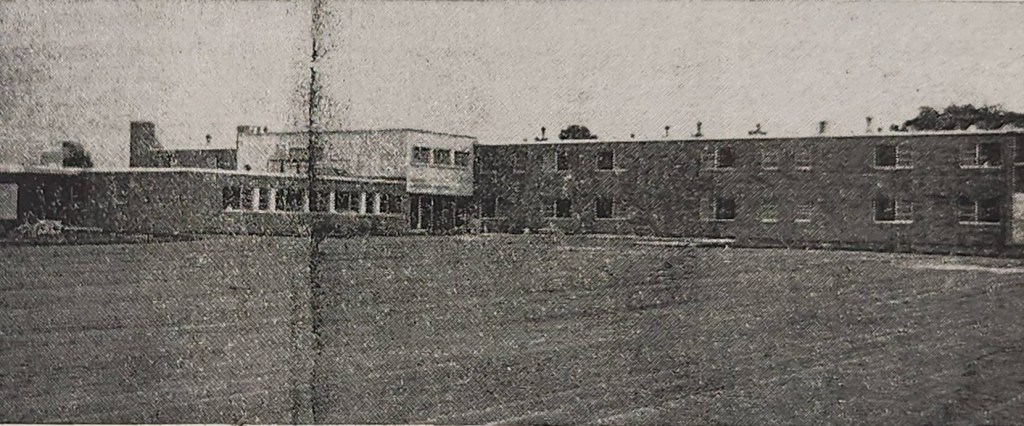
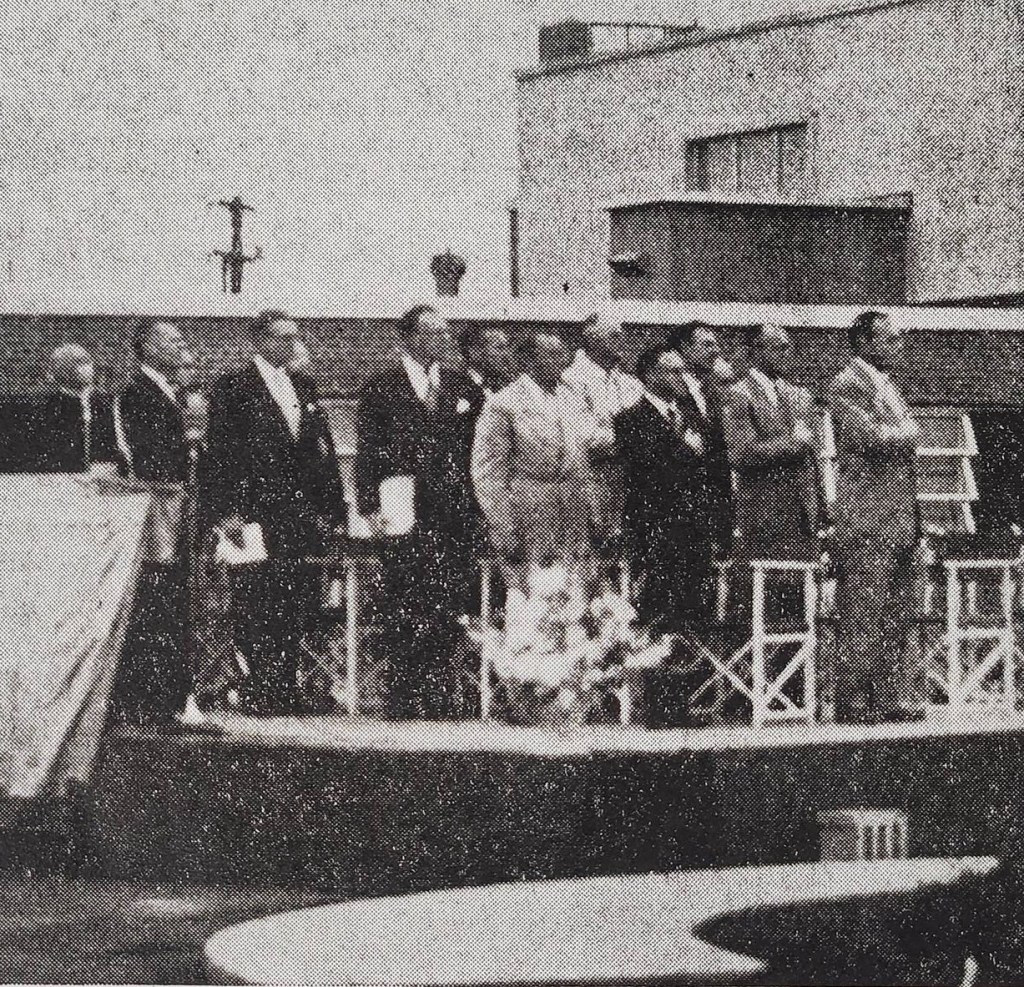
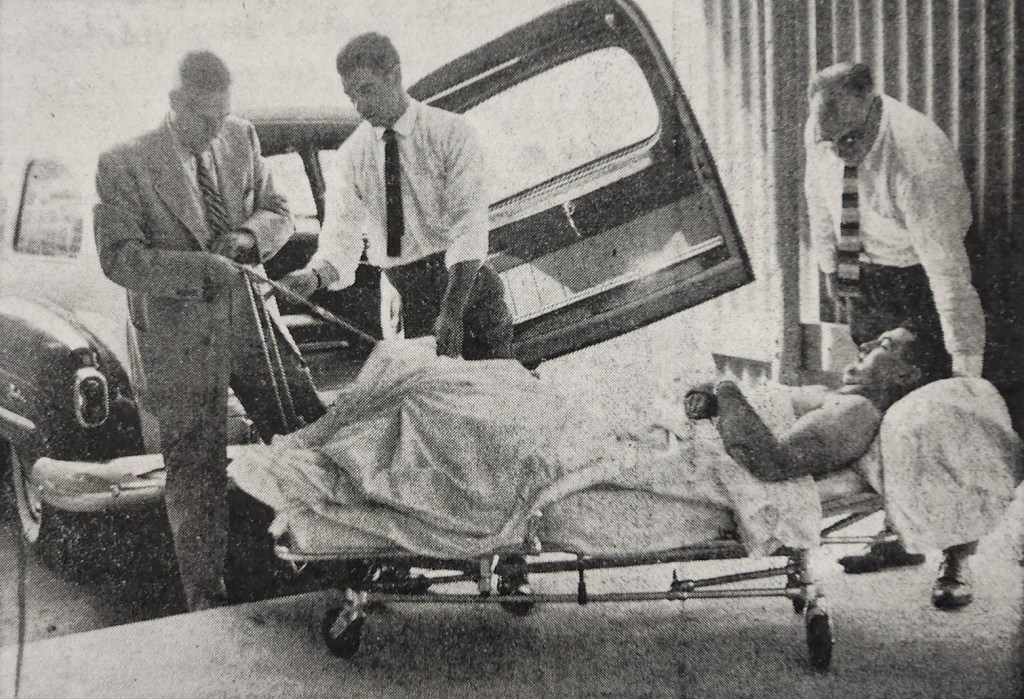
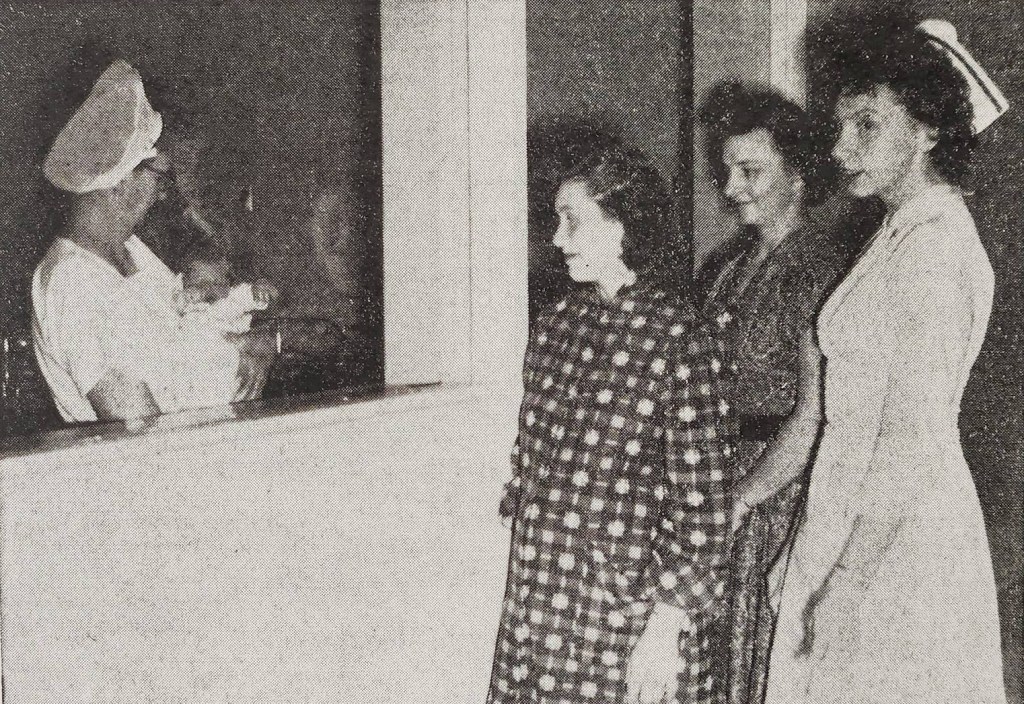
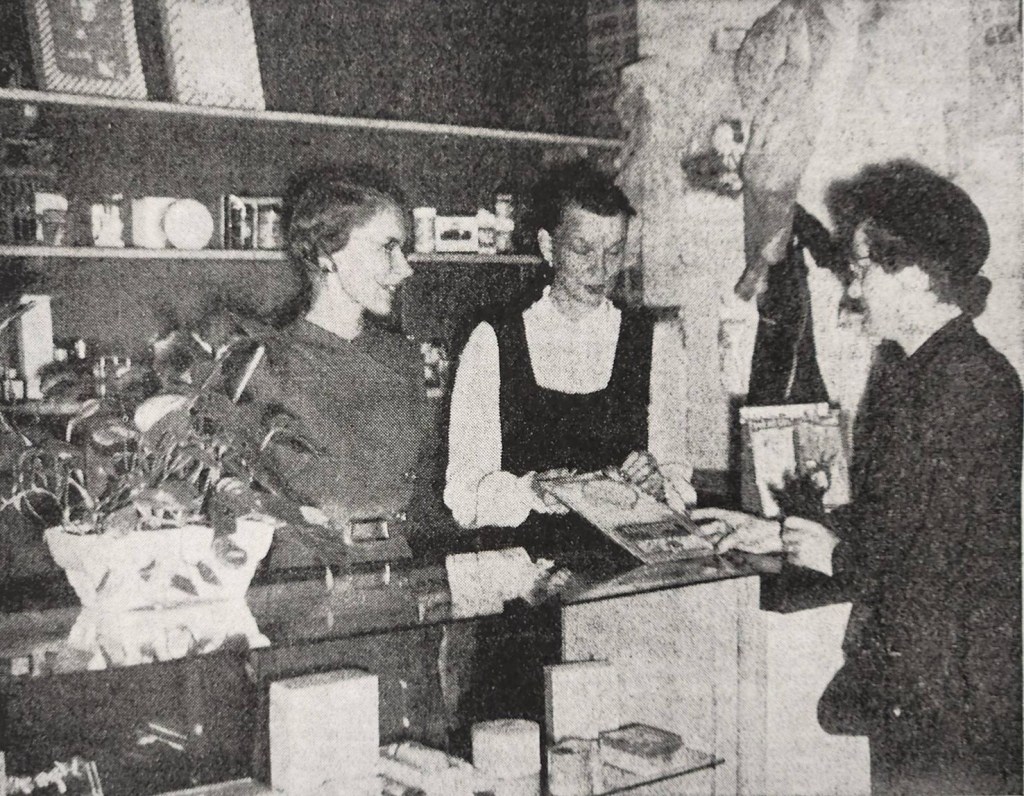
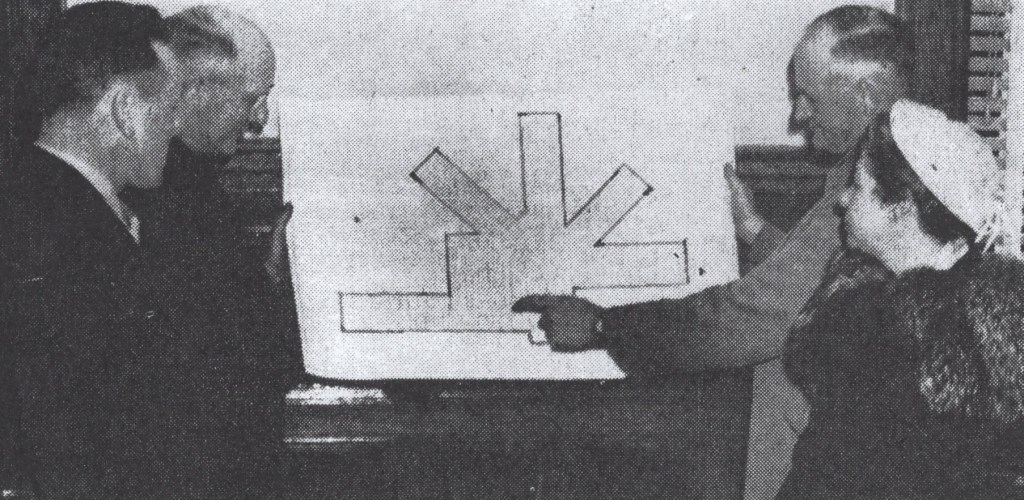
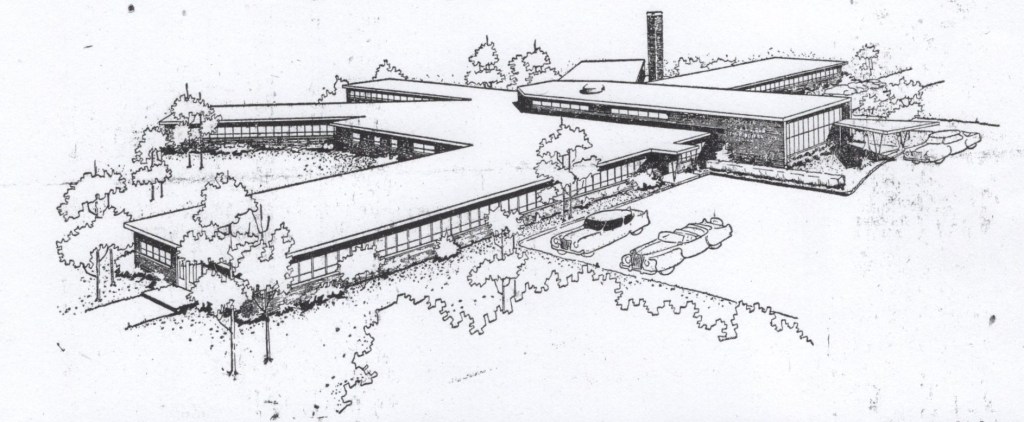
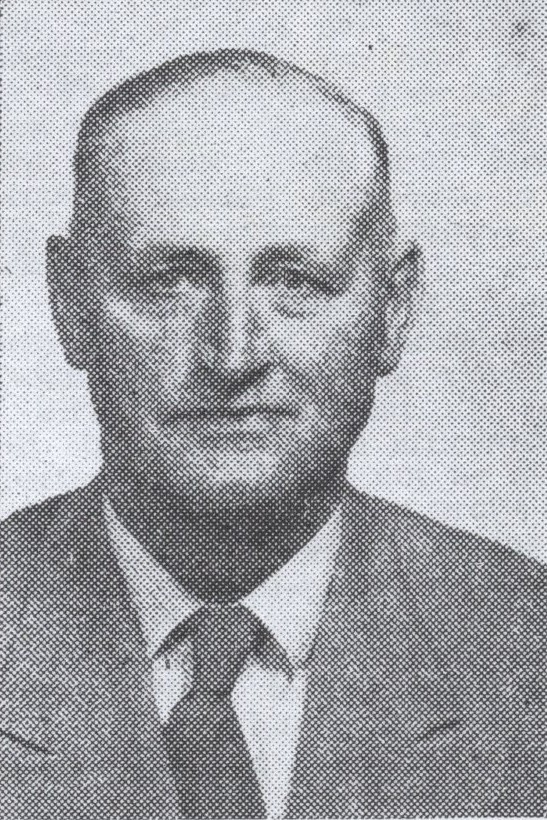
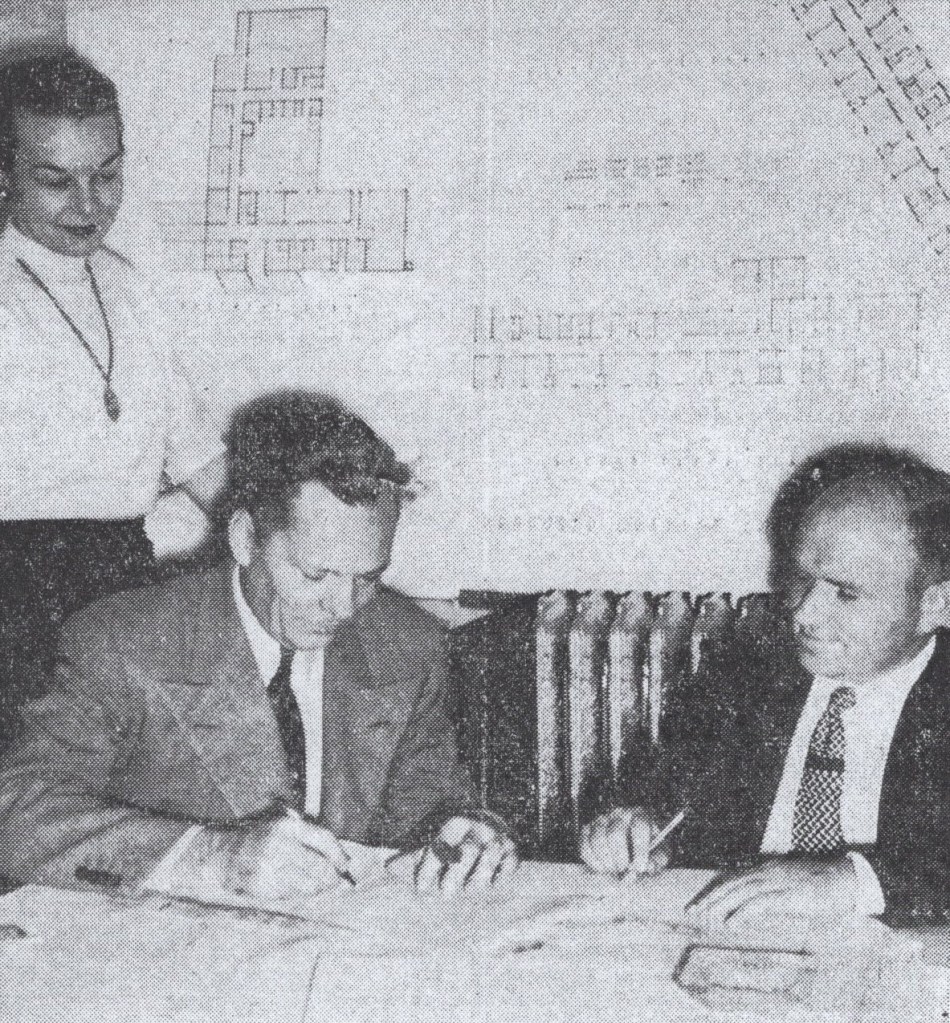
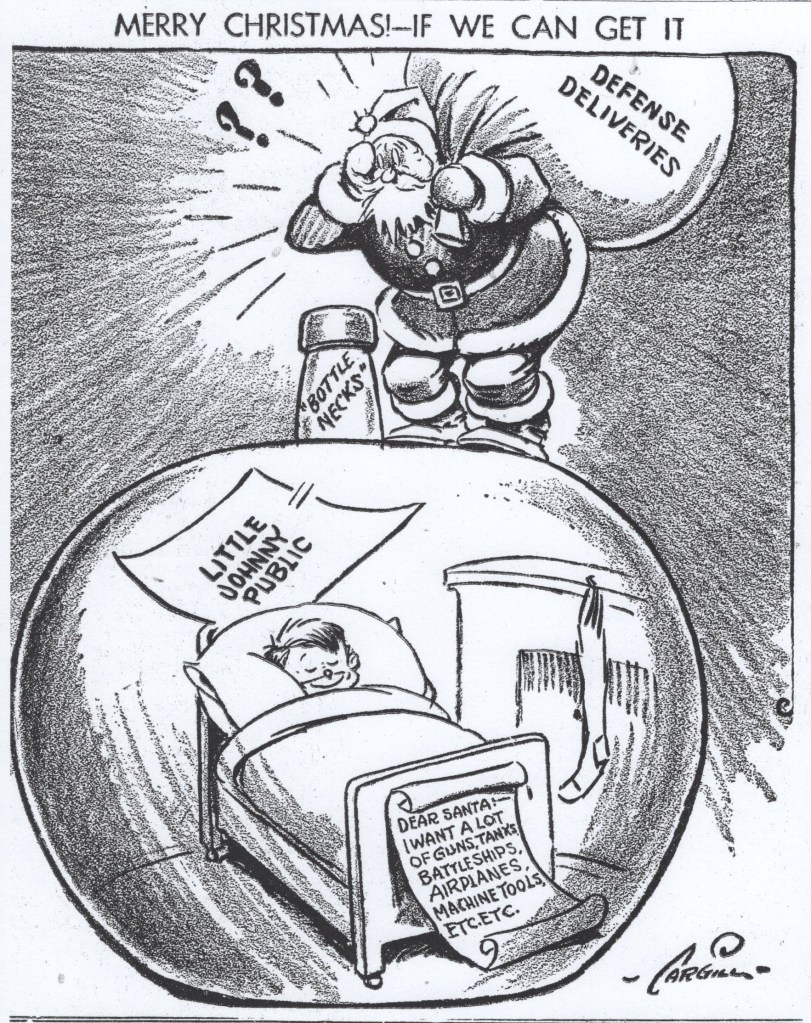
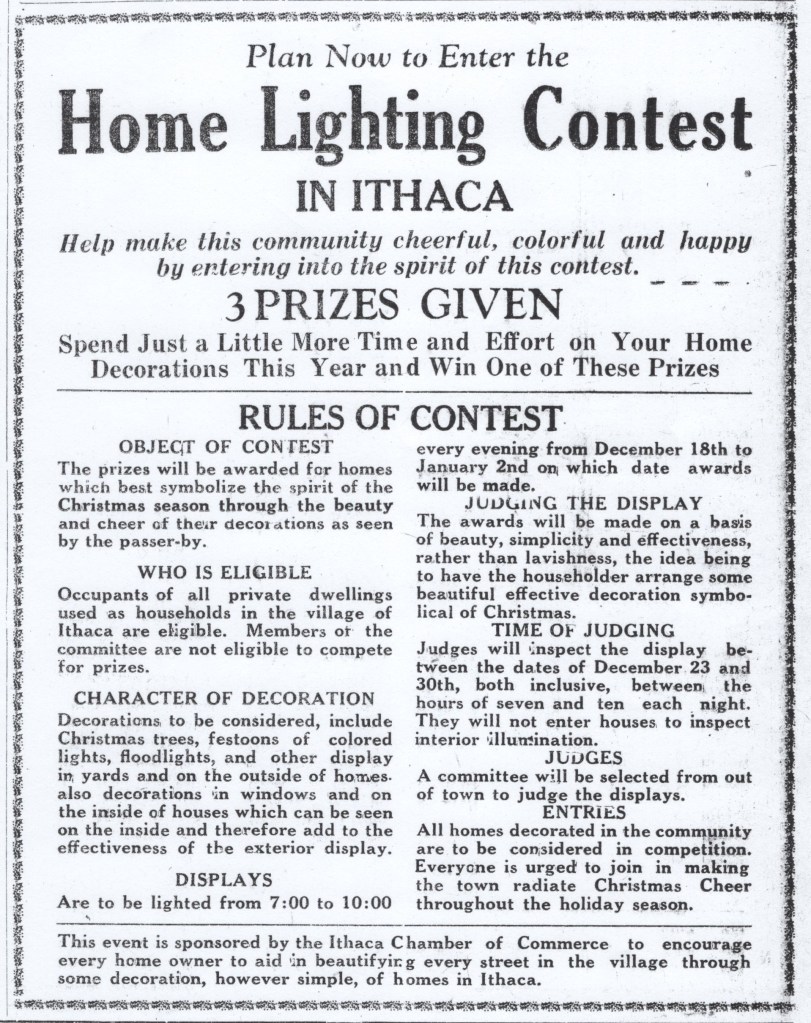
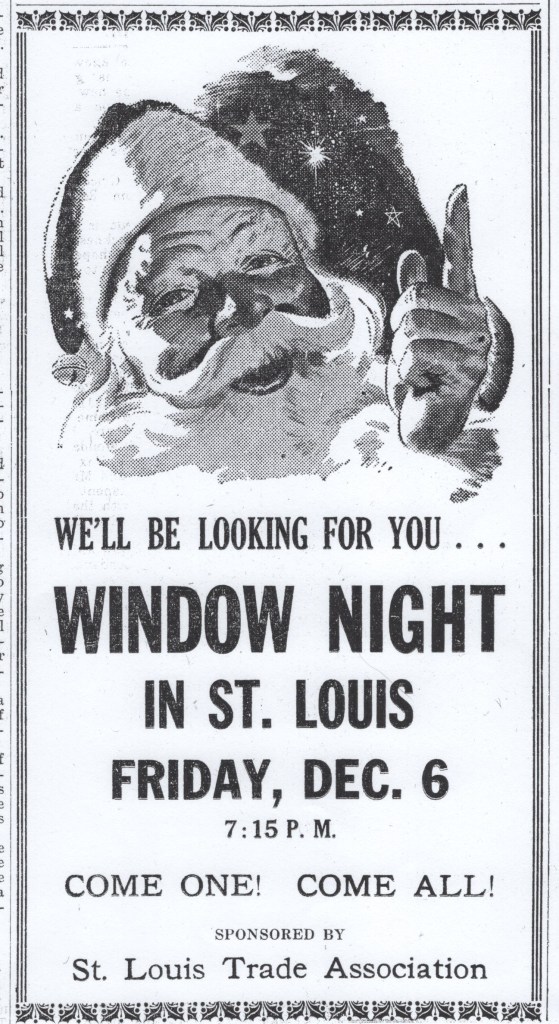
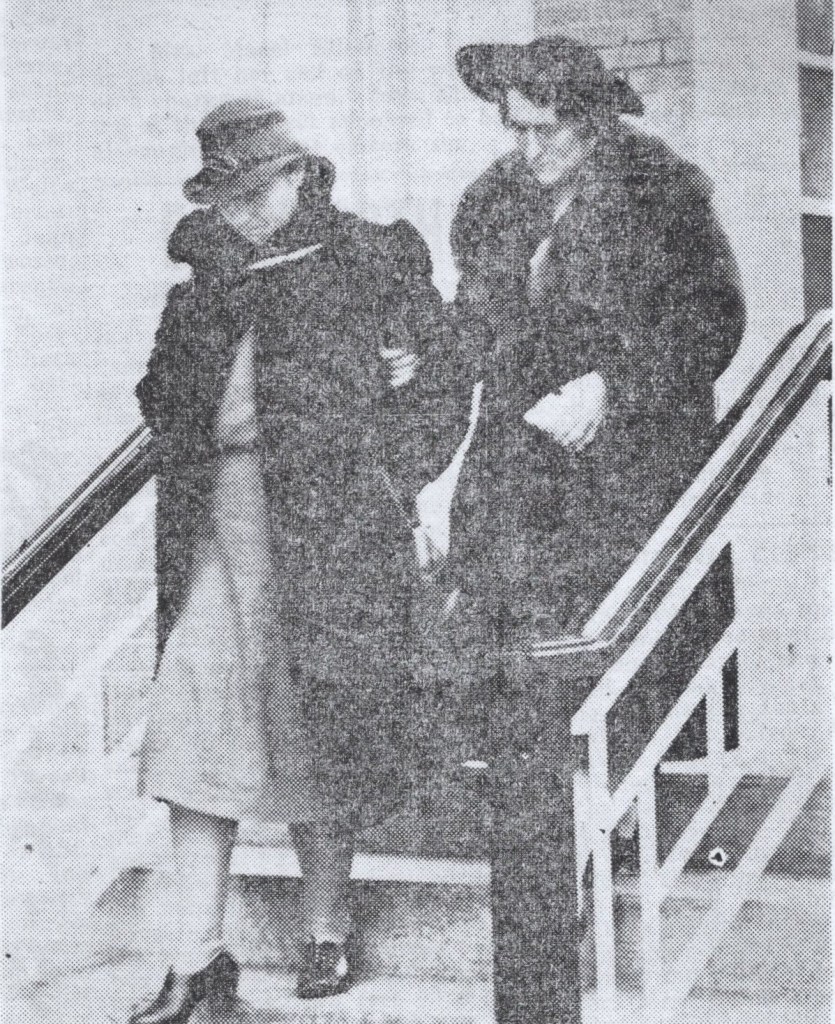



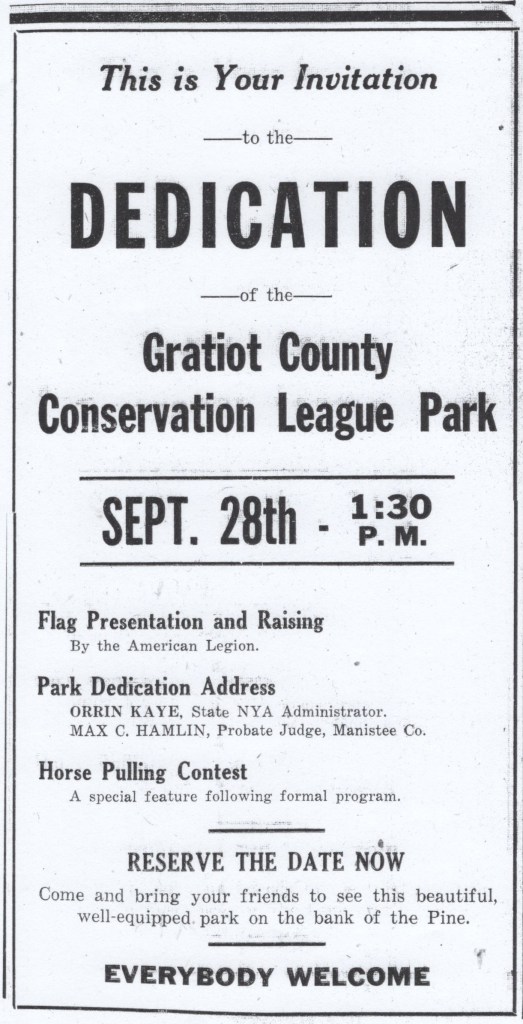
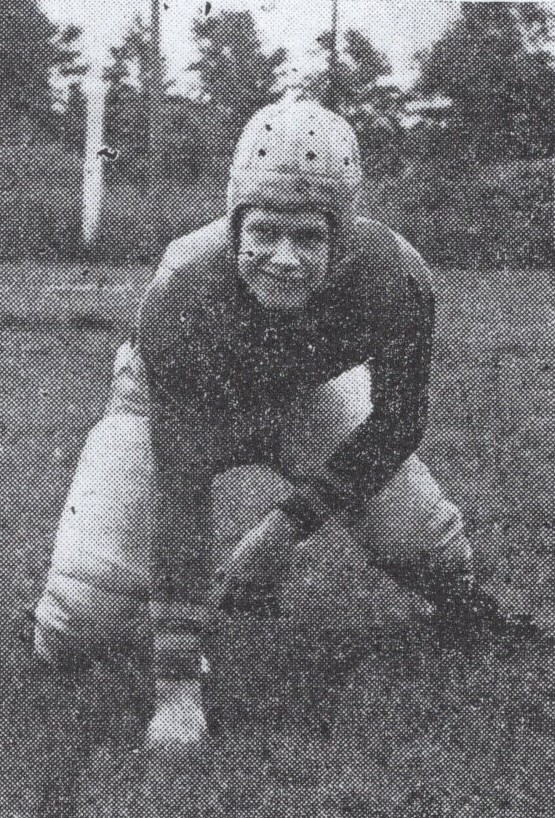
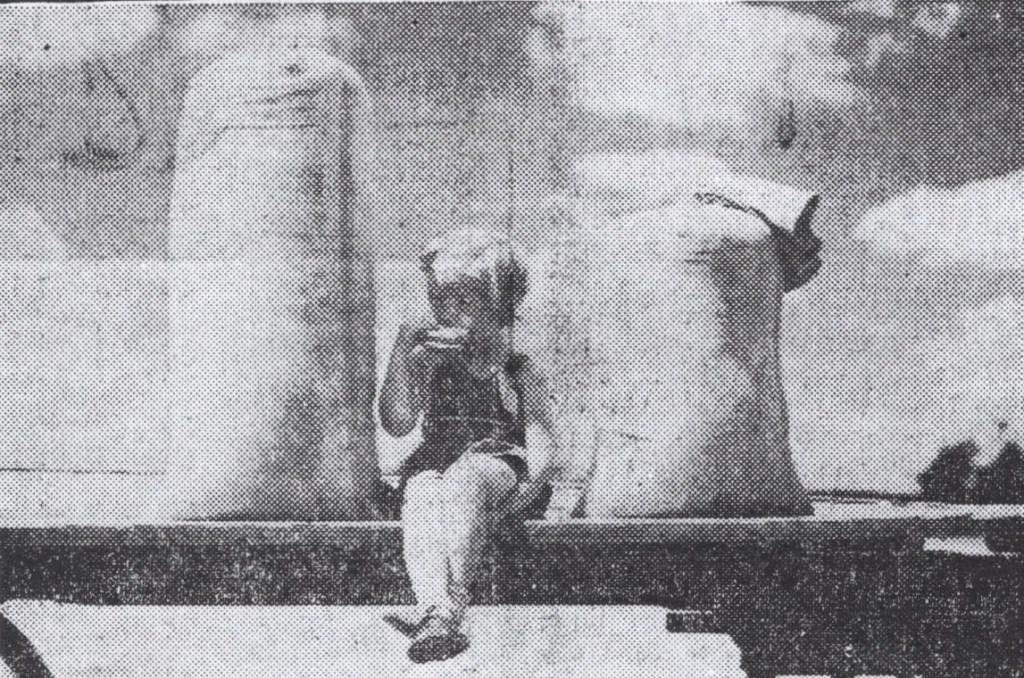

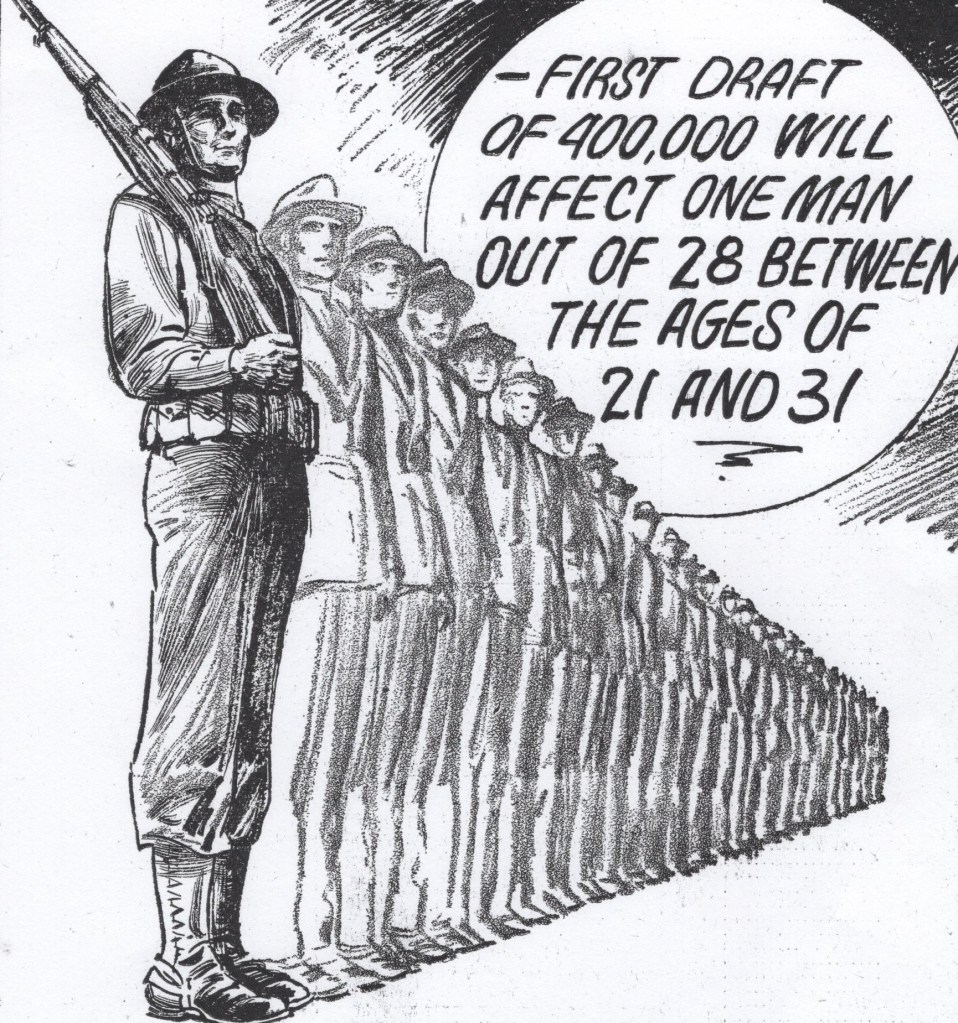





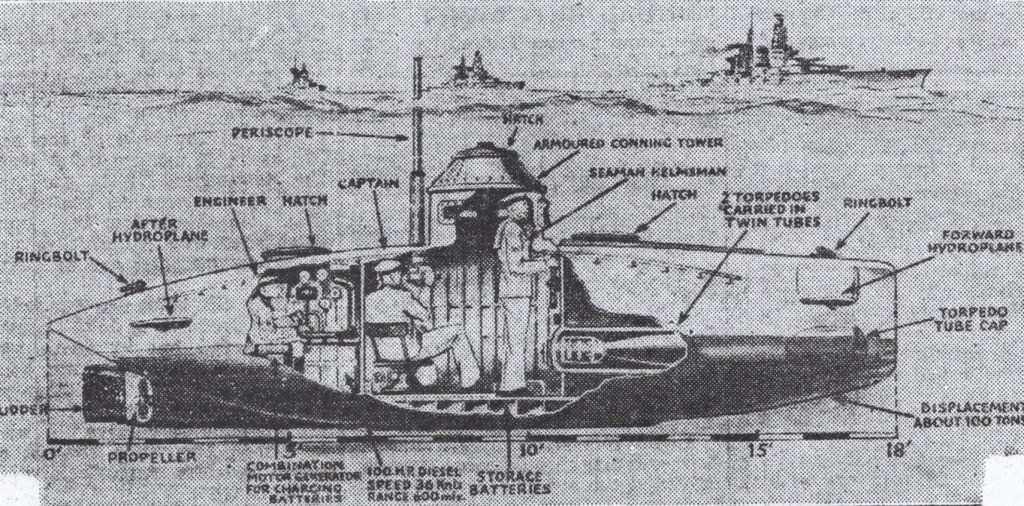


 Goodspeed's Gratiot County Historical Blog