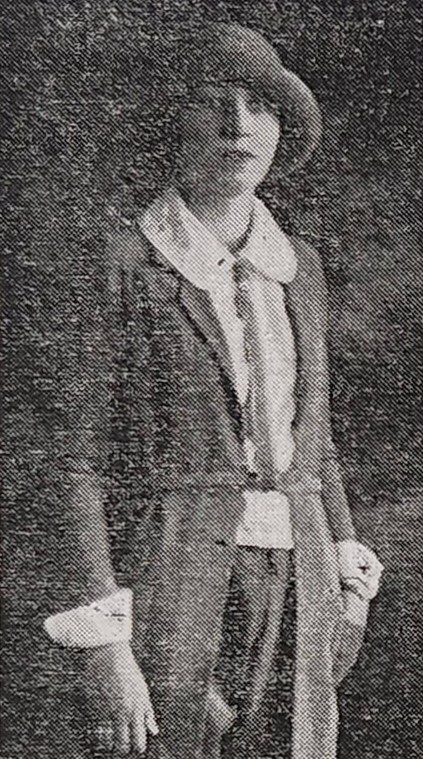
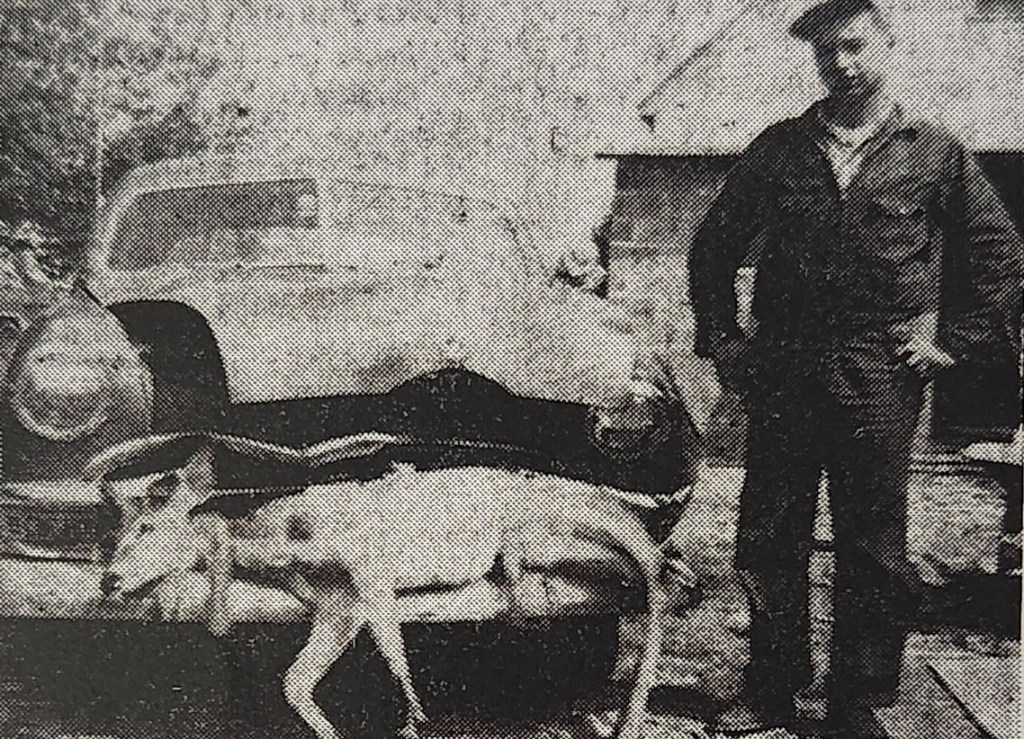
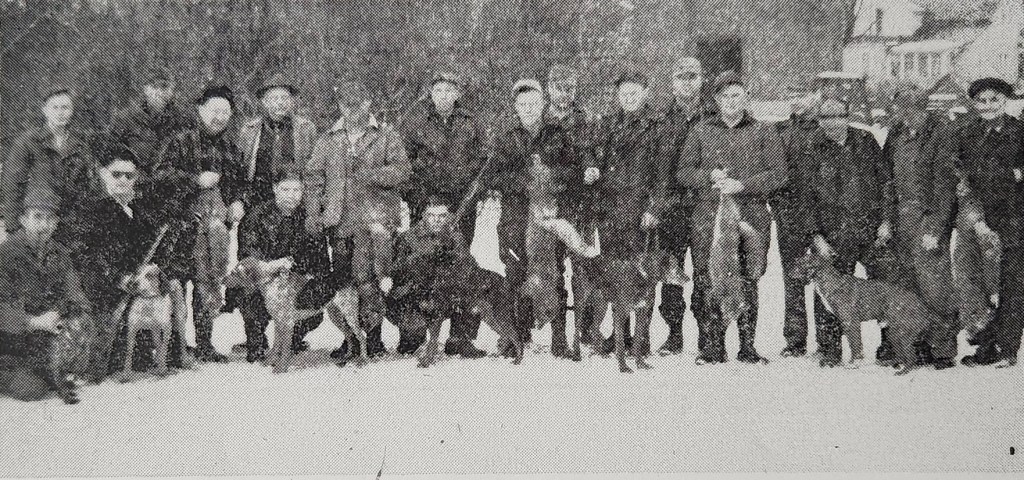
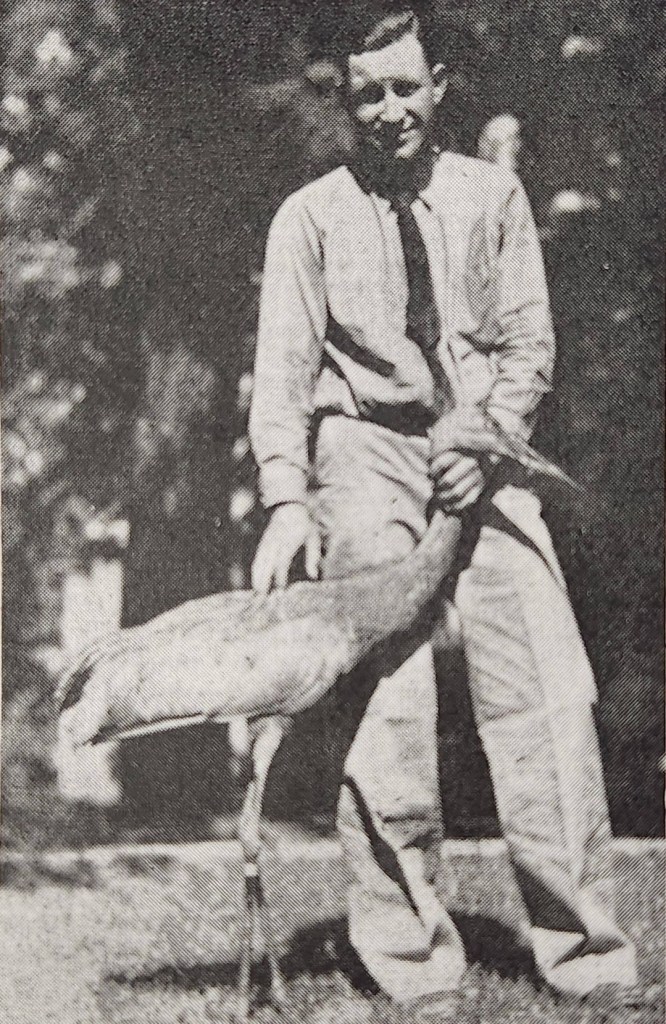
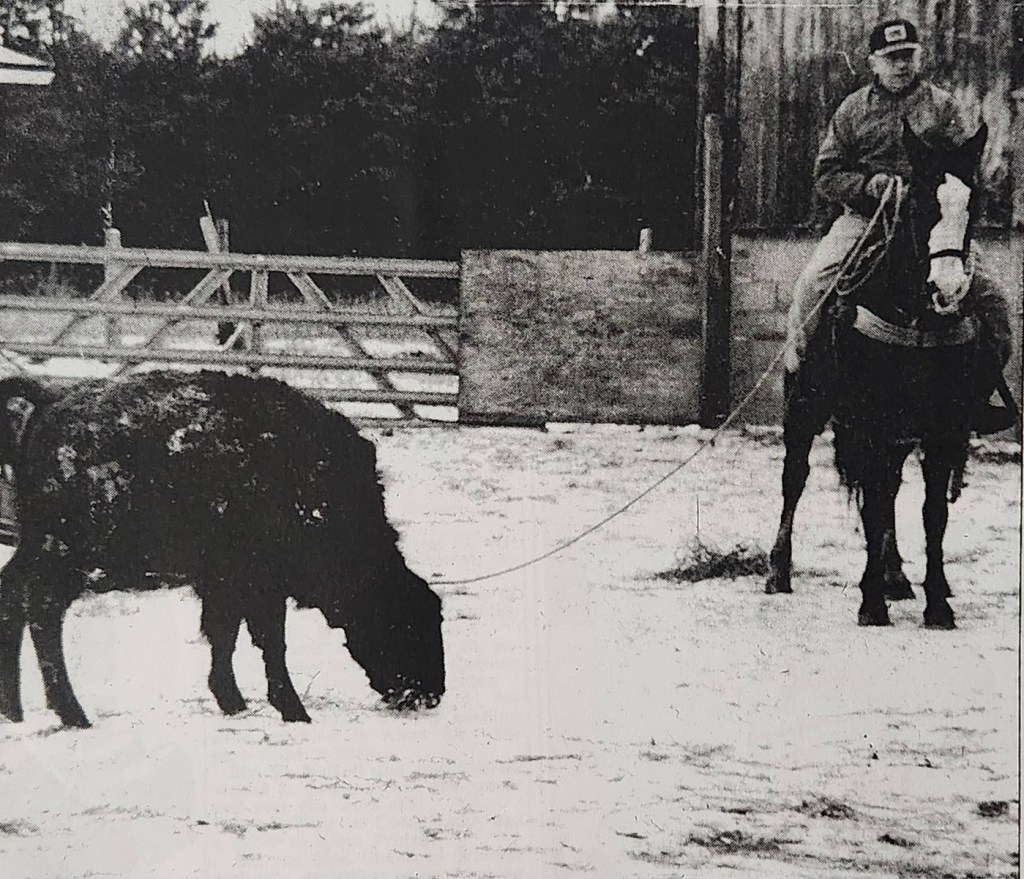
Some of Gratiot County’s critters from the top: Rat catching and extermination plagued both city dwellers and farmers in the early twentieth century. Miss Helen Caldwell came to Alma and pledged to show the city how to reduce its “rat problem,” which cost an average of $2 per citizen per year in food eaten by rat; Over hunting of whitetail deer in the late 1800s left the population scarce by the start of World War I. Just seeing a deer in the county could be big news. Here, Jack Farrough of Alma found one the hard way when he hit one of three deer just south of North Star. Farrough reported the incident in early June 1951; Many residents thought that the biggest nuisance animal during World War II was the red fox. This hunt in South Gratiot in 1945 brought out 50 hunters and yielded 5 foxes; Gratiot County also had its share of somewhat strange birds and animals. Here, naturalist Parks Allen shows the first sandhill crane ever banded and released in the state of ichigan in June 1938; finally, a bison on the loose west of Ithaca in December 1981. This young heifer got loose from the Stub Biddinger farm and was roped and led home by Ken Fisher of Ithaca.
The story of twentieth-century Gratiot County and its wildlife began after farming and overhunting had reduced the county’s forests. Gratiot’s largest native animals – deer, bear, and wolves – had been largely eliminated from the area well before World War I.
After the devastation of the large animal populations, sightings became notable events. In July 1930, A.S. Wheeler of Lafayette Township reported seeing a deer on his property for the first time in fifty years. That same week, Lloyd Davis of New Haven Township reported seeing a bear on the Ed Siefert farm, sparking much interest. Deer sightings near the Maple River flats made the news in December 1930, and in 1938, a group of deer near Riverdale also garnered attention. Jumping ahead to November 1950, Austin Phillips of Bridgeville shot a large bear in response to its killing chickens and causing disturbances; the animal, weighing 65 pounds, ended up at the Ithaca locker plant. About a decade later, a bear and a cub sighting along the construction route of the new US-27 highway, north of Ithaca, also drew notice.
Meanwhile, other large mammals appeared in Gratiot’s landscape, though often in captivity. For example, an elderly bison was kept at Lumberjack Park but did not live long. In the early 1980s, Stub Biddinger brought home a young bison heifer to raise west of Ithaca, but she soon escaped and crossed Washington Road, leading to her eventual capture by the Gratiot County Sheriff Department. Similarly, in the fall of 1930, Jay Swarthout, owner of the Gratiot County Oil Station in Alma, brought in two bear cubs, Amos and Andy. The cubs drew much attention from Alma’s children, who fed them anything from lettuce to honey. After about two years and several parade appearances, Swarthout sent the bears to the Saginaw Zoo. Alma’s Wright Park once housed a pair of wolves until 1919. By 1928, the park’s remaining animals, some deer, were relocated to Flint.
Comparing captive animals to hunted ones, the red fox was probably the most vilified and hunted animal in Gratiot County’s history. Its perceived threat to chickens and pheasants made fox bounties and hunting popular, with bounties reaching $5 a pelt in the 1940s. To claim the reward, hunters had to produce the pelt and have it tagged by the sheriff, since some tried to turn in the same pelt in both Clinton and Gratiot counties. For instance, in 1947, the Ithaca Gun Club turned in 64 fox pelts from weekly hunts.
Coyotes also became targets of organized hunts, especially during the Depression. For example, in March 1932, a party in Hamilton and Elba Townships shot four coyotes, highlighting their continued presence. Earlier, in 1908, a baby coyote unexpectedly appeared in a cage at the Alma train station, though its origins remained a mystery, and it was displayed publicly in Ellicott and Hubbard’s Saloon.
Turning to animal farming, Gratiot County also saw ventures that aimed for profit from wildlife. The Gratiot County Silver Fox Company opened north of St. Louis in November 1924 with 25 pairs of Silver Black Foxes. In 1957, Joseph Patrick of Pompeii attempted to start a mink farm but faced a major setback when 1,076 of his baby mink were killed by a company’s insecticide. The case went to court, and the court awarded Patrick $50,000 in damages.
Beyond mammals, deadly, rare, and unusual reptiles also appeared in Gratiot’s history. Rattlesnakes in particular made headlines. In 1928, Mr. Schaulmeyer killed one on the Graham farm west of Ithaca; the coiled snake struck his cultivator several times, measured 2 ½ feet long, and had four rattles. Just a few years earlier, in 1921, another rattlesnake—with five rattles and a button—was killed in downtown Breckenridge, the first seen there in thirty years. Also, in the 1920s, farmers near the Gratiot-Saginaw line reported blue racers in Hamilton Township and around Edgewood. Leo Beebe killed two racers east of Edgewood, averaging five feet in length. Many residents mistakenly believed racers were venomous and aggressive, though they had not been seen in decades.
Occasionally, even more exotic animals made appearances in Gratiot’s history. For example, Gratiot naturalist Parks Allen once banded a captured sandhill crane from Emerson Township, marking the first such event in Michigan. Twice, news reports described an alligator in Alma—first as a pet, and later as a 4 ½ foot specimen found dead in 1923 below the dam. The owner’s identity remained unknown. In 1956, a black monkey with needle-like teeth repeatedly escaped captivity at the Grant Store in Alma, requiring capture with gloves and a French fryer strainer. Alma businessman Joseph Rademacher brought a pair of nutria to town, hoping to start a nutria farm; in 1959, he sponsored a “Field Day” at the Alma Fairgrounds to promote this venture.
By the late 1960s, the Alma and St. Louis Chamber of Commerce, along with the Alma Jaycees, sought to create a farm zoo and a campsite for 50 sites north of the St. Louis US-27 exit on the Ernie Best farm. The plan depended on area farmers lending actual farm animals, such as cows, sheep, and goats, each spring and summer for visitors, while the zoo provided food and care. Intended to lure travelers off US-27, the zoo was short-lived. Nevertheless, Best Sales and Service attracted attention with several large fiberglass animals—decorative figures rather than live animals—displayed at parades, festivals, and sidewalk sales. Today, one of the last fiberglass figures—an elephant missing a tusk—remains on what is now the North State Sales property.
Copyright 2026 James M Goodspeed

