Gratiot County in Depression and War: “The Good Old Summer Time in July 1940″

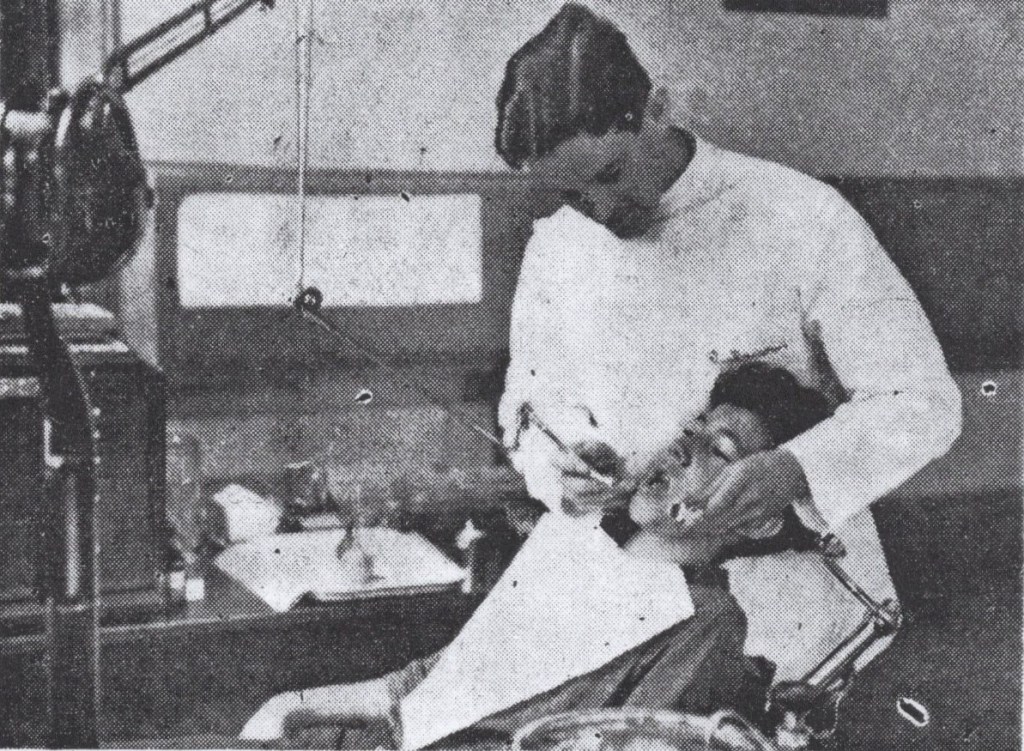
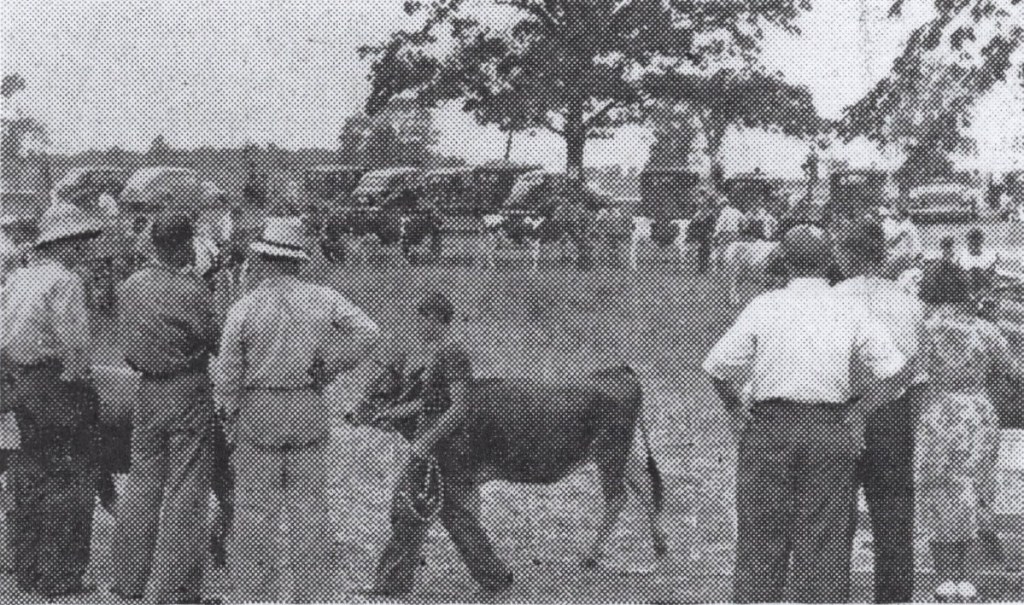
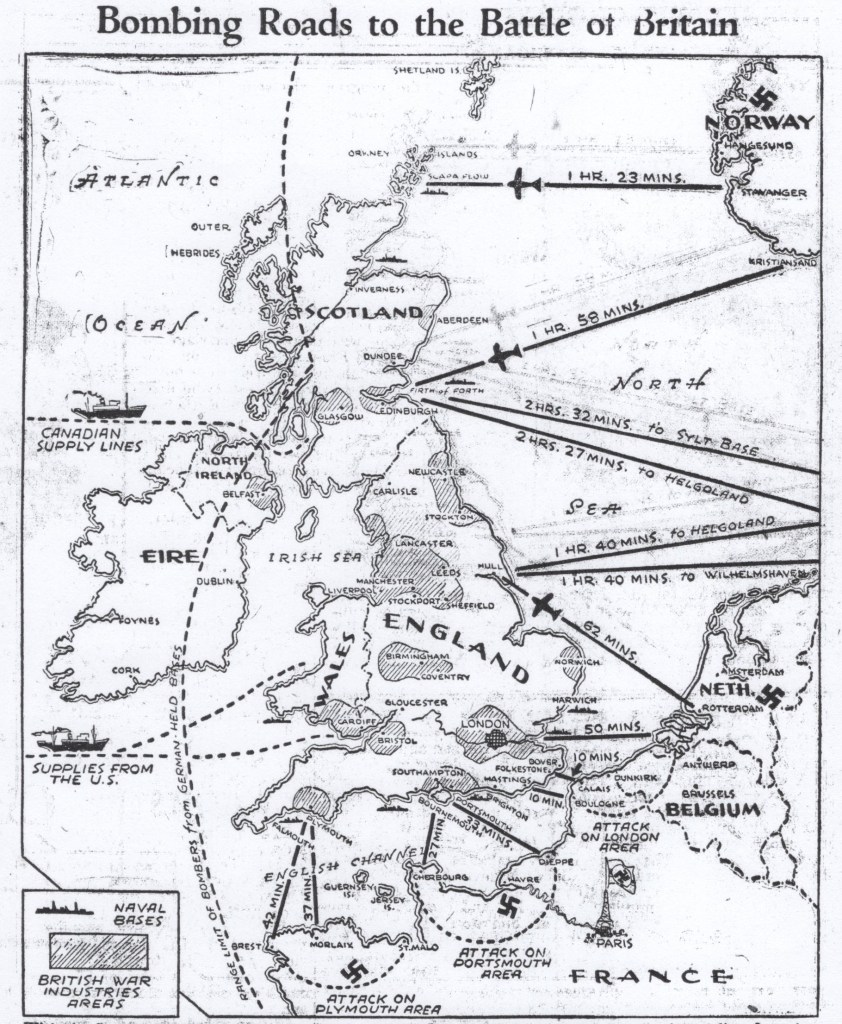
From top to bottom: Doctor G.V. Barrow of Ann Arbor works on one of his patients during the Gratiot County free dental clinic in Ithaca. Barrow treated eighteen cases each day for several weeks. The clinic then moved to Alma and concluded in St. Louis; this FFA showmanship event at the Gratiot County Fair featured stock raised by young future farmers from Gratiot; meanwhile, the Battle of Britain was in full swing in Europe. Could England survive Hitler’s bombings?; would President Franklin D. Roosevelt be nominated for a third term as President? The Democratic Convention in Chicago soon revealed that the President would indeed accept a run again for a third term.

The late spring and summer of 1940 proved to be cooler and wetter than many residents in Gratiot County wished. Newspapers warned readers that the war in Europe could soon escalate into a global conflict. Across Gratiot County, Depression-era programs continued to operate, providing respite, entertainment, and activities for both children and adults.

People could enjoy the isolation of quiet country towns, villages, and hamlets.

It was July 1940 in Gratiot County.

The World at War

Gratiot residents began reading about a potentially growing global conflict. A group of 30,000 United States troops was now placed on high alert in the Panama Canal Zone. Bombing raids by Hitler’s Luftwaffe upon Britain became known as “The Blitz.” Maps illustrated the time and distance it took to fly German bombers from their bases to targets in England. Then, there were maps illustrating how Americans, Soviets, and the Japanese all had potential areas of conflict in the Pacific. Would there soon be a “Pacific War” involving the United States? In all of this, most Americans seemed to forget that the Japanese Empire had been at war in places like China since 1937.

Here in Gratiot County, the Red Cross said that it needed only $400 to reach its goal for the War Relief Fund. They hoped to raise the balance to $1,920 by July 10. Twenty-two Michigan communities in southern Michigan agreed that military education for high and junior high school students was beneficial and necessary. The government hoped that between 10,000 and 15,000 defense workers would receive training in this way. The only question was what kind of training to provide and how far it should extend. Some, like Professor Howard McLusky from Michigan, argued that a long ideological fight involving dictatorships and democracies would soon start, and courses in high schools should prepare students for it. State Superintendent Dr. Eugene B. Elliott argued that Michigan schools had to prepare students with both strong minds and strong bodies; however, he failed to mention that he believed the United States would be directly involved in a war.

The issue of a third term in the White House arose in newspapers regarding President Franklin D. Roosevelt’s status at the Democratic Convention in Chicago. Keynote speaker Senator Alben Barkley spoke on behalf of Roosevelt and stated that the President had declared all delegates free to vote for the Democratic candidate of their choice. Still, the President did not say he would refuse a renomination. As a result, newspapers ran the headline “Way to Third Term Cleared by Roosevelt.” Within a week, FDR accepted the renomination and left the issue of a third term up to the voters.

Over at Ithaca, a hefty call for copies of birth certificates nearly swamped the county clerk’s office. Why? Numerous Gratiot residents needed them to demonstrate their citizenship status to work in plants supplying materials to Britain, as well as for anticipated home defense needs. Requests for birth certificates were received in Ithaca by phone, in person, registered mail, and air mail. Birth certificates were also necessary for those traveling to Canada for vacation or fishing. These certificates cost fifty cents each.

Depression Life, July 1940

The Gratiot County supervisors okayed the move of the county welfare office from Alma to the basement of the courthouse in Ithaca. Part of the reason for the move was a cost-saving measure that eliminated the need to rent space. The final move was contingent upon state approval.

The terms “recreation” and “recreation programs” gained a lot of attention in Alma for Turck’s Beach, and places across town where miniature golf, tennis, playgrounds, wading pools, as well as boys’ and girls’ softball and baseball all took place. There were also activities such as handicrafts, dancing, and an interest in archery. These activities took place across Alma in various locations, including Wright Park, Alma High School, some elementary schools, and the basement of the Salvation Army. The month of July, usually hot and steamy in Gratiot County, soon turned unseasonably cold and wet, thus dampening some of the swimming at Turck’s Beach. Despite the cooler weather, a large crowd gathered at the beach to enjoy a swimming show and water carnival, as well as demonstrations on how to operate a canoe and perform a rescue from drowning. Bill Moody, the head lifeguard, conducted some of the performances. At the same time, Dr. W.E. MacInnes gave a brief talk about Red Cross safety. A second water carnival was planned for early August at Turck’s Beach. Many of those who worked at these places that offered recreation had NYA workers or were tied to NYA projects.

Are you older and concerned about your finances in old age? Attend a Townsend Club meeting in the county. Townsend Club Number 2 held meetings every Monday at the Ithaca village hall. Doctor Townsend himself appeared on the front pages of local newspapers under “Doctor Townsend Says…”. Townsend billed his old age pension plan as “a movement to unite the peoples of the earth in one great brotherhood” – and ensure that every older American received an old age pension.

WPA work continued on the 1939 paving project, even though it was the summer of 1940. A crew of 65 men built new curves and gutters on streets where they paved last year. The project poured a slab on three blocks of River Avenue, then planned to move on to shorter works on Walnut, Euclid, Allen, and Orchard streets. Work was progressing more slowly in July, according to City Manager W.E. Reynolds, because in 1939, he had between 90 and 130 men working on projects. Now, regulations lowered the number to only 50 workers. Alma petitioned for an additional fifteen blocks for paving. Still, the city had not yet received approval from the federal government.

Migrant Workers, Weather, Fair in July

A reasonably large turnout was observed at Alma’s Washington School for the county’s migrant school open house held at the end of June. Almost one hundred visitors came to the open house on a Thursday night. Following this program, another 126 Mexican workers and their children attended the program’s first Family Night. Migrant center workers from Mt. Pleasant and Kenton, Ohio, joined with the Alma staff to discuss work in their respective centers. The Alma school officially enrolled up to 100 children in woodcraft, English, citizenship, table manners, and singing. This group also included sixteen toddlers and babies. By the end of July, the numbers dropped to 55 children as migrant families moved on to other work in the state. Gertrud Herman,  Merle Farnie, and Grace Rowell lead the programs at the center. Rowell, accompanied by Reverends Drake and Moreno, took a group of the older migrant children to the Gratiot County Fair to see the rodeo. A field day was also held for the older children from Alma and the Mt. Pleasant centers before the centers’ closing. The center held its final Family Night on July 25, marking the end of the program. By the time the Alma Center closed, over 400 visitors from across the state of Michigan came to Alma to see how the Washington School’s migrant center worked with children, and many migrant mothers hoped that Alma would open another program like this in 1941. This migrant center was the first such project supported by the Gratiot County Council of Churches and the Council of Women for Home Missions.

Gratiot County’s weather continued to challenge area farmers that summer. A cold and wet late spring had crops lagging during planting season, while hay, oats, wheat, and barley were unusually heavy due to the rains. A warmer July was allowing crops to start catching up, but many appeared to be below average and needed a warm late summer and an extended growing season. More Gratiot farmers planted soybeans, but the increase was not as significant as in other parts of the state. And then came a classic Gratiot cloudburst on July 8, which flooded a large section of Emerson Township. The storm affected an area in Emerson Township that measured 2 ½ miles north and south and 5 miles east and west, and it was hit with heavy winds. The Riley Aldrich farm was completely submerged in water, as were the farms of other farmers in the area. Aldrich’s grandson appeared in a Gratiot County Herald photograph with water standing halfway up his boots.

Many farm families not affected by the storm later requested help from the Gratiot Road Commission to spread spot oil in front of their homes and down their roads to deal with the dust. Farmers paid one cent per square yard, and the final cost depended upon how many times the road was oiled.

Visiting the 75th annual Graiot County Fair in Ithaca was a highlight of summer and took place from July 23 to 27. Before opening the fair, officials installed a new automatic starting system for horse racing, which would take place over four days of the fair. The fair featured the most extensive 4-H exhibits, the C.R. Ranch rodeo, Roman chariot races, horse pulling, and a large midway. Children’s Day on July 23 offered free admission to children under the age of twelve, and rides cost only a nickel.

In other news, the Farm Security Administration announced the expansion of the Farm Tenant program in Gratiot County. This program allowed former farm tenants to buy their farms under government long-term contracts. Tenant farmers were encouraged to apply to the program. Need to dip sheep? A sheep dipping demonstration took place on the Paul Burnham farm in Bethany Township and Max Church’s farm in Arcada. County Agent C.P. Milham asked Gratiot farmers to declare war on sow thistles, urging them to seek out and destroy the plants. Sow thistles grew to three feet in height, and had yellow blossoms like dandelions, which could smother a crop due to their dense mat of leaves.

The Long Arm of the Law in July 1940

The Fourth of July weekend in the county was rough on several drivers. Overall, a total of six traffic accidents injured seven people and claimed one life. Franklin Kunkel, age 22, of Riverdale, was killed in an accident when his Ford roadster crashed into another car near the Honeyoye Bridge, miles west of Alma. Kunkel tried to pass another vehicle before entering the bridge, then went off the road after striking another car. Instances of drunkenness made their way to court as a group of people from Owosso were arrested east of Alma for drunk driving. A familiar sight in Alma, Frank (Frenchy) LaBart returned to Alma after eight years. LaBart managed to bang up several cars in front of the Kroger Store while trying to park his vehicle. He was charged with drunk driving and served 45 days in jail rather than pay $56 in fines. Lillian Berted, age 29 of Alma, was arrested in Breckenridge for public drunkenness. Although initially pleading not guilty, she later changed her plea and paid a fine of $13. R.L. Lalonde of Ithaca received a fine and costs of $28.85 for driving wildly past a WPA flagman and road workers south of Alma. Lalonde was cited for reckless driving.

 Leo Gusman, a Mexican from Eaton Rapids, was arrested for driving without a license. Gusman’s penalty was paying $12.30, and he still had to spend five days in jail. Howard Sparks from Clinton County was arrested for illegally selling fireworks. He paid $16.45 rather than go to jail. Jenasio Mejia, “an Alma Mexican,” was arrested near the Michigan Sugar Company factory for carrying a concealed weapon. He was held in the county jail for having a loaded revolver and six extra shells. Someone, an itinerant peddler in Alma, was passing forged checks in Alma on behalf of Parke, Davis, and Company of Detroit. The forger had already passed one in Clare for $15.00. Be on the lookout for the crook. Two beet workers, Steve Grusky and Stanley Druska, got into a heated battle just south of Bannister. Both were arrested and hauled off to jail. In late July, Otto Morro, St. Louis street commissioner, announced that the first crop of wild marihuana in town had been located in an alley between North and Center streets. A citizen identified the plants and reported them to the authorities.

In some other instances that involved calling for the police, an 18-year-old girl in Alma jumped off the Superior Street Bridge just after midnight on July 17. Thankfully, the water was only four feet deep, but the fifteen-foot drop did more damage. She later admitted that she wanted to take her own life after parting with her male escort. Still, a sister arrived at the police station and escorted the jumper home the next day. In another tragedy, the first drowning of the summer took place at the Washington Township gravel pit, just east of the B-Z-B gas station. Herman Wallen of Perrinton, age 22, was probably killed after diving into the bottom, as a cut on the head suggested he had hit bottom; possibly he also suffered an epileptic seizure. Wallen was considered an excellent swimmer.

Another story in the Dewey Glinkie case appeared in local newspapers. Ginkie, who had stolen over $3,000 in county funds several months earlier, was in the news as Sheriff William Nestle traced a lead to Canandaigua, New York, where someone found Ginkie’s Social Security card and notebook in a mailbox. The card had been issued in Ohio, and the notebook contained Glinkie’s handwriting. Yet, the collection of notes failed to specifically tell who was helping Glinkie or who knew of his whereabouts. Before this, Glinkie had connections to Port Huron and Detroit. So, the hunt for Dewey Glinkie continued.

The county got excited when former county prosecutor Ora L. Smith announced that he was running for the Michigan Republican gubernatorial nomination for the 1940 election. Smith formally announced his candidacy on the radio station WJR in Ithaca. Several parades took place in the county to honor and support Smith. In other court news, Kelly S. Searl, a circuit court judge, began his 26th year as a judge in Ithaca. The Alma City Commission denied the use of its tourist park for house trailers. The city only charged $1.50 per week for short stays or 25 cents per day. The commission was concerned that long-term occupancy by house trailers would run up the cost of electricity and turn the area into a “trailer park.” Currently, there are 75 to 100 families or groups in Alma living in trailers.

Gratiot County Health Matters

A pair of Gratiot County residents, Vere Allen (Arcada Township) and Ruth Johnson (St. Louis), each suffered bites from their dogs. Both animals were euthanized, and their heads were sent to Lansing for rabies testing. Thirteen-year-old Anna Macey of Alma was also bitten on her thigh while riding her bike near the Wright Hotel. Police impounded the dog for observation for ten days due to concerns of rabies. The county sheriff was increasingly concerned that residents were becoming more careless about letting their animals roam rather than being quarantined. In St. Louis, many residents complained about the number of running dogs in town. Doctor D.K. Barstow warned residents that the only way to be safe from rabies was to get their dog(s) vaccinated. For those who resorted to only leashing or penning their dogs, Barstow reminded them that a leash could not keep another rabid animal from biting the family pet. Rabies vaccinations were good for a year. A statewide quarantine had been in place for 47 counties since April. During the first three months of the quarantine, County Dog Warden Howard Evitts of Pompeii announced that 160 dogs had been euthanized in Gratiot County so far.

Better health news came from the news of lower TB death rates in Gratiot County. A report showed that eight people died of TB in 1938 and seven in 1939. Vera Karajoff of Alma had to be admitted to Smith Memorial Hospital for a serious injury to her ankle. Initially, a fracture was a concern; however, Karajoff only had a severe sprain. How she did it was not reported. Charles Federspiel was released from Smith after an X-ray check-up on his fractured left arm. Federspiel broke his arm in a jumping incident. In sad news, in Ashley, grocery store owner Clarence Duprey, age 46, took his own life. He left a wife and three daughters. Newspapers listed no cause for the death.

The Gratiot County free dental clinic entered its third week in July. Dr. G. V. Barrow of Ann Arbor saw an average of eighteen cases each day in Ithaca. The clinic soon planned to move on to Alma and then to St. Louis. Approximately 400 young people received dental care in Ithaca alone from the clinic.

And So We Do Not Forget

The new C.S.A. Hall in St. Louis planned a two-day celebration for its dedication with a grand opening. A Grand March from the Park Hotel to the hall on Michigan Avenue kicked off the activities on Saturday, July 6…Notices for the upcoming performances on the Chesaning Showboat appeared in local newspapers. A cast of 125 performers, along with Jimmy Raschel’s Band, planned two-hour shows from July 11 to July 14 in Chesaning…Jean Arthur and Fred Mac Murray appeared in “Too Many Husbands” at the Ideal Theatre in Ithaca on July 4 for a one-night show. Roy Rogers appeared July 5-6 in “The Days of Jesse James.” Tickets were ten cents for matinees…The Saginaw Black Socks edged the Ithaca Independents by the score of 2-0 in a special Sunday game in Ithaca. North Star defeated the Balmoral Indians by a 7-0 score…Cupid’s victims included Marvin Neal, age 22, of Alma, and Narlene Tracy, age 19, also of Alma. Good luck to the newlywed.

Mrs. Clifford Brewer of St. Louis became the new Central Michigan women’s golf champion at Clare. Brewer defeated two previous champions on her way to the title…Vera Patterson of Ithaca set a new ladies’ golf record at the Gratiot Country Club by turning in a 37 on nine holes. Muriel Pettit held the previous record with a 39…A Reverend F.R. Davidson petitioned the Alma City Commission to set up a portable tabernacle of Masonite pressed wood for religious services in Alma. Davidson represented the General Council of the Assembly of God…The Gratiot County Board of Supervisors adopted a resolution allowing the closing of county offices and the driver’s license examination bureau in the courthouse on Saturdays. While some offices in the courthouse had previously been closed during a slow summer season, the supervisors stated that some offices could remain open on Saturdays as needed in the future…George Stewart, J.C. Penney’s manager, took a two-week vacation to spend time with family on Crystal Lake…More new paint jobs in Alma included work on Wilkins’ Economy Market, Reed’s Popular Priced store, and Gay’s 5 & 10c store.

Sidney Toler and Marjorie Weaver starred in “Charlie Chan’s Murder Cruise” on July 7-8 at the Alma Theatre. Tickets were ten and fifteen cents…The Alma Chamber of Commerce announced an outline for the program and activities for the 1940 Harvest Jubilee in late August…Former employees of the Alma Republic Truck Company planned to hold a reunion on July 27-28 in Conservation Park in Alma. A total of 1,313 letters were sent to former employees in 23 different states, inviting them to the reunion. This reunion would be the third such one held in Alma…Buy a new single-wall washing machine at Walker’s Electric Shop for only $39.50. A double-wall machine only costs ten dollars more.

Finally, over at St. Louis, a balloon ascension and jumper captivated the city on a Saturday night. The St. Louis Trade Association sponsored the event on July 6. Large crowds turned out to watch the balloon, put together by the Winkler Brothers of Lansing, fill with hot air next to the newly erected bandstand. After it filled with enough air to allow it to tower above all the buildings in St. Louis, it began to rise skyward and headed northeast. Many feared the jumper would end up in the Pine River. However, after reaching its maximum height, the jumper bailed out. It deployed two parachutes, the second of which was decorated in red and blue. How did it end? The jumper found himself in a cornfield just north of the city. The balloon ascension was just one of a series of regular Saturday night programs created by the St. Louis Trade Association that summer.

And that was Depression and War in Gratiot County in July 1940.

Copyright 2025 James M Goodspeed

Gratiot County in Depression and War, June 1940: “Summer is Coming, and so is War”

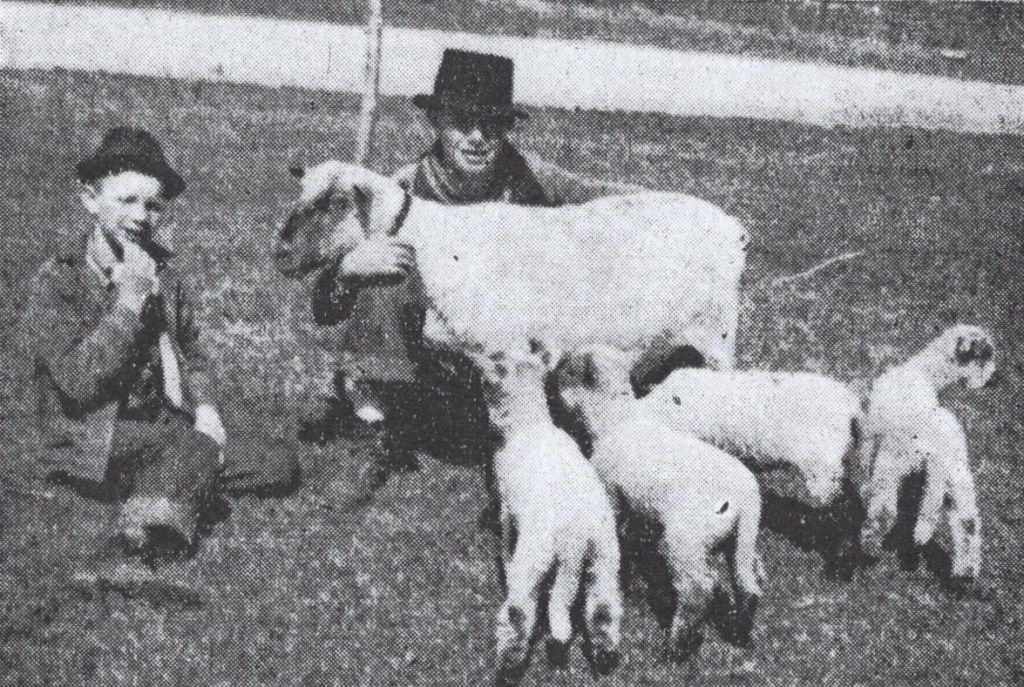
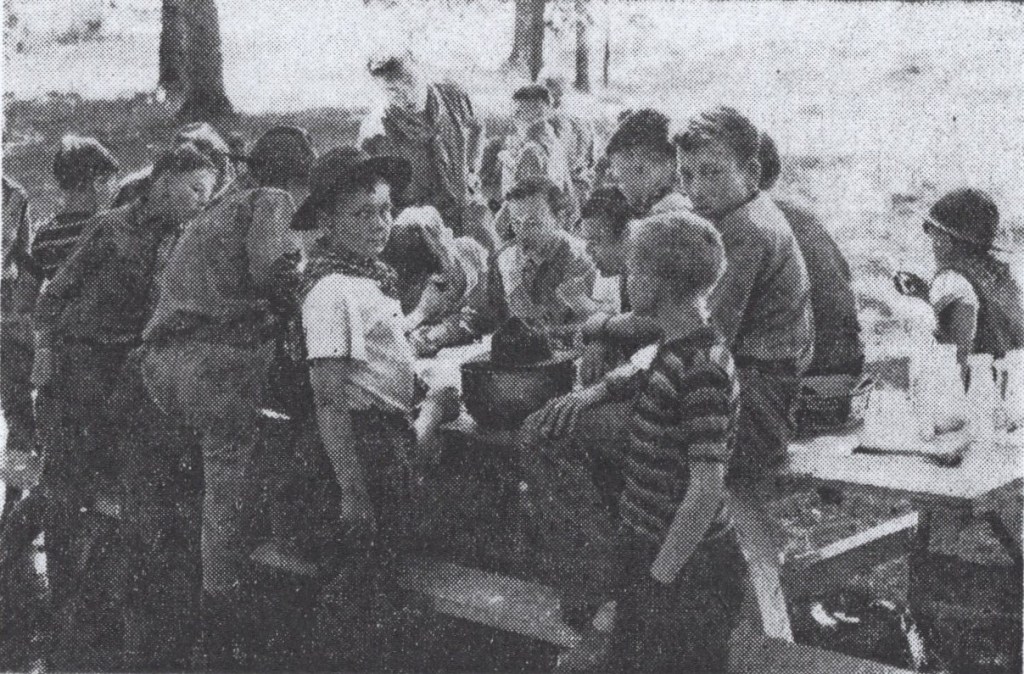
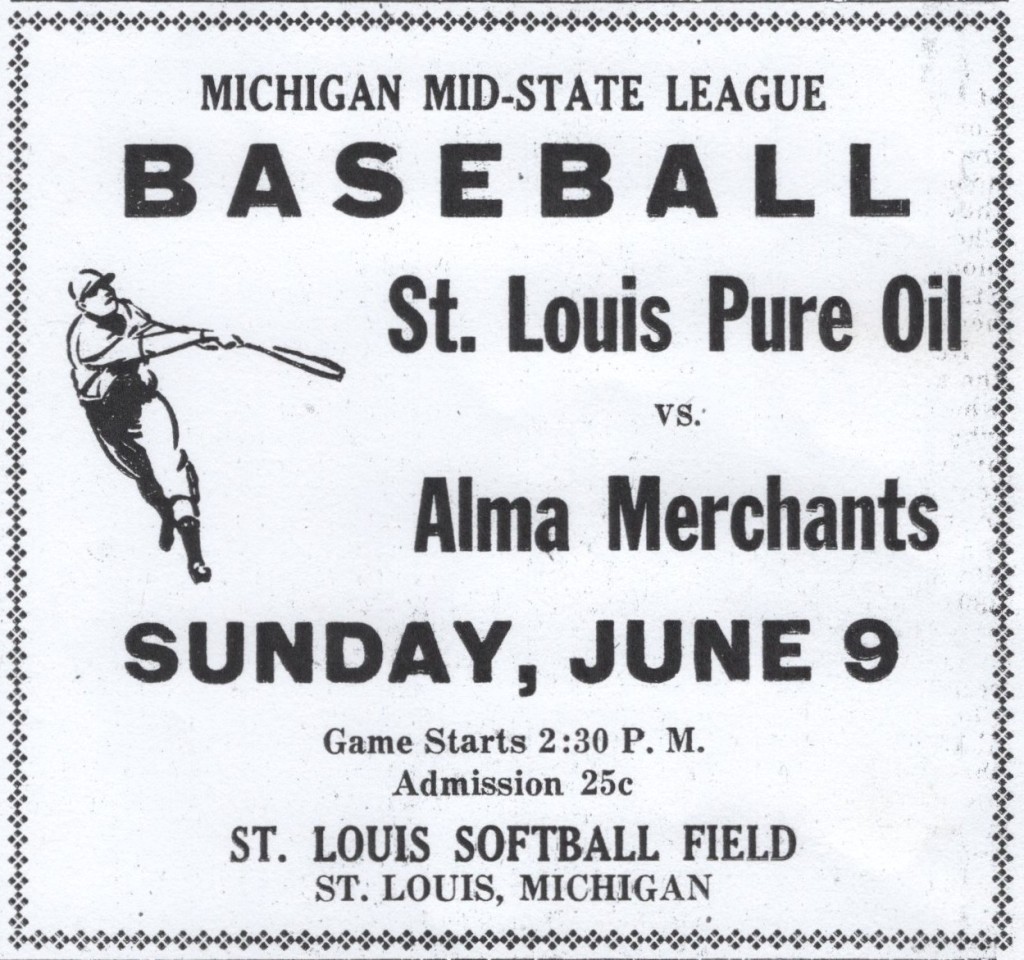
News and life in Gratiot County during June 1940 (from the top): The cartoon “Smoke” implies what many in Gratiot County began to realize – war was coming and the nation needed to prepare; James and Billie Vanderbeek of Pine River Township show off their proud “mama” and her quadruplets; unidentified Boy Scouts take in a “Camporee” at Ithaca’s Woodland Park; there was nothing like a Sunday county league baseball game in St. Louis – which one could see for only a quarter.

As Gratiot County slowly warmed up to another summer, events in Europe exploded as Nazi Germany invaded and conquered much of Western Europe.

Life in the United States began to slowly drift toward war as President Roosevelt developed plans that included large munitions plants as well as training young people for a potential national emergency.

Still, one could appreciate small-town life. How many believed that a world war in Europe could affect places like Ithaca, Alma, St. Louis, or Breckenridge?

It was June 1940 in Gratiot County.

The War in Europe in June 1940

Troubling news about the Nazi conquest of Western Europe appeared on the front pages of county newspapers. German troops crossed the Marne in France, and the nation’s collapse and surrender seemed imminent, with the outcome seemingly only a matter of days. In addition, Italy joined the war on the side of Nazi Germany and Mussolini announced Italy’s rights to Corsica, Malta, Tunisia and the Suez Canal.

In response to the events in Europe, President Roosevelt announced a draft plan to mobilize an estimated 7.5 million young men and women for noncombatant training. The President emphasized the need to train young people in “general disciplinary courses” in anticipation of a national emergency. Unlimited quotas for Army recruits were being accepted at Camp Ord, California, and Fort Lewis, Washington. Recruiters in Lansing were now available for any in Gratiot County who desired to volunteer. President Roosevelt also recommended a chain of government munitions plants across the country. The nation took another step toward preparing for war by examining thirty sites, which cost $376,000,000.

Locally, the war began to have a gradual impact on local people. Captain C.H. Reed, who operated a local fuel business in Alma, was called to active duty with the Army at Fort Brady, Sault Ste. Marie. Reed had previously supervised several CCC camps in the state. Approximately sixty members of the Troop B, 106th Cavalry of Alma, prepared to go to Wisconsin in August for 21 days of training. Before this date, the group had never trained for more than 15 days in the summer. Second Lieutenant Frank W. Iseman, an Ithaca High School graduate and a graduate of West Point, continued his training in the Air Corps Flying School. Iseman would ultimately serve as the director of operations of the 502nd Bombardment Group in the Pacific. A former Gratiot County youth, John C. Seipp of Fulton Township, passed the entrance exam to the United States Naval Academy at Annapolis, Maryland. After his family moved to Lansing, he attended Lansing Eastern High School. The Gratiot County Red Cross announced that the county reached the unit’s goal of raising $1,920 to help refugees during the war.

The Gratiot County Herald ran a very long editorial entitled “What Hitlerism Means.” The editor attempted to educate Gratiot County residents about how this war would be different from previous wars in history. It warned that Hitler would not settle for a few territories but was bent on European and, ultimately, world domination by Nazi Germany. What happened with the collapse and fall of France stood as a warning to the world that this would not be a short European war unless more countries capitulated to Adolf Hitler.

Many Social Program Activities in June 1940

June brought opportunities for New Deal programs that affected many in Gratiot County. At least three New Deal social programs collaborated to provide opportunities for children, young people, and adults to stay engaged and occupied during the late stages of the Great Depression.

Several WPA workers volunteered to help pour a concrete floor in the shelter house at Conservation League Park. After completing the 30×50-foot floor, all of these workers received a free yearly membership in the Conservation League. The shelter house encouraged more people from Gratiot to use the park for walking, picnicking, and other recreational activities.

With the warm summer weather, many young people traveled to Turck’s Beach in Alma to go swimming. The number of swimmers necessitated a program and its oversight. Both the NRA and WPA provided a total of 35 workers to watch swimmers and oversee the beach house. Over 200 swimmers turned out for the first swimming lessons at the beach. Thirty youngsters also expressed interest in participating in the new canoeing program. The main reason for the need for so many workers centered around the fact that the program, like others in the New Deal, only paid them for part-time work. Bill Moody was in charge of supervising the beach area, assisted by Bud Stearns, Don Martin, Jim Sebring, and Robert Parks. Two large towers went up on the beach so that lifeguards could watch all of the swimmers. Three wading pools were also constructed for young children on Michigan Avenue, in Wright Park, and near Hillcrest School. This type of pool also allowed families with young children to find a spot to cool off without having to go to the beach.

 In addition to Turck’s Beach, in Alma, 50 boys and 80 girls wanted to participate in a softball league. Another 40 boys, aged 15 to 17, wished to participate in a baseball league. That organization came under the direction of the NYA.

 More boys and girls in St. Louis also wanted their own recreation programs. Elliot Oldt started a program at Wheeler Field where boys and girls played a variety of sports on the field, including horseshoe pitching, badminton, softball, boxing, and croquet, among others. Ruth Walker supervised the activities for those under the age of eleven. One of the nicest draws in St. Louis now centered around new tennis courts. Tennis courts became so popular that Alma had six new courts constructed through the Wright Park improvement plan, which the WPA funded. The plan also called for new shuffleboard courts.

For young women not interested in athletics, the NYA planned a homemakers’ training school, which would accommodate up to twenty girls. They would be hired to learn food preparation, home management, laundry work, budgeting, and sewing. The NYA would pay the wages for these women. At least four other programs like this existed in the state of Michigan. Due to the numerous programs in the Alma area, the WPA recreation director, Darrell Milstead, was granted his own office in Alma City Hall.

Out on the streets of Alma, the WPA continued work on the 1939 paving project. The city believed it would soon be completed, as 20 new WPA workers would be coming to Alma, which meant potentially having as many as 70 WPA men working on Alma’s streets.

In other Depression-related news, Ithaca Townsend Club Number 1 met at the Masonic Hall and planned to show a movie in Woodland Park. Progressive Townsend Club Number 2 held its monthly meeting at the village hall. Because the Texaco gas station and Hanssen Grocery on East Center both had Townsend trade cards, members were encouraged to visit those businesses. The Townsend program was an alternate pension plan for the elderly, which commanded a very popular message to many in Gratiot County. Two Alma men, David Gerhard, Consumers Power Company manager, and H. S. Babcock, Alma Record publisher, went to the dedication of the new seven-million-dollar plant on Saginaw Bay. The featured speaker for the program was Wendell Willkie, who would soon be the Republican nominee for President in 1940. Boys between the ages of 17 and 24 could apply for enrollment in the Civilian Conservation Corps. Visit the Gratiot County Department of Social Welfare office located at 614 East Superior Street in Alma.

The Long Arm of the Law in Gratiot County

Some law officers thought Gratiot experienced fewer court appearances during June, and the jail count supported this notion. At one point, only three people were in the county jail, which had a capacity of up to twenty-two. Still, traffic violations generated the most revenue in terms of fines, totaling $466.84.

 James Vlasich was bound over to appear in the circuit court for intent to commit significant bodily harm to his mother. John Hagen of St. Louis was in trouble for driving his car on the sidewalk in St. Louis. Most of the others making appearances did so for drunk driving, like Stanley Furly, an oil pumper in the Porter oil field. He received sixty days of jail time and a $59.35 fine. And then there was the familiar face of Cornelius W. Eichorn of Emerson Township. Eichorn was picked up for reckless driving east of St. Louis this time and had no driver’s license. Eichorn was developing a habit of not driving safely. He was released on a $100 bond. In another strange case, Marvin Cooper of Arcada Township confessed to driving his tractor over three blocks of newly surfaced blacktop in Ithaca. The tractor’s lugs did much damage to the surface.

Claud Offill, formerly of Elm Hall, lost his appeal from a 1929 sentencing for assaulting Deputy Sheriff Ray Helman. Offill shot Helman twice and was on the run for twelve hours before being caught. He received a ten- to twenty-year sentence at Jackson State Prison and was now in the eleventh year of his sentence. Offill claimed his confession of assault and battery of his wife was coerced, but the high court rejected Offill’s argument. He stayed in prison.

In other news, Alma, James Campbell, Chief of Police, warned residents to stop disregarding parking tickets, which would now result in formal complaints in court. Those citizens who paid their dog taxes before the June 1 deadline brought in $2,045 in May. Howard Evitts of Pompeii, the county dog warden, would be out collecting delinquent dog taxes for those who had not paid. The Alma police department announced they were reducing their force to four officers upon the retirement of Patrolman Gus Herron. Herron, 72, served Alma for 21 years. Mildred Taft announced that she was running for probate judge. This position oversaw a team of 21 individuals who process naturalization applications in Gratiot County.

And among the last of the news was the name of a new drug that appeared in Gratiot County – “marihuana weed.” The Michigan State Police issued warnings about this new drug in mid-Michigan, and it was now a federal offense for growing, possessing, selling, purchasing, or transporting Marihuana. Police also said continuous smoking of it would lead to insanity. In the wild, the drug grew to a maximum height of 3 to 6 feet. The police also warned Sunday drivers, Boy Scouts and Girl Scouts, hikers, and farmers to be on the lookout for the illegal weed.

Health Issues and Events

To start a new dental parlor in Alma, R.B. Davies planned to open his office in his mother’s home on 226 North State Street. Davies, an Alma High School, Alma College, and the University of Michigan Department of Dentistry, returned home with good references and an eagerness to serve his patients. A twelve-week free dental clinic came to Gratiot County, sponsored by the James Couzin’s Fund of Michigan (also called The Children’s Fund of Michigan). Parents of children under sixteen who are in need received letters inviting them to receive free treatment. The clinic would be in Ithaca for five weeks, then move to Alma for four weeks, and end in St. Louis after a three-week stay. The first free dental clinic in the county was established in 1937.

William Kinney, age 57, of Arcada Township, took his own life with a shotgun. He had faced poor health and despondency due to his inability to work in his trade as a paper hanger and painter. Before he passed, he claimed to be shooting a crow, but coroner G.V. Wright disagreed. Kinney left behind his widow and two children.

Chase Farrar of Route 3, Alma, went to Smith Memorial Hospital for treatment of a gunshot wound in his left forearm. Farrar was wounded while driving a tractor and had been hit from a long distance. Robert Hinderline of Alma reported that his son had been admitted to Smith for treatment for severe burns. The young Hinderline was thought to have played with firecrackers, but the culprit was a dynamite cap from a friend’s car. The boy received heavy burns around his lips and left hand when the cap exploded. Karl Wigglesworth of Breckenridge survived electrocution from a 4800-volt line on a telephone pole near Sickles. He and another Consumers Power Employee, Leland Helfer of Ithaca, were working on the line when Wigglesworth accidentally touched a hot stick and took the jolt with his left hand and right hip, which rested on a service wire. Thankfully, the cool work of fellow worker Helfer helped free him. Wigglesworth was in Smith Memorial Hospital with a burned left hand and right hip, but survived the ordeal.

St. Louis city residents received another notice, reminding them that they had until July 1 to have their noxious weeds cut. Those who failed to cut their weeds would have the city highway crew do it, and the cost would be charged to their city taxes. Heavy June rains left many properties and vacant lots full of weeds.

Dr. Georgia V. Mills delivered a health lecture at St. Louis High School titled “Preventing Communicable Diseases.” Topics included the spread of contagious diseases, quarantines, vaccination, and the danger of tuberculosis. The St. Louis Child Study Club and the Michigan Department of Health sponsored Mills.

Farming & Outdoors in June 1940

Weeds, bugs, and fungi all grew well during June as the onslaught of cool, wet weather brought an abundance of all three to Gratiot County. Gratiot County agricultural agent C.P. Milham noted that some of the growth in the fields resulted from some farmers who used nitrogen fertilizer. Heavier soils in the county needed straight phosphate, while those planting grains needed a potash combination fertilizer.

Sheep dipping continued across parts of Gratiot County. A new portable dipping rig allowed participating farmers to treat 7,000 sheep and lambs thus far. One of the sites to be included in the upcoming weeks is Milton Snyder’s farm in Pompeii and C.K. Tuttle’s farm in Fulton Township. More farmers offered to host a sheep dipping session. Garl Vanderbeek of Pine River Township still had his quadruplet lambs, which were now almost two months old. While deliveries of quadruplet lambs were not extremely rare, having all four survive this far was. E.E. Stahl’s farm, six miles north of St. Louis, continued to welcome a strange visitor among his herd of cows. A small fawn regularly appeared among the cows, following the herd to pasture. The Stahl family could usually reach within a few feet of the small animal.

Bill Harper’s Hardware in Houserville had John Deere hay loaders for sale. The McCormick-Deering Store in Ithaca offered a smoker (demonstration) for its new harvester-thresher on June 18.

The Bailey family west of Pleasant Valley experienced a tragedy when young Dale Edward Bailey, age 15, died as a result of being pinned under a tractor. Young Bailey was plowing a field and did not return home for dinner that evening. His young sister went out to find Bailey and came upon the accident, which had the boy pinned face down between the fender and wheel of the overturned tractor. Death probably came from suffocation.

Four new 4-H clubs were organized in late June, bringing the county’s total to 20 and enrolling 212 members. The new clubs included the Good Luck Canners (in Ithaca), Pompeii Willing Workers, Happy Farmers Livestock and Crops Club (Ephert School), and Our Gang (Bannister).

In June, stricter enforcement of quarantine for dogs across the state led to a decrease in rabies cases. It also led to a reduction in dog attacks on livestock. In 1939, the state reported farmers suffered a loss of $125,000 in livestock. Most of the dogs in both questions were believed to be strays from towns and villages rather than those from farms.

Gratiot County prepared to open its first school for children of Mexican beet workers. Reverend Floyd Drake of Breckenridge, president of the Gratiot County Council of Churches and Schools, devised the idea and organized support for the school. The school planned to open in the abandoned Washington School in Alma. It would be under the direction of Gertrude Herman of Grand Rapids. She had three staff members who planned to host children aged four to fourteen, and a host of NYA (National Youth Administration) workers cleaned and prepared the building. The school planned to host up to one hundred students, and forty showed up on the first day. At the end of June, visitors from different out-of-state churches visited Alma to see the school; at least two were from New York. An open house invited Gratiot residents to view the program and facilities. 

Finally, in an attempt to get outdoors and enjoy a day fishing for trout on the Pine River, Don Lemon of Alma had a startling experience. While casting for fish, Lemon stepped on a large rattlesnake while walking on the bank. Lemon claimed the rattlesnake was as large around as his wrist, and he quickly changed locations to continue fishing.

And So We Do Not Forget

In Michigan Mid-State League Baseball, St. Louis Pure Oil played Alma Merchants on Sunday, June 9, at the St. Louis softball field. The admission cost was twenty-five cents…The St. Louis Trade Association sponsored its first Saturday night entertainment event, featuring a band concert by the St. Louis High School band. Herbert Saylor conducted the concert on a vacant lot on Mill Street…The Ithaca High School class of 1915 reunited on the school grounds in Ithaca on Saturday, June 22. Silas Partee invited all past members to attend along with their families, as this was the twenty-fifth anniversary of the reunion…The Ola Camp Meeting opened with Dr. Nathan Cohen Beskin, an evangelist and a Jewish convert to Christianity. Beskin was known nationally as an outstanding evangelist…Miss Mae Nelson offered piano and clarinet lessons in Ithaca for 75 cents a lesson. Contact Mrs. Mike Haley for more information…The Bannister area was shocked and saddened by the sudden death of young Esther Lillian Thomas. Thomas was only 14 years old and died just before her eighth-grade graduation. Esther had strong ties to her community, school, and church.

According to the recent census results, Gratiot County gained 2,429 people since 1930. A total of 35,938 people were recorded in the census, with Alma and St. Louis accounting for the majority of the increase. Elba Township lost fifty-five people, but Emerson Township only three…The Ithaca Masonic Lode prepared for the arrival of Dick Lewis, a 1913 Ithaca High School graduate who experienced success in the manufacturing field. Lewis planned to bring thirty-five entertainers for an evening program in Ithaca…Michigan Chemical Corporation planned to build a new brine well in the northwest corner of the Jake Wolford Farm just north of Oak Grove Cemetery…Spencer Tracy and Hedy Lamarr starred in “I Take This Woman” at the Ideal Theatre in Ithaca. All seats were only ten cents…The village of Ashley has lost a beloved citizen, Mrs. Emma Jane Duncan, who passed away at the age of 81. Her husband, a Civil War veteran, moved to Ashley in 1900. Many knew her for her willingness to help those who were sick and in distress. She also worked at the Ashley post office for six years…Alfred J. Fortino received his LLD degree from the University of Michigan. A 1933 Alma High School graduate, he attended and graduated from Alma College before pursuing his law degree…The Alma Chamber of Commerce has announced the committees for the upcoming Alma Harvest Jubilee, scheduled for August 22-23. Finance, entertainment, parade, and publicity committees all planned to go to work after the Fourth of July…A group of 150 Boy Scouts attended the annual Boy Scout Camporee at Ithaca’s Woodland Park. The camp operated for two days, and every four or more Scout patrols were required to provide their unit’s camping equipment. Some events included signaling, water boiling, and a flapjack contest.

Four St. Louis men purchased the Gratiot County bank building from owner H.J. Stroupe. St. Louis voters earlier turned down the idea of turning the building into the city hall. The new owners included W.V. Hess, Vere Nunn, Fred Tryon, and Ralph Goggin…Van’s Wallpaper, the Byerly store, and Almy’s Food Market in Alma all had new signs on their stores…Prepare for the opening of bass season by purchasing Shakespeare Famous Tackle at C.G. Larry Hardware in Ithaca – the Fisherman’s Headquarters…Tom Brown and Constance Moore starred in “Ma! He’s Making Eyes at Me” at the Alma Theatre. News, oddity, and comedy for only ten or fifteen cents on July 2-3…The Saginaw Black Socks came to Ithaca to play the Ithaca Independents at the Ithaca fairground on June 30 at 2:30 p.m…Skippy LaMore’s Comedians would be St. Louis for one week beginning July 1. The group planned to present seven plays in a beautiful tent theater for only ten cents…The Czechoslovak Society of America opened a new two-story building with a two-day dedication ceremony. Construction of the new hall began two years ago and measured sixty feet wide by eighty feet long…F.M. Vandercook celebrated his 90th birthday in St. Louis. Vandercook was a pioneer newspaperman who owned and operated different papers in St. Louis and Ithaca. He published the first daily paper in St. Louis in 1893…A Fourth of July celebration was scheduled for Lumberjack Park. This “old time celebration” featured patriotic addresses, the Breckenridge Community Band, hog calling, husband calling, and a free movie. One could even buy a chicken dinner from the camp cook, Mrs. C.A. Field.

Several Alma people traveled to Detroit to watch the Tigers defeat the Yankees. A group of eight led by James Kline, a meat cutter at Bert Hicks and Sons store, watched the close game. Others from Alma, like G.A. Giles, saw the Tigers take a doubleheader from the Athletics…Alma High School graduate Carl Shultz was assigned to play for the Union City, Tennessee, team in the Kitty League. The St. Louis Cardinals system signed Schultz…Earl Willert’s barbershop at 212 East Superior got an entirely new fluorescent lighting system courtesy of Everett Giles, electrician and Strand Theatre operator…Persistent rain forced the postponement of the Alma City Band’s opening concert. The group had twenty-five members…Miss Lois  Brainard, age 15 and a student at Alma High School, was selected in  “Alma’s Glamour Girl Contest.” Brainard reigned as queen over festivities for the Alma Lions Club production of the local movie, “We’re in the Movies Now.”  Margaret Atkinson finished second…Thompson’s in St. Louis advised customers to join their Blanket Club. Plan for winter – lay away a 72 by 90-inch virgin wool, moth-proofed blanket. A deposit of fifty cents and payments of only twenty-five cents a week got you the extra-large winter blanket…Gratiot’s leading naturalist, Parks Allen, wrote an article that described the different types of water birds he saw during a trip to East Tawas. Allen remarked that only three types of gulls could be found: the herring, long-billed, and Bonaparte’s gull… The Balmoral Indians defeated Shell Oil by a score of 7-4 in the season’s opening game in Ithaca.

Turck Beach in Alma is prepared to open to the public. Dressing rooms had been refurbished, repainted, and cleaned up. William Moody, Jr., will act as supervisor…Reverend R.J. Tuttle accepted the call to become the new pastor of the Alma Church of God. Tuttle completed a two-week church revival, and the congregation invited him to remain as pastor…Ten-year-old Charles Federspiel, son of Gratiot County Treasurer William G. Federspiel, was taken to Smith Memorial Hospital after suffering a double fracture of his left arm below the elbow. Young Charles obtained the injury by trying to jump off a brush pile. Unfortunately, he caught his foot on one of the branches…Recreation bowling alleys at 215 West Superior in Alma closed for the summer. Manager V.G.Case believed they would reopen after August 30…Joseph L. Winslow’s name went to the Senate for confirmation for his second term as Alma Postmaster. Winslow recently completed his civil service exam in Saginaw. H.R. Leuth of Medler Electric Company received the electrical work contract for the new St. Louis Co-Operative Creamery, which was under construction. The contract was worth more than $3,000…The Gratiot County Conservation League hosted a successful pancake supper, attracting 250 people and raising nearly $100 to enhance the park. Some prizes awarded to attendees included over forty pints of maple syrup… Gittleman’s Style Shop installed a new air conditioning system on West Superior Street in Alma. Weighing ten tons, the new system would constantly maintain a temperature of fifty percent relative humidity.

And that was the Depression and War in Gratiot County in June 1940.

Copyright 2025 by James M. Goodspeed

Gratiot County in Depression and War, April 1940: “Peace and Isolation”

From top to bottom, life in April 1940: A new neon sign appears in county newspapers. The sign at the corner of Washington and Mill Streets is considered one of the nicest in mid-Michigan; a WPA mural done by Joe Cox, entitled “Harvest,” is hung on the north wall of the Alma Post Office; a group of English women prepare for anticipated air raids in London.

The long winter leaves Gratiot County, and the spring thaw takes place.

In Europe, it meant the resumption of Hitler’s war. “The Phony War” was over as the Nazis invaded Scandanavia, Denmark and prepared to invade Western Europe.

Farmers got ready to work their fields, and people carried on their lives in an isolated area of mid-Michigan. How many quiet springs would be left?

It was April 1940 in Gratiot County.

Winter War Becomes the Spring War

As winter ended in Europe, the “phony war” ended. Nazi Germany now started to make its anticipated aggressive moves toward the West – on land and sea. Gratiot County saw and read about these events through articles and photographs published in county newspapers.

British citizens in London anticipated air raids, as did French ground crews who believed invasion was imminent. French soldiers passed their time in places like the Maginot Line, waiting for the Germans to attack. Australian troops (Anzacs) in Palestine believed that they too faced a Nazi invasion of the Middle East. The Italian navy moved toward the Dardenelles to help the Nazis.

Hitler ordered his troops to occupy Denmark, and the Danes barely resisted. The situation in Poland was far worse as Warsaw lay in ruins and Jews were forced to wear the yellow triangle and walk in the gutters instead of on the street. The Nazis had also attacked Norway and moved to occupy the city of Trondheim on the east coast. The naval war between Germany and England began when Hitler proclaimed he was there to protect them.

In Brooklyn, New York, a group of seventeen men known as the Brooklyn Boys went on trial for plotting to overthrow the government. The United States Army tested new tanks at Camp Ord, California. In St. Louis, Michigan, Vojta Benes, brother of the former President of Czechoslovakia, spoke to groups about how he escaped his country before the Nazis occupied it. Ottakar Podrabsky, a Czech college student who escaped and enrolled at Alma College, explained what life was like with blackouts and preparations for a Nazi occupation. Both speakers asked Gratiot County residents for moral support during the European crisis.

Depression Life May 1940

The issue of a lack of money and social issues in Gratiot County continued in the news.

 One of the growing responses to the problems of the elderly remained the popularity of Townsend Clubs. The Townsend Plan was another proposed way of providing pensions for the elderly, and these programs attracted large numbers of interested people. Over in Elwell, a meeting at the Odd Fellows Hall drew sixty people who gathered to see a movie about the Townsend Plan. An even bigger group of 300 interested people appeared at the St. Louis Park Hotel to hear state spokesman Ira Brinker. Dr. Townsend also had regular newspaper columns, such as the Alma Record.

The cost and care of indigent residents in Gratiot County continued to concern those on the board of supervisors. Part of this concern centered upon a potentially growing financial deficit for the cost of care now that Gratiot County had taken over responsibilities from the state. The county received $223.79 a month for total care of all indigents and already had a deficiency of $788.96, and this was only a few months into the county’s role of managing these costs. Much discussion occurred about the need for sworn written statements from county doctors when a child or adult indigent needed to be sent to a place like the University of Michigan Hospital for treatment. An auditor told the commission that if the current rate of debt continued, the county faced a $78,400 bill in October 1941.

Over in St. Louis, the Community Council led the discussion of creating a community chest that could be used in part to help care for needy families. One way to do this was to create a card system for disadvantaged families and places where donations like clothes and shoes could be stored, such as the city hall and the Gratiot County bank building. The bank building was presented as a site where women repaired clothes. The greatest need in St. Louis was shoes for the needy.

All of the discussion about the needs of people across the county occurred during what the Gratiot County Herald labeled “New Deal Defeatism” – or disenchantment with the deficits created by the New Deal. In 1932, the Herald cited the nation’s unemployment at ten million people – the same number a WPA administrator claimed was the rate in 1940. With so many out of work, looking for jobs, and the nation’s deficit growing, how could the New Deal programs be worth supporting?

Places like St. Louis faced financial issues tied to a New Deal program. Residents of St. Louis voted down two bond issues, one of which involved paving sidewalks with additional money from the WPA. That bond would cost taxpayers $32,000, the city $12,000, and the WPA $76,000.  There was still interest in the sidewalk proposal, but voters needed more details. The other bond issue, which involved buying the Gratiot County Bank building for a new city hall, went down overwhelmingly.

However, people could still see New Deal programs at work in Gratiot County. NYA workers trimmed trees in Wright Park and faced problems with removing stumps. In 1938, the city removed trees under a state forestry expert’s direction to increase sunlight in the park. Now, the city had to deal with how to get the stumps out of the ground, which required stump-pulling equipment.  Without the equipment, it was impossible to remove all of the unsightly, decaying stumps. The NYA also planned to help Alma by working to enlarge the city’s summer programs for youth. Alma High School coach Floyd Lear was contacted to oversee the summer program. WPA workers in Alma continued to work on terracing and seeding streets south of Superior Street on Gratiot Avenue and toward Gratiot. The city also planned to work with the WPA to complete curbing on several streets.

The most beautiful work done by a New Deal program in 1940 was done by Joseph H. Cox of Indianapolis, Indiana. Cox, a University of Iowa instructor, completed a large mural mounted inside the north wall of the Alma post office lobby. Many people turned out to watch as the mural, entitled “Harvest,” depicting harvesters stopping from their work to drink water from a long-handled dipper,  was placed on the wall. Another part of the mural showed a one-horse wagon loaded with grain, with farm buildings in the background. Cox came to Alma to supervise the hanging of his mural.

Farming, Outdoors

Unseasonably cold weather in April meant spring planting lagged as farmers waited for spring to arrive. Some called this time in Gratiot “backward spring,” as the only thing being planted so far had been oats. The Gratiot County farm agent commented that more farmers intended to grow more beans than sugar beets. However, many farmers believed that an overproduction of beans would occur and reconsidered their sugar beet acreage.

A group of 1,096 farmers in Gratiot County signed up for farm plans under the AAA (Agricultural Adjustment Administration). The number of sign-ups represented 52 percent of all farms in the county. By signing up with AAA, these farm plans monitored soil depletion, acreage allotments, goals for soil building, and the maximum payment every farmer could receive in 1940.

Farmers who planned to use sugar beet labor were required to pay the same rates as they did in 1939. Those beet growers who wanted benefit payments from the Sugar Act of 1937 had to comply with these wages. In anticipation of the upcoming farm season, Mexican sugar beet workers in Texas faced physical examinations to receive health certificates before they came to Michigan to work in the fields. Michigan doctors who traveled to Texas to examine potential workers looked for tuberculosis and venereal diseases. In 1939, 126 laborers were denied work due to health issues. Of that group, 86 had tuberculosis. The total cost of the examinations was $2,500. Michigan beet growers were supposed to have sanitary living conditions, quarters, and return transportation to Texas.

Problems with rabies and dogs occurred on and off farms as spring began. Clifford McKellar and Dr. D.J. Shepherd of Breckenridge brought charges against Bethany Township tenant farmer Floyd Ludwig. Ludwig shot an English setter belonging to McKellar and Shepherd after he claimed the dog wandered onto his property and lunged at him. However, after getting his gun, Ludwig shot the dog on an adjacent property belonging to someone else. Ludwig was jailed for defaulting on a $500 bond and awaiting an examination. The dog was valued at $200.   Miss Martha Carlson of St. Louis experienced sadness when her beloved collie dog, Laddie, was ordered to be put to sleep for his aggressive behavior. Laddie had been in court a year before due to his attacks on other neighbors. In one case, Laddie attacked a man who was plowing on nearby property by tearing off the man’s shoe. While the trial was held in Justice J.L. Smith’s court in St.Louis, the dog’s owner was in Detroit and could not attend the hearing, petitioning the court for leniency through her sister—a sad case for all those involved.

That spring, a bigger issue with animals and Michigan was rabies. 47 counties south of Town Line 21 now faced immediate compliance with quarantining all dogs starting April 1 due to a rabies outbreak. All dogs in Alma had to be confined; if on the street, they had to be on a leash. All stray dogs would be picked up and impounded. Newspapers like the Gratiot County Herald supported the quarantine and believed it was the only way to end the scourge of rabies. Howard Evitts, the county dog warden, also announced that he planned to place dog traps in areas where farmers notified him about the loss of sheep. Dogs caught in these traps would be disposed of upon notification.

The topic of banning Sunday hunting remained a hot issue. Two of three newly formed hunting clubs in the county supported banning Sunday hunting, partly to control the number of hunters invading the county on weekends. Clubs in New Haven and North Shade supported the ban; one in the Seville Township area did not.

There were other things related to farming and farming during April. A new freezer locker storage plant will open in Ithaca – the first in Gratiot County. This locker is expected to open in the old Nelson Produce Company, which Mrs. Gertrude Brown owned. A total of 300 lockers would be available. Interested people could view 700 exhibits by Gratiot County winter 4-H clubs at Alma High School’s gymnasium. Of the approximate 990 girls and boys who worked on projects, 875 finished them. This exhibit, the largest ever assembled in the county, featured girls’ clothing, handicrafts, electrical work, hot lunch, and food preparation.

The C. R. Ranch Rodeo Company agreed to perform at the 1940 Gratiot County Fair. Suckers were running up the Pine River, you could buy live ones at George Gates’ vegetable and fruit stand in Alma on State Street north of the post office. Michigan Mutual Windstorm Insurance Company offered insurance for high winds and tornadoes. Buy chick mash for baby chicks at the Middleton Farmers Elevator Company in Middleton. It only costs $2.35 for 100 pounds of mash.

Health in Gratiot County

Smith Memorial Hospital in Alma received good news when the State Supreme Court upheld its tax exemption. Before this, the city claimed the hospital owed almost $2,000 in realty taxes. Because it argued that the Smith was a charitable, non-profit institution, it was exempt from those taxes. The high court affirmed the decision made in Judge Kelly Searl’s court in 1938 that the hospital did not have to pay those taxes.

A variety of health issues continued to plague the county. The Michigan Tuberculosis Association offered a chest X-ray clinic starting in Ithaca at the Methodist Church to deal with tuberculosis. Those who had a positive tuberculin test after attending clinics in Ithaca and Crystal were encouraged to participate in the clinic. Metal signs went up in public places across the state as well as in the county, warning about the dangers of syphilis. Made by prison industries in southern Michigan and numbering 26,000, the signs appeared in public places such as washrooms and warned of the symptoms of venereal disease. A group of citizens met with the Children’s Fund of Michigan representatives to offer another summer dental clinic. The clinic mirrored the one provided in 1937, in which indigent children who could not afford it received free dental care. The Gratiot County Board of Supervisors appropriated $200 for the clinic.

In sad news, Samuel Mills of Emerson Township, age 58, took his own life after battling nervous depression and despondency for almost fifteen years. Mills had been under doctors’ care for some time. Mills, his brother, and their wives farmed 80 acres of their own and worked the Thomas farm of 240 acres adjacent to theirs. Samuel Mills was found early one morning by his sister-in-law in the cellar. A shotgun had been used as the instrument. Mills left behind a wife, two children, and his brother’s family.

The Long Arm of the Law, April 1940

Crimes and law-breaking of all kinds and levels appeared in the spring of 1940. During March, Prosecuting Attorney Robert H. Baker announced that 58 convictions were reached in court. 41 cases involved traffic violations, while 17 others involved other various offenses. Still, the court received $308.65 in fines and costs.

What were some of the offenses? Six of the cases dealt with breaking, and one with vagrancy. The notorious “Trailer Thief” Ross Smith, father of Michigan’s first trailer baby born in a stolen trailer from Redman Trailer in Alma, was released from jail three years ago. Smith failed to pay $200 in restitution, and then he disappeared. When he turned himself in to the authorities in Traverse City, Smith was sent back to Gratiot County, where Judge Searl gave him six months to five years in Jackson Prison. A jury convicted Leo Rawlings of North Star of stealing nearly 1,000 pounds of aluminum and scrap metal from Lobdell-Emery in Alma. It took the jury only 35 minutes to find Rawlings guilty.

Sixteen couples found themselves in court for chancery cases, in other news involving the law. The Dewey Glinke embezzlement case continued as the county sought to determine how much money Glinke stole from the county in late 1939. County supervisors have now announced that $3,078 in stolen funds is certain. The county would probably owe another $500 for paying two clerks who assisted the auditor general’s office with the case research. During the winter, a few taxpayers outside the county still needed to be contacted to determine if Glinke had stolen their payments. The Glinke case continued for several years in an attempt to find him and bring him to justice.

In other news, the Wheeler Township Board denied two beer license renewals by Orville Wilk and Steve Brenz, both outside Breckenridge. The FBI moved into Michigan—or so it was announced. FBI investigator Chief O. John Rogge said he planned to investigate corruption in high places. One Frank McKay profited from selling over $90,000 in bonds to finance the Blue Water Bridge at Port Huron.

And what else stirred up the Gratiot people in April 1940? It had to be the national census. Many residents spoke out about consenting to being interviewed for the national census of 1940. A list of 25 census enumerators appeared in newspapers to inform readers who would be knocking on their doors. Some, like Ethel Dunn of Elwell, sought out people in Seville Township. Mabel Lippert toiled in Alma’s second ward. Urban enumerators received 40 cents per name, while those in the country got up to 30 cents for each farm they recorded. Individuals like W.G. Davis and H.O. Butler of Ithaca protested being asked to contribute information to the census and being paid to interview them. Butler went so far as to organize the Gratiot County Vigilance Committee and hold a meeting at the Ithaca Circuit Courtroom. A total of 200 people showed up to oppose participating in the census, who did not want President Roosevelt or Uncle Sam to know about their status in 1940.

And So We Do Not Forget

A welcome sign was placed at Conservation League Park outside of Alma. The sign encouraged public use of the park and explained future planned improvements…John G. Young, Riverdale postmaster, died after being ill for two weeks. Young had been postmaster since 1910…the J.J. Newberry Store in Alma planned to open after completing a false front, new trimming, and a new stairway.  The fountain bar, a public favorite, remained untouched and ready to continue its service for eager customers. The store planned to rent the upstairs rooms…Area schools prepared for the county achievement tests for two days in early May. Seventh and eighth grade students would take their tests on May 2; the rest had the day off. On May 3, all fifth and sixth-grade students were tested while the rest had a free day. Make sure and bring two well-sharpened pencils and a lunch…Since May 1, 1939, the St. Louis Fire Department answered 61 calls for fires, including 4 in just one week in early April. The department responded to 40 fires in 1939, an increase of 21 fires…Buy your baseball equipment at the Varsity Shop in Alma. Baseball shoes cost only $2.15; gloves and mitts started at 69c, and bats ranged from 25c to $1.75…St Louis put up a large neon sign at the Washington and Mill Streets intersection. It measured 15 feet long and 5 feet high. Newspapers stated that St. Louis was the only city in mid-Michigan with such an attractive sign.

Eight students graduated from the St. Louis Business Institute in the previous three months. Four of the graduates already had jobs. Some graduates included Phyllis Alward, Bette Comstock, and Geraldine Humm from St. Louis…Resident V.K. Beshgetoor described a horrifying incident he witnessed on his way home to Alma. Beshgetoor motored through Shepherd when he saw a young boy inching near passing cars on a bike in northbound traffic. The boy took a tumble off his bike and missed being run over by a truck by only inches. Beshgetoor commented that after being scared for his life, he wondered how parents would allow their children to ride bicycles in such heavy traffic…The Porter-Yost field in Midland Township had 341 wells running and made a daily run of 4,754…The Ford Motor Company provided a Mercury 8 1940 test car for the Rademacher Motor Sales in Alma. Its average mileage is 22.3 miles per gallon.

Go to McIntyre’s Drug Company in St. Louis and order a treat. On April 28, customers could enjoy a free tree from the New Arctic Soda Bar…St Louis Schools expected its teaching staff to return for the 1940-41 school year. The only one not returning was kindergarten teacher Miss Ellen Strom…Mr and Mrs. M.D. Fisher opened their home to host the Gratiot County Rural Letter Carriers’ Association and Auxiliary. The group enjoyed a meal of chop-suey…Jackie Cooper and Betty Field starred in “Seventeen” at the Strand Theatre. Tickets cost 10c and 20c. A local newsreel ran every Wednesday and Thursday nights…The St. Louis Park Hotel offered regular duck dinners for 75c. Frankenmuth style cost $1.00. “Why eat at home when you can dine with us at these prices?”… Sixteen-year-old Richard Hetzman pf
Alma was chosen to represent the George W. Myers American Legion as a delegate at Wolverine Boys’ State in East Lansing in late June…The Sawkins Music House sold the 1940 Norge Steri-Seal Washer and a vacuum cleaner for $69.95. Buyers could also pay $1 a week. Interested customers could see for themselves at the Builders Show in the Alma High School gymnasium April 25-27…The Alma Oddfellows Hall hosted thirteen boxing matches for the Alma Athletic Club before a large crowd. Four of the bouts ended in knockouts…Alma High School returned five lettermen for the upcoming track season. Four of the five were seniors…County school children again sold Easter Seals for the benefit of handicapped children. This year, the thirty schools sold a combined $498.45 in seals…Most St. Louis Trade Association members wanted to close their businesses on Wednesday nights and offer entertainment programs on Saturday evenings…

Resident Theodore Bloss made the news for his friendship with neighboring fox squirrels. Bloss had been friendly with several of them for the past four years and had them visiting Bloss on his back porch and eating out of his hand…Burlingame & Son of St. Louis offered the new 1940 Chevrolet Master 85 Business Coupe for $659. Phone 282 to contact the business..Alma Girl Scouts launched their annual cookie sale. Crisp, crunchy butter cookies with chocolate and vanilla flavor appeared like the Girl Scout trefoil. Only 25 cents a box…St Louis Michigan Chemical Corporation displayed its new custom-built salt machine, which could produce one per minute. The blocks were sold to feed cattle…The Alma Builders Shows started on Thursday, April 25, and ran the rest of the week at the Alma High School gymnasium. Sawkins Music House showed moving pictures in the smaller gymnasium each evening…Monroe’s Drug Store in St. Louis sold vitamins, antiseptine, nose drops, and Tread Easy Foot Powder, see the advertisement in the St. Louis Leader-Breckenridge American….An article in the Alma Record told how a migration of Amish settlers left Canada and the United States for Mexico in the 1920s. Now, some of the followers established communities in Maryland…Fleming Shoe Company in St. Louis sold  nurses’ Oxfords for $1.98 a pair…Engineers in Montcalm County studied plans to increase the water level in Rock Lake. Plans called for transferring water from Marl Lake, a quarter of a mile away…Alma High School prepared to show 400 feet of film entitled “Land of the Free,” movies taken of students while they were in the building. The school recently purchased movie equipment to show a four-reel movie…

Bert Hicks &  Son continued remodeling their grocery store on the corner of Woodworth and Superior Streets in Alma. C.A. Hicks (“Bert”) had been in the grocery business for 37 years, 10 of those for himself. For the upcoming grand opening, Hicks planned to have a SunshinebBiscuit and Maxwell House coffee demonstration for all of those in attendance…James Merodeas joined James Stamas and Steve John as Alma State Sweet Shop partners. Merodeas came to the business with an excellent record as a cook…The Triangle Coal & Oil Company in Alma displayed a new thermometer on their building. In this way, motorists who stopped for gas or oil could easily read the temperature and realize the need to buy more coal for heating during cold weather…Mrs. Inez Brainard of St. Louis established the “Willard J. Brainard Loan Fund” to assist any St. Louis High School students who sought to further their education. Mrs. Brainard established the fund as a way of honoring her son, who died from fatal burns in an incident in 1939…Buy linseed oil, turpentine, and Moore’s House Paint at the Davis-Wolansky Hardware Company in North Star…A total of $498.45 was raised during the Seventh Annual Crippled Children’s Seal drive. Over 30 schools in Gratiot County participated in the program…66 schools renewed their Junior Red Cross subscriptions, which resulted in $100.63 to the Gratiot County Red Cross…Barbara Stanwyck and Fred MacMurray starred in “Remember the Night” at the Ideal Theatre in Ithaca.  Admission was 15 and 10 cents…

The thawing of heavy snow in Middleton left much of the village with high water in vacant lots, on streets, and on main roads. School buses could not travel some main routes to pick up students on a Friday. Still, robins and turtledoves could be heard and seen in Middleton…The Ithaca High School Junior Class presented “The Eyes of Tlaloc,” a mystery play, in the high school gymnasium…Mr. Harwood’s St. Louis High School English class polled students about their favorite radio program. Kate Smith’s program and “The Hit Parade” came in at the top of the most listened to on the radio…Bobby Erskin was lucky to have parents and grandparents who wintered in Dunedin, Florida. Bobby loved the Detroit Tigers, saw the Tigers in spring training, and served as one of two Tigers batboys. Ersikine brought home cracked bats used by Rudy York and Roy Cullinbine…Buy a new 6.2 cubic foot 1940 Westinghouse refrigerator for $112.75 at Walker’s Electric Shop in Alma.

And that was war and Depression life in Gratiot County during April 1940.

Copyright 2025 James M. Goodspeed

Gratiot County in Depression and War, February 1940, “The Long Winter”

From the top: The Joe Porubsky auction took place eleven miles southeast of Ithaca and drew a record crowd, lining both sides of the road and filling up a twenty-acre field; baseball was on the minds of Gratiot readers, with messages about a war going on in Europe; Electrified Farm Week, along with new tractor models, came to the county in mid-February 1940.

The long winter of 1940 continued. Get out the ice skates. Read about the war in northern Europe. Farmer, think about the upcoming 1940 season.

It was February 1940 in Gratiot County.

The World at War – “The Winter War” Continues

Most war news in Gratiot County dealt with the Winter War and Russia’s invasion of Finland. Photographs of dead, frozen Russian soldiers appeared in the newspapers, the results of the clashes between the Finns and Russians near the area of Petsamo, Finland. A hint of Nazi Germany’s intention to start an offensive in the West began as the French slowly retreated from a quiet German advance. The world knew that spring fighting was not that far off.

The St. Louis Service Club met at the Park Hotel and watched talking pictures of the United States Navy and March of Time films. People continued to monitor world events. In all this talk and awareness of a potentially expanding world war, one group expected to benefit from the war centered around news for farmers. Economists foresaw a billion-dollar boom for farmers as competition for food supplies, changes in shipping routes, and sea conflicts meant Britain would have to deal with more goods from the United States. Although the United States was not in its position in 1914 when the world had an endless need for food and goods, many believed a growing need for goods would happen again starting in 1940 with the war’s expansion.

Gratiot County Life Late in the New Deal Great Depression

During the winter months, if one wanted to see New Deal social programs in the county, one looked at ice skating. The WPA (Works Progress Administration) continued to maintain and invite the public to use skating rinks. Over in St. Louis, Lester Fillhard supervised the Community Council skating rink east of Wheeler Field, which sponsored a St. Louis Community Ice Meet. The meet had six types of skating events, from boys and girls under twelve to men and women of any age. The community council stated that there was a “crying need” for someone to donate a public address system and phonograph to play music. Some St. Louis residents used the rink for birthdays, such as when one student invited forty fellow eighth graders to skate and have lunch together. Hockey teams from both St. Louis and Alma battled each other in city competitions. St. Louis held its first Skate Carnival, and Robert Wilson served as contest judge. Sled events opened to both boys and girls. However, soft ice postponed the events for a week. Soon afterward, the ice improved, and the St. Lois recreational hockey team met and defeated the Alma East End bunch by 10-5.

Alma had a skating rink on South State Street, and city commissioners agreed to provide music for its skaters. Above the dam, many ventured out to enjoy the new ice that was created in only a few nights of cold weather. The city lowered the water to construct an overflow drain and raised it to its natural level. Two WPA recreation leaders, Frances Lott, and Chester Johnson, oversaw the Alma rinks. They promoted a city-wide meet and planned to lay out an oval shape on the rink for the races. One of the problems with operating the rinks centered around people who got on the ice when it was not in skating condition. Some of the older boys tended to get on the ice before it was ready, which resulted in numerous ruts and holes and made skating impossible.

There were other New Deal programs at work in the county. The Alma Salvation Army allowed the NYA (New Youth Administration) a place for thirty boys and young men to work on woodworking projects. The NYA also offered a sewing project for girls and young women ages 18 to 25 and provided sewing machines to recondition used clothing. One special need concerned the making of layettes for newborn children. In February, the government programs employed fifty NYA workers on different projects in Gratiot County. The WPA offered the city of St. Louis financial help to construct pavements and sidewalks. However, the project was estimated at over $108,000, with over $76,000 provided by the WPA. Still, this meant St. Louis would have to issue bonds to borrow money, and the common (city) council hesitated as the public would have to vote on the matter. Another issue involved buying the Gratiot County Bank building and turning it into a city hall.

Even in February, WPA workers continued on labor projects, such as retaining walls and the river bank near Walnut Street and North Court Avenue. The city also wanted the dangerous curve at that location worked on in the upcoming year, and many Alma property owners petitioned for extensions to sidewalk work that started in 1939. The city also hoped to widen Downie Street and Pine Avenue entirely through WPA labor and funds.

Several leaders like A.D. Smedberg of Alma met at Alma High School for a radio broadcast over WBCM of Bay City to continue promoting the benefits of New Deal programs such as the WPA. The men explained how WPA programs helped the city and why Alma remained a good place to live and have a business.

For a community celebration, the St. Louis Park Hotel hosted the annual President’s Birthday Ball. The ball benefited those affected by infantile paralysis and the Gratiot County chapter of the March of Dimes. Half of the money raised from the ball went directly to those in Gratiot County who had infantile paralysis. Those who attended the ball were awed by the beautiful red, white, and blue decorations provided by the Consumers Power Company of Alma and the music and dancing led by the Don Hoffman Orchestra of Lansing. In the center of the ballroom hung a large picture of President Franklin D. Roosevelt.

The issue of public health was very real in 1940, as the Michigan Tuberculosis Association continued to offer T.B. clinics in response to eight people who died from the disease in Gratiot County in 1937. Tuberculin tests and at least one X-ray clinic occurred in the county in March 1940.

Some news in the county relating to the effects of the Depression was not so happy. Ralph Olmstead of Elwell led a case against the First State Bank of Alma, arguing that the Alma bank was the parent bank responsible for the loss of assets in his former bank in Elwell. Olmstead and other former depositors sought compensation for the closing of the Elwell Bank in 1933. Judge Kelly Searl granted an injunction to consider whether all suits could be combined.

The county also had a “scavenger sale” on delinquent properties. County treasurer William Federspiel offered over 500 property descriptions with a total value of $153,077 to the public in anticipation of the sale. However, the county only succeeded in selling 203 descriptions for a total of just under $25,000. While Alma and St. Louis led the sales, Hamilton Township sold nearly $4,000 of land to fervent bidders and speculators. Seldom did any original owners bid on any of their property.

Finally, opponents across the county for those concerned about President Roosevelt’s Social Security plan continued attending Townsend Club meetings. Alma, Ithaca, St. Louis, and Wheeler clubs participated in these potluck meetings to discuss their support for the Townsend Plan.

On the Farm, In the Gratiot Countryside

Although it was winter, Gratiot County farmers, dealers, and businesses planned for the upcoming farm season. The Michigan Sugar Company of  Alma and Lake Shore Sugar Company of St. Louis issued contracts for the 1940 season. However, the companies issued contracts with a slight change. Farmers would be paid for their first beet payment by December 1, 1940, but would not receive the balance until October 1941. This proposed second payment would be one month later than the year before. The St. Louis Co-Operative Creamery announced plans to build a bigger creamery during its 25th annual meeting at the St. Louis High School auditorium on February 2. A significant reason for creating a new creamery came from the June 1, 1939 fire, which caused $9000 in damage. The dairy also promoted Milkmaker, a mix with alfalfa or clover hay, and sold a superior dairy ration.

Alma Production Credit Association held its annual meeting and elected officers. Howard McMacken of Shepherd was re-elected president, and Harry Glenzen of Alma as secretary and treasurer. Over 700 members in Gratiot County belonged to APCA, had been operating since February 1934, and issued more than 1.3 million dollars in loans. Amazingly, the association had lost only $137 since that time.

Did you need a new tractor? Johnson’s Farm Equipment in Ithaca offered the 1940 Model 60 Family Harvest for $545. Bill Harper’s Hardware, northwest of Ithaca, sold the John Deere Model “DA” disk, billed as operating “Faster, Easier, Better.” About 150 farmers visited Rademacher Motor Sales in Alma on February 21 to see a demonstration of the New Ford tractor, which had a Furgeson system. Albin Rademacher showed a film entitled “Building for Future Farmers,” with entertainment provided by the Mercury Rangers. A highlight of the day was the presence of William Ford, brother of Henry Ford, a general distributor for Ford tractors. Eleven miles southeast of Ithaca, a record crowd attended the Joe Porubusky auction. Cars lined the roads for over a half mile up and down the road, filling a twenty-acre field for the auction.

Other events surrounding county farmers proved sobering. Leon Cratsenberg of Hamilton Township lost his home to a fire early in February. The Cratsenbergs, who had attended the county teacher’s institute in St. Louis, were on their way home through Ithaca and heard of the fire from a passing motorist. When they arrived home, the family found that only part of the contents could be saved due to the fire’s severity. Cattle thieves stole eleven cattle from the Eugene Ensign farm east of Ashley. Police arrested two brothers who rustled in Saginaw and Genesee counties and returned five of them after being discovered on a Huron County farm. Law officers arrested the Desanders brothers on robbery and possible murder charges. Because the brothers sold some of the Ensign cattle and other stolen livestock to farmers, getting the cattle back to the rightful owners proved challenging as other farmers had innocently purchased stolen stock. George Stoneman, Jr., of Ithaca, had a team of valuable draft horses hit by a Cheboygan man’s car. The horses, which won several horse-pulling awards, suffered severe cuts. Still, a veterinarian called to the scene believed the team would survive the wounds. Stoneman pulled onto US-27 when the Cheboygan car hit the team, destroying the vehicle’s front end.

Gratiot County received $3,526.17 for claims made from dogs that killed livestock in 1939 and ranked ninth in the state for losses. Authorities stressed that mongrels and strays running in packs, as opposed to bird and hunting dogs, were most responsible for losing sheep and other livestock in the county. The state urged the continued enforcement of quarantine and local dog laws as measures to reduce losses. Another dog story appeared in the news when Fred Cornell of St. Louis helped boys playing near the Pine River after the boys ran to the Michigan Chemical Corporation yelling for help. It turned out that the boys could not help an Irish Setter who had fallen through the ice and gone under several times. After more calls for help, Leverne Hill and Burdett Yats also arrived at the scene. Hall strapped a rope around his waist and gently crawled out on the ice to the struggling dog. Cornell and Yats then carefully pulled Hall and the exhausted dog back to safety. After returning to the river bank, the men and boys witnessed that the dog could no longer stand due to exhaustion. They then returned with the canine to the Michigan Chemical plant to dry off and warm up. In a short time, the once-drowning Irish Setter recovered and was up and around. A St. Louis dog owner undoubtedly owed thanks to this group of boys and a trio of men who saved this pet.

 Central Michigan Turkey growers met at the Court House in Ithaca to listen to speakers from Michigan State College explain new methods and answer questions about turkey management. Parks Allen, a Gratiot County naturalist, sought to save the life of an injured doe found east of Elwell. The deer appeared to have a broken leg, and a Pere Marquette Train brakeman reported that he thought a train hit it. Allen soon arrived and deduced that the doe had a dislocated shoulder but no broken bones. Allen took the deer home and provided a quiet location in a box stall, and the deer slowly improved. Allen also believed the injury occurred when the deer tried to jump a high fence near the railroad tracks in Elwell.

What else could farmers do in the winter? Ice fishing on Houghton Lake called many people north, where fishermen had daily limits of 15 perch or 25 combined pan fish. Fishing licenses cost one dollar and included one’s spouse! Although the trapping season ended, Gratiot trappers had until the end of February to report how many animals they trapped during the 1939-1940 trapping season. Barely half of those licensed to trap had reported their winter kills.

Finally,  strange things happened in southern Wheeler and northern Lafayette Townships in early February. The commotion became so intense involving “Finnish soldiers” that the county sheriff and his deputies were called for help. Township residents hid in their cellars, locked their doors, and turned off the lights. One caller telephoned the sheriff, urging, “Come to the Powell farm two miles south of Wheeler in a hurry!” Area farmers were so excited that several turned out with shotguns because “peculiar objects” had been seen a mile down the road. Deputy Nestle led a posse into the area and saw four strange things that appeared against the white snow. Nestle called out, “What are you doing?” The response came back, “Just hunting crows.” It turned out that Carl Lanshaw and Dr. C.O. Shaffer of Wheeler, along with Glenn and Grant Marr of Lafayette, all wore white aprons to blend in with the snow, covering all except their head and shoulders. The four men went out on a crow hunt wearing white camouflage but riled up the entire neighborhood. After determining that the complaints and phone call did not involve “Finnish soldiers,” Nestle reminded the men as he departed, “You better go to Finland if you want to use those methods (to kill crows). Carl Lanshaw later told the local newspaper that his group killed over 150 crows, thought it was a good sport, and even took their wives along while hunting the black pests.

The Long Arm of the Law in February 1940

If someone wants to learn about some of Gratiot County’s problems, they must look no further than the local courts and the county jail. That month, Fifty-eight people were convicted of crimes and contributed $387.78 to the county coffers. At the end of February, the county jail had 19 prisoners. Forty of the convictions dealt with traffic violations, and the rest of the crimes covered a variety of offenses. William Partello, age 27, and Grace Schaffer, 23, both of Lafayette, were hauled into court on the crime of lascivious cohabitation (living together without a marriage license). This crime had a long history in Gratiot County, and the consequences varied. In Partello’s case, he was sentenced to sixty days in jail, while Schaffer was sentenced to a strict one-year probation. In another case, Armond Bongard, 36, and Goldie Lewis, 17, ended up in jail on the same charge of “L and L” crimes. They waved examination and said they would appear before Judge Searl for sentencing. The bigger question remained: how did the sheriff and judge discover the  “L and L” crimes? Someone reported the couples, but the question remained: who?

Two other crimes involved embezzlement, one for vagrancy, and two for illegally trapping muskrats (one offender received ten days in county jail; the other got a $10 fine and $8.85 in costs). Other court cases involved selling chattel mortgage property and issuing checks without funds. Howard Phillips of Crystal pleaded guilty to embezzling $19 worth of property from Peterson Hardware Company, paid $33.85 in fines and costs, and pledged to repay the stolen money. The sheriff’s deputy went all the way to Flint to arrest Philips. Harry Conklin of St. Louis said he was not guilty of misappropriating the sum of $41.35 and twenty bushels of oats. His trial was yet to come. Roscoe Daymon, who lived west of Ithaca, was brought before the court for deserting his wife and three children. Daymon furnished a $500 bond and was released until his hearing.

Ralph Fisher of Elwell experienced the law’s long arm when Conservation Officer C.B. Smith pinched Fisher for spearing fish in protected waters. Fisher paid $8.85 in costs rather than spend ten days in jail. Over in Breckenridge, the conduct of a Porter Oil Field worker made the news when Lester McAlister caused an automobile accident in town due to drunk driving. McAlister was arraigned for drunk and disorderly conduct but spent sixty days in jail as he could not pay his fine and costs of $31.11.Oil wells continued to be installed in parts of one of the Porter oil fields, even though newspapers reported that drillers did not expect to find more oil. The Pure Oil Company, however, did put in its 28th well in Porter Township at the Mina Narmore lease.

Another pair of crimes in Alma upset residents. On a dare from his peer, one young man damaged newly constructed items at Gratiot County Conservation Park. In another case, thieves broke into the new log cabin at the park. They then stole $125 worth of aluminum cooking ware that the Lobdell-Emery manufacturing plant had just donated. The thieves used a wrecking bar to pry off the locks and entered the cabin to do their dirty work. The next night, another group of thieves broke into the Lobdell plant and stole 1,000 pounds of scrap valued at $125.

The Jesse Perez murder case reappeared in the courts after three years. Perez shot and killed a fellow Mexican beet laborer on a farm in Seville Township on July 7, 1936. Perez argued that Judge Searl failed to accurately hear and pass on the confession that Perez made about the murder and, therefore, Perez somehow witnessed against himself. Perez’s attorney also argued that his client did not understand the charges brought against him and that witnesses to the murder no longer resided in the United States. Perez’s appeal was denied, and he continued serving his 15-30-year sentence in Marquette.

Finally, the Women’s Christian Temperance Union requested printing an article in the Gratiot County Herald about a “Warning About Marihuana.” In 1938, there had been over 1,000 violations of the Marihuana Tax Act. Because over 8,770 pounds of bulk marihuana had been seized that year, parents and educators needed to be more aware of the possibility of the drug entering local schools. According to the WCTU, education continued to be the best defense against the drug.

Life in the Underside of Gratiot County: Race

What did being Mexican or Black in Gratiot County in 1940?

As more Mexican beet workers came to the county to work in the fields each summer and fall, the Gratiot County Council of Churches and Sunday Schools sponsored a religious project for children and adults. The program ran from June 15 to  September 1 in Alma and St. Louis with two Spanish-speaking teachers and a Mexican minister. Helen White served as superintendent of migrant work for the Council of Church Women of the Board of Home Missions.

A historically uncomfortable but then acceptable event in Gratiot County dealt with the performance of a minstrel show by the Alma Rotary Club. On February 20, the Rotary Club used forty men in a two-hour show and charged forty cents for admission. The sold-out performance hosted 500-600 people. Before the program started, Father John Mulvey gave a short talk about why minstrel shows appeared in history and the beliefs and history of the Alma Rotary Club. Aside from Father Mulvey, only one performer did not appear in “Blackface” during the performance. The Alma Record wrote about the show’s conclusion, “The grand finale was all that the term implies, with nothing lacking to revive the glory of the old-time minstrelsy and the spirit of Auld lang Syne.” Minstrel shows as community or organizational fundraisers and entertainment could be found in Gratiot County well into the 1960s.

County Clerk Charles L. Hicks announced that an examiner from the Detroit Federal Naturalization Office planned to be in the county on February 21 to conduct a naturalization hearing. Approximately a dozen people who petitioned for their citizenship planned on attending. The examiner also said he would be present in the afternoon to help petitioners with questions and problems about becoming a United States citizen.

Finally, Reverend V.K. Beshgetoor, born in Armenia and well-known and respected in the Alma area for decades, officiated at his daughter’s wedding in Highland Park, Michigan. Throughout his life, Reverend Beshgetoor had been a proponent of remembering and telling the story of Armenia’s sufferings and hardships.

And So We Do Not Forget

Miss Maurine Stovall announced that she installed a new lighting system at her studio in Alma. The new system gave the subject a daylight effect without heat and glare. She also had new photo enlargers and remodeled her darkroom…A.D. Smedberg of the Triangle Coal and Oil Company at 904 E. Superior in Alma advertised a new, higher quality coal stoker with a lower price…a St. Louis product, Crystal Fo Iodized Salt, appeared at the M.S.C. dinner in Lansing. The event hosted 150 Michigan publishers and their wives. Each received a complimentary box of salt…Corky’s Standard Service at the stop light in St. Louis gave away free autographed photos of actress Dorothy Lamour from her new movie, “Typhoon.” Drivers could also purchase Winter Iso-Vis Motor Oil…Gratiot County prepared to honor the birthdays of Abraham Lincoln and George Washington. Both former presidents appeared on the front page of the Alma and St. Louis Leader newspapers…Alma Public Schools notified parents of students who wished to enroll outside the Alma district. The cost for enrollment would be $11.20 per child…Alma JC Penney Store announced it had increased the size of its “Baby Shop.” The area next to the ladies’ ready-to-wear section featured the newest items for the baby or nursery…The Gratiot County Crippled Children’s Society met and decided to hold its annual Easter Seal campaign during the Week of March 11, 1940. Four area Rotary Clubs planned to promote the campaign. In 1939, the county raised $436.99 in penny Seals…Simi’s Restaurant and Billiard Hall planned to open in the Gaffney Building beginning March 1. Hubert Croton, Ray Helman, and Silvio Simi invited the public to come and see the new location.

The Danceland Ballroom, located above JC Penney Company in Alma, planned to host the annual Fireman’s Ball. Reed’s Sing Band provided the music….want the “Soundest Investment I Ever Made”? Buy a Pontiac at Pung Motor Sales at 315-317 East Superior Street in  Alma or Whitney Auto Sales in Ithaca…the quickest knockout ever seen in amateur boxing took place at the Alma Athletic Club when featherweight Don Anderson of Ithaca knocked out Al Brown of Stanton – in all of seven seconds. Anderson took out Brown with a sharp right jab that took Brown out for the count…the Detroit Tigers announced that they planned to move Hank Greenberg from first base to the outfield. The move enabled Rudy York to play at first base…a high school Mardi Gras took place at Alma High School. Eighteen students appeared in a photo in the Alma Record and Alma Journal…the Jean Bessac Chapter of the Daughters of the American Revolution held a colonial tea and exhibit at the Gleaner Home in Alma. The Jean Torrence Chapter of the Ithaca D.A.R. provided historical exhibits, and members of the Alma chapter appeared in colonial dress. This meeting was the first significant function of the Alma D.A.R. since its formation a few months earlier. A crowd estimated at 125-150 people attended…a group of an executive committee met in  Alma to continue exploring establishing a community center in Alma. A.D. Smedberg chaired the committee. A group of twenty-five delegates from various Alma organizations encouraged the creation of the executive committee …the I.O.O.F. Hall in Elwell hosted a dance every Saturday night. Both round and square dances took place, and it only cost thirty-five cents per couple…Edward G. Robinson starred in “Blackmail” at the Ideal Theatre in Ithaca. Admission was fifteen cents…the Ithaca Post Office received approval to move to the old Ithaca National Bank Building. The area would be enlarged to 1800 feet of floor space. The old post office had been in operation for over forty years and was owned by the Barstow estate.

Drivers in Ithaca could now turn on red at Center and Pine Streets. A flashing red arrow now came on with a red stop light for traffic coming from the east…famous artist J. Franklin Caveny entertained a large crowd at St. Louis High School using works done in crayon and clay. As he talked to crowds, Caveny quickly transformed drawings like the Atlantic Ocean, then used a few strokes to make it into the Hudson River. What appeared to be a lump of clay promptly became a bust of William Shakespeare or Abraham Lincoln. The crowd responded with prolonged applause for several of his works…over at St. Louis, excavators working on Maple Street at the Ray Boivin home found flakes of gold at a depth of seen teen feet. Samples of the gold quickly went to laboratories for testing….Laurel and Hardy starred in “Flying Deuces” for two nights at the Alma Theatre…Mrs. R.B. Smith of Alma returned home with her daughter, Miriam, from visiting her son, Lieutenant Reynolds C. Smith, in New Haven, Connecticut. No one knew it in 1940. Still, Reynolds C. Smith would be the first Gratiot County serviceman to die in World War II…Professor Roy Hamilton of Alma College addressed the Alma Rotary Club. He issued a “terse and forceful plea” to the audience about the lack of moral and spiritual poise during this time of world and individual affairs….American League umpire George Moriarty spoke to a very excited crowd of listeners at Ithaca High School. Moriarty told stories about professional baseball and how, by living by “clean rules,” America could fight “the anti-Christ influence” coming from Europe’s dictators. Moriarity signed a baseball for Marie Plank, and the photo appeared in the Gratiot County Herald…Leslie Reeves of Ithaca stated that he would display the new Case Flambeau Red Tractor during Electrified Farm Week…” Elmer and His Singing Farmers” traveled to South Bend, Indiana, for a one-night performance at the Mid-West Creamery Banquet. The group included Kenneth McComber, Linden Wright, Wendel Wright, and George “Elmer” Schleder.

And that was February 1940 in “Gratiot County During Depression and War.”

Copyright 2025 James M. Goodspeed

Gratiot County in Depression and War, January 1940: “A New Year, New Prospects?”

January 1940 photos from top to bottom: Fred Pernert, manager at the St. Louis Co-operative Creamery, took on the role as county chairman for the Finnish Relief Fund; a picture of Japan’s new three-man pocket submarine appeared in the newspapers; “Mugsey,” the Holstein cow belonged to J. Ward Doyle of Breckenridge. No other cow in the county produced milk at cost as Mugsey did; the dean of American League umpires, George Moriarty, appeared at Ithaca High School.

By January, the holidays passed, and winter finally arrived in Gratiot County, dumping snow and creating colder temperatures. As a new year started, residents wondered if the Depression was beginning to end.

What would happen in Europe as fighting continued?

It was January 1940 in Gratiot County.

Images of War in Gratiot County

County newspapers continued to provide Gratiot readers with glimpses of the fighting taking place in the world. Most news stories seemed to pay attention to Nazi Germany. However, in January, news coverage focused on the Russian invasion of Finland, which took place near the Arctic Circle. Here, Finnish soldiers endured bombings and had to flee to neighboring Norway for refuge. During some of the fighting, the Finns wore white uniforms as camouflage, while Russians fought in their traditional dark suits. Names of Finnish cities like Turku, Hanko, and Tornio all now became newsworthy while they endured Russian attacks. Over in St. Louis, Fred Pernert, manager of the St. Louis Co-operative Creamery, accepted the chairmanship of the Finnish Relief Fund. Pernert received the request from President Herbert Hoover to serve as chairman. This fund sought to help the Finns as they fought for principles similar to America’s. Supporters could send money to the Creamery office or Commercial Savings Bank. In St. Louis, Rotarians heard a speech from John L. Giles entitled “Communism in the United States.” Giles went on to explain his experience with Communist propaganda and urged listeners to be aware of the dangers of “the Reds.”

 A cartoon entitled “The Middle Man” in county newspapers depicted the predicament neutral nations found as they tried to sail through the British Blockade, which contained German sea mines. This problem echoed events over twenty years earlier when the United States tried to stay out of the First World War while trading with European nations. In an ironic twist, the Gratiot County Herald showed Japan’s new three-person vest pocket submarine, which started production. Small submarines like this appeared at Pearl Harbor in December 1941.

News coverage also featured two Gratiot men who served the country while the rest of the world was at war. Fireman First Class Arthur Wood of Alma came home on a ten-day pass to spend the holidays with his parents. Fireman Wood, in the service for four years and ten months, told the Alma Record about what he saw during fighting at Soochow Creek, China, in 1937 and rescuing the crew of the gunboat Panay in 1939. Wood was also involved in the rescue of the steamship President Hoover near the island of Formosa. Other journeys led to Vladivostok, Russia; Manila, Philipines; Siam; and journeys through Alaskan and Chinese waters. Over time, the young sailor managed to keep a record of his journeys in a picture album. Sergeant Chester Harvey of the 106th Cavalry of Alma was the other serviceman to return to Gratiot County. Harvey went to Fort Riley, Kansas, for three months of training to prepare for a promotion as a commissioned officer. Harvey, an Alma College graduate, also had the record as one of the best shots from Troop B.

The Depression Rolls Onward

One of the new developments in Gratiot County by 1940 concerned changes for those requesting welfare. The Gratiot County Social Welfare Board made a presentation to the County Board of Supervisors regarding hospitalization for those on welfare, especially afflicted children. Mable Clelland, county agent, was ordered by the Supervisors to handle investigations of the sick and disabled children until the state appointed a person to replace him. One positive report showed that the county had 113 fewer relief cases than a year ago. The Supervisors then transferred $10,000 from the general fund to the social welfare fund, giving it a balance of $24,000 for the upcoming year.

The biggest news concerning welfare centered around Gratiot County’s new program unofficially called Work for Relief. Relief clients who wanted assistance now had to do work provided by the county. One type of employment meant cutting brush along county highways for $1.50 daily. The question was then asked, what about the many clients who would not be able to labor cutting brush? To answer this question, the board asked physicians to designate those unfit for such labor. Still,  “work or no relief” caused relief clients to appear at one of five county garages on the first day to get their work assignment, which entailed working eight hours daily. Twenty-two showed up at Alma, eighteen in Breckenridge, ten at Ithaca, nine at Ashley, and seven in Middleton. To help the clients, the county road commissioners furnished tools and supervision.

The Works Progress Administration (WPA) continued in Gratiot County, although it sometimes lacked favor from some, like the Gratiot supervisors. Mr. Morrell, a WPA legal advisor, proposed a five-year federal relief project involving compiling a Gratiot County history to the supervisors. The project would employ five people, and the federal government would finance it with $4,000. Gratiot County had to pay $300. The results? The Board flatly turned the offer down. One commissioner likened the project to a dog chasing a train. What would the dog do with the train once the dog caught the train?  In other words, what would the long-term benefit be for creating the history of Gratiot County? In other news, Alma Junior High hosted a state WPA Project where Gladys Bradshaw Perry, state supervisor of the Michigan State College WPA Project, brought an extensive collection of toys created by WPA workers. The collection consisted of stuffed dolls and animals, educational toys, doll beds, and various games done by WPA workers. The federal government paid wages for the workers, and materials came from sponsors and co-sponsors, all in an attempt to give the unemployed jobs and the opportunity to learn a trade. The WPA also did other things in the county, such as holding a city-wide ping pong tournament. Both WPA recreation leaders, Jack Acker and Wilford McWilliams, oversaw the program. Other WPA recreation programs occurred at Alma’s Wright Park, the Old Republic School, the Republic skating rink, and the city skating rink. Over at St. Louis, a new skating rink debuted through the Community Council, which opened weeknights and weekend afternoons. The WPA and NYA (National Youth Administration) had members overseeing activities at the rink. In addition to a weekend of working to create good ice, skaters also had a warming house for taking a break from skating. Over at East Alma Recreation, the WPA sponsored Junior Bug-a-boo, Senior Bug-a-boo, and Girls Doodle Bug clubs. Participants enjoyed food, music, crafts, and dance instruction.

The other significant New Deal Program in Gratiot County concerned the NYA (National Youth Administration). Vernon Davis of Alma was one of only 200 young people chosen to take a two-year program that educated young men interested in aviation. Davis enrolled at the Waterloo Project at Camp Cassidy, which trained men in mechanical engineering. The young men in this program lived in cottages, each with a leader (Davis was elected as one). NYA workers would also be involved with 2,150 Gratiot youth in a nationwide survey to determine unemployment problems for those ages 16-24. The survey attempted to determine how many young people were out of school and did not have jobs. Some of the NYA workers in the county helped conduct the study. Here in Gratiot County, NYA members worked clearing the ground of dead logs around Conservation League Park, built tables and benches,  a shelter house, and rebuilt a log cabin. Around city hall, boys in the NYA did shop work and cleaned and painted walls. Over at Alma Schools, several worked in woodworking classes. A sewing project sponsored by the city of Alma involved NYA, and the Salvation Army employed ten unmarried young women aged 18 to 25. The project had help from a local company that loaned machines so the women could condition old clothing and create layettes for newborn children.

In other news, the Townsend Club followers continued to hold meetings in the county. President Charles Reed, who oversaw the Alma club, invited Reverend George Gullen from Detroit to attend a program at the American Legion Hall over Reed’s Shoe Store. Gullen represented the Townsend movement in the state as its attorney. Another Townsend meeting occurred at the St. Louis Park Hotel, where Harry Elliot, a national speaker, planned to discuss the Townsend Plan. Over 200 people attended the program, ending with Edgerton Crandell playing the xylophone.

New Deal programs like the WPA, NYA, and others often faced criticism from Americans who believed the programs to be a waste of government dollars. One such program gave the public millions of surplus apples at seventy cents a bushel. Because farmers could hardly get twenty-five cents a bushel for apples, a critic wondered why the government paid seventy cents for each bushel it planned to give away without helping farmers. On top of that, too many apples seemed to go to waste, and to this county newspaper, the government just seemed to be “shaking the tree.”

The Outdoors, Farming, and Farm Issues in January 1940

After the holidays, Alma urged Christmas tree owners to deposit their used trees at Conservation Park. The previous winter, large flocks of birds appeared and used the trees as shelter. The Gratiot County Herald ran a story about a new winter sport – ice fishing in Michigan. However, a new law prohibited using lights at night to catch bluegills. In another topic relating to fishing, Michigan sugar beet executives met to discuss the issue of epidemic fish killings again in places like the Pine River below Alma and St. Louis. The large number of fish killed was attributed to the sugar beet plant’s inadequate treatment facilities. It took ten miles of chasing, but hunter Charles Boots shot a red box west of Bridgeville along the Maple River but a second red fox got away, and many had been seen between Bridgeville and Maple Rapids. Henry B. Gulick of Mason, Michigan, grew up in Lafayette  Township. He recalled what hunting was like as far back as the 1870s in Gratiot County and described the abundance of bears, which made hunting very successful. Within three hours on one hunting day in 1884, Gulick and his family shot three bears in Section 24, and with the help of their wagon, they had them back home by noon. The largest bear weighed 450 pounds.

Farmers met at different shows and meetings as the 1940 winter moved forward. The Middleton Methodist Church hosted the Gratiot-Clinton District Association of Farmers. Middleton merchants furnished roasted meat for the noon potluck meal as a break from the whole day of meetings. Don Sharkey from St. Louis hosted one of three tractor shows in January. Sharkey, who sponsored one meeting at the Community Hardware Company’s implement building, highlighted the use of John Deere tractors and implements. One of the features of the meetings included free talking movies and a free lunch. The St. Louis Beet Growers Association held its ninth annual meeting in the St. Louis High School auditorium. The meeting was expected to draw 500 to 600 farmers, and the Lutheran, Episcopal, Christian Church, and American Legion Auxiliary provided a meal. When the day ended, over 800 people attended. News came from Washington that a government sugar beet program would take place in 1940, but payment rates would be the same as in 1938 and 1939.

Some of the controversial news involving farmers that winter dealt with the sensitive issue of ending Sunday hunting in Gratiot County. The Gratiot County Board of Commissioners voted 18 to 6 to petition the state legislature to allow a referendum vote on the issue. Clinton County also sought to ask the state the same thing. A group of ministers in the Gratiot County Council of Churches and Sunday Schools approached the commissioners and urged an end to Sunday hunting. However, a ban would not be enforced for at least one year. Opinions on both sides of the issue appeared in local newspapers. H.O. Butler wrote a long letter to the Gratiot County Herald telling readers that he was against a ban on Sunday hunting, saying, “It is no more wicked to hunt on Sunday than on any other one of the five remaining work days.” He added that if preachers did more of their job preaching “the truth, the whole truth, and nothing but the truth” from the scriptures, there would be no hunting on Sundays as more hunters would be in church. Butler also added that he did not hunt or own a gun.

 H.J. Pinter and D.W. Olson announced the opening of Blue Ribbon Hatchery in Alma, located one block south of city hall. The owners planned to buy poultry and sell Blue Ribbon poultry feeds to the public. Swift and Company of Alma published a fifteen-page annual Yearbook of Swift and Company that covered what the company did in the past year. “Mugsey,” a Holstein owned by J. Ward Doyle of Breckenridge, appeared in the news as a record-grade cow. Mugsey produced 17,708 pounds of milk and 739.7 pounds of butterfat during 1939, returning to owner Doyle $229.79 above feed cost. Doyle wanted to know if any other cow in the county had a higher producing grade.

Breckenridge was busy that January as it hosted its 12th annual community fair. The Future Farmer Chapter and Breckenridge merchants sponsored the two-day event, which enabled 800 people to view exhibits of farm produce, sewing and home economics, and handcraft projects.

Gratiot County also took a moment to pause and reflect on the history of farming. A long article in the Gratiot County Herald reminded readers of the vital role of the County Extension Agent. The article reminded readers that Gratiot County’s first agent went on duty starting in 1917. The current agent, C.P. Milham, provided the history and details.

The Long Arm of the Law in Gratiot County in Winter

If anyone wanted to know the status of lawbreakers, they only needed to read the newspapers. During the previous month, the prosecuting attorney, Robert H. Baker, announced that thirty convictions occurred, with an additional 21 traffic violation convictions. Eight people in the group were convicted of illegally trapping muskrats. Another offense, passing bad checks without sufficient funds, had five culprits.

 January began with a settlement in the farm accounting case of Rowland Sexton, a Flint minister, and Maurie Arman. Arman operated as a tenant on Sexton’s farm near Houserville for nine years. The pair settled the accounting issue after evidence was taken to circuit courts. Fines and costs brought in approximately $280 to the court.

Various stories behind some criminal cases contained a mixture of sadness, grief, and even disbelief. Berniece Barry, wife of a Porter Township oil worker, failed to have her driver’s license after being involved in a traffic accident. It cost her $55.05 or 60 days in jail. Cornelius Eichorn, reported to be a well-to-do farmer in Emerson Township, made a petition to regain his automobile license, which had been suspended when Eichorn drove his car against a car off of US-27.   Eichorn had not been allowed to drive for several months. Eichorn’s wife petitioned the court to speak on her husband’s behalf in a February hearing. Mike Miczek of Middleton was brought before Judge Potter for stealing coal from Middleton Farmers Elevator. He paid $18.15 for fines and costs or spent 20 days in jail. Newell Little of Wheeler got the book thrown at him when the court sentenced him from 7 ½ to 22 ½ years for forgery. Little forged the name of William Kipp of Wheeler to a check amounting to $12.50. Little had a long line of forgery offenses that came up at sentencing. Kipp was sent to Jackson Prison as a second-offense felon.

Richard Storms, a WPA worker in Alma, stood mute after being arrested for assaulting his wife, who was trying to find medicine for a sick baby. Storms wanted the baby to stop crying and beat her. Storms was allowed to return home while awaiting trial as long as he “lived in accord” with his wife. Theodore Orwig, age 18, of  Alma, broke into Clare Shunk’s car on an Alma street. Orwig had previous probation terms and, therefore, went to jail for ninety days.

Jesse Perez’s attorneys attempted to bring his three-year-old murder case back to court. Perez argued that he did not understand the implications of his confession to a murder he committed in Seville Township in 1936. Perez was convicted of killing another Mexican beet worker, Gonzola Silba, after a dispute while working in the field.

Probably the most talked about topic in Gratiot County in January remained the Dewey Glinke embezzlement case. The probe of Glinke’s efforts to embezzle funds from the Gratiot County treasurer’s office now went to state auditors, and Gratiot County had to pay the state for the audits. Had Glinke been manipulating records for only one or two years or more? To know for sure, auditors now suggested a complete probe of Glinke’s work, which went back five years. The current Glinke defalcations ran up to $1,800. Despite this scandal, the state auditor commended and sympathized with County Treasurer William Federspiel for his cooperation and determination in getting to the bottom of Glinke’s crime.

Norman Prange of St. Louis tested the city of Alma’s peddling laws. He made $1 on a sale at one of his door-to-door stops and was arrested after he failed to pay a $40 license fee. The case was to be reviewed in February, as his lawyer argued that the transaction involved interstate commerce. Finally, In the February 1940 term, two county women, Mrs. Never Hole of Alma and Pearl Strong of St. Louis, served jury duty. The rest of the jury pool consisted of men.

And So We Do Not Forget

The Alma First Methodist Church started holding Lenten season evangelistic services over two weeks. Reverend Edward Patsch of East Liverpool, Ohio, served as evangelist…Eugene T. Walker of Alma wrote a letter to the Alma Record Alma Journal regarding his memories of operating thrashing machines during harvest times in Arcada and Sumner Township. Walker described how he threshed a total of 927,194 bushels of grain in his lifetime. Walker also collected and owned old thresher catalogs, which he loaned to interested readers…Gratiot County Treasurer William G. Federspiel announced that citizens of the county continued to conduct good tax collections. Roughly 58 percent of assessed taxes had been paid so far…Viewers continued to see Alma’s Local News Reel on Wednesday and Thursday nights at the Strand Theatre. Also, Billy Farrell entertained audiences from 6:45 to 7:15 p.m. during intermissions each night. Farrell played the Hammond Organ before features on Tuesday and Friday nights…Alma City Manager William Reynolds laid the rules for those using the city skating rink. The number one rule said no games of “I got it,” “Crack the whip,” or “Tag”…The hamlet of Pompeii witnessed a fire that caused over $7,000 worth of damage to the home of L.E. Passenger, which turned out to be a complete loss. Pompeii had no fire department, and all calls had to be answered by the fire department at Perrinton…Members of the Alma Fire Department planned the upcoming annual fireman’s ball. The ball took place on Washington’s birthday.

Used car sales in Alma remained very brisk. Hickerson Chevrolet Sales said it had more used car sales during the winter than could be remembered. Usually, car buyers wait until after winter to make their purchases, but not this January…Mr. Bourikas at the Main Café in Alma announced that the new modern fireproof addition enabled him to keep up with his growing business. The new 20×24 floor space connected to the dining room and helped him serve the busy crowds on Saturday and Sunday nights…The Newberry Store in Alma announced a new addition that called for an 80 percent addition to its existing space. Newberrys planned to lease the adjacent store building, which belonged to Floyd Luchini. The Simi Café that operated next door planned to move. A 40-foot addition in the back of Newberry’s allowed more space. A partition between the two buildings would be removed, and the store would have different entry locations…The first fatal traffic accident of 1940 took place in Wheeler Township when Lawrence Bartlett, age 29, died when his car collided with one from Ricard Jessup, age 19, of Wheeler. Bartlett, who died at Smith Memorial Hospital, failed to stop on M-46 and crossed in front of the Jessup vehicle.

Red Cross contributions thus far totaled $2,230.90. An increase of 408 new members raised the total from this time last year. Emerson Township had 61 members and contributed $75.60….The newsreel man from the Strand Theatre made his way to Grayling to watch the crowning of the Snow Queen during Grayling’s Winter Festival. The queen, Miss Pauline Merrill, previously lived in St. Louis and Breckenridge and was well known in Alma. The movies will be shown before the show each day until February 4. The film also featured several Detroit Tigers players who attended the festival…Bernard Gallagher, who worked at Bragg’s Standard Oil service station, was taken to Wilcox-Carney Hospital for acute appendicitis. After emergency surgery, Gallagher was resting and had much improved…Mr. and Mrs. Louis Gittleman, owners of their style shop in Alma, traveled to Detroit for a fashion show. The Gittlemans hoped to obtain new merchandise for the Alma store and the ones they owned in Greenville and Ionia…St. Louis Community Council announced that the new skating rink for children would soon open on Wheeler Field. Adults who wanted to skate used the rink on the newly lighted softball field…The Alma Public Library continued to grow as demands for books in practical arts, history, and special sciences doubled. The Masonic Home received 442 books on loan from the library, and the Gleaner Home received 108 books…The Gratiot County Farm Bureau held its fourth annual meeting in the basement of the Ithaca Methodist Church. After the business meeting, a potluck dinner occurred at noon, followed by special singing by Mrs. Neikirk. Mrs. Hearn played the piano…The movie “Beau Geste,” starring Gary Cooper, Ray Milland, and Susan Hayward, played at the Strand Theatre in Alma. Tickets were ten and twenty cents…January 22-26 became known as Health Week for Gratiot County, according to county school commissioner Donald L. Baker. All teachers in the county stressed the importance of good health with students. Topics included keeping the body clean, proper care for teeth, getting physical examinations by the family doctor, vaccinations, and good sources of drinking water…Redman Trailer sales experienced a 200 percent increase for 1939 compared to the previous year. The company sold 400 trailers and grossed $220,000. The company employed sixty men with a payroll of $38,000.

The Gratiot County Herald announced its tenth annual baby contest. A list of rules about those who entered the first babies born in 1940 could be found in the January 4, 1940 newspaper. The first prize involved a baby bed with a mattress or a high chair with a waterproof tray. First place went to Judith Joan Russell of St. Louis, born at 4:18 a.m. on January 1 to Mr. and Mrs. Rolland Russell…Young Dale Paul Todd of Middleton won the Gratiot County Herald’s New Year’s Baby Contest in 1939 and celebrated his first birthday on January 1. Now walking around the house using chairs and furniture, young Dale Todd weighed 25 pounds and measured 29 inches…Roy W. Richards of Alma was appointed enumerator for the 1940 census. Richards began a check-up of business property, but the population count would not start until April 1…Alma’s new sander now sanded three blocks of the road with the same material that formerly only did one road…E.R. Erickson and Edwin Harwood completed work at the University of Michigan to obtain their master’s Degrees. Harwood taught English and wrote a thesis for his degree; Erickson chose to do extra work hours instead of the thesis. Both men taught at St. Louis High School…The St. Louis Rollers women’s bowling team, outfitted in their new uniforms, won two of three games at Alma Recreation Alleys. St.  Louis merchants donated the uniforms…Over 100 couples attended the annual J-Hop held at St. Louis High School auditorium on a Friday evening. Giant white stars hung from the light blue ceiling while the orchestra’s stage displayed blue lights on Christmas trees. Kenneth Harrier, vice-president of the class, led the grand march along with Elaine Ellsworth. Several classes had graduated in attendance from as far back as 1934…462 Gratiot County teachers with teacher certificates filed their oath of allegiance. Those who had not filed had 60 days to do so.

“The Wizard of Oz” made its first movie appearance in Gratiot County when it debuted at the Ideal Theatre in Ithaca on January 11. Admission was 15 cents and 10 cents…The Perrinton Community Hall underwent renovations, and new seats and furniture were installed. Upon completion, the Fulton High School basketball team planned to play its home games at the hall… Noted columnist and radio speaker Boake Carter appeared in Ithaca as part of the Gratiot Town Hall series. Carter was initially supposed to appear in October, but with the outbreak of war in Europe, he remained in Washington. Carter’s reputation as one of the finest radio speakers of his day meant good attendance for his program…The Gratiot County Rural Letter Carrier’s Association held a potluck supper at the home of Mr. and Mrs. Albert Knapp in Alma…Ithaca Schools gave out standardized tests to students on two days in mid-January. Superintendent McKibben said the tests revealed whether the schools expected too much or too little for children in each grade. The scores told whether students performed at their grade level, or higher or lower…The Ballard Trophy at Ithaca High School went to Ralph Cheney for the most valuable member of the 1939 football team. Elwood Mellinger was announced as captain of the 1940 team…The Mellinger School planned a P.T.A. meeting later in January. George (Elmer) Schleder and his “amateurs” would provide entertainment….The Union Telephone Company issued its 1940 telephone directory with 3,094 names of subscribers. Alma had 1,350 telephone stations… The Christmas weather seemed somewhat light, but cold temps in January dropped to the mercury to four above zero…The Ithaca High School Athletic Club sponsored the dean of American League Umpires, George Moriarty, who spoke at the Ithaca High School gym. Moriarty also showed a movie entitled “Touching All Three Bases.”  The Ithaca High School Athletic Club sponsored the event, and entrance was free.

And that was January 1940 in Gratiot County during Depression and War.

Copyright 2024 James M. Goodspeed