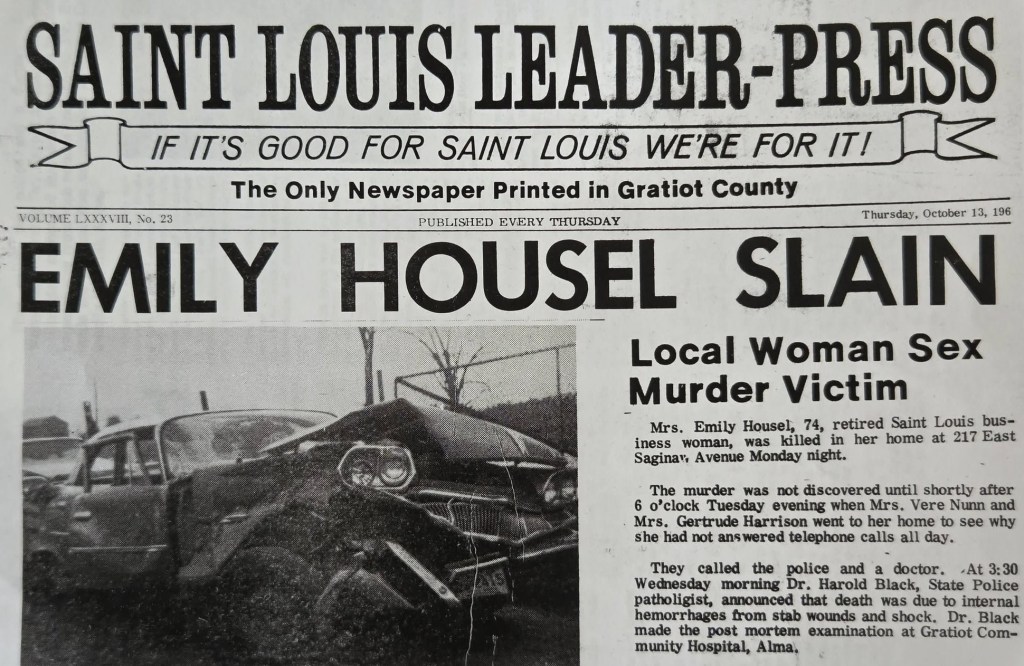
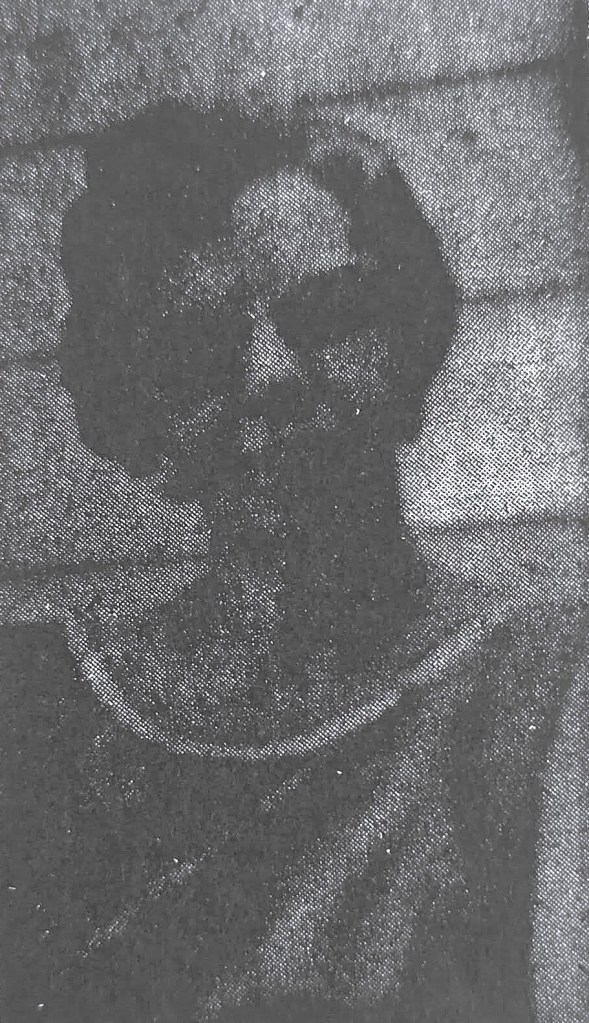
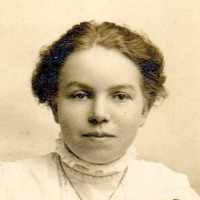
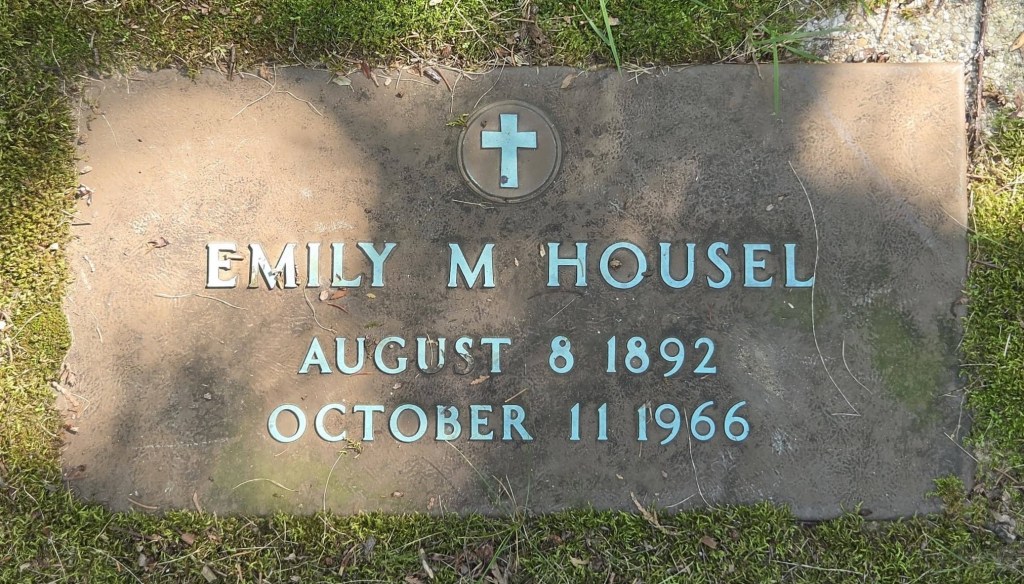
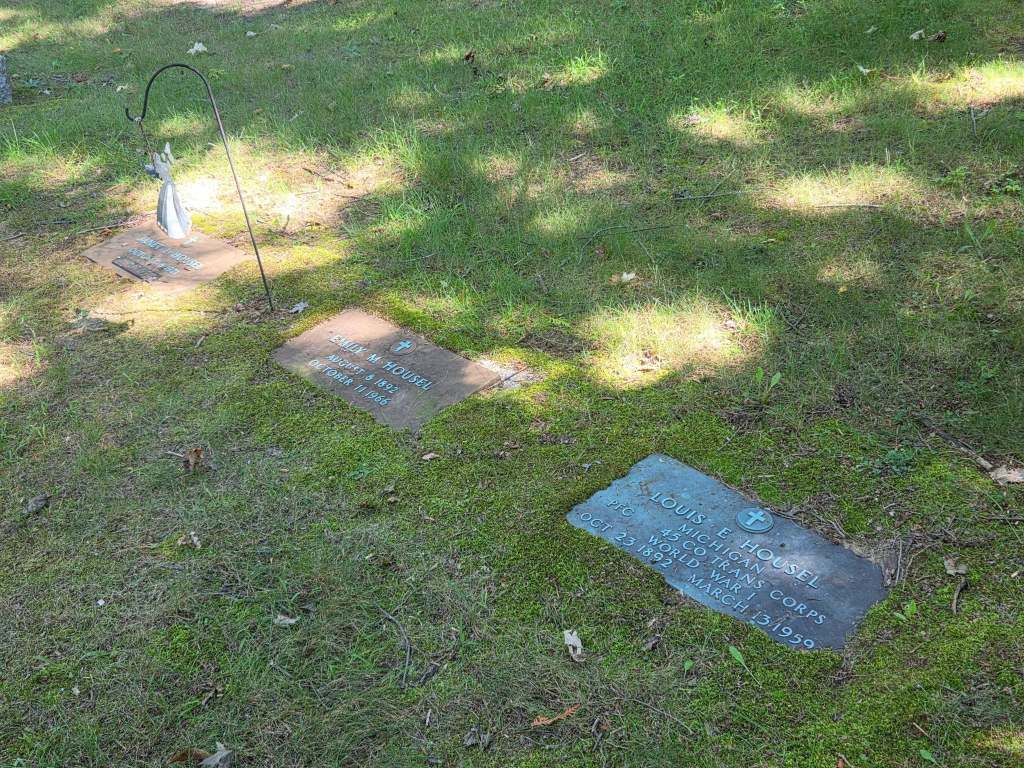
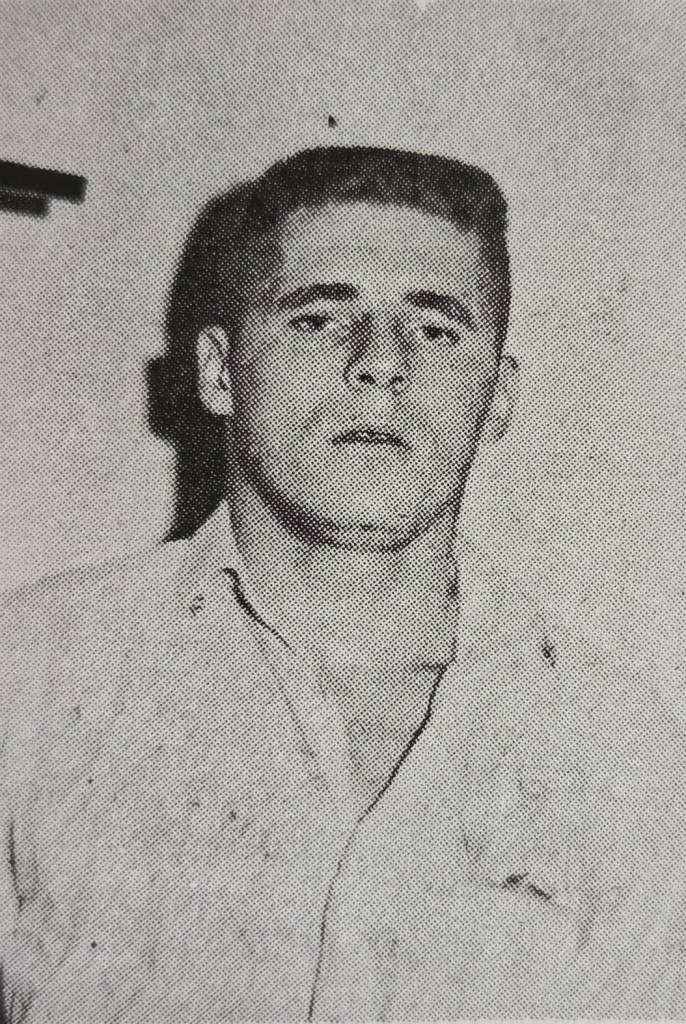
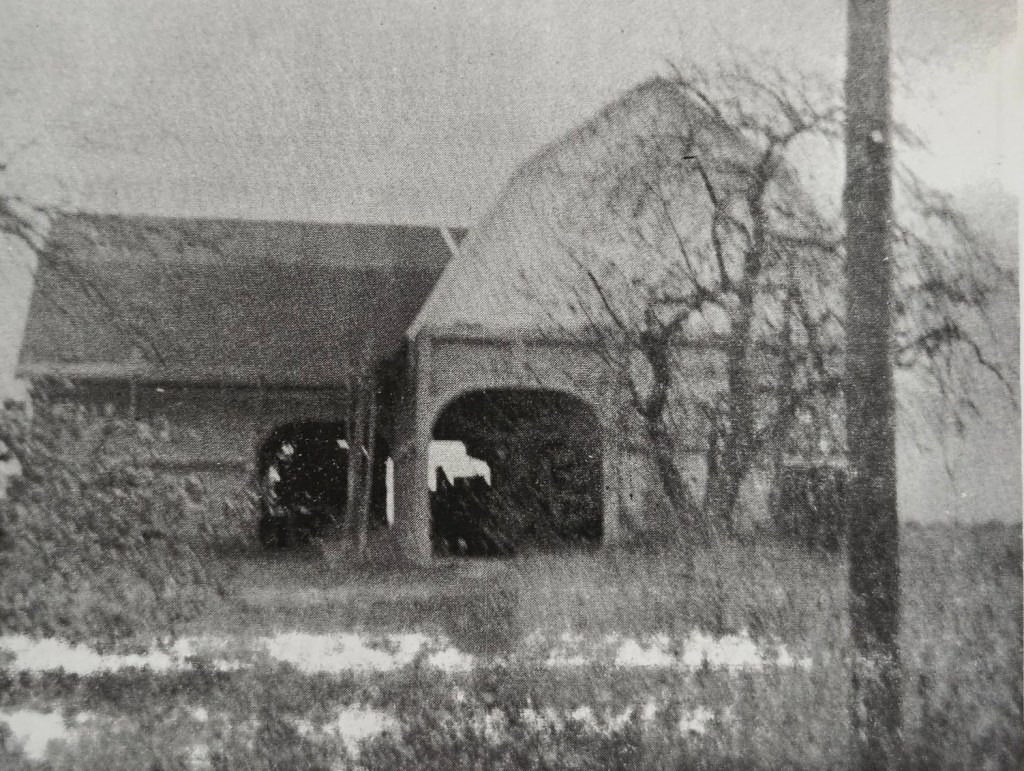
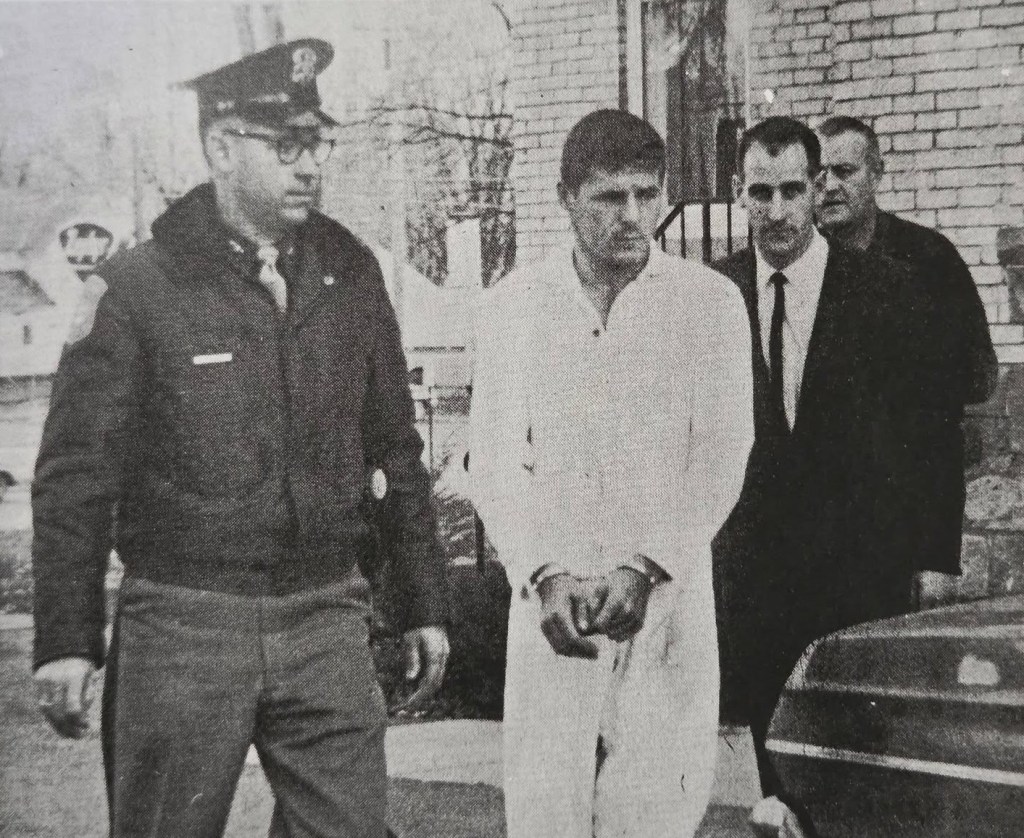
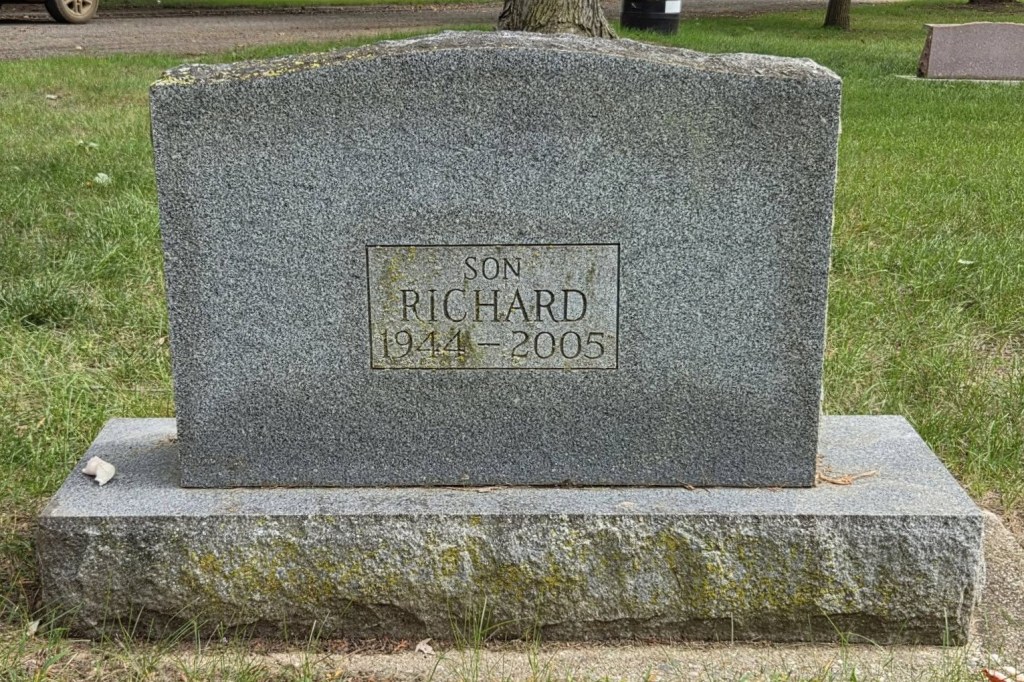
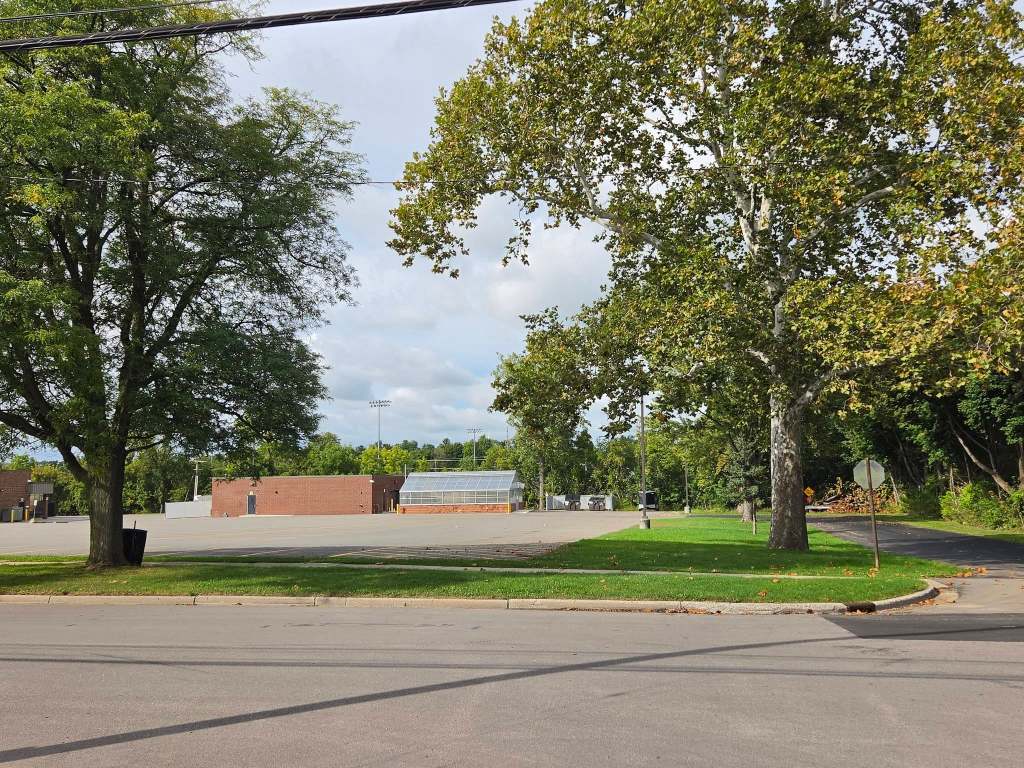
A Grisly Murder in St. Louis in October 1966. From the top: Front page of the St. Louis Leader dated October 13, 1966; A dedicated buisnesswoman – this overexposed photograph of Emily Housel is the only image published at the time of her death in county newspapers; A very young Emily Housel taken decades earlier; Emily Housel’s marker in Oak Grove Cemetery; Housesl family plot in Oak Grove Cemetery in St. Louis; Richard Carl’s photograph published in the St. Louis after he was identified as a suspect in the murder of Emily Housel; The barn in Midland County where Carl ultimately was captured in late October 1966; Carl in cuffs and on his way for arrainment in Ithaca; Carl’s first name appears on back of mother’s marker in Breckenridge’s Ridgelawn Cemetery; Housel home site as it appeared in September 2026.
It was one of the scariest Octobers in St. Louis history. Residents locked their doors, checked their windows, thought about where their children were, and secured their cars. Halloween was on the horizon, yet the city thought about more than just the impending “trick or treat” time. A well-known and respected St. Louis businesswoman was brutally murdered one early morning in what a newspaper termed “the city’s worst crime in years.”
The Victim, Emily Housel, and the Intruder, Richard Carl
Emily Housel was a widow who lived at 217 E. Saginaw Street, just east of St. Louis High School. At 74, she lived alone and enjoyed a quiet retirement after her husband Louis, a World War I veteran, passed away in 1957. During the Depression, Emily earned respect at the Breckenridge Stockyards, starting as a bookkeeper and secretary when it opened in 1935. She became manager in 1945, the first and only woman to hold that position. After retiring in 1957, she served on the St. Louis Library Board and attended First Methodist Church. Emily and Louis had one daughter, Janet, who became a registered nurse. In October 1966, Janet went on vacation to Nova Scotia.
On Monday, October 10, 1966, Emily Housel went to bed after telephoning two other friends that she would attend their weekly bridge game the next day. Housel made what would be her last phone call at 6:20 PM. Later that night, a neighbor’s dog near the Housel home barked loudly, but the owners did not go to check what was happening. At 3:30 AM, an intruder broke into Housel’s home.
Richard Leroy Carl was 22, stocky, and known for being combative. As a teenager, he fought in the Golden Gloves Tournament and boxed for the St. Louis Boys Club. He had been married twice and had a child from his first marriage, but failed to pay child support. Carl had a bad temper and, according to his peers, was willing to do anything when he was drinking. At this time, he was wanted for a probation violation, driving under the influence, and failing to support his first child. Carl frequently moved between St. Louis and Alma and was unemployed. In short, Richard Carl seemed likely to cause trouble, and in the early morning of Tuesday, October 11, 1966, he committed murder in St. Louis.
The Murder
Early that morning, Richard Carl broke into Emily Housel’s home, but later he would say that he was completely drunk and did not remember his actions. However, after breaking a window, Carl entered the kitchen and then met Emily Housel, who must have heard the break-in and went to find out who was in her house. Carl encountered Housel in the kitchen, where he grabbed a knife (later described as an older-style butcher knife), attacked Housel, stabbing her and leaving her body in the bedroom. A pathologist later concluded that she was stabbed at least seven times, was beaten around the face, and was also sexually assaulted. She died from stab wounds, internal hemorrhaging, and shock.
Not looking for any money or valuables, Richard Carl left through the garage and took Housel’s brown 1962 Studebaker Lark. He failed to close the garage door and then began a journey that took him out of Gratiot County for more than two weeks. The next day, two of Emily’s friends, Mrs. Vere Nunn and Mrs. Harrison, called to check on Emily when she missed their bridge game. After repeated telephone calls with no answer, they went to her house at 6:00 pm, found the garage door open, and walked inside. They then saw blood on the kitchen floor, found a wall lamp and Emily’s glasses on the living room floor, which suggested a struggle. In the bedroom, they discovered Housel’s body on her bed, with the knife still in her chest. Emily Housel had died a violent and terrible death. The two women immediately called the police, and soon officers and specialists from the St. Louis Police Department, the Gratiot County Sheriff’s Department, and the Michigan State Police arrived at the house on the corner of East Saginaw and North Clinton streets. It took two days for Canadian police to find Janet Housel, who was in Canada, and ask her to return home due to her mother’s death. The investigation and search for the killer had just begun.
An Unsolved Mystery?
The Housel murder shocked St. Louis for several reasons. It was the first crime of its kind since a young girl was murdered in 1958, which also happened on the same street, though further north on North Clinton Street, which was separated by the football field. As Halloween approached and fall was in full swing, people were especially uneasy. The murder happened right next to St. Louis High School, where school buses picked up and dropped off students each day. Newspapers did not mention the home’s location in relation to the school or the bus routes that went near the murder scene. Still, concerns about safety and the unsolved murder must have weighed on many St. Louis parents’ minds. Emily Housel’s funeral was held the next Saturday, but the killer and the motive remained unknown.
It would not be until Thursday, October 20, that the county prosecutor announced a warrant for the arrest of Richard Carl – a total of eight days since the murder, which initially had left police and investigators baffled. While local law enforcement investigated a list of possible suspects, no one could find Emily Housel’s car. After examining fingerprints from the crime scene and comparing them to state records, investigators identified Richard Carl as the suspect. Still, some of Carl’s friends believed he was innocent, including his current wife, who said she and her husband planned to move to California soon. Could Richard Carl have fled west? Where was Richard Carl?
Even though Carl had disappeared, in the days after the murder, St. Louis residents kept their doors locked and police got many calls about prowlers. Rumors about Carl sightings spread repeatedly through the city. On Giddings Place Street, St. Louis police found an abandoned car with what looked like burglars’ tools, but it turned out to belong to three service members who were AWOL. Another car in Westgate was reported because of an unusual Indiana license plate, but neither car had connections to Richard Carl.
Local St. Louis businesses reported that people soon began buying door locks, and stores had to keep extra in stock. During the week of October 17, St. Louis Mayor Dale Reichard ordered a proclamation that changed the city’s Halloween trick-or-treating hours for the first time to late afternoon and early evening. Officials hoped this would make it safer for children and drivers and reduce the chance of children meeting anyone with bad intentions. The new hours also meant no annual children’s Halloween parade in St. Louis.
The Break: Richard Carl Drifts Home
Richard Carl had been on the run, but no one knew where he was. On Thursday, October 27, he surprisingly got off a bus at the corner of Lincoln and State Roads, south of St. Louis and east of Alma. He walked past the Cloverleaf Restaurant and a nearby gas station, where an attendant, William Guthrie, recognized him and called the State Police. As Carl neared the US-27 overpass, Bruce Perry was heading south to the Cloverleaf for coffee. Carl asked for a ride into St. Louis, but Perry was going the other way. After finishing his coffee, Perry got in his car and picked up Carl, dropping him at Hazel Street at Main. Both men went on their way, but Perry claimed he didn’t know the extent of Carl’s status until he got home and pulled his newspaper out of the mailbox. Carl now made it into St. Louis and stopped at Douglas Robert’s house. Roberts, who was not home and who was a friend, had a babysitter watching his children. The babysitter welcomed Carl inside, where Carl spied his name on the front page of the Daily Record Leader in a wanted notice. As a result, Carl left again and quickly disappeared. Soon afterward, mail carrier Phil Good claimed to see Carl running toward him on Lincoln Street, then dashing onto Tyrell and then onto Euclid. When police arrived at the Roberts’ residence on Lincoln Street, they realized they had just missed Carl, and reports of sightings immediately became public knowledge. Across town, St. Louis residents quickly proclaimed, “He’s back!” and soon, Carl was missing again, this time into the east side of the city.
In reality, Carl escaped the police again by stealing another car. Carl broke into Russell Knapp’s home on Union Road and took a car Knapp had left behind while he was in Arizona for the winter. Knapp had drained the radiator for storage, so Carl didn’t realize it wouldn’t get him far. On Friday, October 28, the day after he was seen again in St. Louis, a driver saw Carl and recognized him as he walked along Meridian Road in Midland County’s Mount Haley Township. The stolen car overheated and stalled, with steam rising from the hood. Carl got out of the car and walked up the road, met the car that identified him, then walked into a cornfield. After a local farmer notified police about seeing Carl, sheriff’s departments in Saginaw, Gratiot, and Midland counties were notified, and about 35 to 40 Michigan State Police officers from Mt. Pleasant, Bridgeport, and Bay City posts searched the area. Two officers entered a barn known as the Ryan farm and saw footprints and a cigarette butt leading into a stall. Carl knew he had been discovered and tried to run, but when police told him to stop, he raised his hands and surrendered without a fight. Eighteen days after Emily Housel’s murder, on Friday, October 28, at 7:00 PM, the police finally caught Richard Carl. The following week, the St. Louis Leader wrote about that night, stating, “Guilty or not, most people in St. Louis were glad to hear Friday night (that Carl) was in the county jail.” The hunt had finally ended.
Carl in Court: Answers, Examination, Sentencing
Upon returning to Gratiot County, Richard Carl demanded an examination in court, where he was charged with murder and breaking into a home. Justice Laura Walker heard the arraignment, but asked Justice John McLoughlin to hear the case, as Walker was a friend of the Housels. Carl was kept in the Isabella County jail during this time, and the court appointed Edward Goggin as Carl’s attorney. Goggin had recently represented two Montcalm County boys in a potential murder case where he successfully defended them. In this case, the main evidence against Carl was the examination and identification of his fingerprints in the Housel home, her car, and those inside Knapp’s car.
Surprisingly, on Tuesday, December 13, Richard Carl waived examination, and he made a startling statement and decided to plead guilty to second-degree murder. In court, Carl proceeded to tell Judge McLoughlin that on the early morning of October 11, he entered Emily Housel’s home at 3:30 AM “pretty well intoxicated,” and that he had no reason to enter the home. He had grabbed a large knife, “killed the woman,” and cut her throat. Carl claimed he had no idea why he went into the Housel home, and that he did not plan to kill Emily Housel. He then told the court how he took Housel’s car to Havana, Florida (near Tallahassee), where he left it beside the road. He never explained how he lived during those days on the run, what he did for money, or why he returned home. Sentencing was set for January.
On Tuesday, January 10, 1967, in Judge McLaughlin’s court in Ithaca, over fifty people watched Richard Carl’s sentencing. Carl received the maximum penalty, which amounted to life in prison without parole. As the sentence was pronounced, Carl closed his eyes, sighed, and gave a slight nod to the judge’s words. He then stepped forward to receive the judgment papers. The sentencing took only eight minutes. The St. Louis Leader reported that Carl’s sentencing “brought to an abrupt and quiet end the most vicious murder recorded in the history of Stain Louis, in which a respected retired businesswoman was stabbed several times, beat, sexually assaulted, and left to die.”
However, Carl’s story was not entirely over. In April 1967, Carl asked to appeal, arguing that he did not remember the crime, should have had a sanity hearing, and that there should have been witness testimony. His former attorney, Edward Goggin, wanted nothing to do with the appeal and wanted off the case. Nearly a year later, a court of appeals denied Richard Carl a new trial.
Picking Up the Pieces – What was Left?
October and Halloween 1966 passed quietly in St. Louis as people returned to work and children went to school. A few years later, St. Louis Public Schools bought the Housel property and tore down the Housel home and one other neighboring house on the corner of Saginaw and Clinton streets. Students kept using the school’s parking lot for a few more years until bus drop-offs moved to T.S. Nurnberger Middle School.
Today, the Housel home sits at the southeast corner of the high school’s parking lot. Emily Housel, a respected lady and innocent victim of a terrible murder, was laid to rest in Oak Grove Cemetery in St. Louis, next to her husband. Her daughter went on to continue a long career as a nurse. When she passed away, Janet was laid to rest next to her parents.
And then there was the murderer, Richard Leroy Carl, who continued to live out his life behind bars at Jackson State Prison in Jackson, Michigan. Carl died there on October 30, 2005 – strangely, just one day before Halloween. His name appears on the back of his mother’s headstone in Breckenridge’s Ridgelawn Cemetery and reads: “Son Richard, 1944-2005.”
And so a city that faced fear during that Halloween season of 1966 took a deep breath and moved on.
Copyright 2026 James M. Goodspeed

