Introduction to “Thirty Who Dared to Serve Gratiot County in the Great War”


WWI vets names Gratiot.jpg

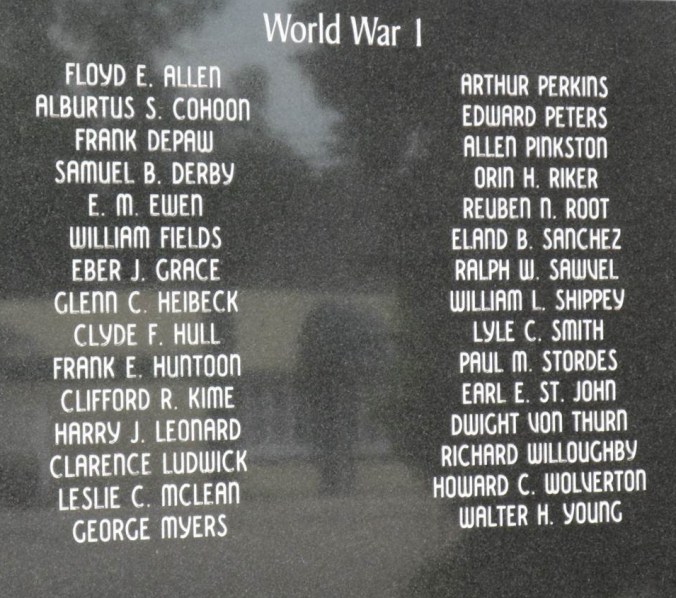
Above: The names of thirty Gratiot County Men who appear on the Gratiot County All Wars Memorial in Ithaca, Michigan.

   Welcome to “Thirty Who Dared to Serve Gratiot County in the Great War.” It is very possible that you may be the only person who will read this article (or any of the thirty to follow) regarding those men from Gratiot County who died in World War I.

    I have spent roughly the last two years looking at these names and doing the research in an attempt to bring these thirty men’s stories back to life. What you will find here is hopefully a little more than just what newspapers from that time tell us. Still, these men still do not have the full recognition for their service and the ultimate sacrifice. They were people who lived here a century ago. They lived life, they had dreams, many had families. In all of their cases, they failed to get what I did, which is chance to live out their lives.

   The first few stories will be somewhat slow in coming to you. Why is that? It is hoped that each of these stories will appear at or near the time of the anniversary (in this case the centennial) of their deaths. By next summer, because some of these men died in combat in the summer and fall of 1918, you will find stories appearing quite frequently. In between, I hope to have stories for you regarding what was going on in Gratiot County, aside from the current “Gratiot County in the Great War” series that appears monthly. (I also want to note that “Journeys with a Gratiot Cemeterian” is going to be back – watch for it)

   As in war, these thirty stories are moving, sad, inspirational, even daring (hence the title). Some of these men wanted to serve in battle and never got there. Some died in the Influenza Epidemic. Several died fighting in France. Other stories appear unbelievable, like Gratiot County’s only Naval fatality which may have taken place in the Bermuda Triangle. Another tragedy occurred with a boy who literally went to war -at barely the age of sixteen- and who died in France. A few others died literally after the Armistice was signed, examples of how war can continue to claim its victims.

    So, again, you might be the only person who reads these stories. But, these thirty men that you read about in the next 14+ months deserve to have their stories told and they should not experience “the Second Death,” which is the death of being forgotten.

   I hope you find the stories meaningful. As with all research and writing, frequently there is someone who knows something more about a veteran. Please let me know and I hope we can more fully honor these men with more information.

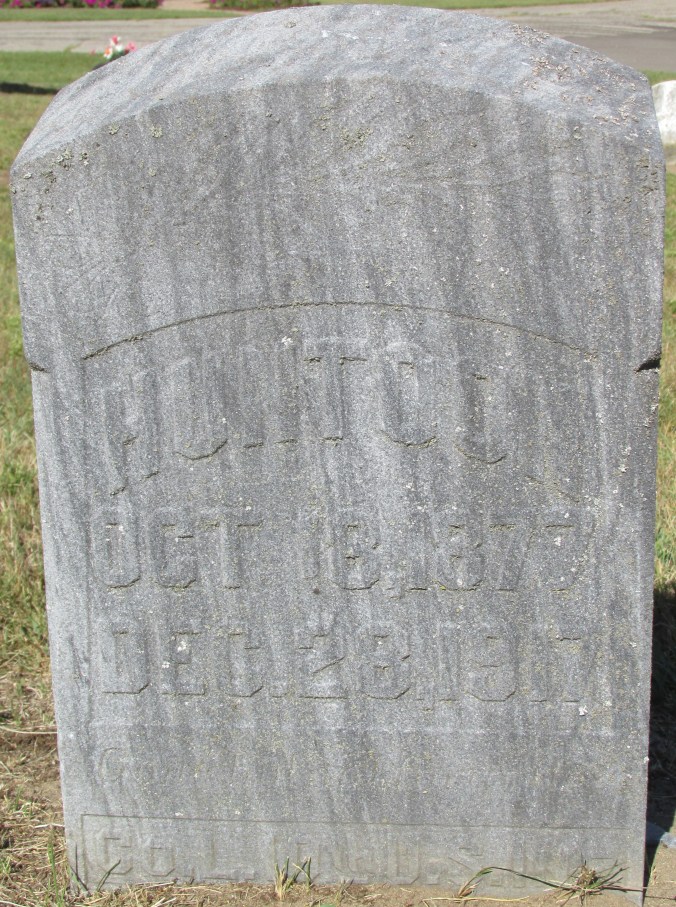
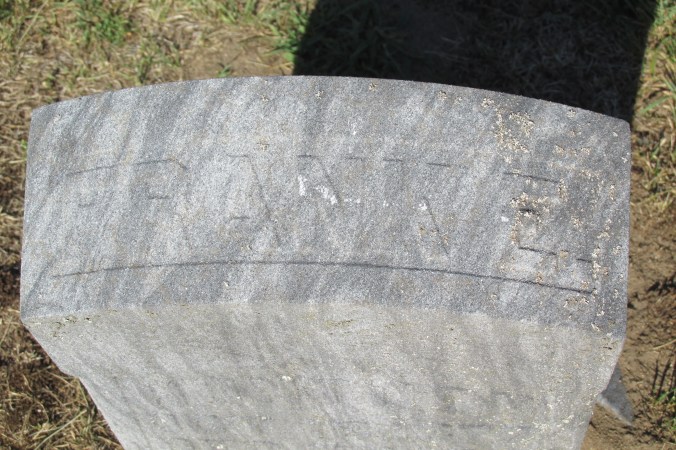
    So, to start the series, we meet a man who was named Frank E. Huntoon who was from Bridgeville and St. Louis, Michigan.


Gratiot County in the Great War, December, 1917: The First War Christmas

IMG_20171217_211550732.jpgIMG_20171217_211606072.jpg

Above: Headlines from news articles in December issues of the Gratiot County Herald.

          In December 1917 Gratiot County experienced its first Christmas during World War I. The Red Cross encouraged people to show their support by hanging a Red Cross banner from their Christmas wreaths. On Christmas Eve, special Christmas candles appeared in many windows and illuminated Red Cross emblems. Church bells in several towns on Christmas Eve chimed each half hour. Earlier in the month a “Fete Patriotique,” a drama performed by local volunteers, was held at the Ithaca Opera House and it raised $68.75 for the Ithaca Red Cross Chapter. Among the many things that the Ithaca Branch completed that month included 37 sweaters, 30 scarfs, 22 helmets, 49 pairs of wristlets and 3 French caps. With a membership of 4500 in Gratiot County, the Red Cross planned a new drive for more members in each township in the county. To help with this, Red Cross booths could be found in stores in Ithaca, Alma, St. Louis, Breckenridge, Middleton and Ashley.

          A county fundraising in December involved the sale of Thrift Stamps. If individuals did not have money to buy Liberty Bonds, they could afford to invest in stamps. Francis King and H.M. Dunham of Alma volunteered to head this campaign. Thrift Stamps cost only 25 cents and when a person had enough of them they could exchange them for a $5 war bond. The bonds had another benefit in that they earned four percent interest and would be good until January 1, 1923. The only downside to buying the stamps was that no person could buy more than $100 in stamps at a time and they could not own more than $1000 worth of them. The government planned that the sale of these stamps would add two billion dollars to the war fund by January 1919.

          News articles and letters told how young men stationed in military camps came home for visits, or who had seen action in France. Walter Young of Ithaca described life at Fort Douglas, Arizona. He, like Sergeant Dallas Brock from Alma, told readers about the great Thanksgiving dinners that they had enjoyed. Brock even said some of the soldiers had their mothers, sisters or sweethearts with them at Fort Custer for Thanksgiving. Orrin Riker, later Ithaca’s first soldier to die in the war, described army life at Camp Hattiesburg, Mississippi. One of the boys who came home to Gratiot County for furloughs included Private Alfred Rhodes of Alma. Lester McAllister, “Speed” Narrance, Lester von Thurn and John A. McAuley, all former Alma College students, described military life at their camps. Gratiot County also began hearing reports about one of its clergymen who volunteered to go with the boys to France. Father John A. Mulvey, from Alma’s St. Mary’s Church, carried out his duties with the 228th Division at Fort Custer. Probably one of the most moving stories to appear in newspapers dealt with Thomas Arnold Robinson of Alma, who had spent six months on the frontlines with the French Army and who had now returned home. After being reunited with his family he signed up to serve Uncle Sam as an aviator. During the war, he served in places like the Vosges Mountains, Verdun, and the St. Mihiel sector.

        Other news from Gratiot men already in Europe was sometimes grim. Captain M.F. Devereaux, a boy from Newark Township, had enlisted in the Canadian Army in 1916 and wrote from a dugout located 1 ½ miles from the German lines. One of his worst memories happened when he tried to find his comrades who had died in combat the night before. When Devereaux returned on patrol the next morning to retrieve the remains of a soldier, there was almost nothing left of him as a result of the shelling that took place. Gil Spencer wrote a letter as one of the first Americans in France with the 9th Infantry. He fought with the French Army and tried to recover from injuries suffered when his weapon accidentally discharged. A Mrs. Foust in Ithaca received a letter from her brother, who fought with the British Army. He had been wounded and had to be sent to a hospital in Bath, England. While the treatment there was excellent, he described being moved from the front. Other stories described how the Germans often set traps for Allied soldiers in trench warfare by preying on souvenir hunters. Innocent piles of German valuables and belongings were secretly rigged with explosives to kill or maim its victims. Also, German soldiers often played dead on the field of battle to shoot Allied soldiers from behind.

         Those Gratiot men who had previously avoided the draft got some sobering news in early December. Under new rules, all exemptions could be repealed, and all men now had to fill out new questionnaires. Men had until December 15 to turn in the paper or they would be listed as a slacker and forfeit any rights to an exemption. Even if a formerly exempted man had moved to a new address, it was his obligation to fill out and return the document to the draft board. In Ithaca, Alma and St. Louis lawyers were available a selected times to advise men on how to fill out the papers. For nearly three weeks, the Gratiot County draft board called in five percent of the men each day. Still, it would take sixty days to get through all of the questionnaires.

        Other wartime events continued to take place in the county. The YMCA planned banquets and programs to promote its plans for keeping Army life “clean.” The Women’s Committee of the Council of National Defense warned readers that the real reason why America fought was that Germany denied America freedom of the seas, that it despised our army and that Americans would pay to reconstruct a victorious Germany. It also spoke of a theme that continued in 1918 – Germany was plotting in our midst. If America did not fight, it would suffer the same shame, horror, butchery, and rape by the Germans that France and Belgium had already suffered.

         Two wireless outfits had been confiscated in Alma. Because they were small and had only a small range, the government deemed them to be unimportant. Still, local authorities kept track of anyone buying them and sought to find how they operated. President Wilson announced that the railroads would be under federal control by the end of the month. The President promised that all equipment would be taken care of and returned to private ownership after the war, all in good condition. People were still encouraged to help the local tobacco fund. For only a quarter, a “package of comfort” could be sent to France and offered a quality of tobacco that no American soldier could find over there. The choices included Bull Durham, Lucky Strike or Tuxedo pipe tobacco. Each packet contained a stamped postcard that told a soldier who sent the tobacco.

              Finally, food was a part of the nation’s efforts to support the war, even in the cold of December. Michigan was supposed to be getting 40 county agricultural agents to help counties to improve food production in 1918. It was not clear if Gratiot would get one or not. Bread rules appeared for merchants and bakers. Sugar prices were capped and bakeries, hotels, and restaurants were limited to how much flour they could use each month. Price gouging was forbidden and weight limits were put on the sizes of bread loaves, as well as how much sugar could be used with each barrel of flour. Pure lard for making bread became blacklisted. The government hoped that bread prices would come down and a cheaper bread would be produced in Michigan. Recipes started to appear in the Gratiot County Herald which told housewives how to engage in “War Pie Conservation.” A way to do this included the use of the “None Such” Mincemeat pie ingredient which saved meat, flour, shortening, labor, and money. The Home Lunch Restaurant in Alma offered Christmas dinner to patrons, but it commented, “Let us eat and know that we are getting value received for our money. We owe it to our GOVERNMENT to live as cheaply as possible.” The restaurant served Duck dinners as a specialty.

Copyright 2017 James M Goodspeed

November, 1917 in Gratiot County: “Patriotic Pressure: Pledge for the YMCA – Turn Out to Help the Red Cross- Use Food Conservation”

IMG_20171118_195714196.jpgIMG_20171118_195726376.jpg

Above: Newspaper advertisements from the Alma Record and Gratiot County Herald, November, 1917.

       In late 1917, Gratiot County’s commitment to supporting its boys in the Great War continued. The Second Liberty Loan drive in the county proved to be another success. Gratiot was responsible for raising $715,200 in Liberty Bonds. Committees in each community were formed and recruited people to do their part. Ithaca aimed for $50,000 and appointed recruiters in all four of its wards. Advertisements urged that “To meet Gratiot’s quota, $25 worth of bonds is required for every man, woman, and child in the county. Let us not be slackers.” In the end, Gratiot County fell well below its goal (as did several other mid-Michigan counties), but Isabella County was above its target. The Republic Truck Company was the biggest subscriber and it bought $30,000 worth of bonds. At the same time in Ithaca, Francis Kellogg purchased $600 worth of bonds while J.L. Barden bought his share with $200. There would be even more bond drives in the county during and after the war.

       Better results in raising money took place in November regarding the YMCA. General John Pershing proclaimed to Americans that “You must have the YMCA to win the war.” The Young Men’s Christian Association offered various resources for soldiers at each camp and it would continue with the men as they went to Europe. At Fort Custer, supporters of the YMCA told how it was “a place for homesick boys to hear music and play games and read.” Families who went there also found a nice place where they could meet and visit. Former Alma Doctor Cyrus B. Gardner, now a Lieutenant at Fort Oglethorpe, Georgia, wrote a lengthy letter for publication that explained what he saw and experienced at the YMCA. He concluded that the YMCA “takes the place of home and church, and even the school.”

         With more American boys headed to France, Gratiot County was told that it needed to raise $10,000 for support – all within a week! Meetings were held in nearly every township, often with a public speaker to help gain public support. Advocates for the YMCA said that this drive “(was) the greatest movement before the American people today for it means home comforts and clean lives for the boys.” In Ithaca and Alma, Lieutenant T.A. Loughery, a Canadian soldier who was wounded at Vimy Ridge, France, was one of the key speakers.  Some of the smallest places in the county also had similar meetings. Locations like Rathbone, Sickels, Sethton, New Haven Center, Pompeii and Beebe had “Round Up Evenings,” all in the hope that Gratiot County would pledge and even raise more than their assigned amount. Support for the drive came from all walks of Gratiot’s society. Students at Alma College gave $1665, which was remarkable since only a few hundred students attended the college at that time. School teachers in Ithaca pledge $100. Ithaca students became involved as well. Each of Ithaca High School’s classes raised a minimum of $10 per grade (the school would ultimately raise $249.62). At Perrinton High School, students in the junior high gave $4 and also sold bottles, rubber, tin foil, rags, and magazines in order to also raise money. At the end of the week, Gratiot County had indeed gone “over the top” with this drive by raising upward of $15,000! Canvassers were praised by local newspapers who noted that they had sacrificed their time “and generally (had) found few slackers” who refused to pledge support.

     The Gratiot County Red Cross also continued its work in helping Gratiot County’s soldiers. At one point a call from the Gratiot County Herald urged more members to attend the work sessions in Ithaca. With a membership of almost 500, only 20 ladies showed up each week to knit. It was estimated that five times that amount was required in order to meet the needs of soldiers as winter approached. The ongoing need for socks, surgical dressings, and garments compelled members to complete as many articles as possible to get them to camps like Camp Custer by Christmas. For instance, a box of surgical dressings could quickly be used by one surgeon for one injured soldier, therefore, more were needed. Instructions were issued by the Red Cross for making knitted socks with a semi-double heel and a “Kitchener” toe design. Once completed, volunteers needed to wash each pair with Lux soap, keeping the foot fashioned down to stop shrinkage.

     More patriotic pressure was placed upon Gratiot County women regarding food conservation. They were encouraged to sign “Hoover Pledge Cards” and to give them to John T. Matthews, Gratiot County’s Food Conservation Chairman, in Ithaca. This program reminded women that “The people of the country have a moral duty to perform, and a patriotic duty also to perform.” The county kept track of all of those who promised to conserve food for the war effort through these cards. Public places got into food conservation. The Republic Restaurant in Alma advertised Tuesday as meatless day (only serving fish, macaroni with cheese and eggs) and Wednesday as a wheatless day (by serving rye, cornbread, and muffins). “Milkless days” had not been scheduled yet in Gratiot County, however, milk was becoming scarce in some places like Alma. All of the food conservation efforts were promoted as ways to assist the Sammies in their fight to defend liberty.

     More Gratiot men continued to be called into military service. By the middle of November, 200 more men appeared before the draft board. A total of 82 men and 5 alternates were chosen and within a week they were sent to Fort Custer. On the early morning that they departed the mood of the group was described as being “in high spirits.” As they left, each man was given a housewife kit complete with buttons, needles, and thread, courtesy of the Republic Motor Truck Company. Red Cross girls and ladies handed out the kits. However, the Alma Record castigated readers the next day for the poor public turnout that took place at the depot. It turned out that the few dozen supporters who showed up consisted largely of family members of those headed to Battle Creek. Even though some people attempted to advertise the need for public support for this goodbye, the Record lamented that “because of lack of (public) cooperation, the sendoff fell flat.” The question was asked, “Were too many Gratiot County residents more worried about making a living than in showing support for those who were placing their lives on the altar of patriotism?”

     Individual stories were received and printed in newspapers from those men who either were on their way to Fort Custer, who had been promoted, or who were headed to France. Robert Sawyer of Ithaca received a surprise send-off and a gift of a new fountain pen, courtesy of the “Goodfellow Club” in town. Lyle Smith from Perrinton quickly married his wife, the former Susie Fraker, and then had to leave for the Army. However, over 200 people from Perrinton met at the village hall in order to honor Smith, along with Elmer Fessler and Guy Baker, who had all been drafted. Lyle Smith would be one of Gratiot County’s men who later died in France in the summer of 1918. Three Alma College men were all given commissions at Fort Sheridan: Ralph Henning, Maurice Cole and John A. McAuley. Henning and Cole had attended the college; McAuley was an Alma College graduate. Howard Burchard was the first Ithaca boy to arrive in France as a gunner on a merchant ship. His letter home came approximately two weeks after he left the United States. Seven other Ithaca boys were on a convoy that was one day from arriving in France, but for some reason, the ship then turned around and came back. Another piece of news was not so good. Frederick J. Hagen of Breckenridge deserted his division at Camp Custer after being there less than one month. He was soon located and taken back to face trial. Hagen, originally a farmer, was then sentenced to ten years imprisonment at Fort Leavenworth, was dishonorably discharged, and forfeited all of his pay.

     Finally, those sending things to soldiers in France were now told that their packages that they sent could not weigh more than seven pounds. Little gifts and “eats” could be packed and as an example a group of Elwell women, led by Mrs. William Shong, all sent Christmas gifts to men at Camp Custer. An anonymous letter appeared in the Gratiot County Herald telling people that not all soldiers wanted to receive tobacco and some soldiers believed smoking to be unhealthy.  The ongoing, serialized story of “‘Over There’: The Thrill and the Hell of the Trenches, Described by an American Boy” had a large readership. Sergeant Alexander McClintock was from Kentucky and he had served in the Canadian Army.  His experience of being at war, his recovery after the Battle of the Somme (after being wounded with 22 pieces of shrapnel in one leg)  was the last of a six-part episode that appeared in the Gratiot County Herald.

Copyright 2017 James M. Goodspeed

Remembering Veterans Day: “When Ithaca Gave Its Best – D.C. Furgason, World War II”

23472307_10212685151336462_7228580654644747215_n.jpg23435062_10212685145776323_8214450166460589720_n.jpg23472188_10212685155456565_5654434424516278037_n.jpg

Above: D.C. Furgason, somewhere in the Mediterranean Theater; on the day he left for the service on March 25, 1943; as a young boy at Furgason’s Store, east of Ithaca.

I was standing in a cemetery in Nettuno, Italy when I was struck with the loss of American life at a place in 1944 called the Anzio Beach Head. The Sicily-Rome Cemetery is one of many operated under the care of the American Battle Monuments Commission. The job of ABMC is to care for the graves of men and women who died in service to the United States and who remain buried overseas.  Unfortunately, for many of these men and women they are threatened with being forgotten.

During July, 2016, I was with a group of teachers who traveled under a program called “Understanding Sacrifice” that was sponsored by the American Battle Monuments Commission and National History Day. For almost one school year each of us researched one American who died during World War II and who was buried in one of four cemeteries in either North Africa, Italy or Southeast France. The man I chose, Raymond Wittbrodt from Flint, Michigan, was buried in the Sicily-Rome Cemetery. Although I was able to track down some of his family, found his grave and wrote a  biography about him and his unit (Wittbrodt served with 1st Special Service Forces), I was unable to figure out exactly where or when he died. There was much about him that remained unknown and unsolved even though he died somewhere on the Anzio Beach Head.

My maternal grandfather had also been at Anzio, albeit as one who worked on the Beach Head as an engineer. When I returned to my hotel in Rome on that night in July I was actually angry that I had been unable to learn about Wittbrodt’s death. Up until that night I really had not seriously thought about the first Ithaca man who also died there: David Chauncy Furgason, Jr. Although I carried the story with me during that year of research, I really had not given him serious research.

By using the information that I had with me in the hotel I was actually able to locate some of his family through Ancestry.com. With some luck, I actually talked to one of them that night from my hotel in Rome. What I learned encouraged me to set up a visit with them when I returned home in August.

Prior to all of this, I first learned about D.C. from one of his classmates, Mrs. Lois Barden, who graduated with him in the Ithaca High School Class of 1941. She remembered a small, thin boy who had reddish hair. She also remembered Furgason’s Store which was operated by his parents just east of Ithaca, along the curving road that came into town. Lois was also the first to tell me that D.C. tragically had an early premonition that his life would be shortlived. Indeed, D.C. was killed somewhere on the Anzio Beach Head.

Now, if you want a biography of D.C. Furgason, you need to pick up the November 8 issue of the Gratiot County Herald.

When I met in August 2016 with D.C.’s niece, Carolyn, she added to my knowledge of this young man who was talented, young, and likable. He was a gifted poet and writer. And on January 27, 1944, he was gone.

It was Furgason’s death and his return to Gratiot County that told me even more about him. Only eight days before he died he mailed his last letter home to his parents. He had also spent only five days in combat. On March 13, 1944, he was awarded the Purple Heart (which I got to see). Also, a memorial service that month was held in Wheeler where 200 people attended the service for four area men who had recently been killed in the war.

Furgason’s Individual Deceased Personnel File (IDPF) told a familiar story about how some of Gratiot County’s dead from World War II made their way back home. It was hard for families. It took time. Laying these men to rest in the county reopened old wounds and renewed grief.

Initially, Furgason was buried in Plot B, Row 9, Grave #252 in the Sicily-Rome Cemetery.  About two months after his death, his father wrote to have his few belongings sent back home. It was July 1944 before nine of these things arrived in Ithaca. The family was also given the remaining money that D.C. had with him at the time: a total of $11.36. In 1947, the Furgason family was sent a picture of the newly constructed cemetery at Nettuno.

Within two years of the end of the war, American families were given the chance to have their loved one sent home for burial. The Furgasons did not hesitate as they wanted their son to rest in Gratiot County. The initial process of bringing D.C. home started in late March 1948 with a request from the Furgasons to have him disinterred. On August 10, 1948, Train #51 from the Ann Arbor Railroad arrived in Ithaca. Three days later, on a Sunday afternoon, a funeral service was held for D.C. Furgason at the Sowers Methodist Church. Afterward, he was laid to rest in Breckenridge’s Ridge Lawn Cemetery. Reverend Don Warmouth, who met D.C. in Italy a short time before he died, helped to officiate the funeral.

D.C. Furgason was one of 130 Gratiot County men from World War II who paid the ultimate price for the freedoms we have today. Each of these men is a story. On Veterans Day we owe them, as well as our many living veterans in Gratiot County, as debt of thanks for their service.


Remembering Gratiot County on Veterans Day: “Not Too Old to Serve” – Craig Morrison, Iraq War Veteran

Craig Morrison in Iraq 2006.jpg

Above: Craig Morrison, 1st Cavalry Divison, Iraq, 2006

Craig Morrison once decided that he was unhappy with his job and that he needed a career change. In late 2004, he entered the Mt. Pleasant Army Recruiter’s office and within a short time he left for basic training – at the age of 33.

Morrison, a 1990 Fulton High School graduate, was also married with children. Recalling his decision to enter the Army at that time he said, “The pay was good and I needed a change in career. I was not happy with my job. I had tried to go back to school and study with online classes and this was all very hard.” There was also a key benefit for serving the country, free health care. He could later say with confidence, “They (the military) take care of you.”

Under the Delayed Entry Program he signed the papers in September, 2004 and he left for basic training on January 5, 2005.  Only four weeks into basic training at Fort Benning, Georgia he pulled two hamstrings, but was able to come home for 30 days. The downside of the injuries meant that he returned just in time to watch his unit graduate. After being in physical therapy for two months, he then had to go back and take his basic training over again.

His next assignment took him to Fort Gordon, Georgia where he took communication work through Advanced Individual Training. His training enabled him to work with computers, radios, antennas and cables. He eventually specialized in working on radios for tanks, Humvees and hand held radios. As this went on, Craig adjusted to the regimen and structure of military life. “It was fun. I later missed the heck out of it,” he now remembers.

By January, 2006 Morrison moved to his permanent duty station at Fort Hood, Texas. A month later, his wife and family moved there to be with him. Then came his deployment to Iraq that fall. On the day he left, his wife, Kristina, returned home to find that it had been broken into and vandalized. Before he flew to Iraq, he made a final call home from Maine and his wife gave him the bad news. There was nothing he could do to help her. However, his commanding officer made contact with individuals at Fort Hood who went to help his wife. After this, Kristina decided to bring the family back home to mid-Michigan. It was one of several moves that she made during her husband’s time in the service.

Morrison soon became assigned to the 1st Cavalry Division, 15 PSB (Personal Services Brigade), which was part of the 15 SB (Sustainment Battalion). In October, 2006 he arrived in Kuwait, then he was sent to Baghdad, serving as a replacement for 14-15 months. Upon entering the city Morrison thought then that “We had no idea where we were at.” Before landing, the plane he was on did a combat dive, a sudden aerial maneuver used to deter the enemy from shooting at American planes when they landed. Craig’s ears hurt for more than one day, but eventually the pain subsided. His base was located on the outskirts of Baghdad and it was fortunate that this unit only left the base via helicopter and did not have to do combat or patrol. During his deployment to Iraq, he never had to fire his weapon.

Morrison was stationed at the Victory Base Complex, which was made up of four or five connected bases. Signal Hill, the large tower at the base, was a target that the enemy often aimed for. On December 7, 2006, Signal Hill was hit for the first time in its then two year history. Indirect fire often occurred during Craig’s deployment, mainly during the day, but sometimes at night.

Life on the base became tolerable for him in his spare time partly due to his wife’s willingness to burn shows on DVDs and mail them to him. He received a package from her every few weeks and men in his unit often found their way to Morrison’s room to watch the shows. Other things to do included watching “bootleg” DVD movies, which almost all Soldiers bought and viewed. There was a basketball court and tennis courts on the base. Dial up internet was used to communicate with home, but the quality was often poor. Contact with TCN’s (“Third Country Nationals”) from a variety of different countries regularly took place. These individuals held jobs on the base like cleaning barracks, running the PX, taking care of trash or working at the nearby Burger King.

Morrison’s Army career took a big change in Iraq when he injured his back. He tried to deal with the pain through prescribed meds, but the pain only increased and got worse. Finally, his unit sent him to accompany another soldier to Germany. While there, Morrison received a MRI and a doctor told him he had two herniated disks. The doctor wondered how he could stand straight up, in addition to handling the pain. It was agreed that Morrison would be sent back to Iraq “on profile” to pick up his things and to make farewells. It was not easy to do and Morrison felt conflicted about his injury and his desire to stay in the Army in a combat zone.

After surgery at Fort Hood, Craig went through the “Med Boarding” process which was how he would have to leave the military. By 2008, Craig Morrison was out of the Army. He returned to Michigan and to the job he had at the Krapohl car dealership in Mt. Pleasant. The government promised that Soldiers would be able to return to the jobs they left behind when they joined up. After a while, Morrison moved to similar car dealership positions at Alma and in Ithaca (where he currently is employed).

Looking back at his Army career, Craig believes that if his health had been better he may have stayed in the Army and served twenty years. After some time at home, he eventually asked the Army Reserves and the National Guard about serving. Both turned him down due to the experience he had with his back.

Still, there are several things that he cannot forget, like losing a buddy in the combat zone, the smell of diesel fuel (which reminds him of Baghdad), and the image of seeing a severely injured female Soldier who was on the same flight he took to Germany. His analysis of his experience in the Army, as compared to many other Soldiers in the war zone, was that “My experience in Iraq overall was a much better one. I only served on one deployment – it was an experience. I came out better than I went in.”

I asked him what civilians today do not understand about the men and women who serve in Iraq and Afghanistan. He shared his observations. First, many of those in the military go on multiple deployments to the war zone (not just one). When Morrison sees groups of soldiers together like he sometimes does at a nearby McDonalds, he sees less and less combat badges on their uniforms, meaning that most of these volunteer soldiers have not been in combat. Also, many returning soldiers return home with psychological damage that they have to deal with. Finally, in the combat zone, comradery is a real and genuine thing for soldiers.

Today, I remember those Gratiot County men and women who, like Craig Morrison, have faithfully served our county, our state and our nation. Many of these veterans from Korea, Vietnam, the Cold War, Gulf War II, and Gulf War II deserve their recognition. Join me on the blog as we visit these periods from Gratiot County’s past.


Gratiot County and the Great War in October, 1917: Our Boys at Fort Custer – The 2nd Liberty Bond Drive –The Next Draft – Food Preservation

IMG_1054.JPGIMG_1055.JPGIMG_1053.JPG

Above: Liberty Bond advertisements from Gratiot Count newspapers from October, 1917

        During October 1917 Gratiot County residents continued to read about their boys who were going off to war. Frequent visits, reports, and stories about Camp Custer, located near Battle Creek, Michigan were local news. Henry McNamara, a farmer from Alma, wrote in the Alma Record that “a trip to (Fort Custer was) beneficial to every citizen” in the county. McNamara then went on to buy $1,000 worth of Liberty Bonds and he encouraged young people to send boxes of food to local men who were at Battle Creek.

         If people were unable to drive down to see the camp, some rides were available in “jitneys” for only a quarter. Writers claimed that it was relatively easy to get into Camp Custer, however, knowing where to go on base was extremely important as over 1600 buildings had just been built. Only the newly painted green YMCA buildings were easily identifiable to visitors.

        Different kinds of visitors from Gratiot County went there. The Republic Motor Truck Company made a visit possible for the Alma Boy Scouts for an overnight trip on October 12. All Boy Scouts were encouraged to go and it proved to be a good public relations move by the company.  The Alma College football team also made a trip to Camp Custer. They played the officers from the 85th Division, but they were defeated 7-0. Even though Alma lost a tough game, playing against a “genuine football team” made up of Army officers showed Coach Helmer that he had one of the fastest Alma football teams ever assembled.  Even local clergymen, businessmen, and doctors traveled to examine and learn about Camp Custer, many at the invitation from the YMCA. Names like Reverend Mumford and Byron Kinney from Perrinton, as well as John Hudson, Roy Dodge, and Will Traub from Middleton, went and listened to calls for funding of the YMCA on future battlefronts.

         The names of local boys frequently appeared in the news, most asking for letters and correspondence from home. Alfred Rhodes, who was the first Alma man to enter Camp Custer, made it home to visit his parents on one weekend.  Theodore Strack, from Elwell, was also awaiting his first call to the camp. His parents were both born in Germany. Strack was to be joined by other Elwell boys including Lee George Loomis, August Junda, and Clare Mallory. The county also began to lose doctors and clergymen who went off to war. Doctors Cyrus B. Gardner and A.A. McNabb from Alma left the city. Gardner headed for Fort Oglethorpe in Georgia and McNabb for a hospital in Grand Rapids. Father John Mulvey, from Alma St. Mary’s church, also volunteered to serve in the Army. Mulvey was assigned to the 328th Field Artillery at Camp Custer. Eventually, Father Mulvey would journey with the troops to Europe, serving on the Western Front. Sometimes other boys were said to be at other camps in New York, Texas or even on their way to France. Orrin Riker (who would eventually be Ithaca’s first man to die in the war) wrote and told about being sent to Fort Ethan Allan in Vermont. Merlyn Hamilton wrote to remind readers that there were also young men stationed along the Texas border.

      Still, Gratiot County called more young men to service. Early in the month, 150 answered the draft. From that group, 65 asked for exemptions, while 53 failed to pass the physical exam. One of those men who asked for an exemption and who was in the news was Orrie Brown from St. Louis. Brown’s status garnered state attention when he claimed a hardship that his wife was encountering on account of his enlistment. As Brown fought for his exemption it was pointed out that he had failed to file necessary exemption papers on time. His wife was taken care of by people in St. Louis and Brown went on to the service. New draft rules came down from President Wilson during October. Four different classes of draft-eligible men now existed, each defined by their own categories. It became more important for each man to properly fill out his questionnaire in answering the draft call. At the very top of the list were single men who had no dependents, at the bottom were licensed pilots. Still, the mayor of Alma issued a proclamation asking young men to join an already estimate of 6,000 Michigan boys who had previously answered the state’s call to enlist in the United States Navy.

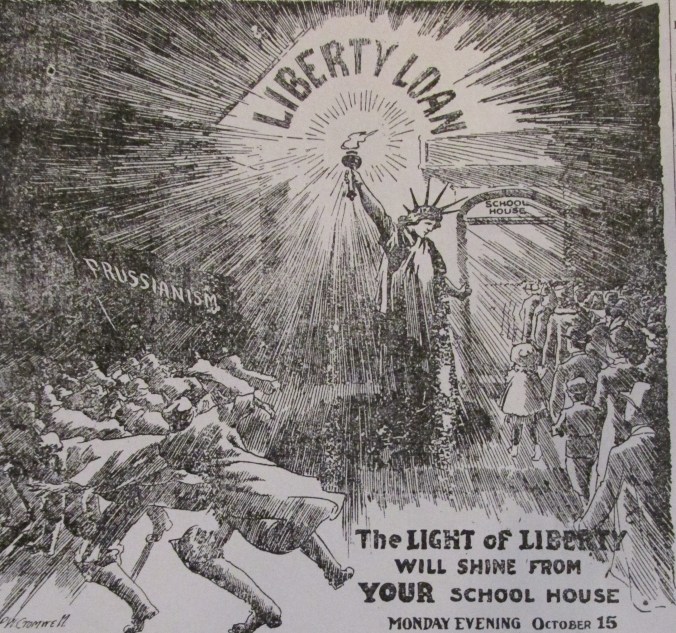
          On the home front, Gratiot County prepared to enter the Second Liberty Loan drive. With a goal of raising $480,000 by the end of the month, the question was asked by the Alma Record, “Is (Gratiot) to go down in the records…as a slacker county?” Michigan Governor Albert E. Sleeper appointed a chairman in Gratiot County to lead the campaign and Francis King of Alma accepted the position. Rural communities, in addition to places like Alma, were targeted to help raise the quota.  Monday, October 15 was set aside as “Liberty Loan Monday Night” as school houses across the county were opened to encourage people to come and buy bonds.  Subtle pressure was applied to citizens to support the bond drive as “It was better to buy a bond than to take orders from Berlin – wake up, hustle to the nearest bond sale and buy a Liberty Bond.” Ithaca proprietors such as Henry McCormack stepped forward and purchased $1500 worth of bonds. At 4 percent interest, payable over 25 years, and free from taxation, citizens were encouraged to buy all they could.

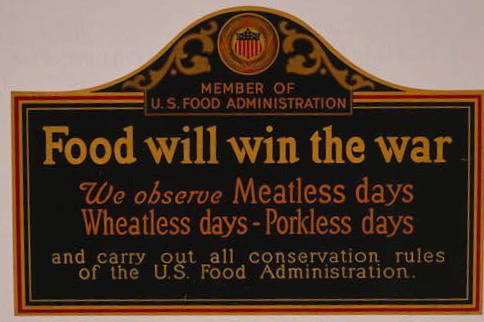
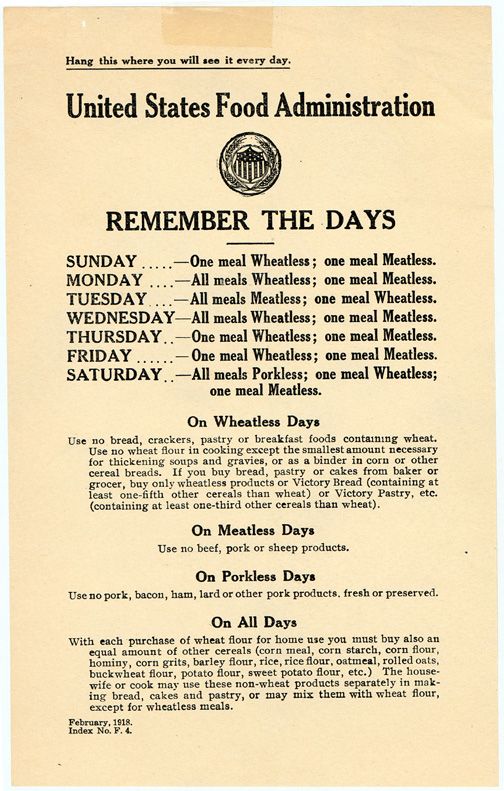
        A new, voluntary movement that took off that fall in Gratiot County involved conservation of meat and wheat. Every housewife was asked to sign a pledge card saying that their household would go meatless on Tuesdays and wheatless on Wednesdays. It was hoped that housewives in the county would support the Hoover Food Pledge and sign a card indicating that they would conserve food and support the war effort,  democracy, and Uncle Sam.

           As October closed, the tobacco fund for soldiers continued to grow. Tobacco offered soldiers “the pleasure and contentment” from a break from war in the trenches. The Red Cross in Ithaca held its annual meeting in the courtroom of the courthouse. Miss Etta Stuckey answered the call for service and left to work in the War Department in Washington, D.C. The first call for German aliens to register with the United States Marshall in Alma was issued and ten people showed up. Finally, it was announced that if anyone wanted to send Christmas mail to the Sammies in France they had to do so by November 15. All packages had to be labeled “Christmas mail.”

Copyright 2017 James M Goodspeed

September 1917: A Barbecue in Ithaca Never Seen Before-Gratiot Boys Leave for Fort Custer-Supporting the War Effort in Gratiot County


unnamed.jpg

Downtown Ithaca on September 20, 1917 – A barbecue for the Boys.

            In September 1917 the second group of men prepared to go off to fight in the Great War. While more left, there were disagreements over the issue of who should and should not have to leave Gratiot County.

            Across the United States, there were people who believed that America could raise its quota of an army of two million men without drafting married men who had children. The Gratiot County Herald argued that men with families should only be called if it was clear that the quota could not be reached. Part of this argument rested on the idea that farm families had their own hardships. Who would take care of the wife and children? Who would feed and clothe them? How many families could actually take in and care for the family that did not have a husband and father to provide for them? This argument reflected a hopeful view that America could still raise an army during a time of war without calling this group of men. It seemed that there were many who believed that Gratiot County families would not send their husband or father until it was absolutely necessary.

                In one local case, Orie Rubben Brown of St. Louis openly challenged the issue of wanting to be exempted from the draft. Brown had been negligent in providing affidavits that he was needed at home and therefore was not eligible for an exemption. His protests and his case became news throughout the state as he debated his status with the Gratiot County draft board. Eventually, Brown joined the Army and served until his discharge in early 1918. His case was an example that there were still many in Gratiot County who hoped that not every man would have to fight in the Great War.

                As the September draft list came out, 172 names appeared on it. One of them included Elind B. Sanchez, an Alma College student who would be the first man to die in service for Gratiot County. Another Alma College student who was also listed and who would later die was Dwight Von Thurn. As some of these young men left Alma College, it was announced that the college would return tuition to all those who would be called by the draft. They also would receive proportional credit for the classes they were in prior to being drafted.

         Some very impressive send-offs for these men continued to take place. To honor those leaving Gratiot County, Ithaca planned to have an ox roast to honor 200 men on September 20. The barbecue was headed by Postmaster C. M. Brown, F.L. Wheeler, and George Lanphere.  At three o’clock that afternoon, Ithaca held a grand parade which started at Pine River Street. The parade was led by the Owosso band and included men from the G.A.R., National Army representatives, county draft board members, Ithaca’s new fire truck, floats, Red Cross volunteers, Camp Fire Girls, and the Boy Scouts. Citizens were also invited to drive their own decorated automobiles at the end of the parade. As soon as it concluded, a band played between McCormack’s and the Home Goods store. The public crowded the newly cleaned pavement to hear a series of speakers talk of patriotism, the call for bravery, and the goal of defeating the Kaiser.

          Afterward, the boys who were headed for the Army, along with their families, joined Civil War veterans in Center Street to enjoy barbecued beef, potatoes, and other dishes.  Mrs. Wheeler from the Seaver House was in charge of the cooking. The rest of Ithaca was also invited to “enjoy Ithaca’s treat” as Ithaca “want(ed) the boys to go with vivid remembrances of hospitality and the good wishes, not of Ithaca alone, but the entire county.” The weather that day was threatening and overcast, however, it was estimated that between 5,000 and 6,000 people came to Ithaca for the event. Eventually, it was said that 4,000 people were served meals.

         The call came for 109 men to leave Gratiot County came quickly within a twenty-four hour period. At one point, the men left at the rate of three or four per day from Alma. The Gratiot County draft board was in charge of taking care of them while they waited for the train.

         With their departure, Gratiot County residents started to hear about their destination, which was known as Camp Custer. The camp was actually being both constructed and used as newly drafted soldiers appeared at its gates. Covering over 6,000 acres near Battle Creek, those who arrived there that fall wrote home to tell parents and wives about the accommodations and the new life of being a soldier in training.

         Walking on the roads across the freshly constructed drill fields, weaving in and out between barracks, William C. Searl wrote his father that it took him almost two hours to find the nearest post office in the center of the camp. Each barrack was one hundred feet long and forty feet wide. One-half of the bottom floor was a kitchen area and had ten tables to feed approximately twenty men. The second floor was for sleeping quarters. Each man slept on an iron cot, which had a straw tick and several blankets. Several windows, which needed to be opened at night, let in enough light. Each barracks had a nearby bathroom or bathhouse for shower baths, washstands and a place to wash clothes. Each company had its own headquarters building. One of the most important places in Fort Custer was the exchange or canteen building. Here a soldier could obtain tobacco, candy, or ice cream. It always seemed crowded in the evenings. For another diversion, the men could visit the newly created Y.M.C.A. (Young Men’s Christian Association) building. Paper, envelopes, postcards, magazines, and newspapers were all available for the soldiers, all for free. Men could also receive equipment on loan to play baseball, football or other sports. Also present were places for religious services for Protestants, Catholics, and Jews.  Searl also wrote that a quarantine for sickness was already becoming a practice of the Army. Men frequently had to stay in their barracks until everyone received the necessary medical shots.

          Searl then stated that Army life was becoming more serious. Awakened at 5:45 in the morning, roll call started fifteen minutes later, followed by breakfast. Drilling for the day lasted three hours, followed by a break, dinner and then another two hours of drills in the afternoon. When dinner and the day’s end came at 6:00 that night, men were free for a few hours. However, lights went out at 9:00 and there was nothing else to do in the camp. Most of the men found that they had little trouble sleeping after all of the training took place.

        That September many parents and families started traveling to Fort Custer to visit their sons. Directions appeared in local newspapers describing the best way to drive to Battle Creek. Soldiers also wrote back to tell how they could be found once families arrived at the camp. Those who went by car found that it was a full day’s trip there and back using a route from Ithaca through Pompeii, St. Johns, Dewitt, Lansing, Charlotte, Bellevue before arriving at Battle Creek. While the roads were very dusty, they were considered to be good for the times. Those who visited made sure to let their son know that they were coming ahead of time and hoped to find a pass waiting for them at the gate, which was helpful due to Camp Custer’s size. Equally important was that the family knew what barracks number to look for once they got on the campgrounds. Before entering the camp, cars often were searched for intoxicants.

       As September closed, help with the war effort continued. The Red Cross Society in Ithaca organized a knitting club to teach women how to knit articles for soldiers. The Domestic Science room at the high school had been open during the summer to encourage volunteers to use its sewing machines. It only cost twenty-five cents to help pay for yarn. People were encouraged to send Wrigley’s gum to soldiers headed to the front. “S.O.S, Send Over Some Wrigley’s” was an advertisement proclaiming that gum could protect thirst and help a soldier’s appetite and digestion. The British chewed it, why not Americans? The Alma library had a goal of raising $400 worth of books to send to soldiers.

          The first “Meatless and Wheatless Days” were coming and it was announced that they would start in October. It was planned that Tuesdays would be a meatless day in Gratiot County homes and that Wednesday would be a wheatless day at the family dinner table. Both were done to help conserve food for the war. Also coming on the horizon was the second Liberty Loan drive. This time the goal would be to raise three billion dollars in America, one billion more than the first drive. It was said regarding the second drive that “Gratiot will be asked to go into the thing harder than ever.” Finally, an outcome of the physicals given to men headed to the Army yielded an ominous warning for places like Gratiot County. Tuberculosis was sometimes discovered with draftees. Detection and prevention of this dreaded disease would be a major health issue as time went on.

Copyright 2017 James M Goodspeed


“Journeys with a Gratiot Cemetarian” 7.7: Allan F. Goward, World War II Veteran, Lafayette Township Cemetery

Goward.jpg

Allan F. Goward was born June 27, 1914, to Frank and Ada Goward. He was one of seven children and he grew up in Lafayette Township. Frank served his country in the Army in World War II.  Allan enlisted on March 2, 1942, at Fort Custer, Battle Creek, Michigan.  He married his wife, Louise, whom he met at a USO function in Yakima, Washington, on March 31, 1943. Allan passed away on December 19, 1945, and he rests in Lafayette Township Cemetery.  A farmer and later a retiree, he had one son. Allan F. Goward is one of many Gratiot County men and women who served their county, state, and country during a time of war.

“In the Wake of Pearl Harbor”: Air Raid Wardens in Gratiot County, 1942

IMG_20170829_064701822.jpgIMG_20170829_064636750.jpg

Above: Headlines from the Alma Record and Gratiot County Herald, early 1942.

            As Gratiot County recovered from the shocking attack on Pearl Harbor the county started to stand up against the Axis Powers. Plans and directions soon came into place about what to do in anticipation of a possible war on Gratiot County’s soil. One of these plans involved anticipating air raids. Because of this, Gratiot County’s Air Raid Warden Plan was born.

           One of the first things that Gratiot County residents were asked to do involved helping the Navy by building miniature air planes. The Navy needed 500,000 solid scale airplanes for training for air craft recognition and gunnery sitting practice. Built on a scale of 1:72, these planes when viewed from a standard ring sight at a distance of 35 feet simulated a plane approaching from half a mile away. Training pilots were able to use them to learn an enemy plane’s identification and its range. The airplanes also could be used to train civilian enemy spotters, just as the British citizens had been doing since the war started.  In all, Gratiot County was called upon to contribute 50 airplanes for the project.

            In early April, the American Legion announced that it was hoping to turn out 1,000 qualified air wardens in Michigan within thirty days. South-central Michigan was especially important for potential air raids due to the location of many industrial plants. At the time, Michigan was third in the nation in turning out war munitions. It was believed that enemy bombers could rendezvous over central Michigan and then proceed over main highways to their targets downstate.

             As this was taking place, leaders of county industrial plants and grain elevators met in Alma’s city hall to discuss how to prepare for enemy bombing raids, handling incendiary devices, and sabotage. Places like the Michigan Chemical plant in St. Louis were of special concern. Twenty leaders came to the meeting and learned that each would have to be responsible for defending their own factory or elevator from attacks. However, first aid would be supplied from citizens groups in the county in the aftermath of a bombing.

             Initial training took place over six ten hour days at Michigan State College. From here, instructors would go back to their own counties to set up their own groups of county air raid wardens. Once air raid training began, citizens quickly volunteered to defend Gratiot County.  Among the first men to attend the training in Lansing included Richard D. Gay, Virgil Case, Cornelius VanVoorst, and Dutch Collins, all from Alma. St. Louis sent Louis Grice, Lawrence Bottum and Fred Himes.  Each completed the course and returned to Gratiot County to help teach another 75 wardens. The head of the overall Gratiot County air warden program was Earl Rhynard, commander of the Alma American Legion Hall.

               The first air raid warden classes for county volunteers took place in Alma, Ithaca, and St. Louis. It was planned that Alma would have either twelve or thirteen air raid warden posts in Alma, with each post having a staff of six people. It also was intended that a special telephone line would be established in Gratiot County to allow all wardens to announce air raids.

         On the first night of classes in St. Louis thirty people turned out, along with volunteers from Breckenridge. These students studied first aid instruction, espionage and sabotage control, incendiary bombs, gas types, blackouts, and how to protect schools. In Ithaca, C.P. Pressley started classes at the high school.  Soon, other people also took part in the training. Ralph Chisolm (Breckenridge), Don Curtis (Middleton), Ernest Arnold (Perrinton), Dan Pomeroy (Pompeii), Joe Liska, Jr. (Ashley), and William Ferris (Bannister) also took the classes in order to set up programs in their own towns. Near the end of the training, public demonstrations from the classes took place in several towns to demonstrate how to put out incendiary bombs. In Alma, a demonstration took place on a Friday night in the city parking lot on East Superior Street.  At another location in Ithaca, a group of air raid wardens took a sample incendiary bomb, ignited it, and then put it out with sand and gravel.

           Classes continued to gain volunteers and by the time school got out that summer, Gratiot County had nearly met its quota of 100 air raid wardens. The American Legion in Alma put on a banquet for the volunteers who completed the classes.  The first group included 82 graduates. Another 18 who joined the classes after they had started completed their work by early summer. Each member who completed the course was awarded an air raid warden certificate; later they were given their own arm bands.

               Some of the first air raid warden posts to operate were located at Alma College, the Alma Masonic Home, the Michigan Sugar Company, Alma Trailer Company and in villages such as Elwell and Riverdale.  As 1942 went on, posts could be found in every town and village in Gratiot County. These wardens played an important part in Gratiot County during World War II by watching the skies for the enemy and keeping the public safe.

Copyright 2017 James M Goodspeed


“Journeys with a Gratiot Cemetarian” 7.6: Raymond LaRue, World War II Veteran, Lafayette Cemetery

Larue.jpg

Raymond LaRue was born July 4, 1920, to Clyde and Harrie LaRue in Carlton, Michigan. He married his wife, Phyllis, in 1942 and they had six children. Raymond served in the United States Army during World War II. He lived in Wheeler for 29 years and previously lived in St. Louis. He worked for Scientific Brake for 29 years until retiring in 1985. Raymond also belonged to the Ithaca VFW, the Breckenridge American Legion, and the Teamsters. Raymond passed away on June 19, 1992, and he rests in Lafayette Township Cemetery. Raymond LaRue is one of many Gratiot County men and women who served their county, state, and country during a time of war.