“Journeys with a Gratiot Cemetarian” 6.7: Donald E. Bowen, World War II – Korea – Vietnam Veteran, Alma Riverside Cemetery

Bowen.jpg

Donald E. Bowen was born July 27, 1925, to Emery and Alice Bowen in Royal Oak, Michigan. He was one of four children and he graduated from Flint High School in 1943. Don served his country for thirty years in the Air Force, starting in World War II and continuing during the Korean and Vietnam Wars. He retired from the Air Force in 1974. Don was known to many in the area as the owner of several businesses in the St. Louis and Alma area including Twin City Coin shop, Alma Coin Exchange, and Alma Collectors Den. Don was a member of the American Legion, VFW, and the Moose Lodge. He married his wife Letha in 1943 and together they had four children. Don passed away September 7, 2002, and he is buried in Alma’s Riverside Cemetery. Donald E. Bowen is one of many Gratiot County men and women who served their county, state, and country during times of war.

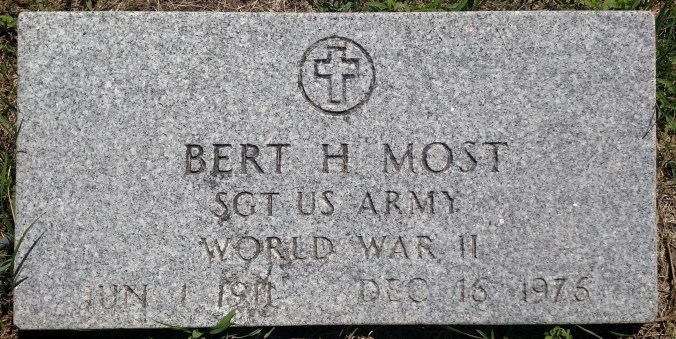
“Journeys with a Gratiot Cemetarian” 7.5: Bert H. Most, World War II Veteran, Lafayette Township Cemetery

IMG_20170703_120034461.jpgBert H. Most was born June 1, 1911, in Oscoda, Michigan. Prior to World War II, Bert worked as a truck driver for Saginaw County as well as in a coal yard. He enlisted in the Army on April 16, 1942, in Detroit, Michigan. He eventually became a Sergeant during the war. He passed away on December 16, 1976. Today, Bert H. Most rests in Lafayette Township Cemetery. Bert H. Most is one of many Gratiot County men and women who served their county, state, and country during a time of war.
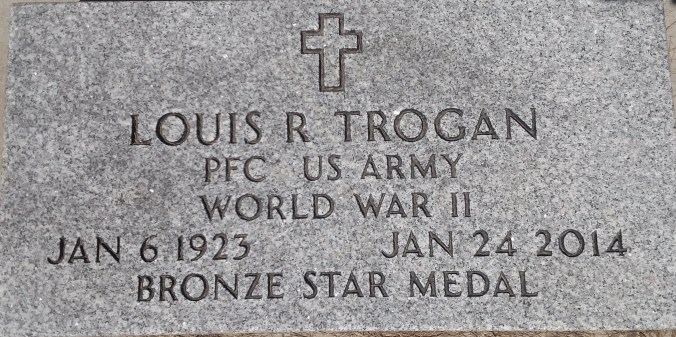
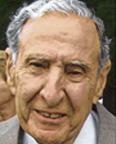
 

“Journeys with a Gratiot Cemetarian” 7:4 Louis Richard Trogan, World War II Veteran, Lafayette Cemetery

IMG_20170703_120557998 (1).jpg

Louis r Trogan.jpg

Louis Richard Trogan was born January 6, 1923, to Richard and Rose Trogan. He was one of four children. Louis served in the infantry in the South Pacific during World War II and he was awarded the Purple Heart, Bronze Star and Good Conduct Medal for his service. After the war, he returned to Bay City where he was a member of the Bay City Fire Department for 32 years, retiring as assistant chief. He was married to his wife, Virginia, for 67 years. Together they had one son, five grandchildren and nine great-grandchildren. Louis was a member of the VFW, Order of the Purple Heart, and the DAV. He volunteered for several military organizations such as the VA hospital. Louis passed away on January 24, 2014. Louis Richard Trogan rests in Lafayette Township Cemetery. He is one of many Gratiot County men and women who served their county, state, and country during a time of war.
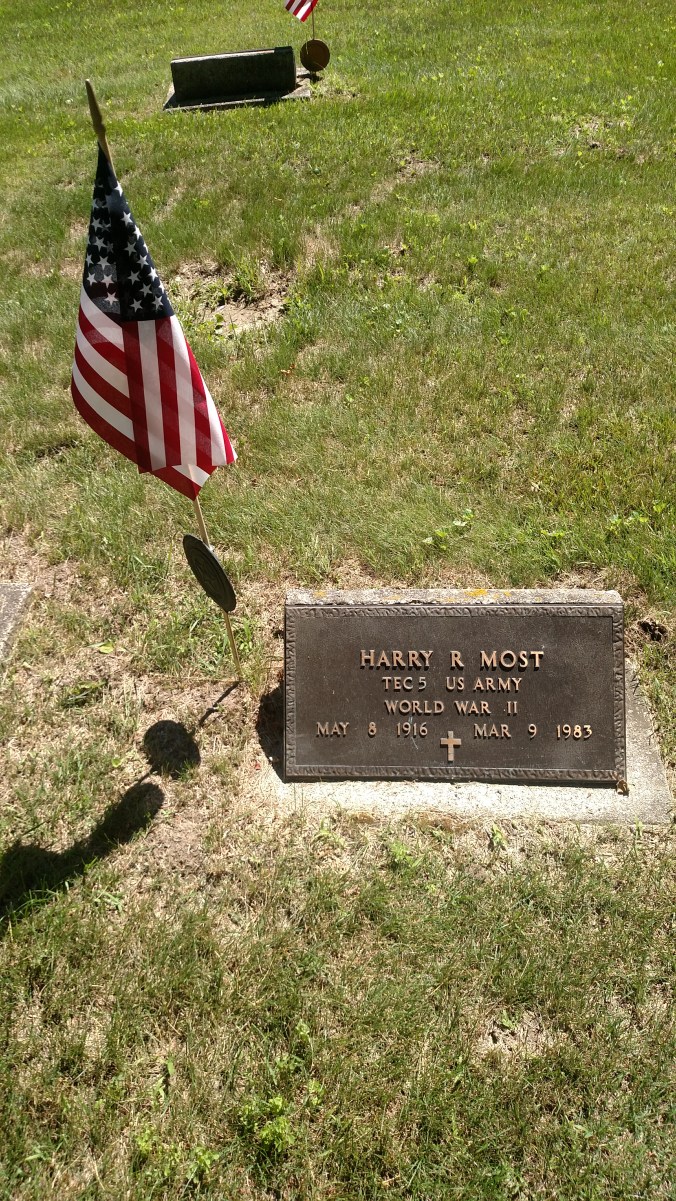
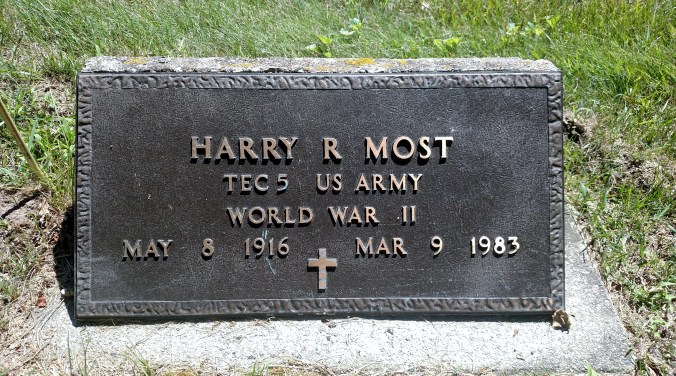
“Journeys with a Gratiot Cemetarian” 7.3: Harry Most, World War II Veteran, Lafayette Cemetery

harry most.jpgHarry Most (2).jpg

Harry R. Most was born  May 8, 1916, in Saginaw County to George and Bessie Most. He had four other brothers and a sister. Harry served his country during World War II. He died on March 9, 1983, in Lansing. Today, he rests in Lafayette Cemetery. Harry R. Most is one of many Gratiot County men and women who served their county, state, and country during a time of war.

“Journeys with a Gratiot Cemetarian” 6.6: Carl Sibert, World War I Veteran, Alma Riverside Cemetery

Sibert.jpg

Carl E. Sibert was born May 2, 1895, in Ithaca to Wilson and Viola Sibert. Carl was a veteran of World War I and also a lifelong resident of Ithaca. He made his living as a railway express agent. Carl passed away on February 26, 1982 and rests in Alma’s Riverside Cemetery. Carl E. Sibert is one of many Gratiot County men and women who served their county, state, and country during a time of war.
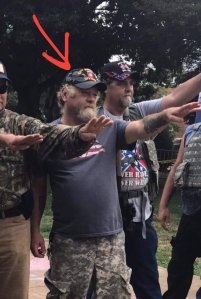
“In Gratiot County, I am Bothered by Chancellorsville” – August, 2017


DHFcZfuVwAAOesg74576

Above left: Image attributed to the Washington Post, August 16, 2017. The red arrow in the picture is not of my doing. Above right: Liberators from the 82nd Airborne and 8th US Infantry Division view the victims of the Nazis inside a building at Wobbelin, May, 1945. Photograph from United States Holocaust Memorial Museum.

     It has been over a week since the protests in Chancellorsville, Virginia took place and I am glad that I just missed the events there. Still, I also remained bothered by what I continue to learn about this event in our country. One image attributed to Chancellorsville, in particular really bothers me. And it compels me to continue to teach, write and lecture.

     I recently took a trip to nearby Staunton, Virginia to attend a teachers conference on President Woodrow Wilson, who served from 1914-1920.  Staunton, which sits west of Chancellorsville, is Wilson’s birthplace and the site of his library. I just dodged another tragic event in two years (last year at almost the same time I was in Nice, France 36 hours after the attack happened there on the French Riviera).

     Last week, my google search notice went off in the morning when the words “Wobbelin 1945” popped up on my screen.

     For fourteen years I have been researching, and recently just started writing about, a Nazi concentration camp that was liberated by the 82nd Airborne and 8th United States Infantry Regiment on May 2, 1945. Approximately 5,000 people went through Wobbelin, a satellite camp of KZ Neuengamme. At Wobbelin, the Nazi weapon of death was simple and crude: starvation. No gas stations or crematoria, just death by starvation.

      When the liberators arrived at Wobbelin it was estimated that somewhere between 1,500 to 2,500 people from over 17 different nations had died of starvation at the hands of the Nazis in ten weeks.

      Since 2003, when I became a Teacher Fellow with the United States Holocaust Memorial Museum, I have been working with a Holocaust memorial at Wobbelin. I also interviewed, met, wrote to and researched dozens and dozens of men and women who saw the Wobbelin camp in 1945. In the process, I was able to find at least four men from Gratiot County who served with the 82nd and who were in the region of where the Wobbelin camp was located. The late John Muneio, who lived in St. Louis, told me how he remembered personally confronting Germans after liberating the camp who came up to him and complained that the survivors of the Wobbelin camp were being fed and helped by the Airborne. Muneio loudly and bluntly told them, “SO?” I took the meaning to be, “SO WHAT, you didn’t give a rip about helping these people – get out of here.”

       What struck me most was how indelibly the images from 1945 still were with these veterans. Dead bodies. Emaciated survivors – the “walking dead” as some called them. The stench of decaying bodies and the camp itself. These were some of the images that the liberators had decades later about what they witnessed at Wobbelin. Most of all, there were memories of those Germans who lived around Wobbelin and who claimed that they knew nothing about the camp and that they had no idea of what was going on there.

      Both the 82nd and the 8th made sure that after the camp was discovered, Germans were going to remember what happened there.   German civilians, young and old, men, women, soldiers, Hitler Youth – any German that was found near Wobbelin – was made to take “a tour” of the camp. Nazi Party members were rounded up and made to carefully excavate corpses from burial pits (with their bare hands) for public funerals that were held in at least four locations. One liberator, Leonard Linton, oversaw the excavation of the pits and reminded those in charge of removing the bodies that they would not be using gloves, “So that you (Germans) will never forget what happened here.” The confrontation with the camp and the funeral was to remind these Germans in 1945 of what the Nazis did and what they, as citizens, had allowed to happen in their own midst.

        What does this have to do with Chancellorsville?

      The Google notice from “Wobbelin 1945”  that I saw featured a picture from the events at Chancellorsville from a story from the Washington Post dated August 16. It was from an article by Cleve R. Wootson, Jr. In it was a picture of what appears to be a man giving a KKK salute while wearing, of all things, a hat from the 82nd Airborne. The irony of attending a KKK/neo-Nazi rally while representing anything to do with the 82nd Airborne was appalling and shocking.

     I had several gut reactions to the Chancellorsville photograph.  “This guy needs his head examined.” “Ignorance is bliss.” “Those who don’t know their own history are doomed to repeat it.” “This stuff needs to stop right here.”

      This is what the 82nd Airborne fought for in 1945?  Does this guy in the photograph have any idea of what Nazism ultimately led to?  My grandfather, who was not a member of the 82nd Airborne but who served in Italy, fought against the same enemy. What would he think of the image? This “protestor” needs to go back to Wobbelin and take a look at what the end of Nazism, hate, prejudice, and discrimination ultimately lead to.

     He also needs to spend some time learning about the Holocaust and American history – and about the 82nd Airborne. And this is why we educate people.

    Maybe I should tell this guy in the photograph that he just gave me the impetus to pick up a recently started manuscript on a book on Wobbelin and that I need to get going with it again.

A year ago I was scheduled to talk to a local historical society about the Ku Klux Klan in Gratiot County during the 1920s. Talk about timing.


“Journeys with a Gratiot Cemetarian” 6.5: Victor Simon, World War II Veteran, Alma Riverside Cemetery

Simon.jpg

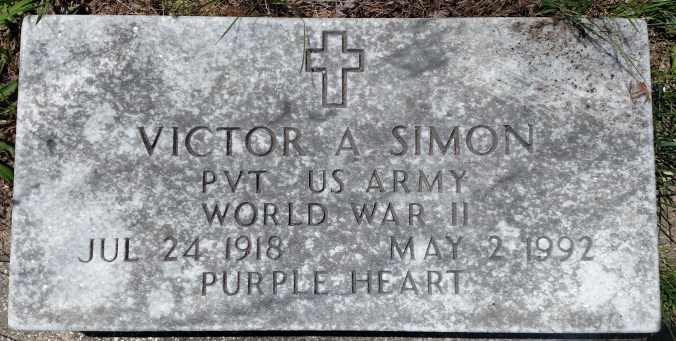
Victor Arthur Simon was born July 24, 1918, to Victor and Hattie Simon in Saxon, Wisconsin. Victor served his country during World War II in the European Theater from January to June 1945. While serving there, he was wounded and was awarded the Purple Heart.  Since 1946 Victor was a lifelong resident of Alma resident. He married his wife Geraldine and had three children. He was the service manager for Greening Buick for 27 years and was affiliated with Decker Real Estate for 15 years. He also taught in the auto department at Mott Community College. Victor died on May 2, 1992, and he rests in Alma’s Riverside Cemetery. Victor Arthur Simon is one of many Gratiot  County men and women who served their county, state, and country during a time of war.

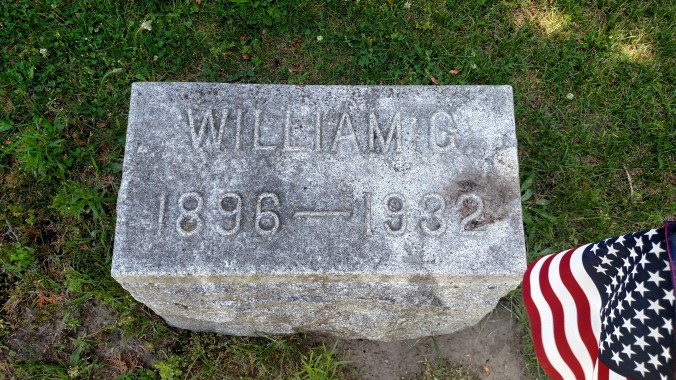
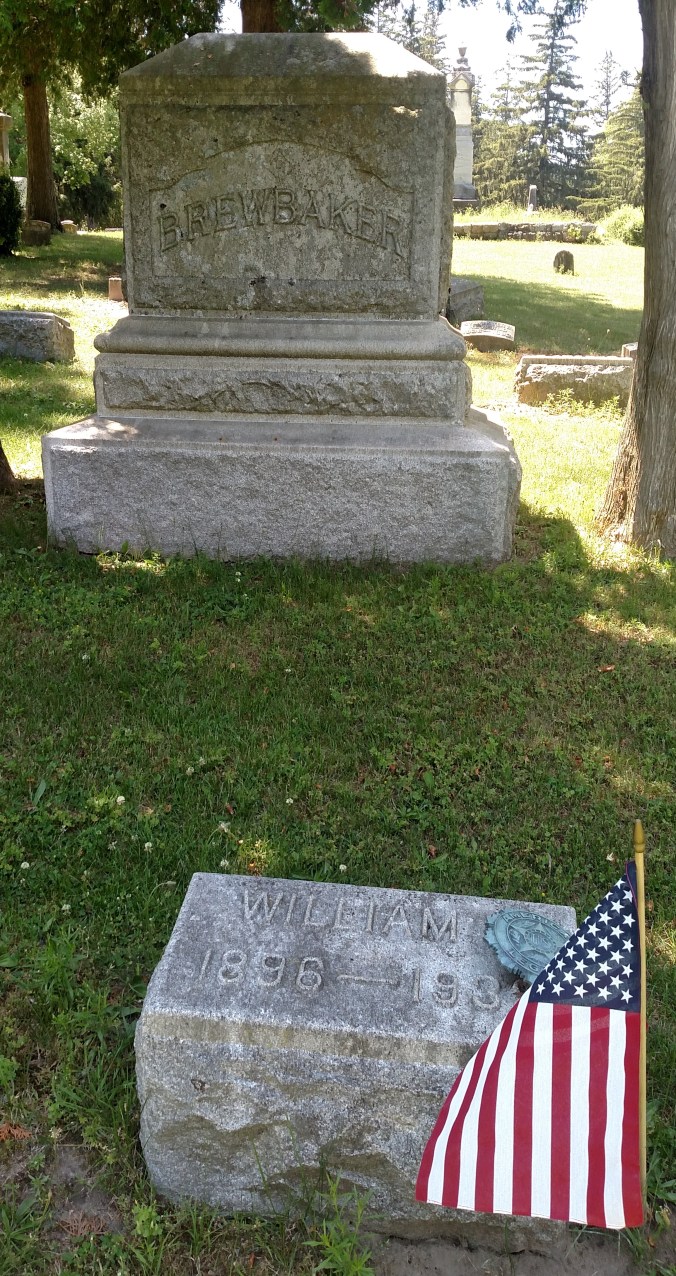
“Journeys with a Gratiot Cemetarian” 6.4: William G. Brewbaker, World War I Veteran, Alma Riverside Cemetery

IMG_20170701_141708046.jpgIMG_20170701_141721674.jpg

William G. Brewbaker was born December 28, 1896, to Ely and Geneieve Brewbaker of Alma, Michigan. William, or “Tad” as he was known to many in Alma, was an only child. He attended Alma public schools and Alma College. During World War I, William was sent to places like Columbus Barracks, where he enlisted on May 24, 1918, and others like Camp Meigs in Washington, D.C. He ended up at Camp Humphreys in Virginia as a member of Company D of the 5th Regimental Engineers. While at Camp Humphreys, he became a Sergeant 1st Class and remained there until being discharged on February 24, 1919.

At the start of the Great Depression, he was living in Detroit with his wife and son as an auditor for the Chrysler Motor Company. It was there on one day in 1932 when William went to work on his car inside of his garage that he became an accidental victim of carbon monoxide poisoning. A tragic and early death, the town of Alma was shocked by his passing. The funeral was held at his parents’ home to a packed house. William was a member of St. John’s Episcopal Church in Alma and a member of the Masons. William was also a great grandson of Alma’s founder, Colonel Ralph Ely.

William T. Brewbaker is one of many men and women who served Gratiot County during a time of war.

“Journeys with a Gratiot Cemetarian” 6.3: Herbert Burris, World War II Veteran, Alma Riverside Cemetery

IMG_20170701_141918277.jpg

Herbert C. Burris was born October 20, 1916. On April 4, 1941, he enlisted in the United States Army and served there until being discharged on November 13, 1945. Herbert lived part of his life in the Clinton County area. He passed away on November 23, 1978, and rests in Alma’s Riverside Cemetery. Herbert C. Burris is one of many Gratiot County men and women who served their county, state, and country during a time of war.
“Journeys with a Gratiot Cemetarian” 6.2 Robin L. Wilcox, Korean War Veteran, Alma Riverside Cemetery

IMG_20170701_140829583.jpg

Robin L. Wilcox was born May 30, 1929, to Earl and Nora Wilcox in Jackson, Michigan. Rob grew up in the Lansing area and graduated from Eastern High School in 1947. During the Korean War, he served in the United States Navy. Rob worked for GMAC in Chicago for many years and later he worked for the State of Michigan. He passed away on April 30, 2012, and rests in Alma’s Riverside Cemetery. Robin L. Wilcox is one of many Gratiot County men and women who served their county, state, and country during a time of war.