September 1918 – Gratiot County in the Great War: Slackers, Stamps, and Service

IMG_20181001_205819172.jpgIMG_20181001_205749220.jpgIMG_20181001_205737920.jpgIMG_20181001_205728240.jpg

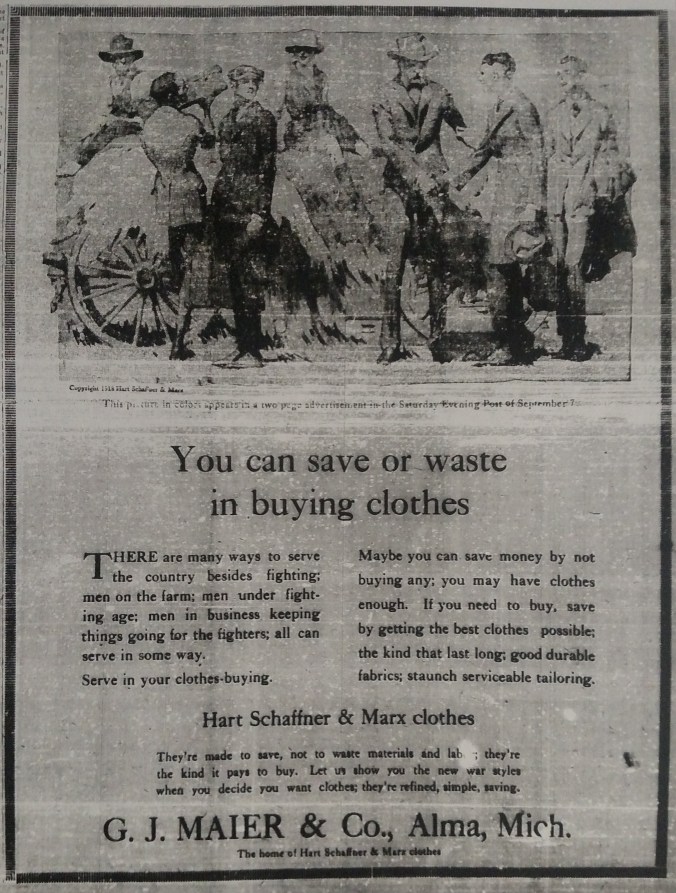
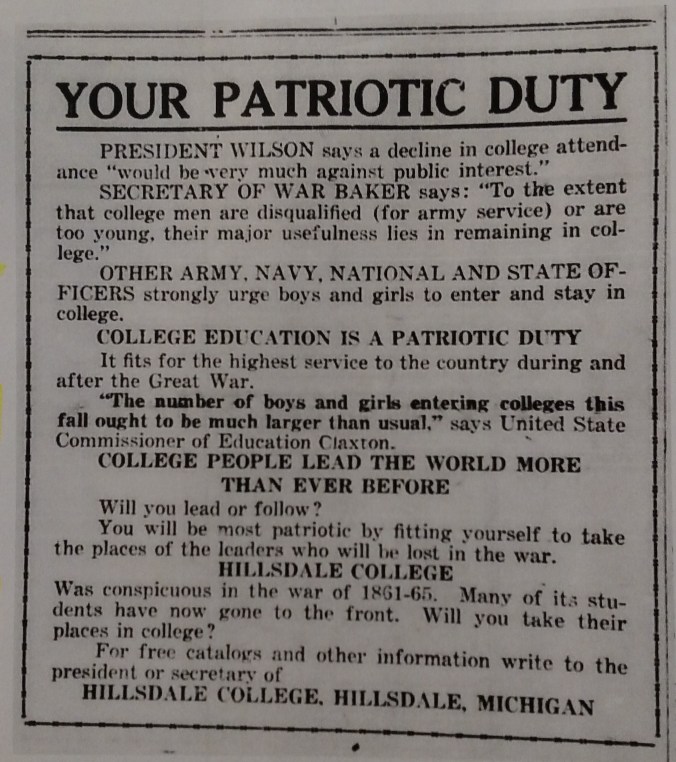
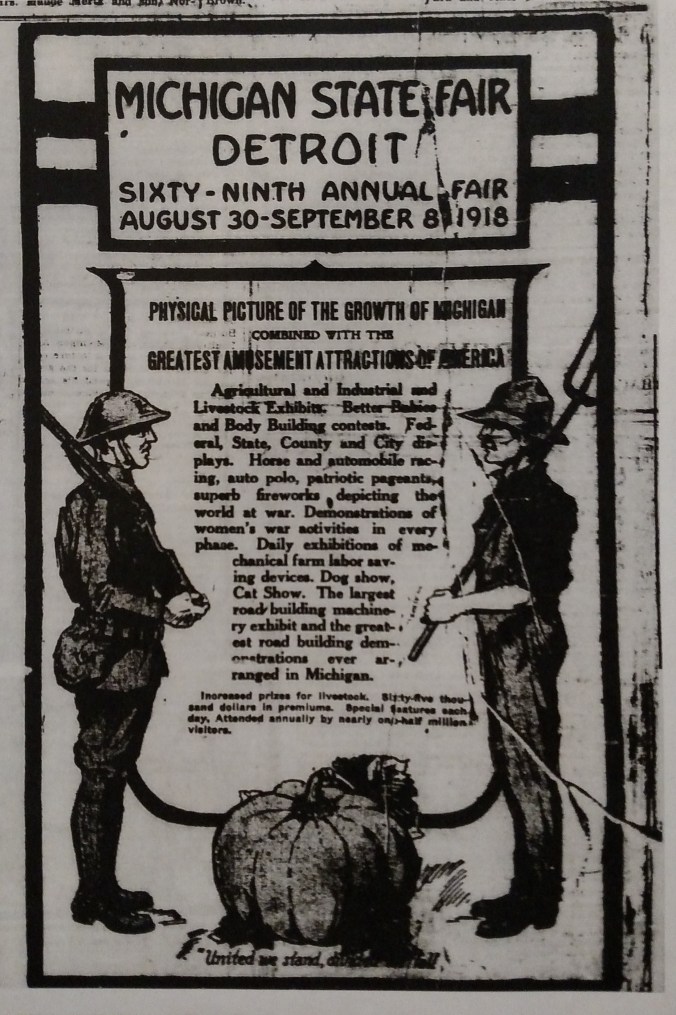
Above: advertisements from the Gratiot County Herald and the Alma Record from September 1918.

         Gratiot County residents continued to show their patriotism during September 1918 in support of the World War. Those who were deemed to be slow or resistant to support the war effort were quickly deemed “slackers.”  The Alma Record ran an editorial column that month that warned readers that “We have no sympathy with such slackers, and we know that their neighbors have no sympathy with them. Shame should be their part if nothing more…No matter what the request of the government at this time, we should attempt to hold to it.” What brought about comments like this? One incident involved L.G. Hull, a farmer in Hamilton Township, who had his barn and house painted yellow with the word “Slacker” on them. It was said that Hull made “slighting” remarks about the government, that he would not buy Liberty Bonds or War Savings Stamps, and that he refused to contribute to the Red Cross. It was noted that the paint could be read from quite a distance from Hull’s property.

       In some cases, people found themselves being looked down upon because they refused to conserve gasoline by not driving on Sundays. In Alma, license plate numbers were written down and the Alma Record threatened to publish the names of those who did not observe fuel conservation. In another instance,  Lionel  Griffey of St. Louis was arrested in early September because he claimed to be too old to be drafted. Griffey claimed to be 30 years old, but his mother verified that he was only 20. However, for some unknown reason, Griffey was allowed to leave St. Louis with a carnival that he was working for.

        Businesses like the Republic Truck Company showed their patriotism by flying a company service flag which added a star for each employee who left for the war. Gold Stars represented former employees, like George Washington Myers and Howard Wolverton, who died in the war. A special prayer meeting about the war in France was held at the Ithaca Methodist Church late in the month. The public was invited.

        A War Savings Stamp sales drive started September 10 and it was expected that every citizen in Alma would buy stamps. The city already had raised a total of $42,000 with a goal of over $400,000.   Ladies at St. Mary’s Catholic Church invested over $100 in stamps. The St. Louis Presbyterian Church held a meeting on how to instruct people who volunteered to sell bonds.  Down at Middleton, students in the Intermediate Room said that they had $600 worth of Liberty bonds and $290 worth of stamps, but they still hoped to purchase more. This was all done by a group of 42 students (30 boys and 12 girls). The Alma Fire Department used $350 that it had in its pension fund and decided to purchase Liberty Loans with it. The fire department hoped to invest a total of $1350 in bonds.  In order to get people to buy Liberty Bonds, plans were being made to bring Senator Vandenburg from Grand Rapids to make to visit  Alma for a Liberty Bond program. The Jackie Band would play and the National Guard would be present. People were asked to supply automobile rides to transport the band to places like Alma, St. Louis and Ithaca. Gratiot County had been told that this Fourth Liberty Loan’s goal was to raise $900,000.00 and 100 volunteers from across the county were expected to be involved in the drive. The Alma Record told readers to “Have it all figured out by Saturday just how much you can afford to lend, then subscribe for double that amount. Pinch yourself  to pay for the other half (of the pledge).”

        The county continued to urge people to ration and conserve resources. On a gasless day in Alma, ninety percent of automobile owners observed the day by not driving. However, 350 odd drivers who did drive around the city the following Sunday faced the National Guard Company 87 which was out at various points looking for drivers and then recording their license plate numbers. Someone in a newspaper suggested that cars should be ticketed and the money given to the Alma Red Cross.  A week after this, a letter arrived in Breckenridge from the Federal Fuel Administrator that told people that if they needed to drive to church on Sunday, then they should do so and they should not be deemed unpatriotic. This was in response to someone who had gone around town painting the term “slacker” on cars that were in church parking lots. The Secretary closed his letter by stating, “It is all right to apply both food and fuel rules strictly, but it is not right to call any person a ‘Slacker’ without the most careful investigation.”  Over in St. Louis on  Sunday it was noted that no automobiles were seen on the streets, no gas was sold and all garages were closed.

         The C.J. Maier and Company clothing store in Alma also ran an advertisement stating that “You can save or waste in buying clothes.” Even though the store sold clothing it appeared patriotic by telling people “Maybe you can save money by not buying any (clothes); you may have clothes enough. If you need to buy, save by getting the best clothes possible…” Farmers were being encouraged to invest more crops in “Liberty acreage” by planting even more winter wheat for the war effort.  Children in Alma who belonged to the city’s canning clubs put on a display late in the month at the high school. They were asked to show a basket which contained foods that they had put up from their summer’s garden.  Starting in September, the “fifty-fifty requirement” was abandoned and housewives were told by the County Food Administrator that they could buy standard flour at the proportion of one pound of substitute mix to four pounds of wheat flour. There continued to be a call for boys to be allowed to miss school in order that they could help on area farms with the harvest. Half of the farm help from the previous year was gone due to Gratiot men going off to war.  A notice out in Vestaburg still asked women to save fruit pits and shells from various nuts for gas masks.

         Among the most devoted and patriotic workers in the county continued to be those with the Red Cross. Out in New Haven Township, the Red Cross held a township hall social and raised $80 when a Crystal man won a quilt raffle. In Ithaca, the Red Cross there opened their rooms on Tuesday and Thursday afternoons. Help was needed in the sewing room and ladies were asked to loan their sewing machines if they were not using them. Five little girls paraded around Ithaca carrying a flag and asked for donations. They raised $4.40. In Alma, metal and paper drives continued at the Washington School. A Mrs. M.M.Barker from the city donated money to the Red Cross from the thirty table boarders that she had at her house. Young women were encouraged to join work for drug laboratories as hospital nurses. Families in Alma of soldiers and sailors were encouraged to ask the Red Cross for help in writing letters to their men overseas. Also, these family members could count on the Red Cross to be there in Alma to help if they needed “advice, assistance or management of their affairs.” The Alma Chapter asked the city for help in its quest to support the National Red Cross in raising fifty tons of used or surplus clothing for those in need in Belgium.  Government leaders also continued to ask housewives to conserve use of butter and milk. Even though the Alma chapter always asked for help, one Thursday evening saw 64 ladies show up to work at the tables. Dan Reed, from Flint and a National Red Cross worker, came to the city and gave a war lecture about his experiences of being on the battlefields in France and Belgium to over 200 people at the Republic Truck Factory cafeteria.

        When it came to military service, Gratiot County men were still being drafted that fall. Those men who had turned age 21 since June 5, 1918, had to register with the local draft board. The government wanted to have a fighting force of 13,000,000 men and then called for a new registration of men between the ages of 31 to 45 years of age. Men were still expected to fill out registration cards and they were given a deadline of September 12 to have them turned in.  On the day of the deadline, patriotic celebrations were held throughout the county. In Ithaca, one was planned for the courthouse yard and all businesses in Ithaca were closed that afternoon for two hours. A band played, school children read recitations, speeches were given by community members and the county’s National Guard performed a drill. The service ended with the playing of “The Star-Spangled Banner.”

         Almost 4,000 men managed to register on that day and it was said that since the start of the war, 6,631 men from Gratiot County between the ages of 18 and 46 had done so. At this registration boys aged 18 were encouraged to go to college where they could enter military training there. Those who entered the Students’ Army Training Corps were given tuition, clothing, lodging, board and $30 pay per month.  The incoming group of SATC boys was so great at Alma College that the college planned on turning the museum into a barracks because Pioneer Hall would not hold all of them. The school was also delayed that month until October 2 because of the rush of incoming applications. Some of the boys would end up being turned away because the new barracks could only hold 150 members.

         There also continued to be stories of the men who were engaged in fighting the war. George Karras, who managed the Paris Café in Alma, went off to join his two brothers who were in the service. Also in Alma, registered men were encouraged to have a photograph take before they went off to war. Two African American men, Leroy Porter and Dayton Alton, were being sent to Camp Custer on September 27 to fulfill the recent quota for African American soldiers.  Floyd Thomas, stationed in France sent a German steel helmet home to his mother in Ithaca. Private Guy Gongwer wrote to his parents in Alma that he claimed that German women were being forced to fight at the front, along with German soldiers. Gongwer stated that some of these women were found chained to their guns. This same Private Gongwer would receive a citation from General Pershing that would lead to him being awarded the Distinguished Service Medal. Gongwer was awarded the medal for his efforts to treat the wounded in the Argonne while his unit was under heavy fire. Private E.E. Down of the 338th Infantry wrote home that he had arrived safely in England.   He found the YMCA there to be of great help with morale and with writing letters home.

          Sergeant D.C. Parrish wrote to his friend, C.M.Brown in Ithaca, about how beautiful French women were because “they have the most beautiful eyes. As a general rule the girls are very pretty, so for one fond of beauty, there is always some pleasing sight upon which to feast one’s eyes.” Private Alva Cook described in a short letter what combat was like for him. After charging up a hill and being then being pinned to it because of heavy fire, his unit chased the Germans for sixteen miles. Walter H. Young wrote about why he treasured his own helmet as he had put it on just before his group encountered a shelling from the Germans. He added, “It was all that saved my life.” Elmer Down of North Star thought it would not be long before he and another North Star boy would be drinking beer in Berlin – if the war continued to go as it had in the last month. Robert Shuttleworth wrote that he had seen the worst of war: dead horses, men, guns, ammunition – all after the battle. He was so busy that he had only washed twice since arriving in France. He also wrote about the American soldiers’ fascination for souvenirs when it came to piles of German helmets, emblems and he wished that he could take pictures of the destruction of what he saw.

         Finally, in September there were clues and notes about a new movement in Gratiot County that was taking place amidst a time of war. This happened to be what was called women’s suffrage and their right to vote. On September 5, a big mass meeting was held at the Alma High School auditorium. The President of Central Michigan Normal School, E.C. Warriner, was the main speaker. Two weeks later, another mass meeting was held at the home of Mrs. F.M. Harrington in Ithaca. The women and supporters were moving to organize their campaign for the proposed amendment to the Michigan constitution that fall.  Forty women attended the Ithaca meeting, including nineteen township chairmen. It was said that several Alma merchants were going to give their advertising space to the suffrage movement in the upcoming issue of the Alma Record.

          And that was September 1918 in Gratiot County during the World War.

Copyright 2018 James M Goodspeed

Thirty Who Dared to Serve Gratiot County in the Great War, Part 14 – George Washington Myers: He had Character, a Good Reputation and Alma’s Respect

IMG_20180930_182519856.jpgIMG_20180930_182509137.jpgMyers stone.JPG

Above: the only existing picture of George Washington Myers; the Myers funeral procession goes through Alma in 1921; Myers’ headstone in Alma’s Riverside Cemetery

       George Washington Myers was born in Edmore, Michigan on March 28, 1883, to Charles and Martha (Jennie) Myers. George was the eldest of six children. In 1900, his family lived in Arcada Township where his father rented a farm and served as an overseer. George attended the Alma schools, graduated from Alma High School and then he first worked for the Swift and Company. Later Myers worked for the Republic Motor Truck Company for nine years as a head shipper until he resigned this position to enlist in the Army. Myers had gained a good reputation, respect from his fellow workers and he was known for his excellent character.

         Myers served in the Quartermaster’s Office while at Camp Custer in Battle Creek, Michigan, but prior to this, he had also served in the National Guard.  During his training at Camp Custer Myers became a Corporal in K Company of the 125th Infantry. In late January 1918, he made what was probably his last trip home to Gratiot County when he visited his family while on leave. After being sent overseas in late July 1918, Myers was a part of the great Allied Drive that was made against the Germans in France. Tragedy came when he was killed early in that operation, but it was never exactly clear when he died. One newspaper report said late July, another August 1, and another August 5.  His request that he made to his mother before he went to France was that he wanted to be brought home if anything ever happened to him.

        After the news of his death reached the Myers family late that summer, a short service was held at his parents’ home with the immediate family present. In reflecting about its loss,  Alma thought stated that it thought very highly of this fallen soldier. The Alma Record stated, “Mr. Myers won for himself the friendship and deep respect of all with whom he became acquainted. His excellent character and manly bearing marked him as one of the finest examples of Alma youth…” A Gold Star was placed in his honor on the Republic Truck Company’s Service Flag.

          It would take almost three years before George Washington Myers returned home to Gratiot County.  His burial file tells a little about this process. First, his date of death was officially listed as August 2, 1918, when a Claude F. Acree signed a statement that Myers was “Killed in action in advance from Ourcq River towards the Vesle. (He was) Buried on the South side of a hill from Cierges, about Aug. 5, 1918.”  The report also noted that one of Myers’ identity discs (identity badges) had been placed on a cross at his grave. Jennie Myers wrote to the government in early 1921 pleading that her son be sent home (“Send his body to Alma”), even though she and her husband lived in East Onondaga, Michigan. On July 4, 1921, the family received a telegram stating that their son’s body had arrived in Hoboken, New Jersey. When George’s body was shipped to Michigan he came with twenty-three other men (four other members of the 125th Infantry were also part of the group).

        The Alma American Legion Post Number 132 helped to plan for an impressive funeral for George Washington Myers.  On a warm, Sunday afternoon over 1,000 people turned out to honor him. The service was held at the First Methodist Episcopal Church because it had one of the largest auditoriums in the city. Those who could not fit into the church waited for the caisson, pulled by four black horses, as it made its way along the route to Alma’s Riverside Cemetery.

         George Washington Myers was 35 years old when he died serving his country and Gratiot County on the battlefields of France. The Alma American Legion Post was named in his memory.

Copyright 2018 James M Goodspeed

Thirty Who Dared to Serve Gratiot County in the Great War – Part 13: Eliud B. Sanchez, “I was an Alma College Student and I Wanted to be an Officer”

IMG_20180916_123852195.jpgEliud Sanchez 1.jpgIMG_20180916_123954913.jpgIMG_6424.JPG

Above: Eliud Sanchez in Alma College Oratory picture; Sanchez’s registration card; picture of Sanchez that appeared in the Alma College newspaper when he died; marker of Eliud Sanchez in Alma’s Riverside Cemetery

         Of the thirty men who died while serving Gratiot County during World War I, Eliud Sanchez was unique: Sanchez was the only Mexican American soldier.

        Eliud B. Sanchez was born October 27, 1893, in Pajarito, New Mexico. He did have one brother, Patricio B. Sanchez, and that is all that is known about his family. How Eliud got to Gratiot County, why he came, and how he enrolled at Alma College is a mystery. Did he come north to work in the fields? Did he have a family with him or did he come alone? We simply do not know.

         In a sense, Sanchez represented a problem that was encountered during the war. Mexicans, Indians, and Blacks all saw their military service as a way to prove that they were loyal Americans and that they deserved equal rights. Many in these groups volunteered to join the Army to prove that they too wanted to be treated fairly as Americans. As a Mexican, Eliud Sanchez came to Gratiot County at a time when the United States and Mexico had experienced intense border disputes, invasions and the threat of war. Because of this, many Americans in the North (like Michigan) looked down upon these immigrants. On the other hand, Mexicans started a pattern in the 1910s because Gratiot County needed seasonal laborers who did the hard work in the beet fields.

         Somehow, Sanchez found a way to enroll for studies at Alma College before the United States entered the war in 1917. While he was there, he became a part of the Phi Phi Alpha Literary Society, which was made up of 35 students. Eliud did not have high grades in any of the classes that he took, however, he was very interested in oratory (public speaking).  His oratorical speech, “The City with the Soul,” was entered into state competition, along with seven other Alma College students. He also appears listed as a junior in the college yearbook.

         On May 13, 1917, Eliud Sanchez left Alma College, along with another student, for service in the Army. He was sent to Fort Sheridan, Illinois with his hope of becoming a candidate for the Officers Reserve Corps. On his registration card, he listed his home as being Pioneer Hall at Alma College, that he was Spanish American (someone wrote “Caucasian” above it), that he had been in the Student Reserve Officer Training Corps for three weeks, and that he had been employed by the United States government. Sanchez also stated that he was short, with a medium build, brown eyes and dark hair.

         While he had hopes of receiving an officer’s rank in the Army, he failed to obtain it. Sanchez returned to Alma and then worked at the Republic Truck Company until being drafted in early 1918. Because of his prior training, he became a corporal and was assigned to Company E, 334th Field Artillery.

           Tragedy struck on August 22, 1918, when Eliud Sanchez died as the result of a drowning incident at Camp Dix. It was never explained how or why he died the way that he did. It was stated that there was a plan for a military service in Alma once his body returned home. It was said of Sanchez in the newspaper that he “came to Alma four years ago from New Mexico, and penniless worked his way through college, representing (Alma College) at the Michigan Intercollegiate Conference.”  The college newspaper wrote that Sanchez was “earnest, smiling, (and) simple-hearted.” The name of the person who signed for his body to be returned to Alma was Dr. William H. Mason of Saginaw, Michigan. A Gold Star was also placed on the Alma College flag to represent his death.

          Today, the only memory of Eliud B. Sanchez is his marker which is in Alma’s Riverside Cemetery, pictures from Alma College yearbook and newspaper, and his registration card.

          Eliud Sanchez was a  man who died serving the county during the Great War because he hoped to show that he was a member of the Alma community. He was twenty-four years old when he died.

Copyright 2018 James M Goodspeed
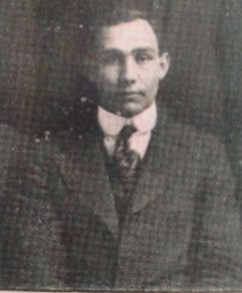
Thirty Who Dared to Serve Gratiot County in the Great War- Part 12: William Fields of St. Louis, He Died “Doing his Duty, Faithfully, and Bravely for his Country”

IMG_20180902_211520957.jpgFields WWI registration.jpgFields marker SL cemetery.jpg

Above: The only known photograph of William Fields, August 19, 1918 issue of the Alma Record; his draft registration card; Fields’ resting place in Oak Grove Cemetery in St. Louis.

        William Fields was born August 11, 1886, in St. Louis, Michigan to Marshall and Hattie Fields. He also had two sisters, Helen and Mabel.  William’s father, Marsh Fields, was well known in St. Louis because he was the proprietor of the Marshall Fields Grocery Store in town. The Fields Grocery was known as a tidy place which used a delivery cart which was pulled by a white horse. It was said in St. Louis that the white horse was sent to France during the war and was killed there.

       William Fields married his wife, Helen Montey, on August 1, 1916 in St. Louis. He worked as a grocer for his father before entering Camp Custer on September 5, 1917. A month later, he was transferred to Camp McArthur in Waco, Texas where he joined Company D of the 125th Infantry, 32nd Division.  On July 31, 1917, William Fields was killed in France at the Battle of the Marne (although newspapers reported that he died August 1). Fields was killed by shell fire in the Bois de Crimpettes, near Cierges, France.

       Soon, news reached his wife Helen in St. Louis about his death.  Sergeant Walter Johnson, a soldier who served with Fields, oversaw the burial in France and he wrote a letter home to Helen.  Johnson explained that Fields “volunteered to locate a machine gun nest, which he did successfully; but was killed on his way back to his platoon, as were many of our boys on that day.” Johnson placed Fields’ identification tag on his cross and he gave one to the chaplain who performed the burial.  The letter continued, “Mr. Fields was one of our best soldiers and also one of our most faithful and bravest men. He was to have been promoted that day he was killed. He was recommended by his Captain for bravery in doing what he did. His death was caused by the bursting of a shell. He died instantly, about 10 a.m…Your husband died doing his duty, faithfully and bravely for his country.”

        In February 1919  Helen Fields wrote to the War Department requesting information about when her husband would be returned to her in St. Louis.  It would not be until January 1921 that the government wrote back to tell her that William was on his way home. In late July, Fields was one of 86 Michigan men who came home aboard the SS Wheaton. A funeral service was held in St. Louis and William Fields was buried in Oak Grove Cemetery.

       William Fields left behind a widow, his parents, and two sisters. William Fields was 31 years old when he died serving Gratiot County in the Great War. The American Legion Post in St. Louis was named after him in his honor.

Copyright 2018 James M Goodspeed

Gratiot County in the Great War – August, 1918: Continued Enthusiasm and Excitement at Home; Loss of Lives Abroad

IMG_20180831_215340406.jpgIMG_20180831_215318096.jpgIMG_20180831_215328549.jpg

Above: Advertisements from the Gratiot County Herald and Alma Reminder from August 1918.

        During the late summer of 1918, Gratiot County continued to be deeply involved in its commitment to winning the Great War in Europe. Local movie theatres, like the Ideal in Ithaca, played movies like “The Unbeliever,” a story of an American soldier who found his faith while fighting in Belgium. Other stories with themes about the World War could be seen in Alma and St. Louis.

        Early in the month, county newspapers showed just how wild things became when an announcement was heard in Alma and Ithaca that a large German army had been captured and that the war appeared to be over.    In downtown Alma, people celebrated the Allied capture of 480,000 German soldiers. Main Street was a scene filled with hundreds of automobiles decorated with flags. A demonstration took place when someone set up a barrel for speaker after speaker who spoke about the victorious Americans. Church bells could be heard and telephone lines were jammed with callers who shared the news. In Ithaca, a similar thing happened as people celebrated until ten o’clock that night. One man drove up and down the street with a wash tub and two coal scuttles attached to his car to make noise. Children beat on tin pans and pails. After the whistle went off at the fire department,  fire trucks drove up and down the street in celebration. An effigy of the Kaiser was also burned, then came the announcement from a state newspaper that all of this was premature and the war was still very much on, with no end in sight.

       Still, other signs of continued patriotism in support of the war effort could be found in many places. On Saturday, August 3, a patriotic meeting and flag raising took place at Beebe which drew 600 citizens.  The Ithaca band played and a group of National Guard soldiers was all present. Little Lawrence Knapp, six years old, gave one of his well received patriotic messages. The Red Cross raised $40 from selling ice cream. Out at Newark Township, a group of patriotic men raised a new flag in front of the Mennonite church. Gratiot County was looking for twenty girls to enroll in the students’ nurses reserve. Training lasted two to three years, however, girls received board, lodging “and a small remuneration” to pay for their books and uniforms. Anyone in the county could donate lead pencils for the YMCA to give to soldiers. It was announced that if you had a service flag in front of your home or business then the Alma Record would print stationery for you that had a red, white and blue flag on it, along with your name.

     The level of commitment that all Gratiot County residents were expected to demonstrate that summer could best be summed up in a command from the government: “Live Like a Miser, Work Like a Horse.” Other headlines blared “Rigid Saving in Food Asked” and “Our Saved Food Fed the Allies.” Everyone was warned that there was an impending shortage of beet sugar. By the end of August, all were expected to limit sugar rations to two pounds per month until January 1, 1919.  Food Administrator Herbert Hoover called off Wheatless days, however, people soon learned that they were expected to continue to use Victory Bread as it did not mean that pure wheat bread was back yet. Then the public was told that the flour rationing would continue at least until November. Farmers in the county were offered several lectures about how to eliminate wheat smut, which would increase the yield of their wheat harvest. The United States Department of Agriculture sent Dr. A.E. Waller to Ithaca to address the Gratiot War Board. The War Board attempted to bring every war-related activity together under its direction in order to maximize work for the war effort. While boys and girls had been keeping gardens in various areas of each town, now came a call to pitch in and help with canning. Children from ages ten to eighteen were asked to bring their vegetables down to the high school to learn how to can food for the winter. Youth were warned that they were “To assist in the work is a part of your patriotic duty, as being a part and as necessary as the Red Cross and other war activities.” At the end of August, all states east of the Mississippi River abolished pleasure riding on Sundays in order to save on gasoline. Cars, motorcycles, and motorboats were affected by the order. Again, patriotic citizens in the county were expected to make the same sacrifice.

       Organizations like the YMCA and the Red Cross continued their work. Arthur Krueger, who was stationed at the Naval Operating Base in Norfolk, Virginia, wrote home to thank the Ashley Red Cross for the package that he had received. Inside he found a new sweater and a Red Cross kit. A French officer, Lieutenant J.A. Picard, spoke to the Alma Presbyterian Church about his experiences in the battlefields of the Marne, Ypres, and Alsace. Picard was a disabled soldier who was sponsored by the Alma Red Cross who spoke to raise Morale – and no collection or appeal for money was made at the meeting. The YMCA still had members in Russia who were caring for Russian prisoners and who were trying to help the Russian people. The Alma Red Cross received support from the “Busy Bees Garden Club” that was keeping a small field of beans. That fall the “Bees” were going to turn over their harvest to the Red Cross. The Alma chapter met its quota in August of 150 pairs of Belgian boys underdrawers and prepared them for shipment. However, the chapter was going to be closed during the local Chautauqua meetings so as not to offer competition. There was one last comforter for sale that the Alma chapter had and it was hoped that someone in Alma would purchase it for the upcoming winter. The Red Cross did plan on having an auction sale during the upcoming five-day county fair. Some farmers were selling hogs and sheep and planned on donating the proceeds of their sales.

       When it came to fighting the war, the Gratiot County draft board continued to call men to the service. Seven men volunteered to enlist from Alma in mid- August. Among them were Howard Walker, Merlin Richards, Verne Welch, Thomas Devarmond, Morris Aldrich Arthur Dumas, and Horace Cummings. A new draft bill was passed that said that all men who turned age twenty one since June 5, 1918, had to register with the draft board.  It was also made known that any men between the ages of 45 and 55 could enlist and work in the quartermaster department. On August 28, fourteen men left for Camp Custer on a rainy morning in Alma. An abundance of whistles and bells went off near the train depot and a fairly large crowd said goodbye. Even local Company 87 of the Michigan state troops showed up. The guards had just received new uniforms, hats, and guns for public demonstrations and drills. Young men at Alma College and Central Michigan Normal School could take military training while attending school. Presidents from both institutions encouraged these students to stay at the schools, complete their training, and then fulfill their military commitment as potential officers. Several Gratiot County men became part of this program which was known as the Students Army Training Corps (SATC). When six young Ithaca men who enlisted in the Navy in 1917 made a surprise visit home on furlough earlier in the month, a crowd of 3,000 people flocked to Ithaca’s courthouse lawn to greet them. This group was originally placed on the Montana, a cruiser, and were stationed in New Hampshire.

        As Gratiot’s men went off to camps, or “over there” to France, they sent letters home to family and friends. Mothers of boys sent to Camp Custer were told that their sons would be well fed and taken care of. A school of bakers and chefs even went so far as to publish sample menus in local newspapers. Rex Allen wrote to his family that he was disappointed in his first experience in visiting New York City. He lamented the absence of good water and no light at his camp on Long Island. He closed his letter, “Give me Camp Custer and old Michigan.” He also planned on being in France by the time that his letter reached home.  Sergeant Fred Wirebaugh wrote to the Gratiot County Herald “From Somewhere in Germany” about the countryside. He gave a description of the difference between “Whizbangs” and “Jack Johnsons” – the type of shells that the Germans fired at American troops. Jesse First, a Perrinton native who made it to England, lamented the different types of currency that the English used. He also wanted to know what his family did on the Fourth of July. If any reader wanted to know how to contact a soldier then they were invited to write to names under “Soldier’s Addresses” that appeared in the paper. Another heading ran “On the Other Side” and kept a tally of those Gratiot men who had made it to France.

       The hardest news involved the growing number of Gratiot men who were being killed in France. A “Roll of Honor” was regularly published and updated in the Herald, along with the news stories telling readers about the deaths. William Field of St. Louis was killed August 1. One of the bigger shocks was the loss of the county’s youngest soldier, sixteen-year-old Leslie McLean from Alma. His death was announced just after a letter that he wrote was published in the Alma Record.  Others were also killed in combat: Harry Leonard and George W. Myers of Alma, and Allen Pinkston of St. Louis.  Then came the news that Elind Sanchez drowned in an exercise at Camp Dix. Sanchez was an Alma College student who dreamed of becoming an Army officer.

       As fall approached, the times would only become bloodier, even when the news said that the Germans were on the retreat.

Copyright 2018 James M Goodspeed
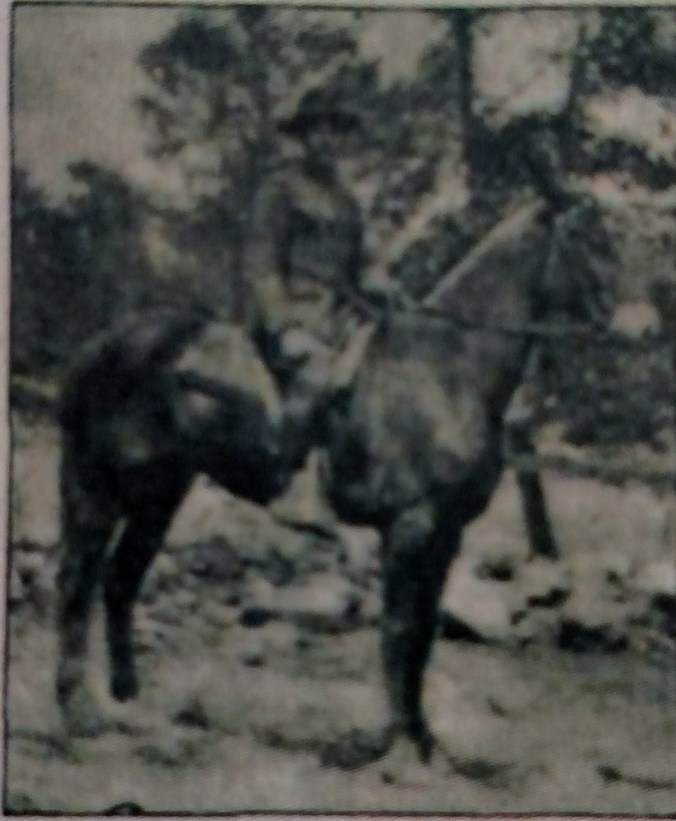
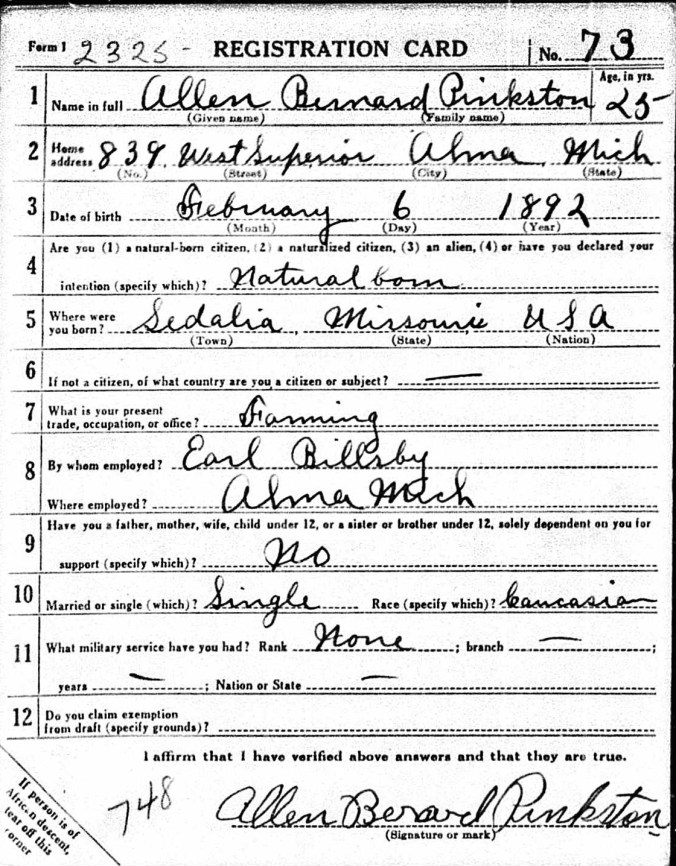
Thirty Who Dared to Serve Gratiot County in the Great War, Part 11: “Allen, We Hardly Knew You” – Allen B. Pinkston

IMG_20180827_205754739.jpg005251382_01027 (1).jpgPinkston marker.jpg

Above: The only known photo of Allen B. Pinkston from the Gratiot County Herald; Pinkston’s draft card; the final resting place of Allen B. Pinkston in Richland Township Cemetery.

Allen Bernard Pinkston is one of thirty men who paid the ultimate price for serving our country during World War I. His story is one of the most tragic of the thirty for one reason: so little is known about this young man aside from his service and his death.

     Pinkston was born February 6, 1892 in Sedalia, Missouri to Thomas and Annie Pinkston. Allen appears to have been one of five sons and two sisters. At one point his parents moved to the Crystal area. Allen  listed his occupation as being a farmer before he enlisted at Camp Custer on September 21, 1917.

      Upon entering the service, Pinkston was assigned to the 338th Regimental Field Artillery, Battery B. From there, he was sent to Camp McArthur on November 2, 1917 and joined the 119th Field Artillery, Company D of the 125th Infantry.

          Pinkston became the next Gratiot County man to die in the summer of 1918 when he was wounded in the head on July 31. He died three days later from his wounds on July 2 in a hospital. He was buried in the Aisne Cemetery and it was not until late October of 1920 when his father petitioned to have his son brought home.  About this time a Detroit veteran by the name of Burgess Iseman wrote to the government asking where Pinkston and another Gratiot man, Leslie McLean, were actually buried in France. One of the situations that families of the dead faced was not knowing in 1918-1920 about where their son actually had been. Iseman’s letter, the government’s response to it, and the note that Allen Pinkston’s body was being returned started to bring some closure to the Pinkston family.  During the following spring of 1921 the government started the procedure of sending  home to his family in Vestaburg, Michigan.

        While Allen Pinkston had ties to Montcalm County, the only news article about his death that his name was placed on the Emerson Township service flag. His death, represented by a Gold Star on the flag, was one of the 31 stars on the flag. This must have accounted for why Gratiot County later claimed him as one of their losses during the war.

        After his arrival home and a funeral in Vestaburg on July 21, 1921, Allen Pinkston was laid to rest in Richland Township in Montcalm County. Allen Bernard Pinkston was twenty six years old when he died.

Copyright 2018 James M Goodspeed


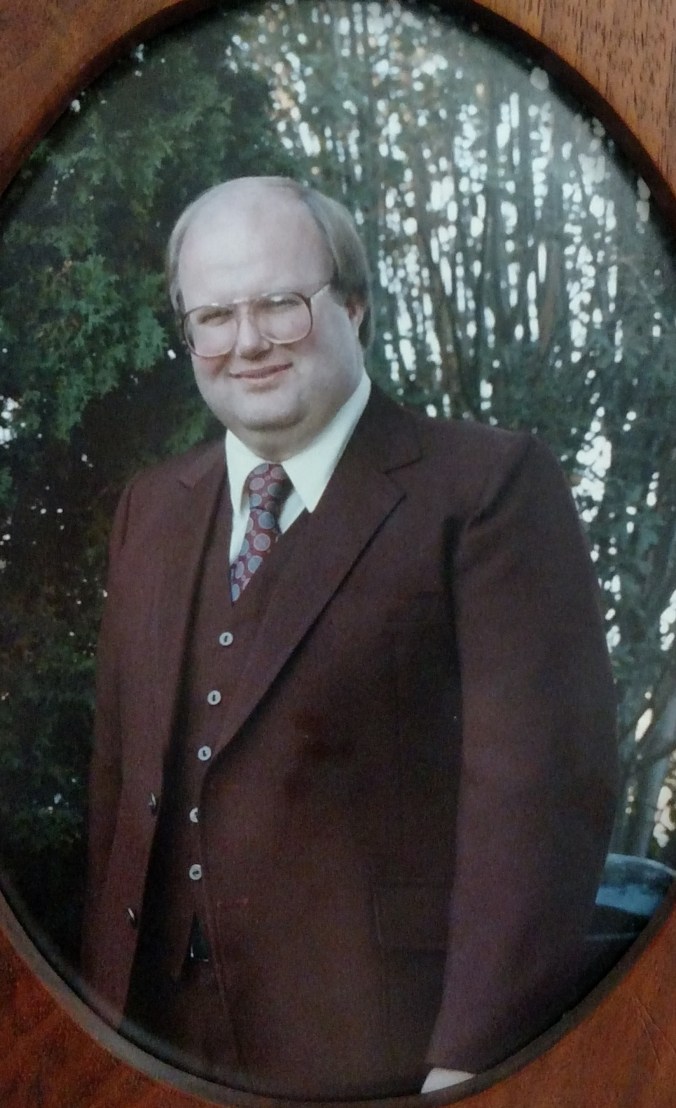
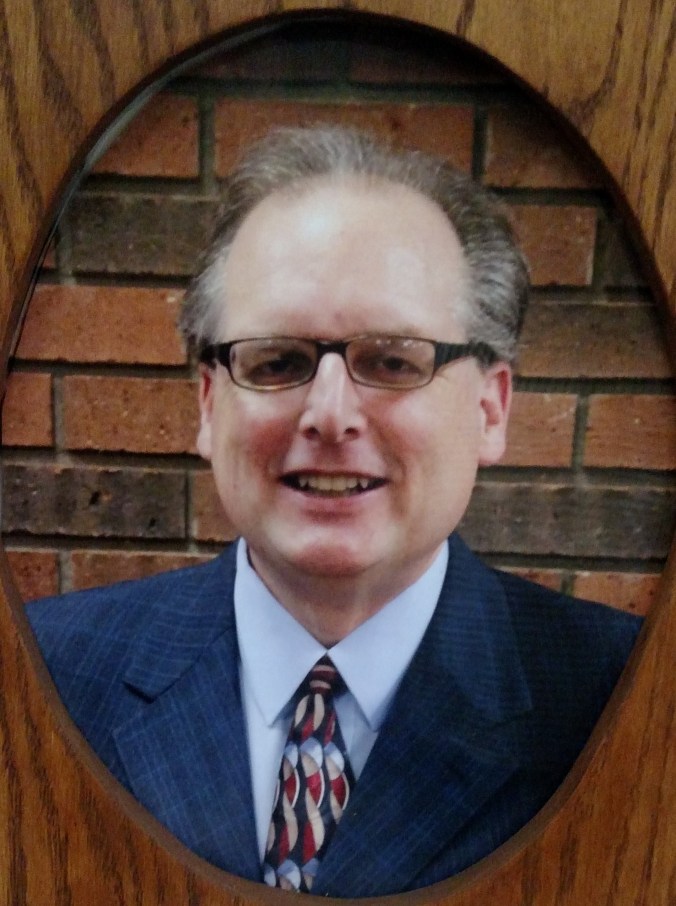
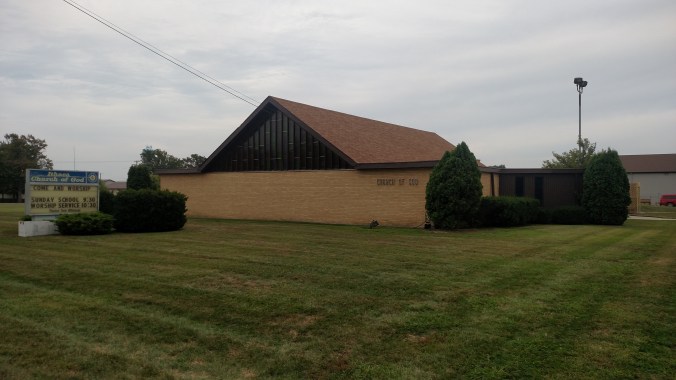
“From the Corner of St. Johns and Emerson to Barber Street: 100 Years of the Ithaca Church of God, 1918-2018” Part VI: Ministry and Service into the Current Era, 1983-2018

IMG_20180822_110351953.jpgIMG_20180821_141609313.jpgIMG_20180822_110403556 (1).jpgIMG_20180824_153611889.jpg

Above: Pastor David Schwarz; Pastor James and Connie Conn; Current pastor, Tom Whitesel; the Church of God today at 624 East Barber Street in Ithaca, Michigan.

        As the 1980s took off, the county tried to recover from one of the most significant recessions since World War II. Interest rates were incredibly high and  unemployment was a challenge in places like Gratiot County. The country as a whole also took a very conservative tone in many ways, and the decade  concluded with the end of the Cold War.

         A new search for church leadership began in 1983 and the Ithaca Church of God called Reverend David C. Schwarz from Lansdale, Pennsylvania. Pastor Schwarz and his wife, Arleta, had two children: Jeremy and Joyelle. Pastor Schwarz was known as a pastor who worked diligently on his preaching. However, it soon became apparent that leadership style and the vision of the congregation did not match. After a period of almost four years, Pastor Schwarz resigned. The church went through a period of time with Pastor Earl Van Sipe, who served as interim pastor. Because of Van Sipe’s  success as a former pastor of the church, and because he brought instant credibility, healing took place and the church eventually turned to a search for a permanent pastor.

          In November, 1987, Reverend James Conn from Saginaw accepted the call to become the next pastor of the church. Pastor Conn, and his wife, Connie, had three daughters: Angie, Amy, and Danielle. Pastor Conn was deeply committed to doctrinal preaching and to Sunday morning services. During Conn’s ministry, the church first became involved with trying small groups and individual discipleship training. Connie Conn revitalized the worship service planning and led the services. She was also instrumental in starting a women’s ministry known as “Kindred Hearts.” Under Pastor Conn, the “Dare to Care Program” met bi-weekly for intercessory prayer for those in the church who had specific needs. After 26 years of service to the church, Pastor Conn retired in May, 2014.

        It was during the 1980s that the church became known in the Ithaca community for its Wednesday night children’s program, which was started by Peggy Mockridge. Eventually the program became known as “Bible Mountaineers” and it drew many children to the church. Peggy was a gifted volunteer musician and she served as the children’s program director. She also planned and directed many special events at the church such as Christmas and special children’s programs. Starting in 1996, the church felt the need to call a full time youth minister to work with youth. The first youth pastors were David and Barb Carney who came with their daughters, Rachel and Amanda. They served for 6 ½ years and were followed by Steve and Tammy Mellish, their son, Mark, and Tammy’s two daughters. In 2005,  Brent and Kaylee Dumler were called to minister and they brought their children: Kelcey, Garrett, Conner, and Josh. When each  of these youth ministers left it seemed that more young families left the church as well. There was also a question about supporting the ministry when church finances did not keep up with expenses. This issue was resolved when the church joined with the Edgewood Church of God to share a youth minister, Matthew Derby. He and his wife, Brandi, have four children: Selah, Ryah, Kitarah, and Judah. Derby was hired as a part time youth minister and currently works with both the Ithaca and Edgewood congregations. In this way, both churches could have a vital youth program  while being able to support a youth minister.

        In the fall of 2014, the church looked to new leadership and Tom Whitesel from Indianapolis, Indiana became the new pastor. He came with his wife, Denise, and the couple have two grown children. Pastor Whitesel has led the church with an emphasis on music, children and community outreach. Under his leadership, the church has adopted the message of “Love God, Love Others, Love the Community” and it has been demonstrated in several ways in Ithaca. In reaching out to the community, the church has offered snacks and meals to schools and teachers. A city project is regularly adopted, and volunteerism and community involvement is encouraged. The church also has an annual “Heroes Day” to recognize individuals in their community.

Copyright 2018 James M Goodspeed
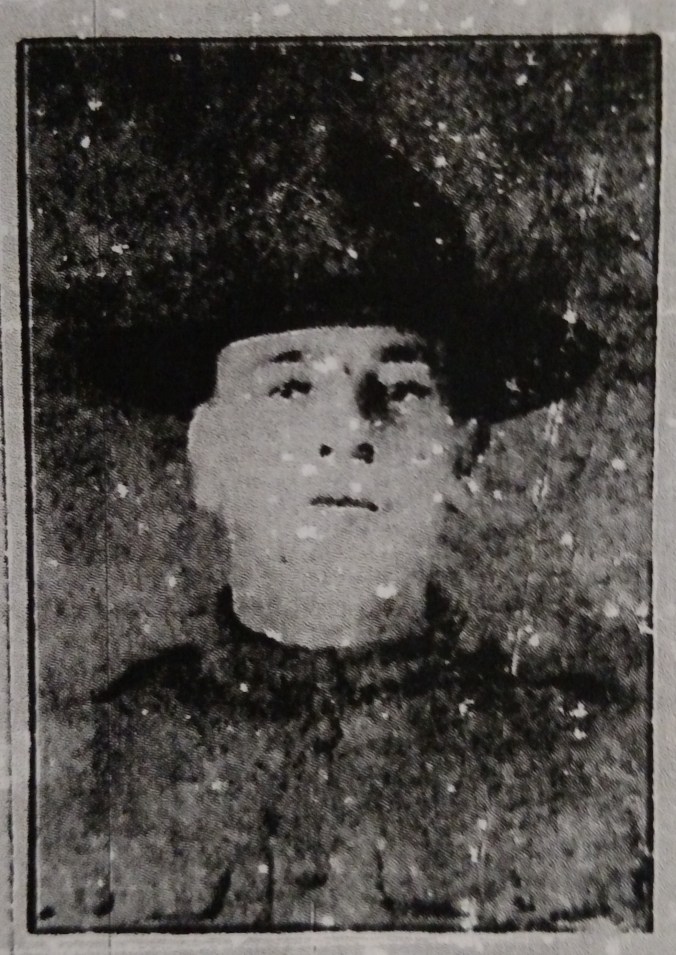
 

“From the Corner of St. Johns and Emerson to Barber Street: 100 Years of the Ithaca Church of God, 1918-2018” Part V: Here Come the 1970s – Another Young, Passionate Pastor Followed by A Calm, Caring Shepherd

IMG_20180822_194042083.jpg

IMG_20180822_194137101.jpgIMG_20180822_110356052.jpg

Above: Pastor James Henegar; Picture was taken in October 1971 following “Hold Forth Your Light” Campaign; Pastor Carson Reynolds.


        As the 1970s began, the Ithaca Church of God again looked to a younger pastor, much as it had two decades earlier. This young pastor was James Henegar, who arrived from pastoring the Church of God in  Hialeah, Florida. Before that, he had been an assistant pastor in Cincinnati, Ohio.  Henegar was a graduate of Anderson College, where he majored in Bible and Christian Education. He also was a pitcher on the Anderson College baseball team and once got his former manager, Carl Erskine (a former major league pitcher) to come to Ithaca to speak to his congregation.

        Pastor Henegar came to Ithaca with his wife Judy and his daughter Michelle, and they began their ministry in Ithaca on July 13, 1970. They also had another daughter who was born in Ithaca during their pastorate. He was energetic, had a passion for evangelism, and was outreach oriented.  Henegar was very active in welcoming new people to the church and in trying new things. In the fall of 1971, he challenged the church with a Sunday School Attendance Campaign entitled, “Hold Forth Your Light.” The goal was to increase Sunday School attendance to an average of 173 people for four straight weeks, from September 12 to October 3. The program was exceedingly successful, and it brought a total attendance of 841 people (most Sundays saw 25 people above their goal). Because the church picked up the challenge, on October 3 Pastor Henegar, his wife, and daughter dressed in “Old Fashioned” style (bibbed overalls for the pastor). Henegar also fulfilled his promise that if the program succeeded he would preach a sermon from the roof of the church, which he did.

        Henegar encouraged the church to try other things which resulted in drawing in children,  younger couples, and their families. A bus ministry was started to reach children and people in the community.  Judy Henegar was instrumental in opening the basement of the parsonage for classes for children’s church and was very creative with ideas on how to reach these children.  Now, a familiar problem for the church was on the horizon: what should the church do now that it was again outgrowing its facilities? One of the issues of church growth for the Ithaca Church of God in the 1970s was that there was a sizeable group of younger adult families and also a core of “pioneers” who had been with the church for decades. Some of the older members had lived through several building projects and participating in another one seemed to be too challenging. It was also thought that younger members wanted a place where they and their children would attend in the future.    The idea of “growing pains” would be an issue for almost a decade for the congregation.

       In 1976, Pastor Henegar resigned after completing nearly six years with the Ithaca congregation.  He had a much larger vision for the future of the Ithaca Church of God, but unfortunately, the church was not ready to accept it.

       In the early winter of 1976, Reverend Carson Reynolds accepted the call to pastor the church. During the 1970s things were happening in Ithaca and in Gratiot County that had an impact on younger families in the church. These dealt with the economy and its effects on jobs in the area. Many seemed to be leaving due to this as well as attending other congregations.

         Reynolds was an older pastor who came with his wife, Katherine, from the Mt. Haley Church of God. He had pastored churches in Kentucky and Ohio before coming to Michigan. Both he and his wife were graduates of Warner Pacific College in Oregon, and they were the parents of three grown children.  Pastor Reynolds came to the church as an able, experienced pastor who was working with a church which was leveling off in attendance. Still, Reynolds could be counted on to both watch and observe his sheep, whether it was a time of a personal crisis, a hospital visit, wedding or funeral.

        There were ministries during this period that were important to the church. One of these involved the youth work that was done by Sam and Connie Price, who volunteered their time and energy as youth ministers. They started a group that involved the youth in “His Kids” that performed in many churches in the area and the state. “His Kids” involved many age groups of youth in the church, and it had a tremendous influence on many people.

  In a short time, the issue of expanding the facilities was the focus of many of the younger families in the church. A vote was taken, and the church entered into another building program in 1980-81 which added the wings to the sanctuary, more bathrooms, a larger fellowship hall with classrooms, and a larger kitchen. The church and its new, completed projects were dedicated in 1982.  Reynolds was very committed to seeing the project completed and this consumed the focus of the church so that programming and outreach suffered. In 1983, Carson and Katherine Reynolds resigned to return to a prior pastorate in Xenia, Ohio. They had served the congregation for over six years.

Copyright 2018 James M Goodspeed


“From the Corner of St. Johns and Emerson to Barber Street: 100 Years of the Ithaca Church of God, 1918-2018” Part IV: A Young and Vibrant Leader, a Growing and Active Church, 1950-1970

IMG_20180820_155630891.jpgold church.jpgIMG_20180820_160758665.jpgIMG_20180820_204102706.jpg

Above: Earl and Charlotte Van Sipe pastored the church for almost exactly twenty years from 1950-1970; a 1950s shot of the old church; a 1964 shot of the new Church of God on Barber Street; in 1970 the Board of Trustees celebrated a mortgage burning ceremony – the new church was paid off.

        As 1950 began, Ithaca, like many other towns across America, had seen great changes in society and in the world. The Second World War ended in 1945 and the church had many men and women in its midst who had faithfully served their country. In Ithaca, a terrible polio epidemic had started in mid-1949 which terrified the community because of the number of people who were stricken in the wake of this terrible disease. Nothing had gripped Gratiot County on this scale since the Flu Epidemic of 1918-1919. By the summer of 1950, another conflict in Korea threatened the United States with another world war. When would peace and stability find come? In some ways, the Ithaca Church of God needed a shepherd who would turn out to be a long-term pastor, and they found one in a young Earl Van Sipe.

         Earl Van Sipe was 25 years old. He had pastored the Church of God in Petoskey for two years, was married to his wife, Charlotte, and had a nine-month-old daughter, Judy.  He and his wife would also be the first pastors to have a child in Ithaca with the birth of their son, Rodney.  Van Sipe was originally from Alpena and he had spent 2 ½ years in the United States Maritime Service during World War II. Both he and his wife were Anderson College graduates and it was there that Earl won letters in several sports and he coached the debate team. What many did not know was that he had turned down signing with the Cincinnati Reds baseball team in order to follow his calling as a pastor. Van Sipe had a knack with people and during his twenty years in Ithaca he became well known to many in the county, whether he was an auctioneer for a charitable cause, heading the county ministerial association, being a high school sports official, a leader of the Gratiot County Civil Defense Program, or serving as chaplain for the county sheriff’s department.

         As the church moved into the 1950s it averaged 90 people a Sunday and continued its ministry within the community. Holding annual or seasonal revivals were a signature of the church and notable evangelists came from across the Church of God to Ithaca to hold meetings.  In 1952, a  special dedication service was held for the purchase and installation of new pews, which cost $2485.00. It was one of many steps in the 1950s that the church took to deal with its growth. In early 1957, the church undertook a drive to raise $30,000 to add a new educational unit for new classrooms, fellowship hall and pastor’s office.  Attendance was now reaching an average of 160 people each week.

         Still, there seemed to be more for the Ithaca Church of God. In the midst of the 1957 drive a new vision was presented to do something better:  build a new, modern church and then relocate.  Parishioners were asked to think bigger and to commit deeply to the idea of building this new church. As leaders looked for a   place to build this church, one day Pastor Van Sipe and trustee Ed Papendick ventured several blocks northeast of the church to what would eventually be called Barber Street. At the time the area was largely corn fields and there was yet to be a subdivision or a high school nearby. The church decided to enter into a mortgage for $45,000 and construction of a new church started in July 1963. In late December, the congregation moved to the church on Barber Street and another church, the Ithaca Free Methodist, purchased the old Church of God properties. Coincidentally, the two churches moved on the same day. Services at Barber Street were held in the completed sanctuary even though the rest of the church was not completed until April 1964. On Sunday, June 14, 1964, the new church was officially dedicated. The new church had a larger sanctuary which was fully carpeted,  had new pews, modern acoustics, a new fellowship area with new classrooms. The property also offered the public something that the older church never had: more than enough parking!  The congregation also took another step and purchased the house across the road which became the new parsonage. Still, many wondered, “How will we pay for this?”

         As the 1960s went on, the church grew, many well-known speakers, evangelists, and singers visited the church and the mortgage was soon paid off.  In late April 1970, the church held a mortgage burning ceremony and the church celebrated having paid off this new church. It was a time that celebrated that God was good and that his people were faithful to their commitment to having a new church.

        Within a few months, the church began a new stage when Earl Van Sipe announced his resignation to accept a call to become part of the pastoral staff at Pennway Church of God in Lansing. The Van Sipes had grown with the church and the community for almost exactly 20 years. In July, the church entered the next decade of its history with another young pastor and his family.

Copyright 2018 James M Goodspeed