September 1917: A Barbecue in Ithaca Never Seen Before-Gratiot Boys Leave for Fort Custer-Supporting the War Effort in Gratiot County


unnamed.jpg

Downtown Ithaca on September 20, 1917 – A barbecue for the Boys.

            In September 1917 the second group of men prepared to go off to fight in the Great War. While more left, there were disagreements over the issue of who should and should not have to leave Gratiot County.

            Across the United States, there were people who believed that America could raise its quota of an army of two million men without drafting married men who had children. The Gratiot County Herald argued that men with families should only be called if it was clear that the quota could not be reached. Part of this argument rested on the idea that farm families had their own hardships. Who would take care of the wife and children? Who would feed and clothe them? How many families could actually take in and care for the family that did not have a husband and father to provide for them? This argument reflected a hopeful view that America could still raise an army during a time of war without calling this group of men. It seemed that there were many who believed that Gratiot County families would not send their husband or father until it was absolutely necessary.

                In one local case, Orie Rubben Brown of St. Louis openly challenged the issue of wanting to be exempted from the draft. Brown had been negligent in providing affidavits that he was needed at home and therefore was not eligible for an exemption. His protests and his case became news throughout the state as he debated his status with the Gratiot County draft board. Eventually, Brown joined the Army and served until his discharge in early 1918. His case was an example that there were still many in Gratiot County who hoped that not every man would have to fight in the Great War.

                As the September draft list came out, 172 names appeared on it. One of them included Elind B. Sanchez, an Alma College student who would be the first man to die in service for Gratiot County. Another Alma College student who was also listed and who would later die was Dwight Von Thurn. As some of these young men left Alma College, it was announced that the college would return tuition to all those who would be called by the draft. They also would receive proportional credit for the classes they were in prior to being drafted.

         Some very impressive send-offs for these men continued to take place. To honor those leaving Gratiot County, Ithaca planned to have an ox roast to honor 200 men on September 20. The barbecue was headed by Postmaster C. M. Brown, F.L. Wheeler, and George Lanphere.  At three o’clock that afternoon, Ithaca held a grand parade which started at Pine River Street. The parade was led by the Owosso band and included men from the G.A.R., National Army representatives, county draft board members, Ithaca’s new fire truck, floats, Red Cross volunteers, Camp Fire Girls, and the Boy Scouts. Citizens were also invited to drive their own decorated automobiles at the end of the parade. As soon as it concluded, a band played between McCormack’s and the Home Goods store. The public crowded the newly cleaned pavement to hear a series of speakers talk of patriotism, the call for bravery, and the goal of defeating the Kaiser.

          Afterward, the boys who were headed for the Army, along with their families, joined Civil War veterans in Center Street to enjoy barbecued beef, potatoes, and other dishes.  Mrs. Wheeler from the Seaver House was in charge of the cooking. The rest of Ithaca was also invited to “enjoy Ithaca’s treat” as Ithaca “want(ed) the boys to go with vivid remembrances of hospitality and the good wishes, not of Ithaca alone, but the entire county.” The weather that day was threatening and overcast, however, it was estimated that between 5,000 and 6,000 people came to Ithaca for the event. Eventually, it was said that 4,000 people were served meals.

         The call came for 109 men to leave Gratiot County came quickly within a twenty-four hour period. At one point, the men left at the rate of three or four per day from Alma. The Gratiot County draft board was in charge of taking care of them while they waited for the train.

         With their departure, Gratiot County residents started to hear about their destination, which was known as Camp Custer. The camp was actually being both constructed and used as newly drafted soldiers appeared at its gates. Covering over 6,000 acres near Battle Creek, those who arrived there that fall wrote home to tell parents and wives about the accommodations and the new life of being a soldier in training.

         Walking on the roads across the freshly constructed drill fields, weaving in and out between barracks, William C. Searl wrote his father that it took him almost two hours to find the nearest post office in the center of the camp. Each barrack was one hundred feet long and forty feet wide. One-half of the bottom floor was a kitchen area and had ten tables to feed approximately twenty men. The second floor was for sleeping quarters. Each man slept on an iron cot, which had a straw tick and several blankets. Several windows, which needed to be opened at night, let in enough light. Each barracks had a nearby bathroom or bathhouse for shower baths, washstands and a place to wash clothes. Each company had its own headquarters building. One of the most important places in Fort Custer was the exchange or canteen building. Here a soldier could obtain tobacco, candy, or ice cream. It always seemed crowded in the evenings. For another diversion, the men could visit the newly created Y.M.C.A. (Young Men’s Christian Association) building. Paper, envelopes, postcards, magazines, and newspapers were all available for the soldiers, all for free. Men could also receive equipment on loan to play baseball, football or other sports. Also present were places for religious services for Protestants, Catholics, and Jews.  Searl also wrote that a quarantine for sickness was already becoming a practice of the Army. Men frequently had to stay in their barracks until everyone received the necessary medical shots.

          Searl then stated that Army life was becoming more serious. Awakened at 5:45 in the morning, roll call started fifteen minutes later, followed by breakfast. Drilling for the day lasted three hours, followed by a break, dinner and then another two hours of drills in the afternoon. When dinner and the day’s end came at 6:00 that night, men were free for a few hours. However, lights went out at 9:00 and there was nothing else to do in the camp. Most of the men found that they had little trouble sleeping after all of the training took place.

        That September many parents and families started traveling to Fort Custer to visit their sons. Directions appeared in local newspapers describing the best way to drive to Battle Creek. Soldiers also wrote back to tell how they could be found once families arrived at the camp. Those who went by car found that it was a full day’s trip there and back using a route from Ithaca through Pompeii, St. Johns, Dewitt, Lansing, Charlotte, Bellevue before arriving at Battle Creek. While the roads were very dusty, they were considered to be good for the times. Those who visited made sure to let their son know that they were coming ahead of time and hoped to find a pass waiting for them at the gate, which was helpful due to Camp Custer’s size. Equally important was that the family knew what barracks number to look for once they got on the campgrounds. Before entering the camp, cars often were searched for intoxicants.

       As September closed, help with the war effort continued. The Red Cross Society in Ithaca organized a knitting club to teach women how to knit articles for soldiers. The Domestic Science room at the high school had been open during the summer to encourage volunteers to use its sewing machines. It only cost twenty-five cents to help pay for yarn. People were encouraged to send Wrigley’s gum to soldiers headed to the front. “S.O.S, Send Over Some Wrigley’s” was an advertisement proclaiming that gum could protect thirst and help a soldier’s appetite and digestion. The British chewed it, why not Americans? The Alma library had a goal of raising $400 worth of books to send to soldiers.

          The first “Meatless and Wheatless Days” were coming and it was announced that they would start in October. It was planned that Tuesdays would be a meatless day in Gratiot County homes and that Wednesday would be a wheatless day at the family dinner table. Both were done to help conserve food for the war. Also coming on the horizon was the second Liberty Loan drive. This time the goal would be to raise three billion dollars in America, one billion more than the first drive. It was said regarding the second drive that “Gratiot will be asked to go into the thing harder than ever.” Finally, an outcome of the physicals given to men headed to the Army yielded an ominous warning for places like Gratiot County. Tuberculosis was sometimes discovered with draftees. Detection and prevention of this dreaded disease would be a major health issue as time went on.

Copyright 2017 James M Goodspeed


“Journeys with a Gratiot Cemetarian” 7.7: Allan F. Goward, World War II Veteran, Lafayette Township Cemetery

Goward.jpg

Allan F. Goward was born June 27, 1914, to Frank and Ada Goward. He was one of seven children and he grew up in Lafayette Township. Frank served his country in the Army in World War II.  Allan enlisted on March 2, 1942, at Fort Custer, Battle Creek, Michigan.  He married his wife, Louise, whom he met at a USO function in Yakima, Washington, on March 31, 1943. Allan passed away on December 19, 1945, and he rests in Lafayette Township Cemetery.  A farmer and later a retiree, he had one son. Allan F. Goward is one of many Gratiot County men and women who served their county, state, and country during a time of war.

“In the Wake of Pearl Harbor”: Air Raid Wardens in Gratiot County, 1942

IMG_20170829_064701822.jpgIMG_20170829_064636750.jpg

Above: Headlines from the Alma Record and Gratiot County Herald, early 1942.

            As Gratiot County recovered from the shocking attack on Pearl Harbor the county started to stand up against the Axis Powers. Plans and directions soon came into place about what to do in anticipation of a possible war on Gratiot County’s soil. One of these plans involved anticipating air raids. Because of this, Gratiot County’s Air Raid Warden Plan was born.

           One of the first things that Gratiot County residents were asked to do involved helping the Navy by building miniature air planes. The Navy needed 500,000 solid scale airplanes for training for air craft recognition and gunnery sitting practice. Built on a scale of 1:72, these planes when viewed from a standard ring sight at a distance of 35 feet simulated a plane approaching from half a mile away. Training pilots were able to use them to learn an enemy plane’s identification and its range. The airplanes also could be used to train civilian enemy spotters, just as the British citizens had been doing since the war started.  In all, Gratiot County was called upon to contribute 50 airplanes for the project.

            In early April, the American Legion announced that it was hoping to turn out 1,000 qualified air wardens in Michigan within thirty days. South-central Michigan was especially important for potential air raids due to the location of many industrial plants. At the time, Michigan was third in the nation in turning out war munitions. It was believed that enemy bombers could rendezvous over central Michigan and then proceed over main highways to their targets downstate.

             As this was taking place, leaders of county industrial plants and grain elevators met in Alma’s city hall to discuss how to prepare for enemy bombing raids, handling incendiary devices, and sabotage. Places like the Michigan Chemical plant in St. Louis were of special concern. Twenty leaders came to the meeting and learned that each would have to be responsible for defending their own factory or elevator from attacks. However, first aid would be supplied from citizens groups in the county in the aftermath of a bombing.

             Initial training took place over six ten hour days at Michigan State College. From here, instructors would go back to their own counties to set up their own groups of county air raid wardens. Once air raid training began, citizens quickly volunteered to defend Gratiot County.  Among the first men to attend the training in Lansing included Richard D. Gay, Virgil Case, Cornelius VanVoorst, and Dutch Collins, all from Alma. St. Louis sent Louis Grice, Lawrence Bottum and Fred Himes.  Each completed the course and returned to Gratiot County to help teach another 75 wardens. The head of the overall Gratiot County air warden program was Earl Rhynard, commander of the Alma American Legion Hall.

               The first air raid warden classes for county volunteers took place in Alma, Ithaca, and St. Louis. It was planned that Alma would have either twelve or thirteen air raid warden posts in Alma, with each post having a staff of six people. It also was intended that a special telephone line would be established in Gratiot County to allow all wardens to announce air raids.

         On the first night of classes in St. Louis thirty people turned out, along with volunteers from Breckenridge. These students studied first aid instruction, espionage and sabotage control, incendiary bombs, gas types, blackouts, and how to protect schools. In Ithaca, C.P. Pressley started classes at the high school.  Soon, other people also took part in the training. Ralph Chisolm (Breckenridge), Don Curtis (Middleton), Ernest Arnold (Perrinton), Dan Pomeroy (Pompeii), Joe Liska, Jr. (Ashley), and William Ferris (Bannister) also took the classes in order to set up programs in their own towns. Near the end of the training, public demonstrations from the classes took place in several towns to demonstrate how to put out incendiary bombs. In Alma, a demonstration took place on a Friday night in the city parking lot on East Superior Street.  At another location in Ithaca, a group of air raid wardens took a sample incendiary bomb, ignited it, and then put it out with sand and gravel.

           Classes continued to gain volunteers and by the time school got out that summer, Gratiot County had nearly met its quota of 100 air raid wardens. The American Legion in Alma put on a banquet for the volunteers who completed the classes.  The first group included 82 graduates. Another 18 who joined the classes after they had started completed their work by early summer. Each member who completed the course was awarded an air raid warden certificate; later they were given their own arm bands.

               Some of the first air raid warden posts to operate were located at Alma College, the Alma Masonic Home, the Michigan Sugar Company, Alma Trailer Company and in villages such as Elwell and Riverdale.  As 1942 went on, posts could be found in every town and village in Gratiot County. These wardens played an important part in Gratiot County during World War II by watching the skies for the enemy and keeping the public safe.

Copyright 2017 James M Goodspeed


“Journeys with a Gratiot Cemetarian” 7.6: Raymond LaRue, World War II Veteran, Lafayette Cemetery

Larue.jpg

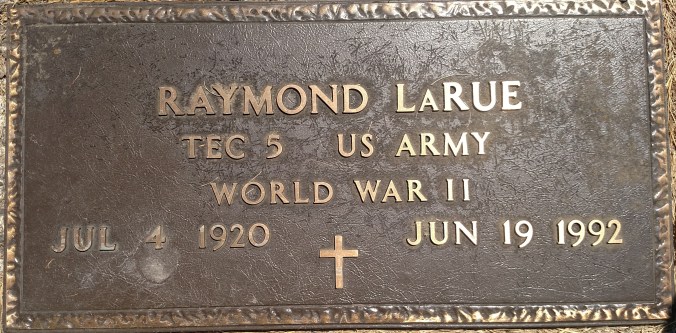
Raymond LaRue was born July 4, 1920, to Clyde and Harrie LaRue in Carlton, Michigan. He married his wife, Phyllis, in 1942 and they had six children. Raymond served in the United States Army during World War II. He lived in Wheeler for 29 years and previously lived in St. Louis. He worked for Scientific Brake for 29 years until retiring in 1985. Raymond also belonged to the Ithaca VFW, the Breckenridge American Legion, and the Teamsters. Raymond passed away on June 19, 1992, and he rests in Lafayette Township Cemetery. Raymond LaRue is one of many Gratiot County men and women who served their county, state, and country during a time of war.
“Journeys with a Gratiot Cemetarian” 6.7: Donald E. Bowen, World War II – Korea – Vietnam Veteran, Alma Riverside Cemetery

Bowen.jpg

Donald E. Bowen was born July 27, 1925, to Emery and Alice Bowen in Royal Oak, Michigan. He was one of four children and he graduated from Flint High School in 1943. Don served his country for thirty years in the Air Force, starting in World War II and continuing during the Korean and Vietnam Wars. He retired from the Air Force in 1974. Don was known to many in the area as the owner of several businesses in the St. Louis and Alma area including Twin City Coin shop, Alma Coin Exchange, and Alma Collectors Den. Don was a member of the American Legion, VFW, and the Moose Lodge. He married his wife Letha in 1943 and together they had four children. Don passed away September 7, 2002, and he is buried in Alma’s Riverside Cemetery. Donald E. Bowen is one of many Gratiot County men and women who served their county, state, and country during times of war.

“Journeys with a Gratiot Cemetarian” 7.5: Bert H. Most, World War II Veteran, Lafayette Township Cemetery

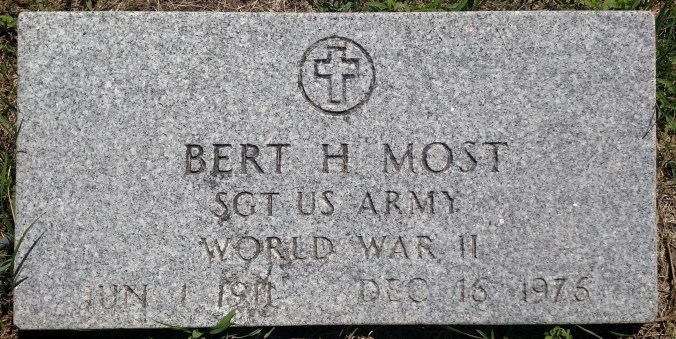
IMG_20170703_120034461.jpgBert H. Most was born June 1, 1911, in Oscoda, Michigan. Prior to World War II, Bert worked as a truck driver for Saginaw County as well as in a coal yard. He enlisted in the Army on April 16, 1942, in Detroit, Michigan. He eventually became a Sergeant during the war. He passed away on December 16, 1976. Today, Bert H. Most rests in Lafayette Township Cemetery. Bert H. Most is one of many Gratiot County men and women who served their county, state, and country during a time of war.
 

“Journeys with a Gratiot Cemetarian” 7:4 Louis Richard Trogan, World War II Veteran, Lafayette Cemetery

IMG_20170703_120557998 (1).jpg

Louis r Trogan.jpg

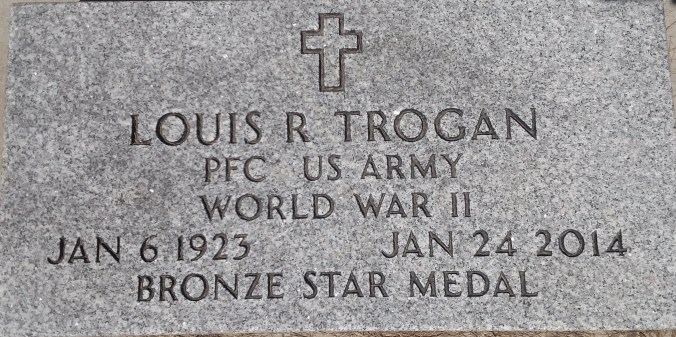
Louis Richard Trogan was born January 6, 1923, to Richard and Rose Trogan. He was one of four children. Louis served in the infantry in the South Pacific during World War II and he was awarded the Purple Heart, Bronze Star and Good Conduct Medal for his service. After the war, he returned to Bay City where he was a member of the Bay City Fire Department for 32 years, retiring as assistant chief. He was married to his wife, Virginia, for 67 years. Together they had one son, five grandchildren and nine great-grandchildren. Louis was a member of the VFW, Order of the Purple Heart, and the DAV. He volunteered for several military organizations such as the VA hospital. Louis passed away on January 24, 2014. Louis Richard Trogan rests in Lafayette Township Cemetery. He is one of many Gratiot County men and women who served their county, state, and country during a time of war.

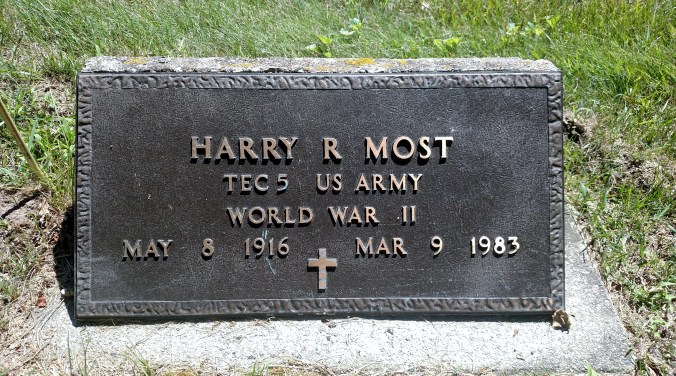
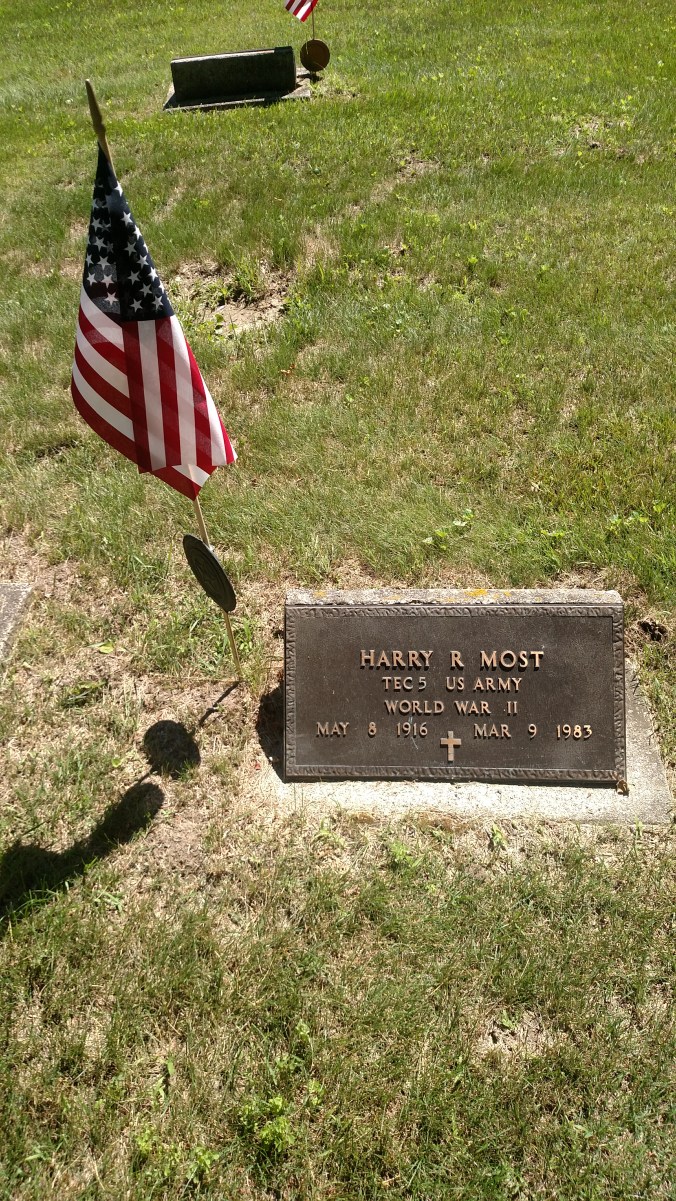
“Journeys with a Gratiot Cemetarian” 7.3: Harry Most, World War II Veteran, Lafayette Cemetery

harry most.jpgHarry Most (2).jpg

Harry R. Most was born  May 8, 1916, in Saginaw County to George and Bessie Most. He had four other brothers and a sister. Harry served his country during World War II. He died on March 9, 1983, in Lansing. Today, he rests in Lafayette Cemetery. Harry R. Most is one of many Gratiot County men and women who served their county, state, and country during a time of war.
“Journeys with a Gratiot Cemetarian” 6.6: Carl Sibert, World War I Veteran, Alma Riverside Cemetery

Sibert.jpg

Carl E. Sibert was born May 2, 1895, in Ithaca to Wilson and Viola Sibert. Carl was a veteran of World War I and also a lifelong resident of Ithaca. He made his living as a railway express agent. Carl passed away on February 26, 1982 and rests in Alma’s Riverside Cemetery. Carl E. Sibert is one of many Gratiot County men and women who served their county, state, and country during a time of war.

“In Gratiot County, I am Bothered by Chancellorsville” – August, 2017


DHFcZfuVwAAOesg74576

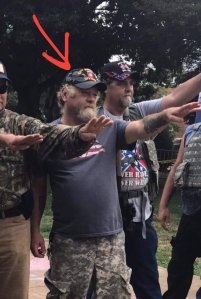
Above left: Image attributed to the Washington Post, August 16, 2017. The red arrow in the picture is not of my doing. Above right: Liberators from the 82nd Airborne and 8th US Infantry Division view the victims of the Nazis inside a building at Wobbelin, May, 1945. Photograph from United States Holocaust Memorial Museum.

     It has been over a week since the protests in Chancellorsville, Virginia took place and I am glad that I just missed the events there. Still, I also remained bothered by what I continue to learn about this event in our country. One image attributed to Chancellorsville, in particular really bothers me. And it compels me to continue to teach, write and lecture.

     I recently took a trip to nearby Staunton, Virginia to attend a teachers conference on President Woodrow Wilson, who served from 1914-1920.  Staunton, which sits west of Chancellorsville, is Wilson’s birthplace and the site of his library. I just dodged another tragic event in two years (last year at almost the same time I was in Nice, France 36 hours after the attack happened there on the French Riviera).

     Last week, my google search notice went off in the morning when the words “Wobbelin 1945” popped up on my screen.

     For fourteen years I have been researching, and recently just started writing about, a Nazi concentration camp that was liberated by the 82nd Airborne and 8th United States Infantry Regiment on May 2, 1945. Approximately 5,000 people went through Wobbelin, a satellite camp of KZ Neuengamme. At Wobbelin, the Nazi weapon of death was simple and crude: starvation. No gas stations or crematoria, just death by starvation.

      When the liberators arrived at Wobbelin it was estimated that somewhere between 1,500 to 2,500 people from over 17 different nations had died of starvation at the hands of the Nazis in ten weeks.

      Since 2003, when I became a Teacher Fellow with the United States Holocaust Memorial Museum, I have been working with a Holocaust memorial at Wobbelin. I also interviewed, met, wrote to and researched dozens and dozens of men and women who saw the Wobbelin camp in 1945. In the process, I was able to find at least four men from Gratiot County who served with the 82nd and who were in the region of where the Wobbelin camp was located. The late John Muneio, who lived in St. Louis, told me how he remembered personally confronting Germans after liberating the camp who came up to him and complained that the survivors of the Wobbelin camp were being fed and helped by the Airborne. Muneio loudly and bluntly told them, “SO?” I took the meaning to be, “SO WHAT, you didn’t give a rip about helping these people – get out of here.”

       What struck me most was how indelibly the images from 1945 still were with these veterans. Dead bodies. Emaciated survivors – the “walking dead” as some called them. The stench of decaying bodies and the camp itself. These were some of the images that the liberators had decades later about what they witnessed at Wobbelin. Most of all, there were memories of those Germans who lived around Wobbelin and who claimed that they knew nothing about the camp and that they had no idea of what was going on there.

      Both the 82nd and the 8th made sure that after the camp was discovered, Germans were going to remember what happened there.   German civilians, young and old, men, women, soldiers, Hitler Youth – any German that was found near Wobbelin – was made to take “a tour” of the camp. Nazi Party members were rounded up and made to carefully excavate corpses from burial pits (with their bare hands) for public funerals that were held in at least four locations. One liberator, Leonard Linton, oversaw the excavation of the pits and reminded those in charge of removing the bodies that they would not be using gloves, “So that you (Germans) will never forget what happened here.” The confrontation with the camp and the funeral was to remind these Germans in 1945 of what the Nazis did and what they, as citizens, had allowed to happen in their own midst.

        What does this have to do with Chancellorsville?

      The Google notice from “Wobbelin 1945”  that I saw featured a picture from the events at Chancellorsville from a story from the Washington Post dated August 16. It was from an article by Cleve R. Wootson, Jr. In it was a picture of what appears to be a man giving a KKK salute while wearing, of all things, a hat from the 82nd Airborne. The irony of attending a KKK/neo-Nazi rally while representing anything to do with the 82nd Airborne was appalling and shocking.

     I had several gut reactions to the Chancellorsville photograph.  “This guy needs his head examined.” “Ignorance is bliss.” “Those who don’t know their own history are doomed to repeat it.” “This stuff needs to stop right here.”

      This is what the 82nd Airborne fought for in 1945?  Does this guy in the photograph have any idea of what Nazism ultimately led to?  My grandfather, who was not a member of the 82nd Airborne but who served in Italy, fought against the same enemy. What would he think of the image? This “protestor” needs to go back to Wobbelin and take a look at what the end of Nazism, hate, prejudice, and discrimination ultimately lead to.

     He also needs to spend some time learning about the Holocaust and American history – and about the 82nd Airborne. And this is why we educate people.

    Maybe I should tell this guy in the photograph that he just gave me the impetus to pick up a recently started manuscript on a book on Wobbelin and that I need to get going with it again.

A year ago I was scheduled to talk to a local historical society about the Ku Klux Klan in Gratiot County during the 1920s. Talk about timing.