
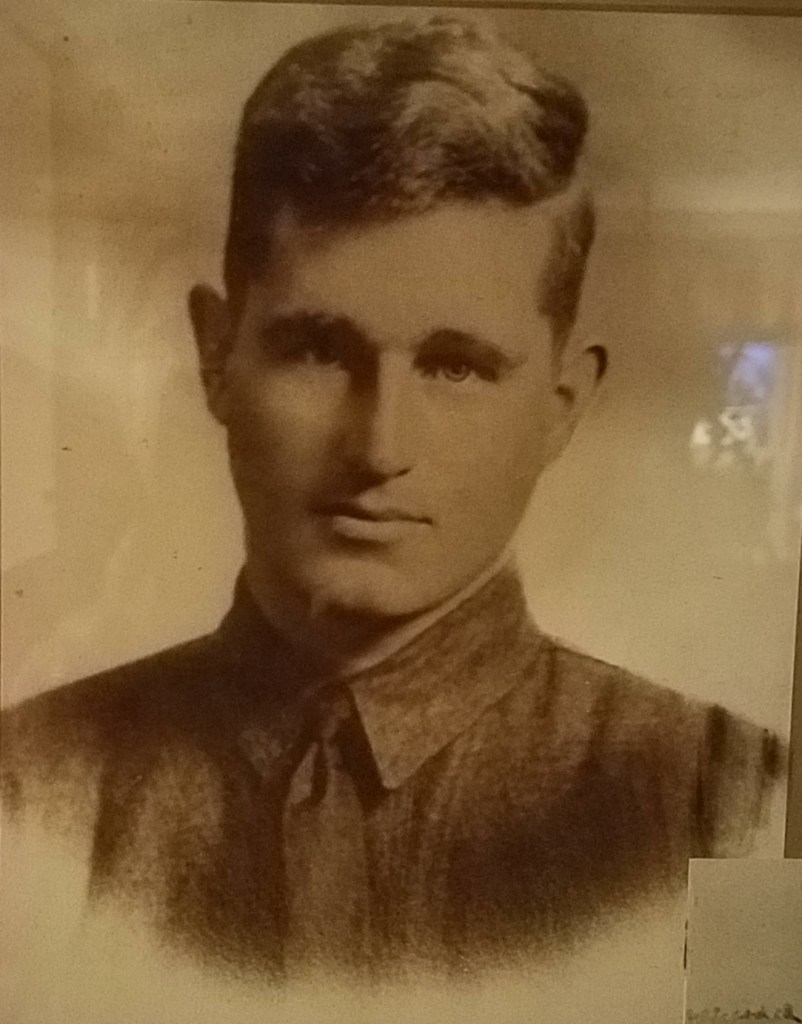
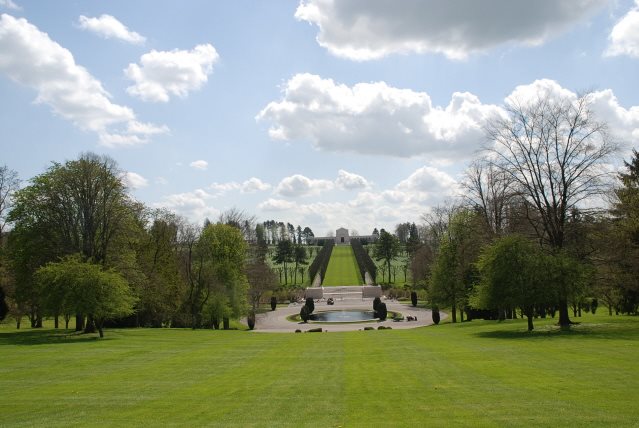
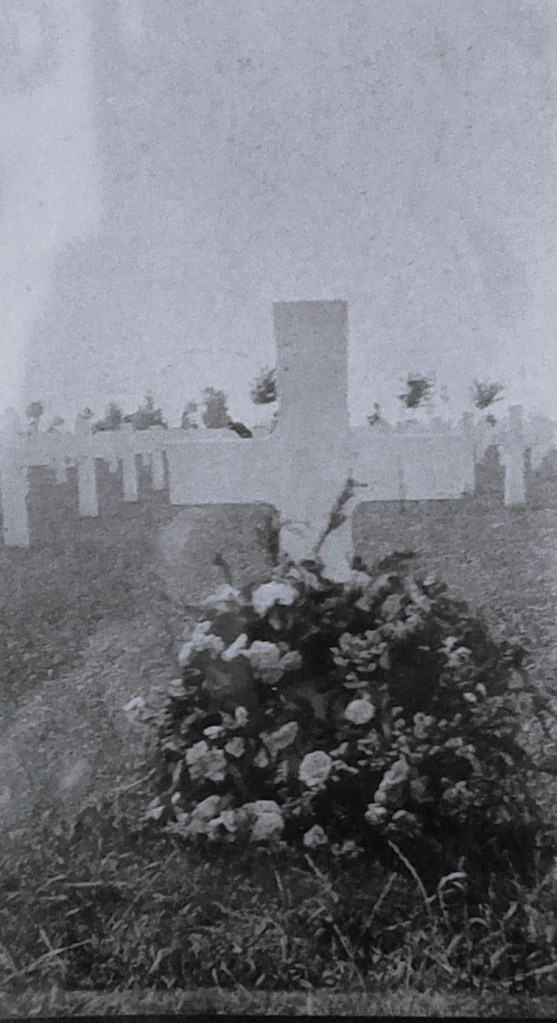

Above: Ella Smith of Perrinton was Gratiot County’s only Gold Star Mother who traveled to her son’s grave in France in 1930 as part of a government program; Private Lyle Smith was one of thirty Gratiot County men who died during World War I: Meuse Argonne Cemetery as it looks today; Private Lyle Smith’s grave on the day Ella visited the gravesite; Marker for Lyle Smith as it appears now in Fulton Center Cemetery in southern Gratiot County’s Fulton Township.
“Every marker is of the whitest marble, and they take such wonderful care of everything. I do not think I ever felt worse in my life than when I knelt by Lyle’s grave and placed a beautiful wreath of roses on it. Had a good cry, then felt better. Felt as if I had been to a funeral.”
So wrote Mrs. Ella Smith of Perrinton, who in 1930 was Gratiot County’s only Gold Star Mother to visit the grave of her son, one of many who died on the battlefields in France during World War I. The Gold Stars were mothers and widows of those men who died serving our country.
By the end of President Calvin Coolidge’s administration in 1929, legislation encouraged mothers to travel to France to visit the graves of their sons or husbands who had not been sent home after the war. Over 17,000 women were eligible for this fully paid trip provided by the government. By the fall of 1933, an estimated 6,693 women made the journey.
Smith left Gratiot County in early June, 1930 and was transported to France aboard the S.S. President Harding along with 2,026 other war widows. She met women from fifteen different states; forty were from Michigan.
In Paris, Ella Smith and other Gold Star Mothers were placed in hotels based on which cemetery they visited. In this case, she was one of 112 women headed for the Meuse-Argonne Cemetery. Part of the trip included seeing the best and worst of post-war France. Visiting memorials, churches, and cultural sites was easier than viewing some scenes in the countryside. There, French women pushed two-wheel carts, led their horses, while seeing constant images of destroyed woods along the shell-torn countryside.
On June 17, 1930, Smith arrived at the cemetery. After participating in a tea service, the women were given the section number where their son or husband was buried. Upon arriving at that row, an officer gave a wreath to place on the grave. The government also had a photographer present to photograph each woman standing next to the grave. The Gold Stars then had six hours to spend in the cemetery.
Upon leaving, Smith’s group headed to the nearby area of the Argonne Forrest where Private Lyle D. Smith died. She wrote, “I presume I am now on land where Lyle was around the cemetery, for here is where the 26th Division was stationed.” As part of the Sixth Division, he had been there on September 26, 1918, when he sent his last letter home. He was killed October 4, just over one month before the Armistice was signed.
Today, the base of Lyle D. Smith’s marker in the Fulton Center Cemetery reads, “Buried in France.”
Copyright 2026 James M. Goodspeed

